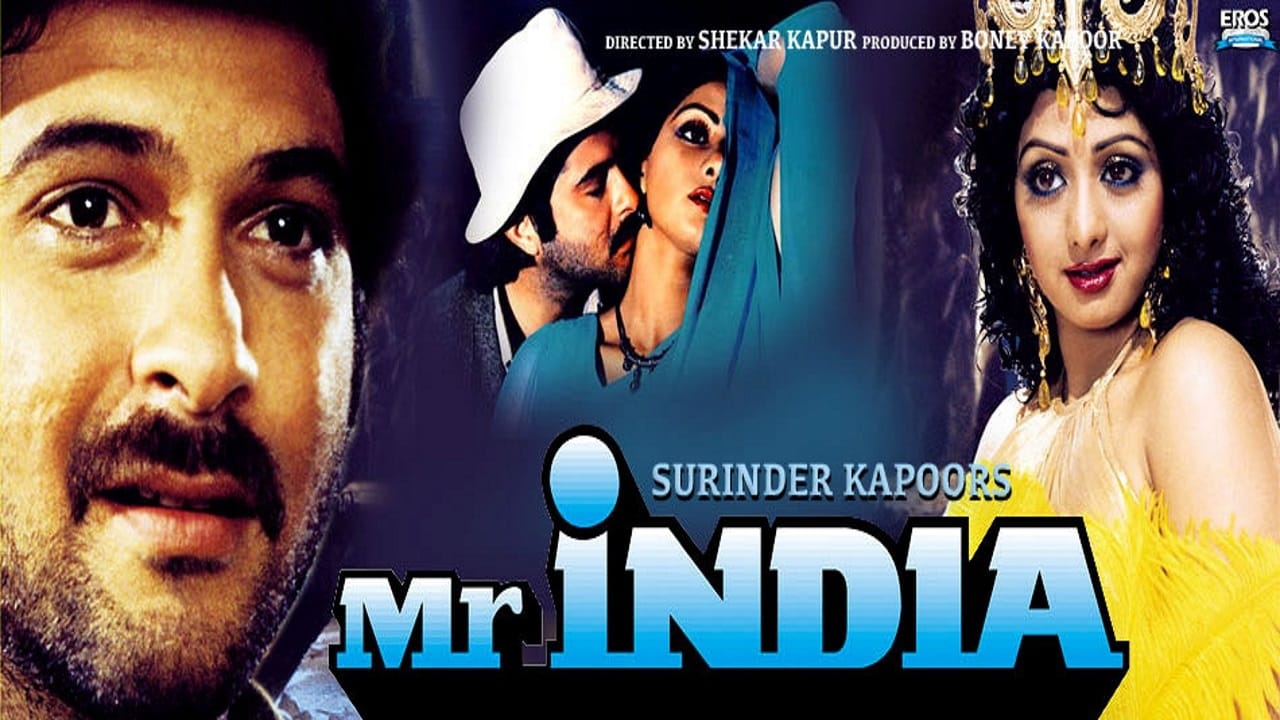
Okay, rewind that tape! Sometimes a movie pops into your head, not just as a film, but as a full-blown experience – a vibrant splash of colour, music, and pure, unadulterated fun that felt beamed directly from another dimension onto your living room CRT. For countless viewers, especially those with a soft spot for the energetic pulse of 80s Bollywood, Shekhar Kapur's Mr. India (1987) is exactly that kind of cinematic lightning in a bottle. Forget sleek CGI; this was the era of heart, imagination, and villains who announced their satisfaction to the world.
### More Than Just An Invisible Man
From the moment those invisible footprints appeared, leaving bewildered onlookers gaping, you knew this wasn't just another action flick. Penned by the legendary writing duo Salim Khan and Javed Akhtar (the minds behind monumental hits like Sholay (1975) and Deewaar (1975)), Mr. India masterfully blended science fiction fantasy with heartfelt family drama, slapstick comedy, romance, and a healthy dose of patriotism. It’s a concoction that sounds chaotic on paper, but on screen? Pure magic.
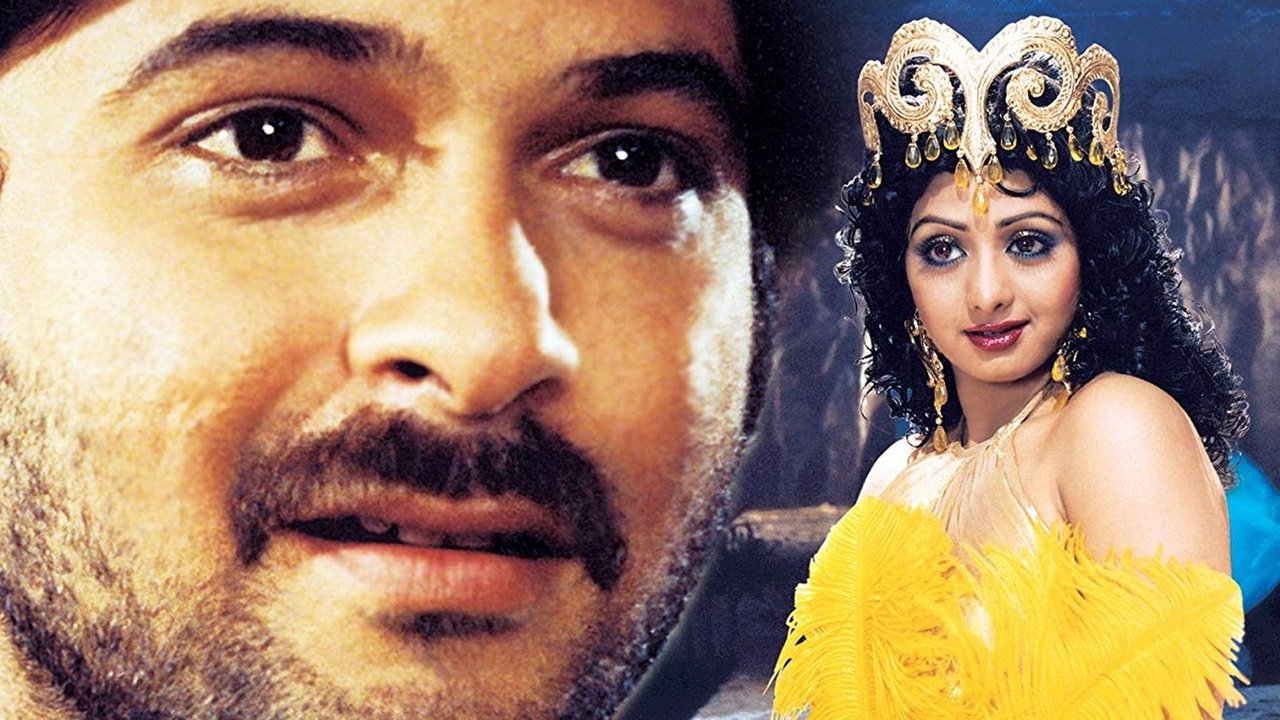
At its core is Arun Verma, played with infectious sincerity by Anil Kapoor. He’s a kind-hearted soul running a makeshift orphanage, struggling to make ends meet while showering his band of boisterous kids with love. His world is turned upside down when he discovers his late father’s invention: a gadget that grants the wearer invisibility. This isn't some high-tech military prototype; it feels like something cobbled together in a shed, adding to its charm. Suddenly, this ordinary man has an extraordinary means to fight injustice, becoming the unseen protector, the titular Mr. India.
### When Mogambo Was Happy, We Were Terrified (and Thrilled)
You simply cannot talk about Mr. India without bowing down to the sheer, magnificent villainy of Mogambo. Brought to life with scenery-chewing gusto by the unforgettable Amrish Puri, Mogambo wasn't just a bad guy; he was an event. With his shock of blonde hair, military attire adorned with questionable medals, and that booming declaration, "Mogambo khush hua!" ("Mogambo is pleased!"), he etched himself into the annals of cinematic villainy. Operating from a ridiculously over-the-top island lair complete with missile silos and bubbling acid pits (because of course!), Mogambo represented pure, cartoonish evil, a perfect foil for Arun's inherent goodness. Puri, who sadly passed in 2005, had a commanding screen presence honed over decades, but Mogambo remains arguably his most globally recognised role – a testament to his larger-than-life performance. It’s said that Salim-Javed specifically wrote the part with him in mind.
### Sridevi Steals the Show (and Our Hearts)
While Anil Kapoor provides the film's moral centre, it’s the incandescent Sridevi as crime reporter Seema Sahni who often walks away with the entire movie. Already a massive star, her performance here is a whirlwind of comedic brilliance, vulnerability, and undeniable screen presence. Who can forget her hilarious Charlie Chaplin impersonation, a masterclass in physical comedy? Or the sheer sensuous energy of the iconic rain song, "Kate Nahin Kat Te," where she sizzles even while romancing an invisible hero? (A challenging scene to film, relying heavily on wind machines and Sridevi's ability to react to seemingly nothing). Then there's the legendary "Hawa Hawaii" sequence – a riot of colourful costumes, infectious energy, and Sridevi's dazzling expressions. It cemented her status as not just a star, but a phenomenon. The chemistry between her and Kapoor is palpable, adding a delightful romantic thread to the mayhem.
### Behind the Magic: Practical Wonders and Enduring Appeal
Mr. India was a significant production for its time, reportedly one of the most expensive Indian films made up to that point. While the budget might seem modest compared to today's blockbusters, director Shekhar Kapur (who would later gain international acclaim with films like Elizabeth (1998)) used his resources cleverly. The invisibility effects, achieved through classic camera trickery like stop-motion animation, split-screening, and clever prop manipulation (like those footprints appearing or objects seemingly floating), possess a tangible charm that CGI often lacks. There’s a delightful simplicity to seeing Arun sip tea, the liquid vanishing as it goes down his unseen throat, or the comical sight of invisible punches landing on hapless goons.
The film struck a massive chord with audiences, becoming one of the biggest hits of 1987 in India and remaining a beloved family favourite for generations. Its soundtrack, composed by the prolific duo Laxmikant-Pyarelal, was equally successful, with tracks like "Hawa Hawaii" and "Karte Hain Hum Pyaar Mr. India Se" becoming timeless classics. It wasn't just a movie; it was a cultural moment. It even spawned persistent rumours of sequels or remakes over the years, a testament to its enduring legacy.
Retro Fun Fact: The initial idea reportedly involved Amitabh Bachchan in the lead, but scheduling conflicts led to Anil Kapoor stepping in – a casting choice that now feels impossible to imagine any other way. Also, the iconic "Mogambo khush hua!" line was apparently suggested by Javed Akhtar during script narration and instantly clicked.
### The Verdict
Mr. India is more than just a nostalgic trip; it's a genuinely well-crafted piece of popular entertainment that wears its heart on its sleeve. It successfully juggles multiple tones, delivering laughs, thrills, romance, and moments of surprising tenderness (especially in the scenes with Arun and the children). Yes, some elements feel gloriously rooted in the 80s – the fashion, the high melodrama, the sheer audacity of the villain's lair – but that's all part of its enduring charm. It captured a sense of wonder and possibility, the idea that even an ordinary person could do extraordinary things, armed with a little ingenuity and a lot of heart. Watching it again feels like catching up with an old, slightly eccentric, but utterly loveable friend.
Rating: 9/10
This score reflects the film's iconic status, brilliant performances (especially from Sridevi and Amrish Puri), unforgettable music, successful genre blending, and sheer entertainment value that transcends its era. It's a near-perfect example of mainstream Bollywood at its most imaginative and joyous, even with its charmingly dated effects.
So, if you find a copy gathering dust or spot it streaming, give it a watch. Just be warned: you might find yourself humming "Hawa Hawaii" for days, and maybe, just maybe, secretly wishing Mogambo was pleased.