Alright, fellow tapeheads, let’s rewind to a time when animated movies weren't all smoothly rendered CGI and saccharine songs. Remember pulling that distinctive VHS box off the shelf, maybe drawn in by the cartoon chaos promised on the cover? I’m talking about 1992’s Bebe's Kids, a film that crackled with the raw, unfiltered energy of the stand-up routine that birthed it, even if it felt a little rough around the edges, like a tape played one too many times.
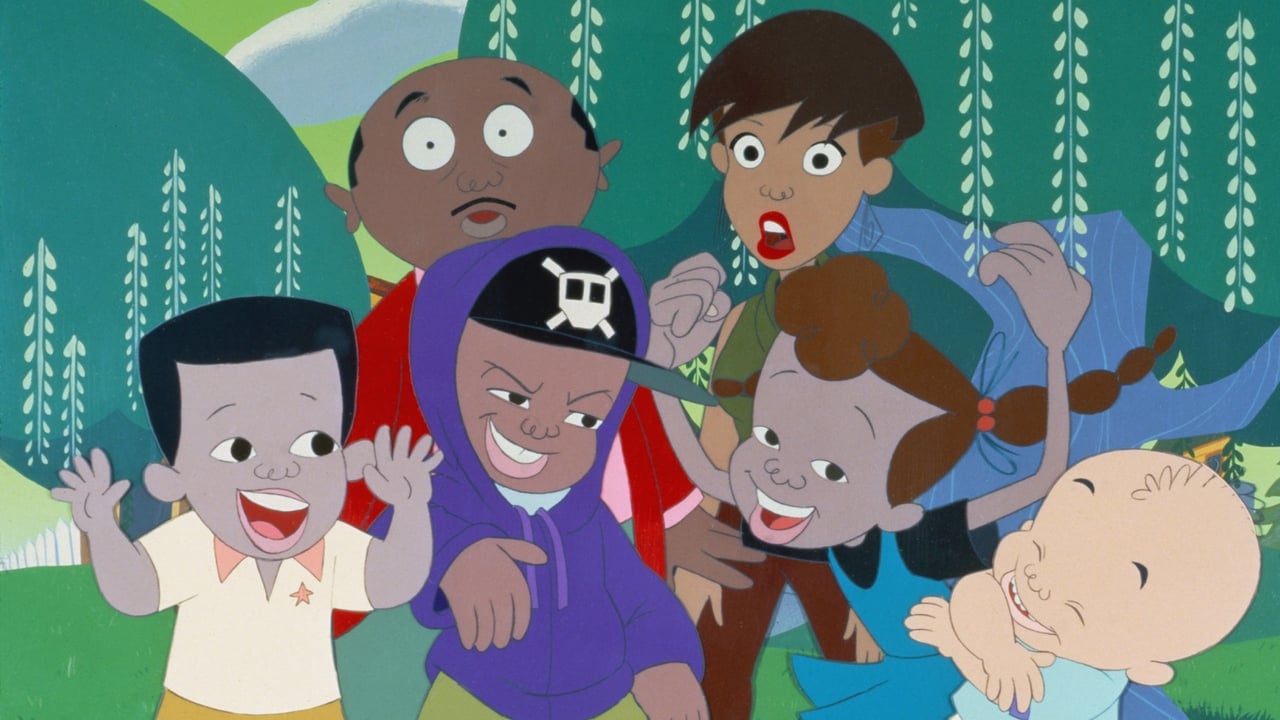
This wasn't your typical Disney fare; it sprang directly from the mind (and legendary routine) of comedian Robin Harris, whose tragically early death in 1990 meant he never saw the finished film based on his signature bit. That routine, a masterclass in observational humor about navigating the treacherous waters of dating a woman who comes with… challenging children, became the foundation for one of the few mainstream animated features of the era starring a predominantly Black cast. Stepping into impossibly large shoes to voice the animated Robin was a young Faizon Love, in what became a breakout role, tasked with capturing the specific rhythm and exasperated charm of Harris’s delivery.
From Stand-Up Stage to Animated Mayhem
The premise is simple, almost primal in its setup: Nice guy Robin wants to impress the lovely Jamika (Vanessa Bell Calloway, bringing a touch of grounded elegance amidst the chaos). The catch? Winning Jamika over means spending a day at the Fun World amusement park with her well-behaved son, Leon, and her friend Bebe's three notoriously destructive offspring: the philosophical toddler Pee-Wee (famous for his catchphrase, "We Bebe's kids, we don't die... we multiply!"), the attitude-laden LaShawn, and the militant Kahlil. What follows is less a charming day out and more a comedic endurance test, a whirlwind of destruction and defiance that pushes Robin to his absolute limit.
The script, penned by Reginald Hudlin (who had already made waves with House Party (1990)), aimed to translate Harris’s specific comedic voice into a narrative. It’s a film that feels like late-night stand-up brought to life – episodic, built around escalating set pieces of disaster, and powered by the sheer force of personality (both Harris's original and Love's uncanny interpretation). Watching it again now, you can almost feel the sticky floors and hear the clatter of arcade games from the video stores where this tape became a cult favorite after a fairly modest $8.4 million run at the box office.
That Hand-Drawn Hustle
Let's talk animation. Directed by Bruce W. Smith (who would later gift us the beloved animated series The Proud Family), Bebe's Kids boasts a visual style that’s distinctly not Disney smooth. It's got a certain raw, kinetic energy; the character designs are expressive, sometimes bordering on caricature, perfectly matching the exaggerated tone of the comedy. Think less flowing realism, more sharp angles and rapid-fire visual gags. This wasn't about seamless, polished movement; it was about conveying pure, unadulterated chaos. In an era before CGI homogenized so much of animation, this hand-drawn approach, warts and all, gave the film a personality that felt unique and refreshingly unpretentious. Does some of it look a bit dated now? Sure, but that rawness is part of its charm, perfectly mirroring the rough-and-tumble world Robin Harris described. It felt like animation with an edge.
The energy extends to the soundtrack, too, pulsing with early 90s hip-hop and R&B that grounded the film firmly in its time and place. It wasn't just background noise; it was part of the film's identity, contributing to that vibrant, sometimes overwhelming, sensory experience.
A Force of Nature Named Pee-Wee
While Faizon Love does an admirable job channeling Robin Harris, and Vanessa Bell Calloway provides the necessary anchor of sanity, the real stars, arguably, are the kids themselves. They aren't just mischievous; they're presented as near-elemental forces of destruction. Pee-Wee, voiced with gravelly authority by Wayne Collins Jr., is an icon of animated anarchy. LaShawn and Kahlil are walking, talking agents of chaos. Their antics – from commandeering a pirate ship ride to unleashing havoc in a futuristic exhibit – are played for maximum comedic impact. It’s the kind of over-the-top mayhem that felt hilariously relatable if you ever felt overwhelmed by unruly youngsters, even if taken to cartoonish extremes. Remember the sheer terror Robin felt facing down those robotic historical figures? Pure animated pandemonium!
The film wasn't universally loved by critics upon release; some found the humor repetitive or the animation unrefined. But audiences, particularly those familiar with Harris's comedy or looking for animation outside the usual mold, found something special here. It gained significant traction on home video, becoming a staple rental and earning its place as a 90s animated cult classic. It tackled themes of dating, responsibility, and cultural identity with a comedic sensibility rarely seen in animation at the time.
***
VHS Heaven Rating: 7/10
Justification: Bebe's Kids gets a solid 7 for its sheer audacity, its groundbreaking status as a mainstream Black animated feature, Faizon Love's respectful and energetic channeling of Robin Harris, and its uniquely chaotic energy that perfectly captures the spirit of the source material. While the animation might feel raw by today's standards and the humor occasionally repetitive, its cult status is well-earned. It’s funny, memorable, and possesses a distinct personality that stands out from the animated crowd of the era.
Final Take: It’s a time capsule of early 90s animation and comedy, brimming with anarchic spirit. Like finding a slightly worn but cherished tape, Bebe's Kids might not be pristine, but its chaotic energy and cultural footprint make it a Fun World worth revisiting – just brace yourself for the ride.