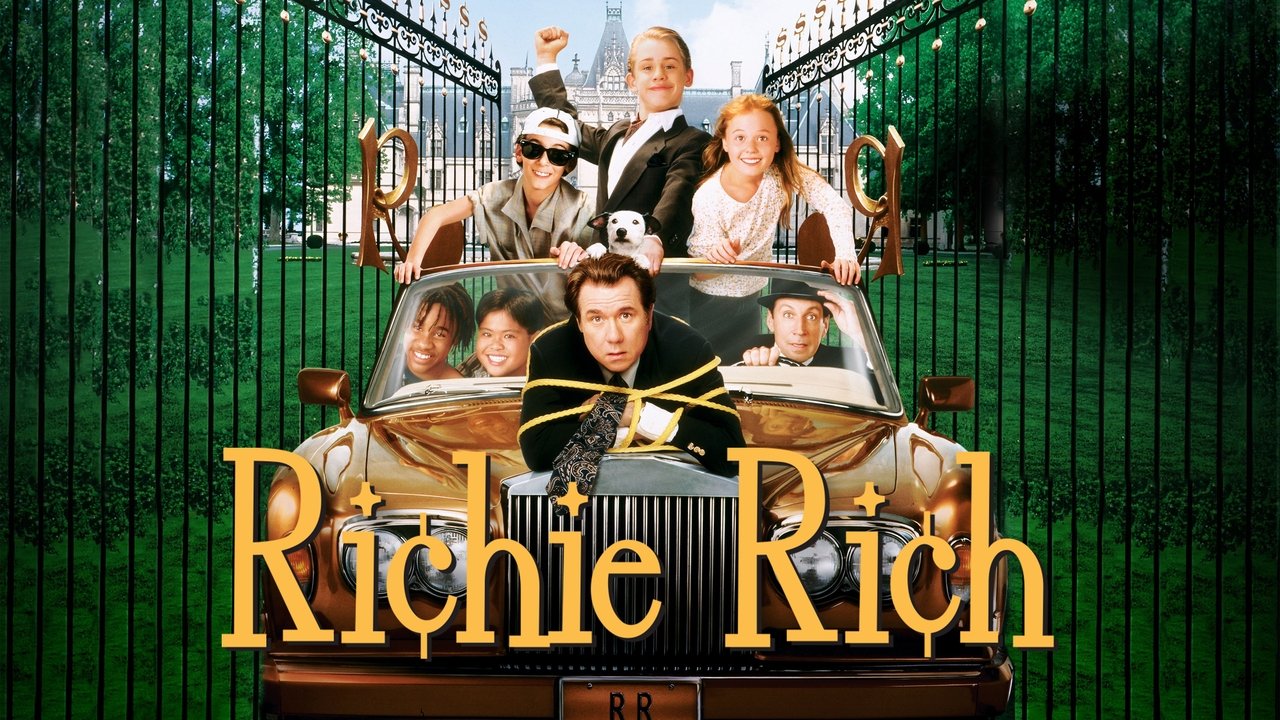
Okay, grab your favourite worn-out armchair and maybe a bowl of something sugary – let's rewind the tape to 1994 and talk about a movie that practically defined childhood wish-fulfillment for a generation: Ri¢hie Ri¢h. If you spent any time browsing the aisles of a video rental store back then, the cover – usually featuring Macaulay Culkin looking slightly nonplussed amidst unimaginable wealth – was instantly recognizable. It promised a world of gadgets, adventures, and the kind of financial freedom most of us could only dream of.
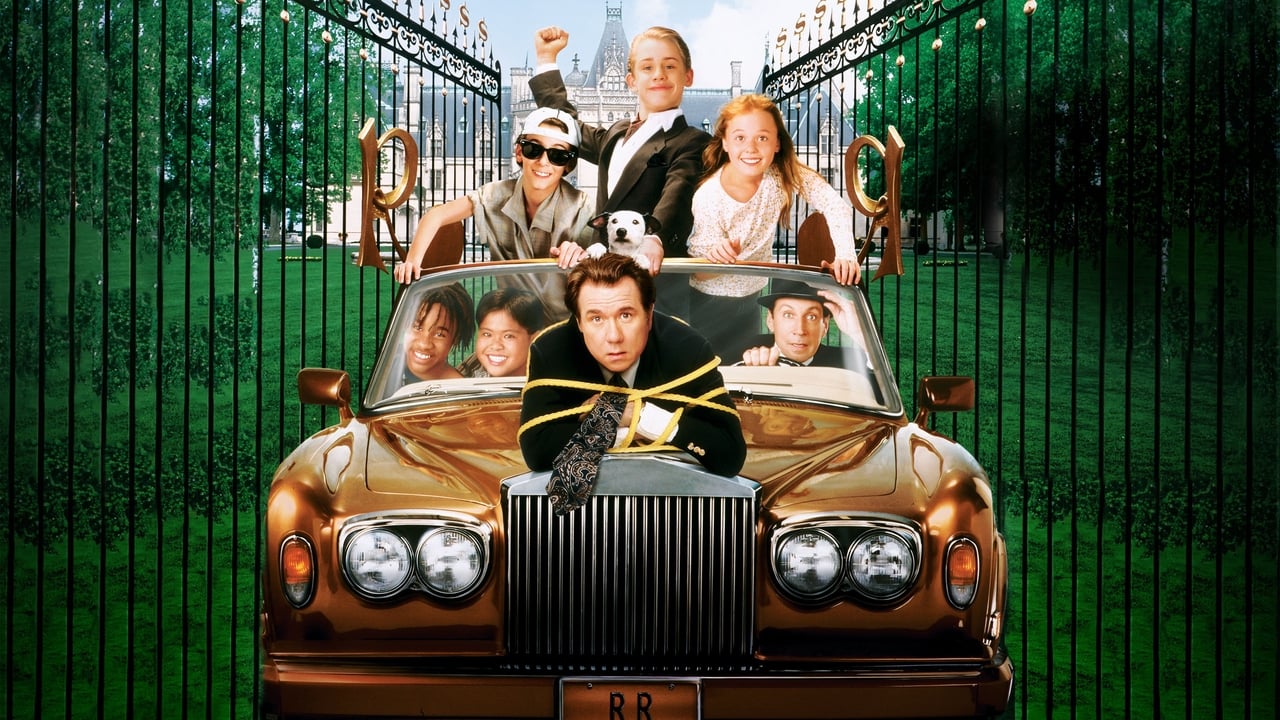
Based on the classic Harvey Comics character, this cinematic venture aimed to bring the "poor little rich boy" narrative into the blockbuster-hungry 90s. And who better to embody that than Culkin, fresh off the stratospheric success of the Home Alone films? He was the kid star of the era, commanding a reported $8 million for this role, a figure almost as eye-watering as Richie's personal fortune. The premise is simple: Richie Rich has everything money can buy – a literal McDonald's in his house, a hovercraft, even his own Mount Rushmore-style family monument carved into a mountain ("Mount Richmore," naturally). But what he truly craves are friends his own age.
Living the High Life (Literally)
Director Donald Petrie, who'd already shown a knack for charming comedies like Mystic Pizza and would later helm Miss Congeniality, paints Richie's world with broad, bright strokes. The Rich estate, much of which was filmed at the stunning Biltmore Estate in North Carolina (America's largest privately owned house – fitting!), is less a home and more a theme park dedicated to one boy's amusement. Remember the Gadget Master, Professor Keenbean (played with delightful eccentricity by Michael McShane)? His inventions were pure 90s kid fantasy fuel: the RoboBee, the Smellmaster 9000, that molecular reorganizer thingy. I distinctly recall watching this and desperately wanting that sense-inverting spray – imagine the schoolyard possibilities!
The visual spectacle of Richie's world is undeniably a huge part of the film's appeal, even now. It taps directly into that childhood fantasy of limitless possibilities. Who wouldn't want a personal rollercoaster or the ability to summon a fast-food feast at will? It’s pure, unadulterated escapism, presented with a cheerful, almost cartoonish energy.
More Than Just Money?
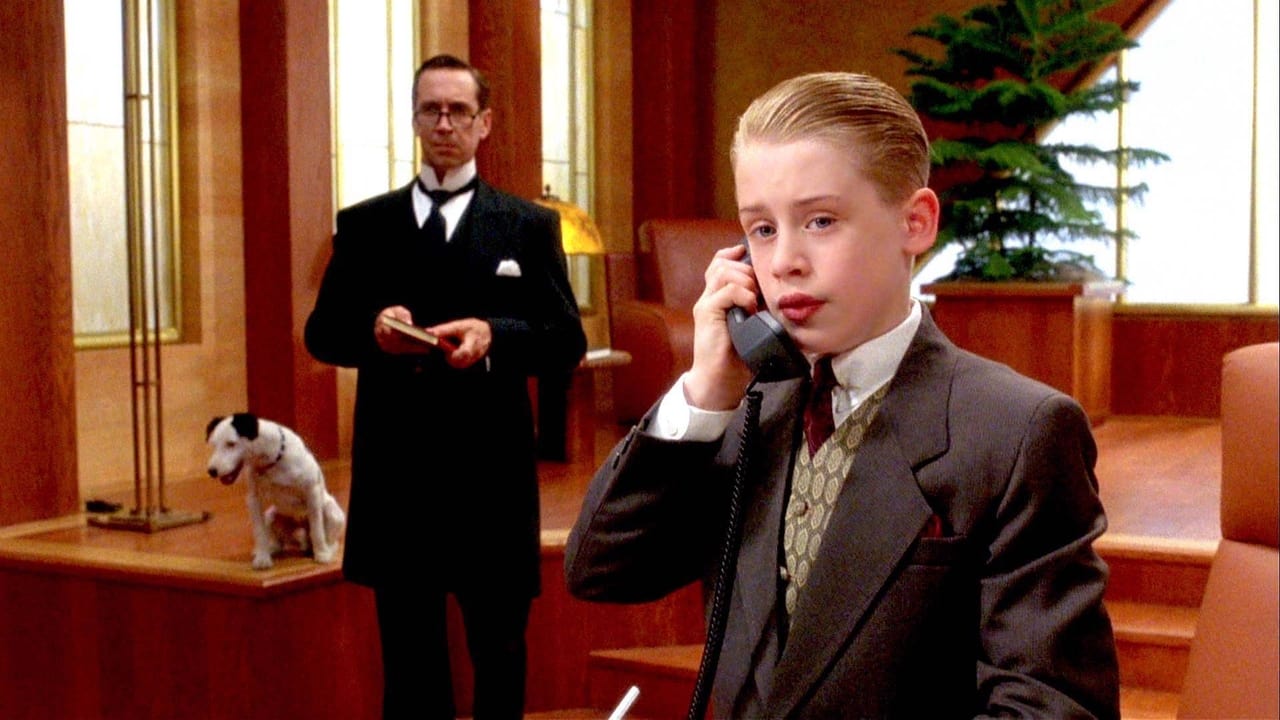
Of course, the story needs conflict beyond Richie just being bored with his billions. Enter the wonderfully slimy Laurence Van Dough, played with scenery-chewing gusto by John Larroquette, best known to many from the sitcom Night Court. Van Dough is the scheming CFO plotting to steal the Rich family fortune, leading to Richie's parents (the always warm and dependable Edward Herrmann and Christine Ebersole) being lost at sea. This forces Richie, with the help of his loyal butler Cadbury (Jonathan Hyde, delivering dry wit perfectly) and a gang of newfound sandlot pals, to step up, outsmart the villain, and save the family business.

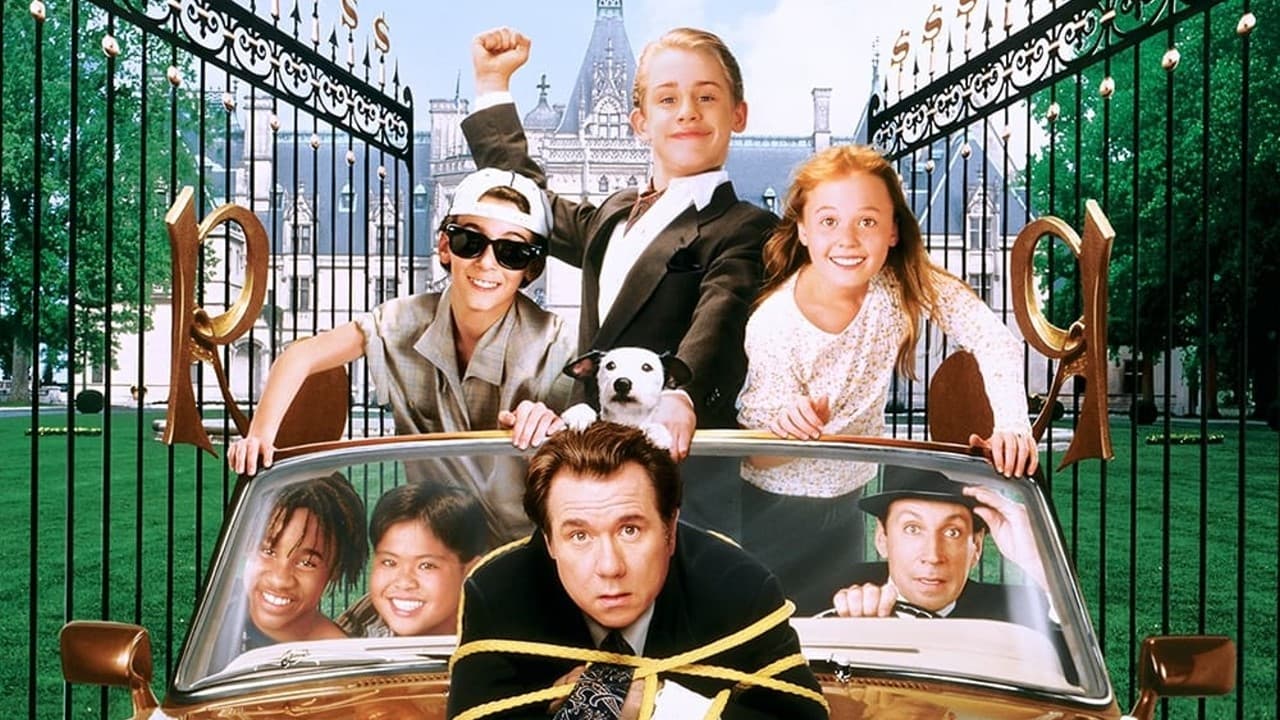
The dynamic between Richie and his new friends – Gloria, Tony, Pee Wee, and Omar – forms the heart of the movie. It's a classic "money can't buy happiness (but it can buy cool stuff to share with friends)" message. While the plot beats are fairly predictable, the interactions have a certain earnest charm. There’s genuine fun in watching Richie introduce his working-class buddies to the absurdities of his life, and seeing them, in turn, teach him the value of genuine connection (and baseball). The scene where Richie tries to play baseball with his high-tech gear, only to learn the real joy comes from just playing the game, is perhaps the film's most endearing moment.
Retro Fun Facts & Lasting Impressions
While Ri¢hie Ri¢h certainly had the budget (around $40 million) and the star power, it didn't quite capture the magic – or the box office gold (grossing about $38 million domestically) – of Culkin's previous hits. Critically, it wasn't exactly beloved either, currently sitting at a chilly 26% on Rotten Tomatoes and a 5.4 on IMDb. Some felt Culkin, then 14, was perhaps aging out of the cherubic roles that made him famous, and the film sometimes struggles to balance its slapstick humor with the more earnest themes. Look closely, and you might even spot a cameo by supermodel Claudia Schiffer as Richie's personal aerobics instructor – peak 90s!
Yet, despite these points, Ri¢hie Ri¢h holds a specific kind of nostalgic charm. It represents a certain breed of glossy, high-concept 90s family film that doesn't really get made anymore. It’s undeniably silly, utterly unrealistic, and wears its heart on its sleeve. It wasn't trying to be high art; it was aiming for pure entertainment, a visual sugar rush packed with gadgets and feel-good moments. For many who grew up renting this tape, perhaps alongside its less memorable direct-to-video sequel Richie Rich's Christmas Wish (starring a different cast), it conjures memories of simpler times and fantastical daydreams.
The Verdict
Ri¢hie Ri¢h is far from a perfect film. The plot is thin, the villain is a caricature, and it lacks the sharp wit of Culkin's best work. However, it delivers precisely what it promises: a vibrant, kid-friendly fantasy filled with imaginative gadgets and a simple, positive message about friendship over fortune. It’s a time capsule of mid-90s family entertainment, anchored by the era's biggest child star navigating a world of impossible wealth.
Rating: 6/10 - The score reflects its status as enjoyable, nostalgic fluff. It succeeds as pure childhood wish-fulfillment and boasts some fun performances (especially Larroquette and Hyde), but it's held back by a predictable script and the feeling of a star vehicle running slightly out of steam. Still, the sheer spectacle of Richie's world and its earnest heart earn it a fond spot in the VHS archives.
So, while you might not need a billion dollars, popping this tape back in feels like finding a forgotten twenty in your old jeans – a pleasant, uncomplicated throwback to a time when having your own McDonald's seemed like the absolute pinnacle of existence.