Ah, Manuelita. Just the name likely brings a certain gentle, plinking tune to mind for many, especially those who grew up with the beloved children's song by María Elena Walsh. Seeing that little turtle embark on her grand adventure in Manuelita García Ferré's 1999 animated feature felt like watching a cherished nursery rhyme blossom into a full-blown journey. It arrived near the tail-end of the VHS era, a time when animation felt wildly diverse, long before CGI smoothed everything over. Finding this tape on the rental shelf felt like uncovering a sweetly earnest, slightly different kind of cartoon magic.

### From Song to Screen: A Turtle's Tale
The story itself is simple, carrying the wholesome charm of its source material. Manuelita, a curious and kind-hearted young turtle living in Pehuajó, Argentina, dreams of seeing the wider world, particularly Paris. Encouraged by her family and friends (including the wise owl Patriarca Lorenzo and mischievous mice), she embarks on an incredible voyage, stowing away on a hot air balloon. What follows is a series of gentle adventures and mishaps, from becoming a fashion model in Paris (her shell makes quite the statement!) to facing challenges and eventually finding her way back home, wiser and more appreciative of her roots. The plot, penned by García Ferré himself, doesn't aim for breakneck pacing or complex twists; its strength lies in its episodic charm and the inherent sweetness of its protagonist.
### A Distinctly Argentine Animation Style
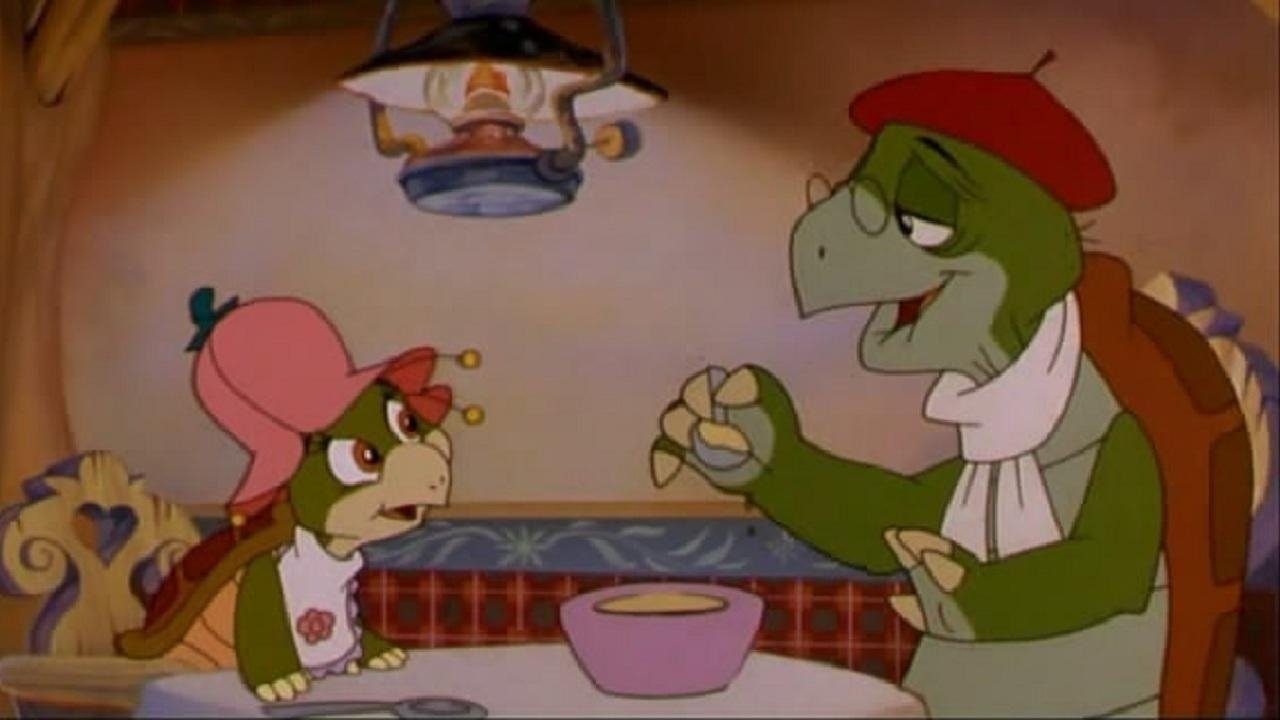
You couldn’t mistake a Manuel García Ferré production for anything else. Coming decades after his iconic creations like Hijitus or Anteojito, Manuelita retains that signature style – rounded character designs, expressive but simple faces, and a certain handcrafted feel. It stands apart from the slickness of Disney or the burgeoning anime influence of the late 90s. The animation, while perhaps not possessing the fluidity or budget of its Hollywood counterparts ($3 million budget, a significant sum for Argentine animation at the time, though modest internationally), has an undeniable personality. The backgrounds are often detailed and colorful, capturing the contrast between the rustic charm of Pehuajó and the bustling elegance of Paris. It feels like illustrations from a well-loved children's book brought to life, perfectly suited for the film's gentle tone. Watching it again now, there's a warmth to this less polished, more traditional animation that feels incredibly nostalgic.
Retro Fun Fact: Manuel García Ferré was a titan of Argentine animation and comics, creating characters deeply embedded in the country's popular culture. Bringing Manuelita, based on María Elena Walsh's immensely popular 1962 song, to the big screen was a significant event. The film was actually Argentina's official submission for the Best Foreign Language Film category at the 72nd Academy Awards, though it ultimately wasn't nominated. Still, that selection speaks volumes about its cultural importance back home.
### Voices of Pehuajó and Paris
The voice acting, primarily in its original Spanish, adds considerably to the film's charm. Rosario Sánchez Almada brings a lovely innocence and determination to Manuelita. Veterans like Pelusa Suero (voicing Larguirucho and the grandfather turtle, among others – talk about range!) and Cecilia Gispert (Manuelita's mother) lend familiar warmth, their voices instantly recognizable to fans of García Ferré's earlier works. Even if you watched a dubbed version as a kid, the gentle earnestness of the performances shines through, making the characters feel like old friends.
### More Than Just a Cartoon Turtle
While Manuelita is undeniably a children's film, it touches on simple, universal themes: the desire for adventure, the importance of home and family, finding courage, and embracing who you are (even if you're a turtle who briefly becomes a Parisian fashion sensation). It doesn't preach, but rather gently illustrates these ideas through Manuelita's experiences. There’s a lovely sequence involving her friendship with other animals and the kindness she encounters, reinforcing the film’s positive message. It’s the kind of movie that likely sparked quiet conversations with parents after the VCR clicked off.
Another Fun Tidbit: The film was a massive success in Argentina, becoming one of the highest-grossing Argentine films of its time. Its popularity even led to merchandise and further cemented Manuelita's place as a beloved national character, bridging the gap between the generation that grew up with the song and the kids experiencing her story visually for the first time. It truly tapped into a deep well of cultural affection.
### Final Thoughts: A Gentle Gem
Revisiting Manuelita feels like uncovering a sweet, slightly faded photograph. It might not have the dazzling spectacle of other animated films from 1999, but its heart is enormous. It’s a film born from a place of genuine affection for its characters and its cultural roots. It’s a reminder of a time when animated features could be quieter, simpler, and possess a unique regional flavour. For those who remember renting it, or perhaps whose parents introduced them to García Ferré's world, Manuelita remains a warm hug of a movie.
Rating: 7/10
This score reflects the film's undeniable charm, its cultural significance in Argentina, and its effective translation of a beloved song into a sweet narrative. While the animation and pacing might feel dated compared to bigger-budget contemporaries, its warmth, heart, and Manuel García Ferré's distinct artistic signature make it a worthwhile nostalgic watch, especially for those who appreciate animation beyond the usual suspects.