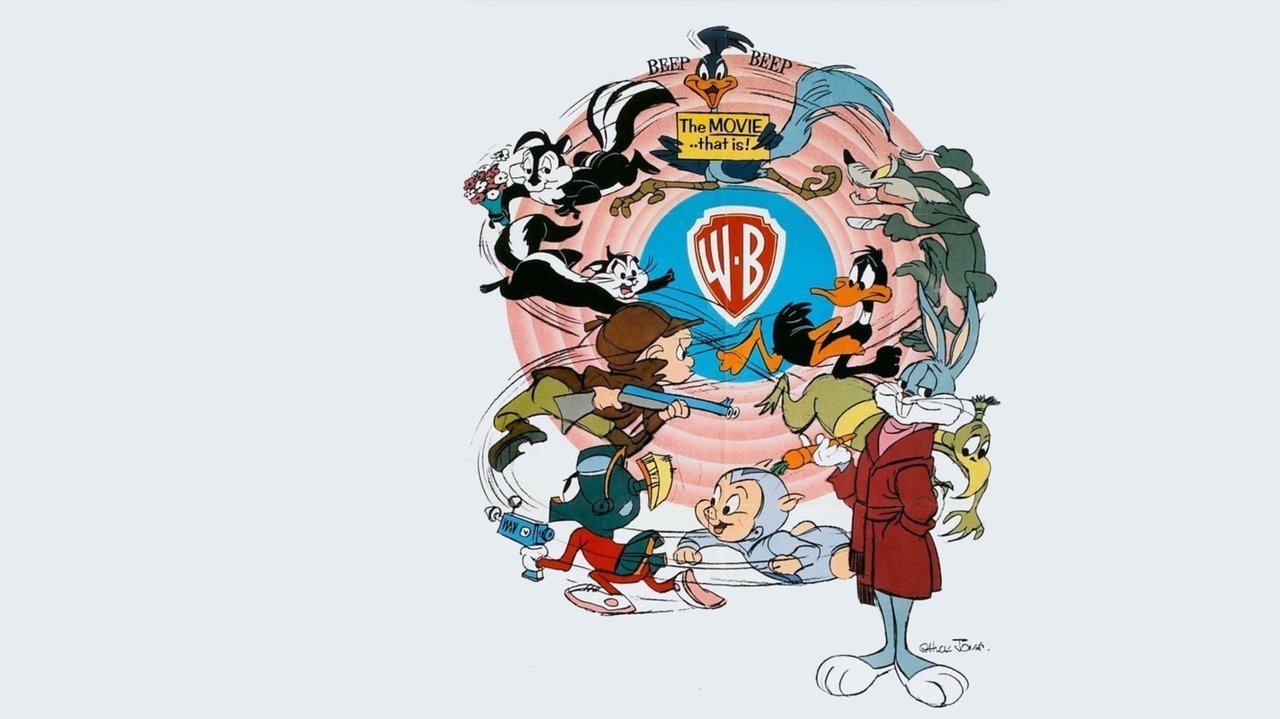
Step into Bugs Bunny's opulent mansion – cartoonishly lavish, naturally – and you’re immediately welcomed by the carrot-chomping host himself. The Bugs Bunny/Road Runner Movie wasn't just another cartoon compilation when it landed in 1979; it felt like an event. For many of us whose Saturday mornings were defined by the anarchic brilliance of Looney Tunes, seeing these masterpieces curated and presented on the big screen (and later, treasured on VHS) by the iconic rabbit felt like getting a guided tour through the animation hall of fame. It was less a movie, perhaps, and more a perfectly packaged dose of pure, unadulterated cartoon genius.
A Masterclass in Mayhem
At its heart, this film serves as a loving tribute to the work of its primary director and co-writer, the legendary Chuck Jones. Seated comfortably, Bugs introduces extended sequences showcasing his own clever escapades, Daffy Duck’s increasingly surreal misfortunes, and, of course, the eternal, physics-defying battle between Wile E. Coyote and the Road Runner. Jones, who also conceived the framing sequences alongside writers like Michael Maltese and Tedd Pierce (giants who penned many of the original classic shorts), wasn't just making cartoons; he was crafting miniature comedies with impeccable timing, razor-sharp wit, and a visual language all his own. Think of the expressive nuance he could wring from a simple eyebrow raise on Bugs or the sheer, existential panic in Daffy's eyes during the masterpiece Duck Amuck. Seeing these shorts strung together highlights Jones' incredible range, from the operatic grandeur of What's Opera, Doc? to the minimalist desert ballet of the Coyote and Road Runner.
The Voice Heard 'Round the World

Of course, you can't talk Looney Tunes without bowing down to the incomparable Mel Blanc. This film is practically a monument to his vocal wizardry. Bugs, Daffy, Porky Pig, Yosemite Sam, Sylvester, Tweety (in some shorts featured), Foghorn Leghorn... Blanc was these characters. His ability to imbue each with such distinct personality, humor, and pathos remains astonishing. Listening to him switch effortlessly between the smooth-talking Bugs and the sputtering Daffy is a constant delight. While Elmer Fudd was originally voiced by Arthur Q. Bryan, Blanc had taken over the role by the time many later shorts were made, further cementing his vocal dominance. It's said that after a near-fatal car accident in 1961 left him in a coma, Blanc was unresponsive until a doctor asked, "Bugs Bunny, how are you doing today?" to which Blanc replied, in character. That anecdote alone speaks volumes about how deeply these personalities resided within him.
Retro Fun Facts: Coyote Engineering and Cartoon Laws
Watching Wile E. Coyote’s elaborate schemes backfire spectacularly never gets old, does it? Chuck Jones famously established a set of "rules" for these segments: the Road Runner never harms the Coyote (gravity and the Coyote’s own incompetence do the job), the Coyote is always more humiliated than harmed, all action is confined to the natural environment of the American Southwest, and dialogue is minimal (save for the occasional "Beep Beep!" and maybe a sign). Perhaps the most crucial rule, though, was that all tools, weapons, or mechanical conveniences had to be obtained from the Acme Corporation. What kid didn't pore over those freeze-frames, wondering where Acme got its endless supply of rocket skates, anvils, and giant magnets? The genius lay in the repetition and variation; we knew the Coyote would fail, but how he failed was always a fresh exercise in comedic disaster, brilliantly timed and animated. This compilation gives you segment after segment of that Sisyphean struggle, a testament to hilarious futility.


More Than Just Cartoons
While primarily a celebration of Chuck Jones' work, the film cleverly uses Bugs Bunny's narration to provide context and commentary, making it feel cohesive rather than just a random assortment. It’s a curated experience, showcasing some of the absolute pinnacles of American animation from the 1940s through the early 1960s. Released in 1979, it bridged a gap, bringing these golden-age classics back into the spotlight just as the home video revolution was dawning. For many kids growing up in the 80s, the VHS tape of The Bugs Bunny/Road Runner Movie (or its successors like The Looney Looney Looney Bugs Bunny Movie) wasn't just entertainment; it was an education in comedy, timing, and the boundless possibilities of animation. I distinctly remember renting this one, the worn-out clamshell case promising an afternoon of guaranteed laughs, a reliable escape into a world where physics was merely a suggestion and cleverness always won the day (unless you were a coyote).
The Verdict
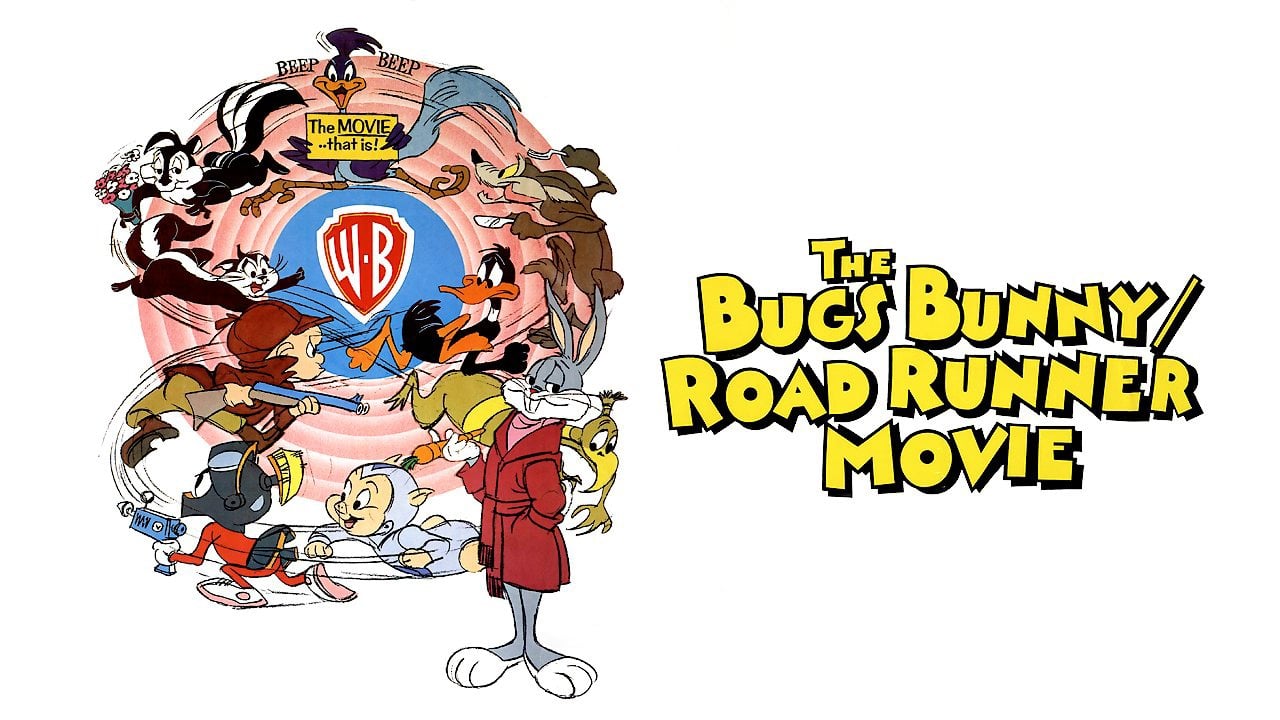
The Bugs Bunny/Road Runner Movie isn't really a "movie" in the traditional sense, but as a curated collection of some of the finest animation ever produced, it's practically perfect. It’s a dazzling showcase for the directorial genius of Chuck Jones and the vocal talents of Mel Blanc, presenting timeless comedy that transcends generations. The framing device with Bugs works beautifully, tying together disparate shorts into a satisfying whole. Even decades later, the gags land, the animation impresses, and the sheer inventiveness on display remains astonishing. It’s pure joy distilled onto film (and later, onto tape).
Rating: 9/10
Why not a perfect 10? Only because it is a compilation, lacking the narrative arc of a standalone feature. But for what it sets out to do – celebrate the golden age of Looney Tunes under Jones' direction – it's almost flawless. It’s a time capsule of animated brilliance that feels just as fresh and funny today as it did back when adjusting the tracking on your VCR was part of the viewing experience. Grab some popcorn (and maybe a carrot) – that's all, folks!