Alright, saddle up, varmints! Let’s rewind the tape past the big-budget blockbusters for a moment and pull out something truly special from the dusty shelves of memory. Remember wandering those video store aisles, past the familiar Disney clamshells, and stumbling upon something… different? Something European, maybe? For many of us, that discovery might have been Lucky Luke: The Ballad of the Daltons (1978). It might technically hail from the late 70s, but its quirky charm and unique style absolutely found its audience during the great VHS boom of the early 80s, offering a jolt of animated anarchy quite unlike anything else.
### A Different Kind of Cowboy Cartoon
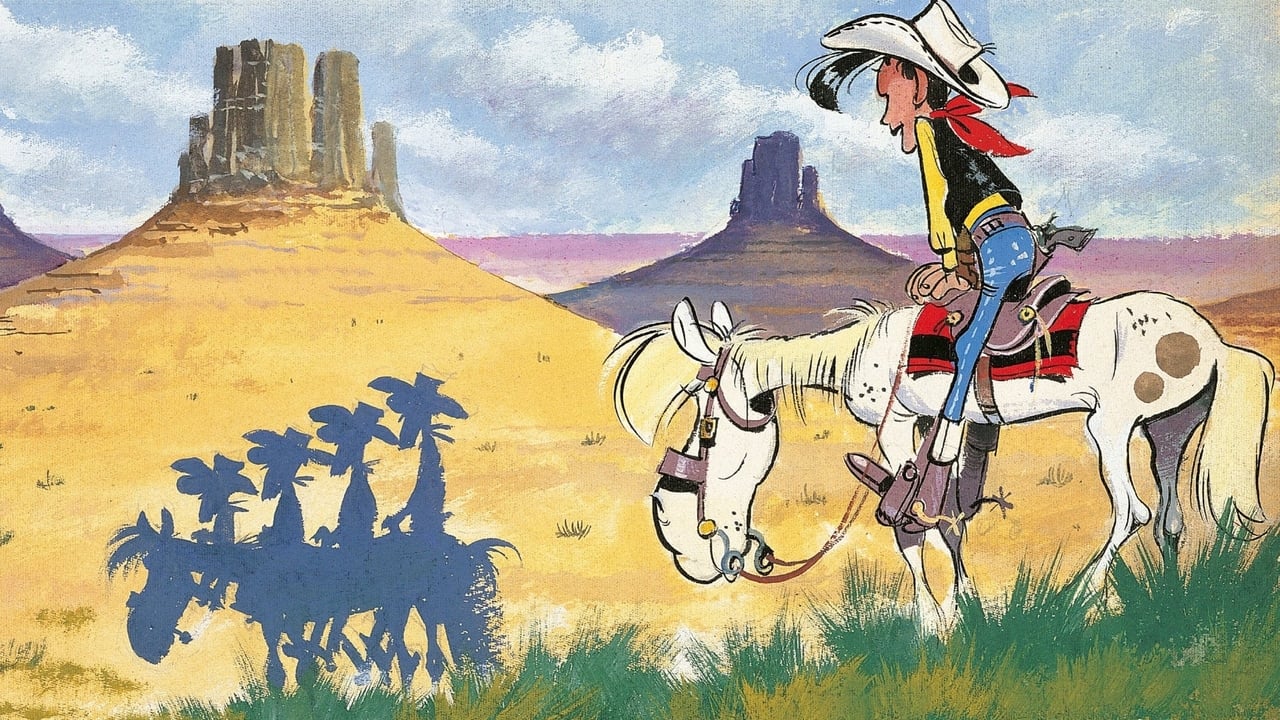
Forget slick, perfectly rendered animation for a second. The first thing that hits you about Ballad of the Daltons is how utterly, wonderfully faithful it is to its comic book origins. Created by the legendary Belgian cartoonist Morris, Lucky Luke’s world springs to life here with a kinetic, slightly scratchy energy. It feels like the comic panels themselves decided to just get up and start moving. Directed by Morris himself, alongside animation veteran Henri Gruel, Pierre Watrin, and, crucially, René Goscinny – the genius co-creator of Asterix – the film crackles with a distinct Franco-Belgian comedic sensibility. This wasn't your average Saturday morning fare; it had a wit, a speed, and a certain European flair that felt exotic and exciting parked next to He-Man or the Smurfs on the rental shelf.
### The Lonesome Cowboy and His Idiotic Adversaries
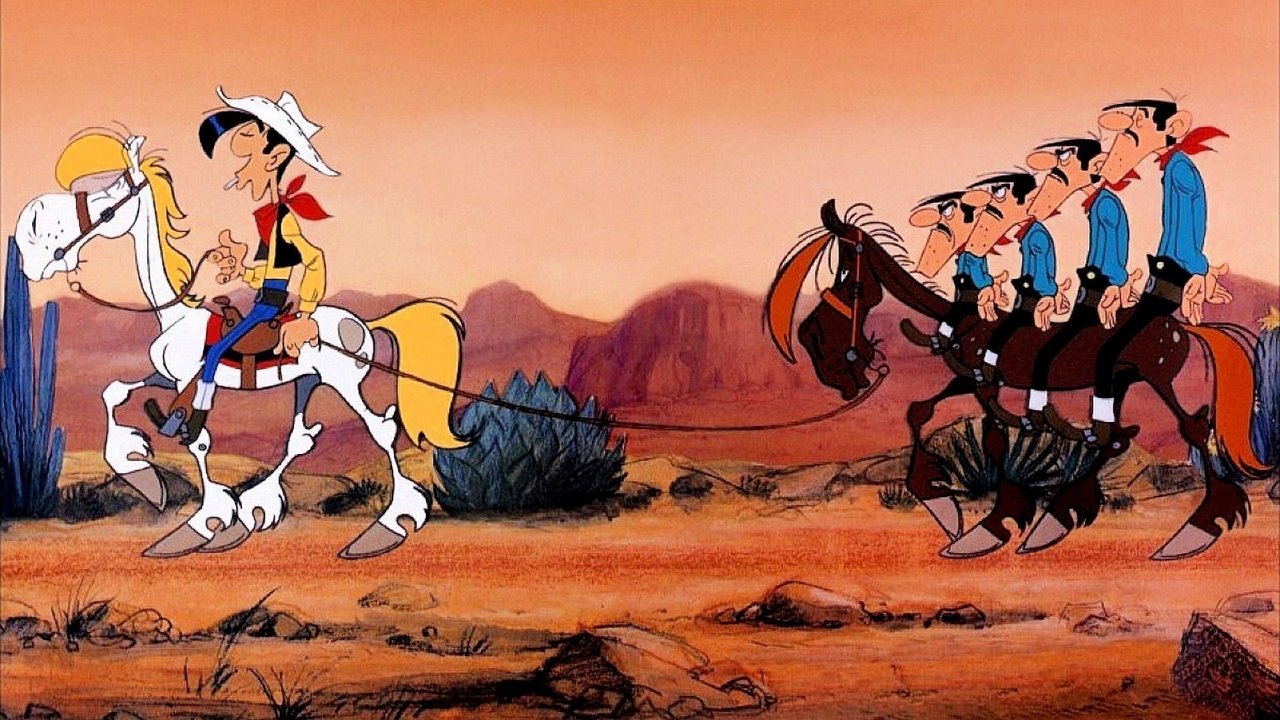
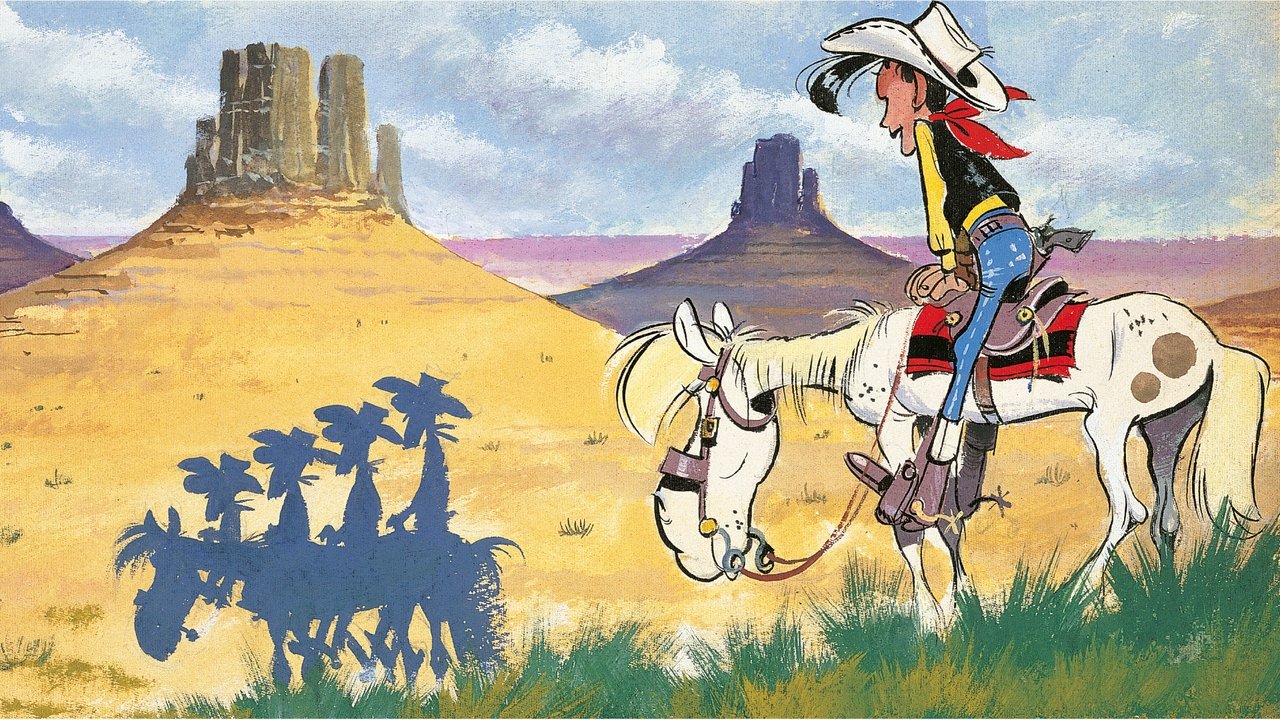
The plot is pure, distilled Lucky Luke: our hero, the man who shoots faster than his shadow (and often talks to his horse, Jolly Jumper), is tasked with an unusual mission. The perpetually unlucky Dalton brothers – Joe, William, Jack, and Averell – stand to inherit a fortune, but only if they eliminate the judge and jury members who put them away. And guess who has to escort them and ensure they don't succeed? Yep, Lucky Luke himself. This sets up a fantastically episodic journey across the West, as Luke and the Daltons track down each eccentric juror, leading to a series of hilarious, often surreal, set pieces.
The sheer comedic energy here is infectious. This is René Goscinny firing on all cylinders, bringing the same sharp wordplay, running gags, and delightful absurdity that made Asterix a global phenomenon. Tragically, this film marked Goscinny's final project; he passed away from a heart attack during production in 1977, a fact that lends a poignant air to the film's relentless humor. Knowing this adds a layer of appreciation for the comedic timing and clever writing packed into every scene. It’s a testament to his talent that the film feels so cohesive and joyfully anarchic. Studios Idéfix, the animation house Goscinny co-founded, sadly closed its doors not long after the film's release, making Ballad of the Daltons a bittersweet swan song for that particular venture.
### Hand-Drawn Hijinks and Gallic Gags
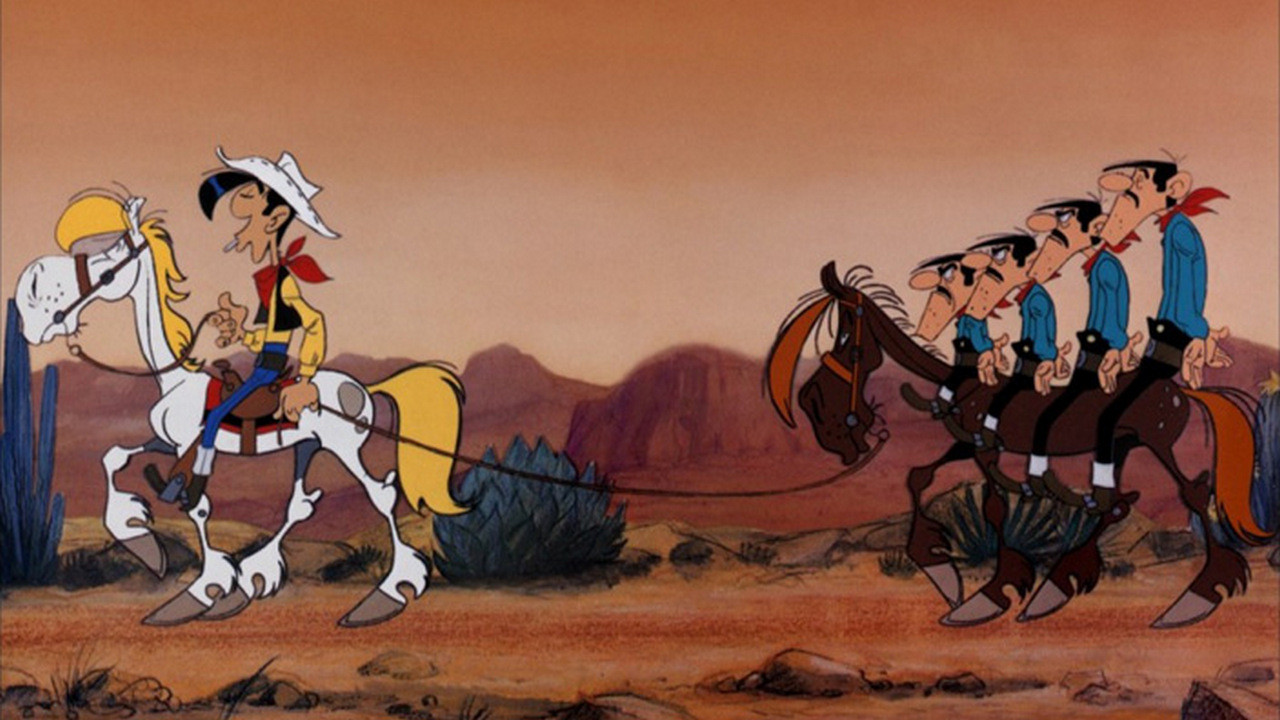
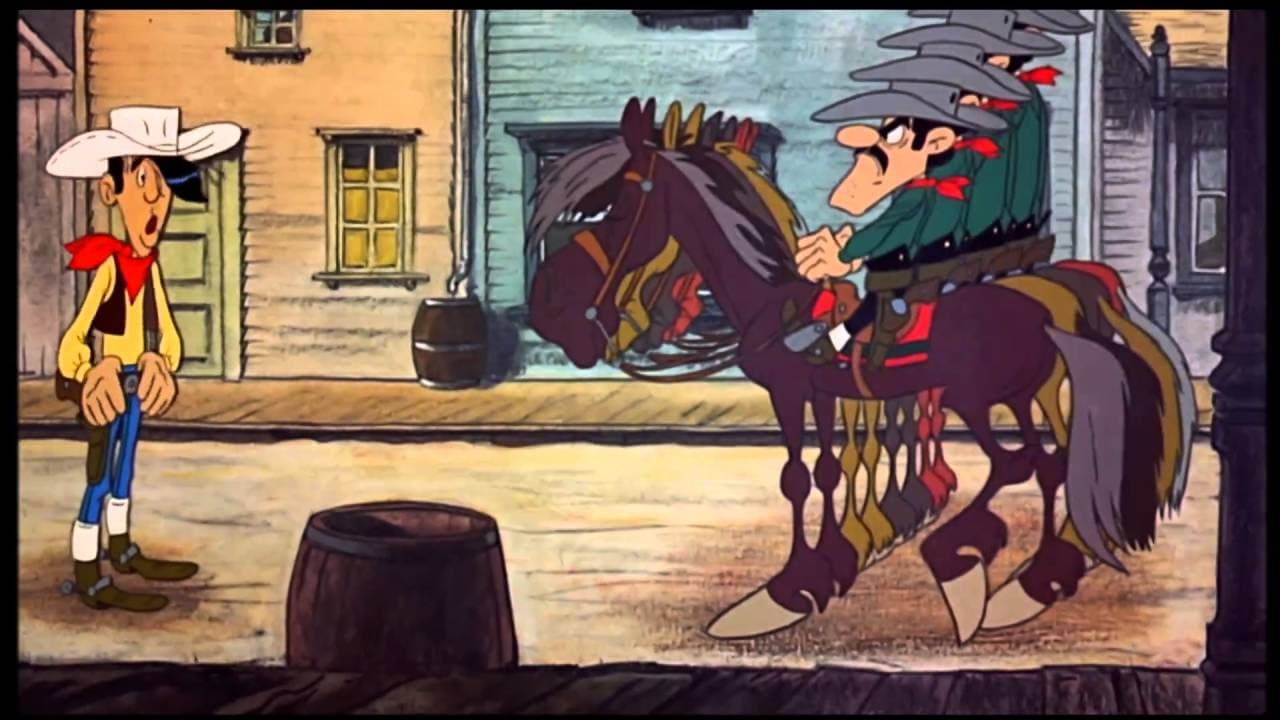
Let's talk about the "action," cartoon style. Forget hyper-realistic CG mayhem; the thrill here comes from the relentless pace, the visual gags piling up faster than Averell can devour a plate of beans, and the sheer creativity of the scenarios. The sequence where the Daltons try (and spectacularly fail) to rob a train guarded by Luke is a masterclass in comedic timing. Each juror they visit presents a new challenge and a new flavor of visual comedy – from the perpetually gambling Waldo Badmington to the theatrical Ming Li Foo. Remember Rantanplan, the prison dog who is arguably the stupidest canine in the West? His appearances alone are worth the rental fee, providing moments of pure, unadulterated slapstick.
The animation itself, while perhaps not possessing the fluid budget of a Disney feature from the same era, has an undeniable charm. The character designs are iconic – Luke’s stoic profile, the varying heights and identical grumpy faces of the Daltons (except for the towering, food-obsessed Averell). It’s hand-drawn animation with character, capturing the dynamism of Morris’s original artwork perfectly. In the original French version, the legendary Roger Carel voiced Luke (alongside Asterix and many others!), bringing a wry coolness to the character that perfectly complements the surrounding chaos. The English dubs common on VHS might vary in quality, but the core visual humor translates brilliantly. And those songs! Catchy, quirky, and distinctly European-sounding, they lodge themselves in your brain like a stubborn cactus spine.
### A Cult Classic on Worn-Out Tape
While perhaps not achieving the global household name status of Asterix in English-speaking territories, Lucky Luke: The Ballad of the Daltons became a beloved find for animation fans and kids browsing the "Family" or "Cartoon" sections of the video store. It was proof that fantastic animation existed outside the Hollywood mainstream. Finding this tape felt like uncovering a secret, a brightly coloured slice of the Wild West filtered through a uniquely European lens. It respected its source material deeply while delivering a rollicking adventure filled with genuine laughs.
VHS Heaven Rating: 8/10
Justification: This score reflects the film's brilliant faithfulness to the source material, its genuinely funny script courtesy of René Goscinny, its iconic character designs by Morris, and its sheer energetic charm. It might lack the polished animation of bigger budget features, and some humor might feel culturally specific, but its wit and creativity shine through, making it a standout animated feature of its time and a delightful nostalgic rediscovery.
Final Thought: The Ballad of the Daltons is pure, unadulterated fun fired straight from the six-shooter of Franco-Belgian comics – a vibrant, hilarious animated escapade that proved the Wild West was just as funny, and maybe even funnier, on the other side of the Atlantic. A true gem well worth digging out of the digital crate.