Alright, fellow tapeheads, let's rewind to a time when comedy felt wonderfully, gloriously unhinged. Pop the cassette in, ignore the tracking lines for a second, and let’s talk about Steve Martin’s big-screen arrival as a leading man: the utterly unique, undeniably quotable The Jerk (1979). Sure, it just squeaked in before the 80s officially began, but let's be honest, this movie practically lived in VCRs throughout the entire decade, becoming a cornerstone of the comedy section at every Blockbuster and Mom & Pop video store.

### From Wild and Crazy Guy to Lovable Idiot
Remember Steve Martin the stand-up? Arrow-through-the-head, banjo-playing, "Excuuuuuse me!" shouting comedic force of nature? Translating that anarchic energy into a narrative film was a gamble, but under the expert guidance of comedy legend Carl Reiner (The Dick Van Dyke Show, All of Me), Martin didn't just stick the landing; he somersaulted into cinematic history. The Jerk isn't just a movie; it's the unleashed id of Martin's stage persona given ninety minutes to run gloriously amok. Martin co-wrote the screenplay with Carl Gottlieb (who, believe it or not, also helped write Jaws!) and Michael Elias, building the entire premise from a single line in his stand-up act: "It wasn't always easy for me; I was born a poor black child."
And thus, we meet Navin Johnson, perhaps the most endearingly naive simpleton ever committed to film. Raised in Mississippi by a black sharecropping family who never quite found the right time to tell him he was adopted (and white), Navin embarks on a journey to St. Louis after hearing music on the radio that speaks to his "true rhythm." What follows isn't so much a plot as a series of brilliantly staged, often disconnected comedic vignettes showcasing Navin's utter cluelessness about how the world works.
### Finding Purpose (and Thermos)
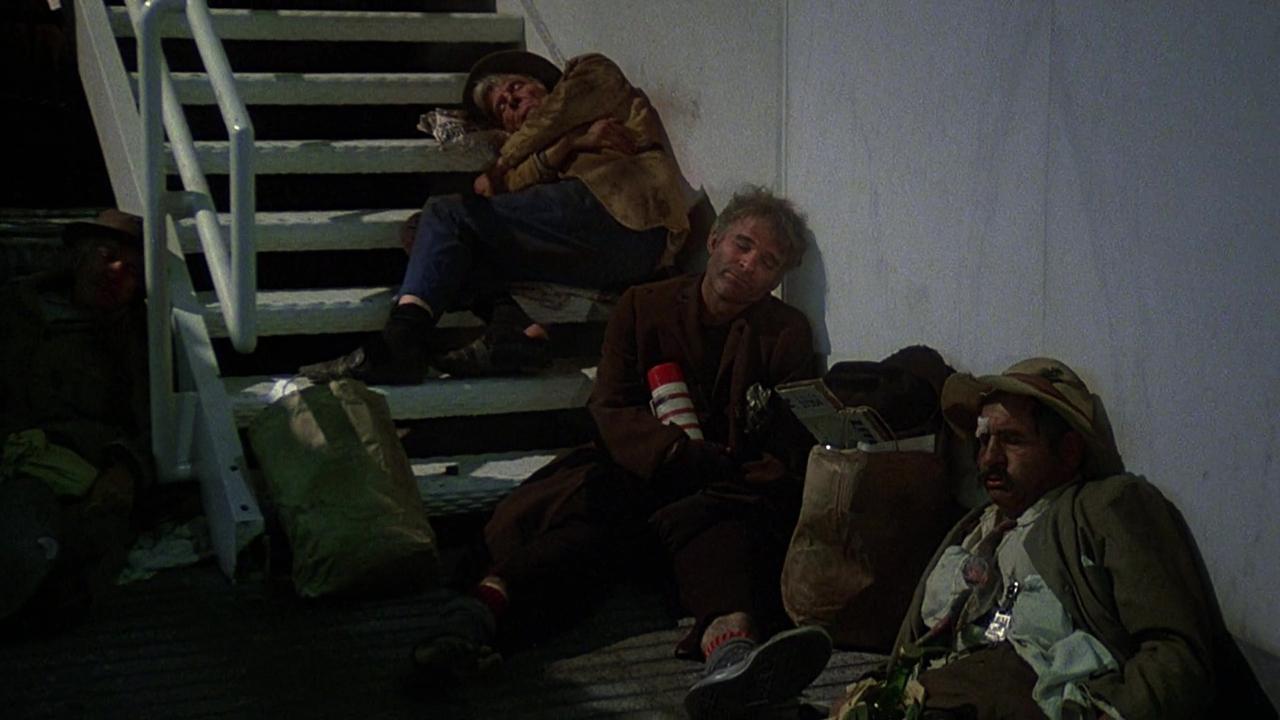
The episodic structure feels almost like flipping through channels late at night, landing on one bizarre scenario after another. There's Navin's disastrous job at the gas station, run by the perpetually exasperated Jackie Mason, where he misinterprets a customer's complaint about oil cans and phone books as a personal attack ("He hates these cans! Stay away from the cans!"). There’s his invention of the Opti-Grab, the ridiculously flawed glasses handle that ultimately makes him a millionaire (and eventually, a pauper again). Fun fact: the lawsuit subplot involving the Opti-Grab causing crossed eyes was reportedly inspired by a real, though less catastrophic, patent infringement case concerning an eyeglass handle device.
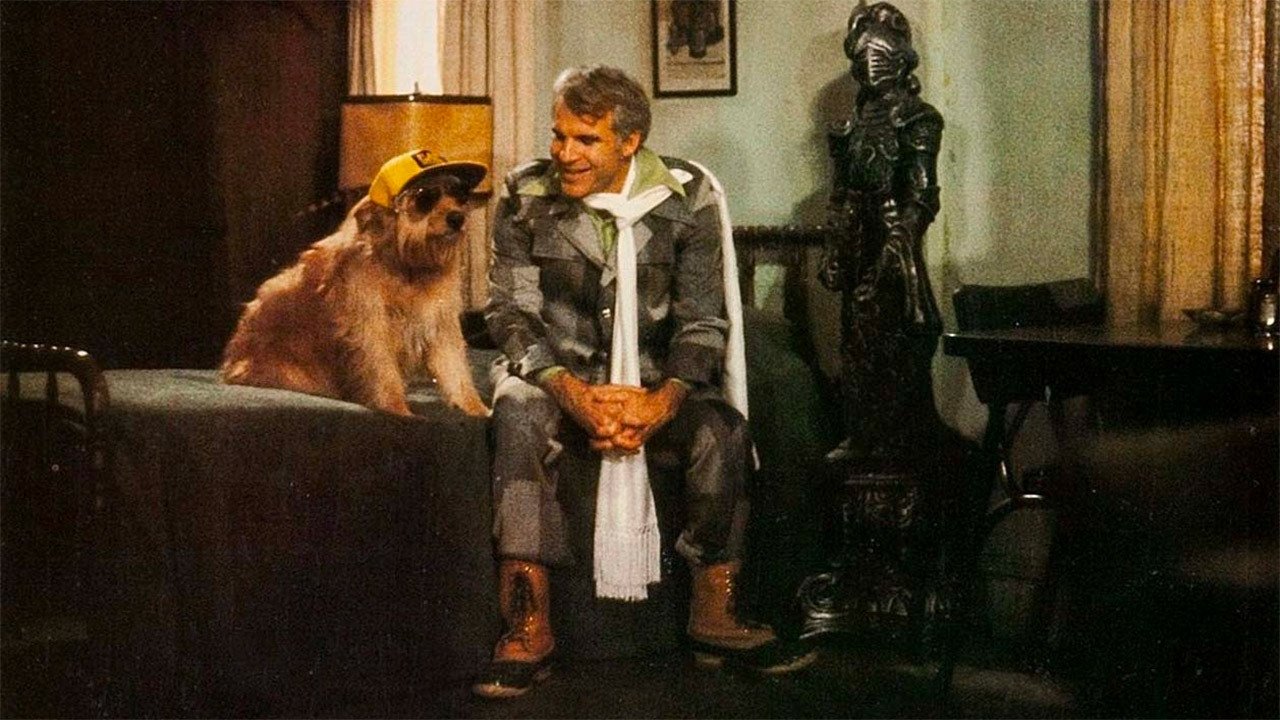
And who could forget his whirlwind romance with Marie (Bernadette Peters), the sweet-natured cosmetologist he meets at the carnival? Peters, already a Broadway star, provides the perfect grounded counterpoint to Martin's absurdity. Their duet of "Tonight You Belong to Me" on the beach, with Martin accompanying on his trusty ukulele (a step up from the banjo, maybe?), is a moment of pure, unadulterated sweetness amidst the chaos. Their chemistry is surprisingly tender, making Navin’s eventual downfall feel, well, almost sad before the next joke lands. Watching it now, their simple walk on the beach, no green screens, just two actors connecting, feels incredibly refreshing.

### The Genius of the Gag
Carl Reiner’s direction is deceptively simple. He knows the star here is Martin's comic persona and the script's relentless barrage of gags. He doesn't clutter the frame or rush the timing, allowing the inherent silliness of each situation to breathe. Think of the scene where Navin tries to handle the sniper targeting him – the escalating panic, the desperate attempts to shield himself with random objects, the final, futile cry of "He hates cans!" It’s physical comedy gold, executed with Martin's signature blend of manic energy and childlike innocence. The film cost a modest $4 million back in '79 but exploded at the box office, pulling in over $73 million domestically (that's easily over $300 million in today's money!), proving audiences were absolutely ready for this kind of off-the-wall humor.
Of course, some jokes haven't aged perfectly – the humor is broad, occasionally juvenile, and definitely a product of its time. The film even snagged an R rating, likely for some language and suggestive bits, which feels almost quaint now compared to modern comedies. Yet, the core appeal remains: Navin's unwavering optimism and fundamental lack of guile in the face of constant absurdity. My friends and I spent years quoting this movie endlessly – "I need this! And this! Just this ashtray... And this paddle game..." – finding endless joy in its sheer, unapologetic silliness. Remember trying to explain the cat juggling scene (achieved through clever editing, thankfully no felines were tossed!) to someone who hadn't seen it? Good times.
### Still Special After All These Years?
The Jerk isn't sophisticated, it isn't layered, and its plot could be written on a napkin. But its influence on comedy is undeniable, launching Steve Martin's film career and setting a template for fish-out-of-water comedies for years to come. It’s a film built entirely on jokes, character, and the sheer force of Martin's unique comedic talent. Rewatching it on a worn-out tape (or a crisp Blu-ray, if you must) feels like visiting an old, slightly eccentric friend who never fails to make you laugh, even if you know all their punchlines by heart.
Rating: 8.5/10
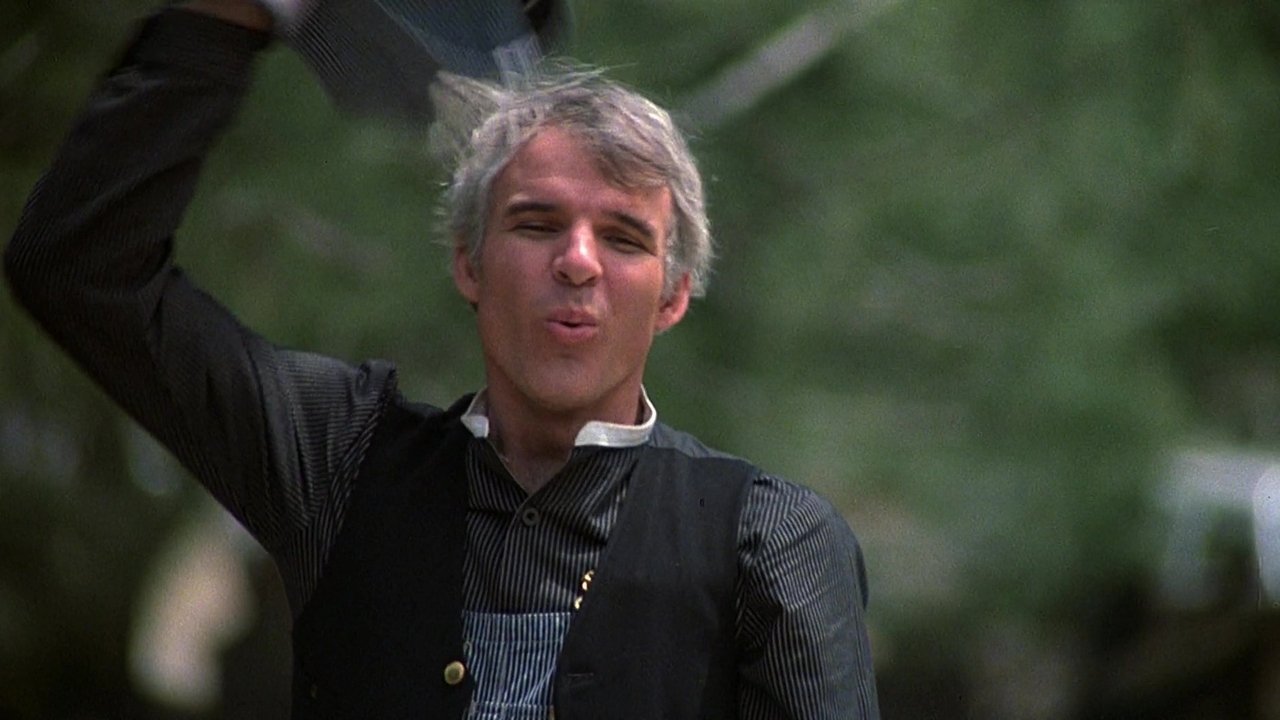
Justification: While undeniably dated in spots and narratively thin, The Jerk remains a towering achievement in absurdist comedy thanks to Steve Martin's iconic performance, Carl Reiner's assured direction, and a relentless barrage of quotable lines and memorable gags. Its impact and enduring charm, especially as a beloved VHS staple, earn it a high score. It’s pure, unadulterated silliness distilled onto celluloid.
Final Take: It doesn't need anything... except this review. And maybe that lamp. But that's all it needs... except... The Jerk is proof that sometimes, the most brilliantly stupid ideas make for the most enduring comedy.