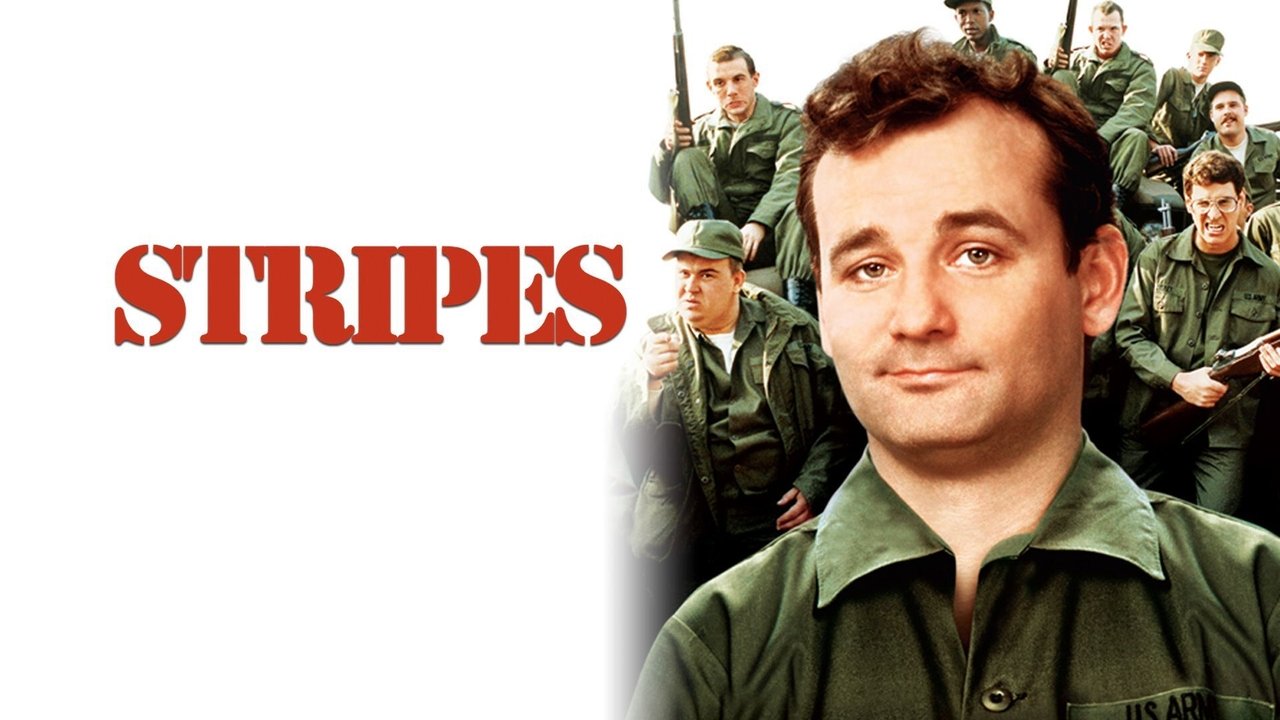
Alright, grab your armchair general's cap and settle in. Remember that feeling? Scanning the comedy shelves at the local video store, the slightly worn cardboard sleeve promising laughs, maybe a little bit of rebellion? If that sleeve had Bill Murray smirking back at you in army fatigues, chances are you stumbled upon Stripes (1981), and your weekend entertainment was sorted. This wasn't just another service comedy; it was a blast of anarchic energy, perfectly bottled for late-night viewing on a temperamental VCR.
### Joining Up for Laughs
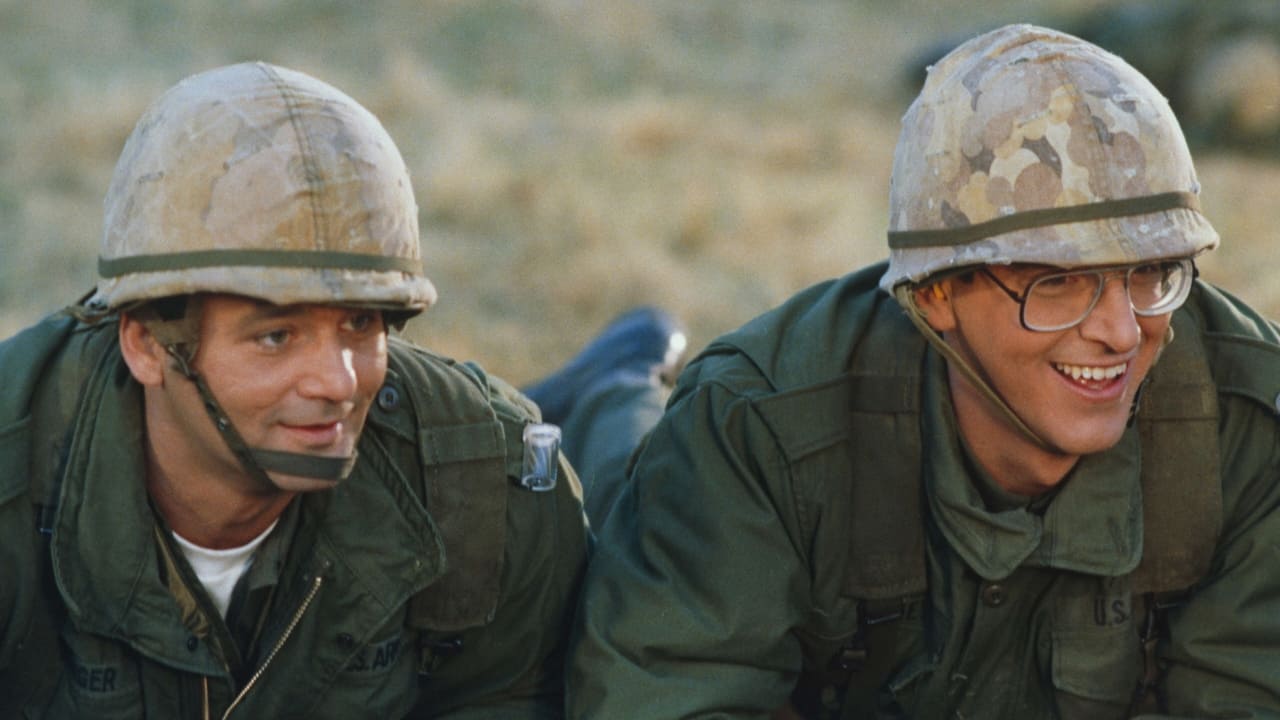
The setup is classic early 80s slacker comedy: John Winger (Bill Murray), a cynical cabbie who loses his job, apartment, and girlfriend in roughly five minutes flat, convinces his best buddy Russell Ziskey (Harold Ramis) that joining the U.S. Army is the perfect escape. Why? For the travel, the adventure, maybe just to get away from it all. Murray, fresh off Caddyshack (1980) and already a master of detached cool, is magnetic as Winger. He doesn’t just deliver lines; he leans into them, shrugs them off, finds laughs in pauses and glances. And pairing him with the brilliant Harold Ramis, who also co-wrote the screenplay with Len Blum and Daniel Goldberg, was genius. Their chemistry as two intelligent guys slumming it provides the film’s grounding wire amidst the escalating absurdity. Interestingly, the original concept was reportedly conceived as a vehicle for Cheech & Chong, which would have resulted in a very different movie, likely trading Murray’s deadpan irony for a different kind of haze.
### Boot Camp Bedlam
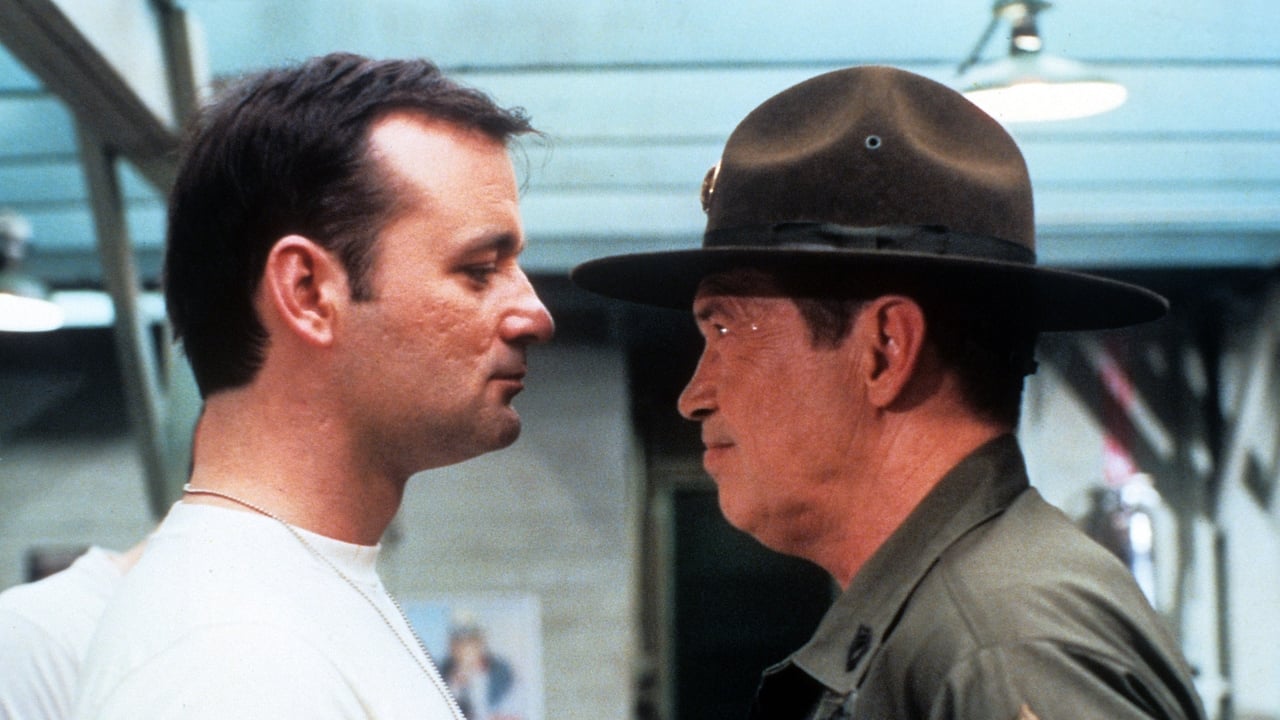
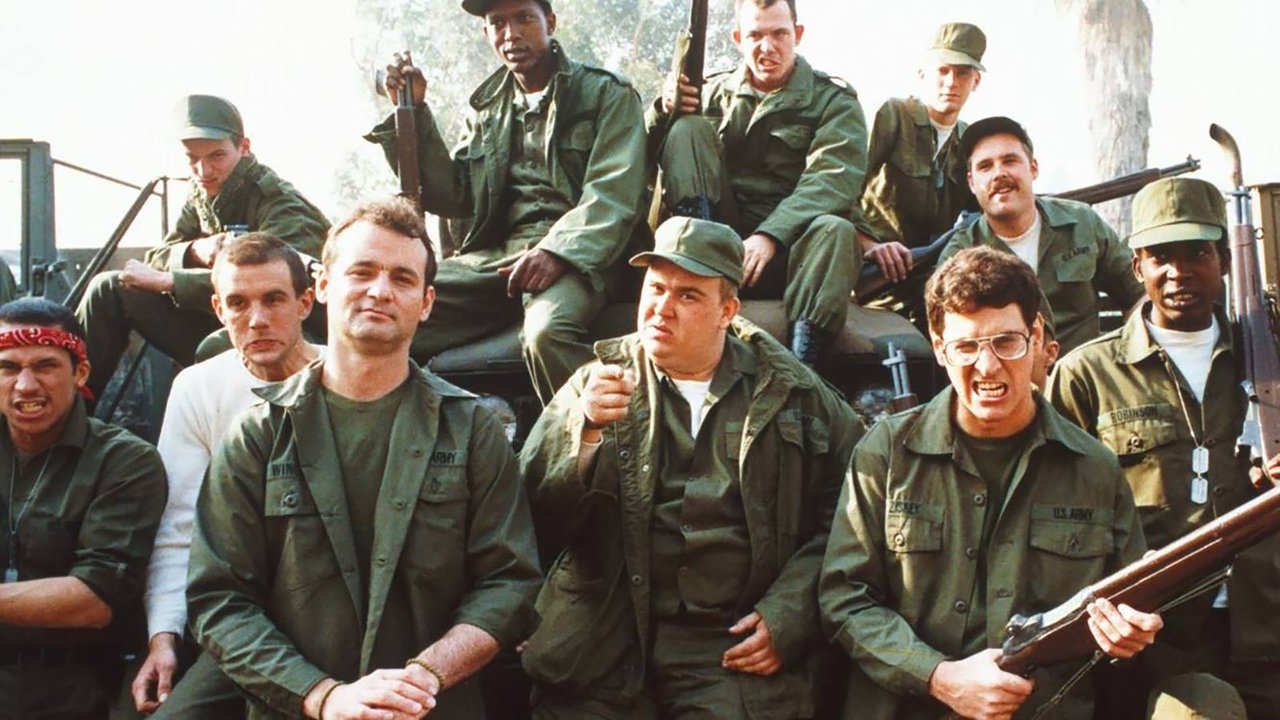
The heart of Stripes beats strongest during the basic training sequences. This is where the film truly shines, introducing us to a platoon of lovable misfits: the eternally optimistic Dewey "Ox" Oxberger (John Candy in a star-making turn), the naive Captain Stillman (John Larroquette), and the perpetually exasperated, hard-as-nails Sergeant Hulka, played with absolute perfection by the legendary Warren Oates. Watching Oates, a veteran of gritty Peckinpah Westerns like The Wild Bunch (1969), try to impose order on Murray’s patented brand of chaos is pure comedic gold. Tragically, this was one of Oates' final major film roles before his untimely passing in 1982, and he brings incredible gravitas and weary authority to the part – you genuinely believe he could whip anyone into shape, except maybe Winger.
Director Ivan Reitman, who had already teamed with Murray for Meatballs (1979) and would later strike gold again with Ghostbusters (1984), clearly understood his star's strengths. He fostered an environment where improvisation thrived. Many of Murray’s most quotable lines – "That's the fact, Jack!", the entire ‘Aunt Jemima treatment’ riff – feel spontaneous because they often were. This loose, slightly ramshackle energy feels distinctly of its time. Forget tightly scripted, focus-grouped gags; this felt like hanging out with the funniest guys you knew, who just happened to have access to army gear. Remember the close-order drill scene? The sheer joy Murray exudes while leading his platoon in a completely nonsensical routine felt revolutionary back then – a thumb in the eye of conformity, delivered with a smirk.
### Wait, Where Are We Going?
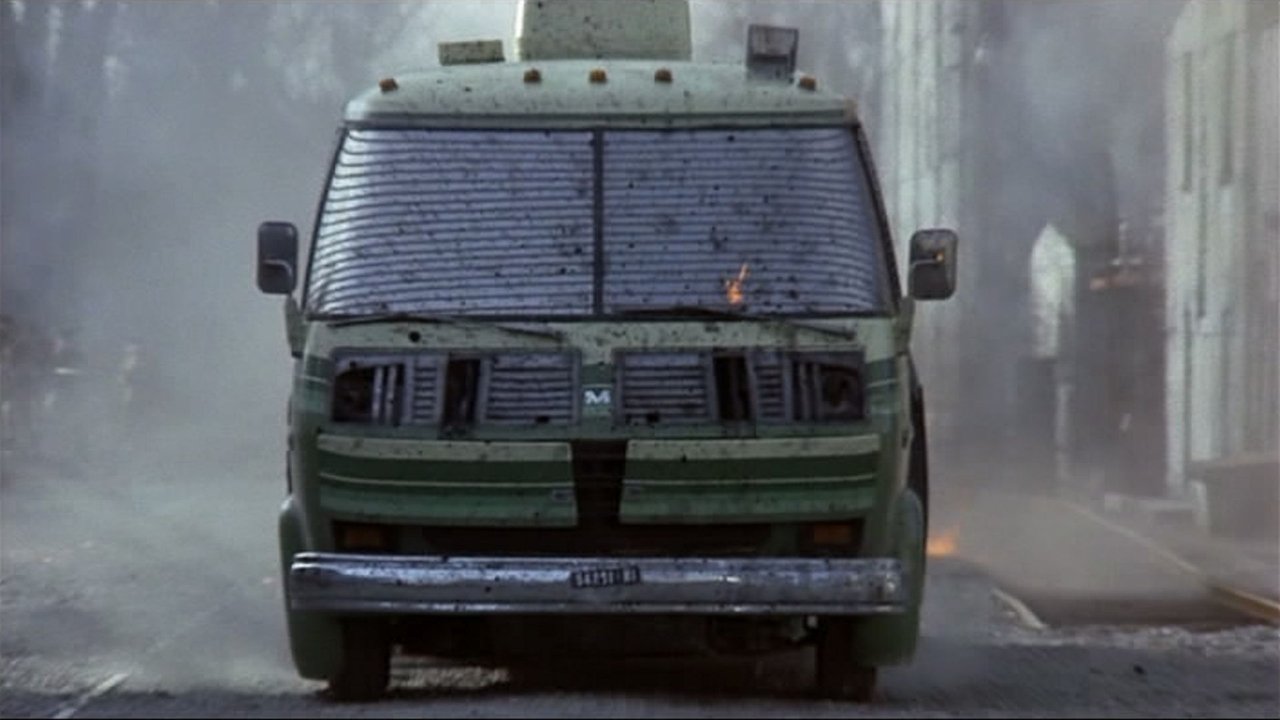
Okay, let's talk about that third act. Suddenly, our newly graduated (barely) heroes are whisked off to Europe (specifically, Czechoslovakia, though filmed largely in Germany and Kentucky believe it or not) with the EM-50 Urban Assault Vehicle – essentially a heavily armed recreational vehicle. This entire section, involving international intrigue and a daring rescue mission, feels famously tacked-on, and that’s because, well, it largely was. The filmmakers reportedly felt the movie needed a bigger climax after basic training, so this high-stakes (but still goofy) adventure was concocted.
Does it completely derail the movie? Not quite. It’s certainly a tonal shift, moving from character-based situational comedy to something more resembling a light action-adventure spoof. The practical effects work on the EM-50 is classic early 80s – clunky, tangible, and undeniably fun. Seeing that thing blast through a border checkpoint had a certain visceral thrill on grainy VHS that slicker, modern CGI often lacks. It might not be as cohesive as the first two-thirds, but it still delivers laughs, thanks mainly to the unwavering comedic chops of the cast, including P.J. Soles and a young Sean Young as the MPs who fall for Winger and Ziskey's questionable charms.
### The Big Barracks Verdict
Stripes was a bona fide hit back in '81, raking in over $85 million on a $10 million budget (that's like, mega-blockbuster money adjusted for today). Audiences adored its anti-establishment humor and Murray's effortless charisma. While some jokes haven't aged perfectly, the core appeal remains potent. It captures that specific early 80s blend of cynicism and silliness, a kind of post-Vietnam, pre-Reagan hangover where authority was ripe for mocking, but maybe joining the system wasn't the worst idea if you could bend the rules.
Watching it now feels like unearthing a time capsule. The haircuts, the casual attitude, the sheer star power simmering just below the surface (Judge Reinhold! John Diehl!) – it’s a snapshot of a comedy scene hitting its stride. I distinctly remember renting this tape multiple times, the slightly fuzzy picture and warbly sound adding to the charm. It was the perfect movie to watch with buddies, quoting lines back and forth for weeks after.
Rating: 8/10
The rating reflects the absolute comedic brilliance of the first two acts, the iconic performances (especially Murray, Ramis, and Oates), and its undeniable status as an 80s comedy cornerstone. It loses a point or two for the slightly disjointed third act, but the sheer laugh-out-loud joy it delivers easily overcomes that structural wobble.
Final Thought: Stripes marches to the beat of its own irreverent drum – a fuzzy, hilarious VHS memory that proves sometimes, the best way to serve your country (or just kill some time) is with a wisecrack and absolutely no respect for the rules. Lighten up, Francis!