Forget the gleaming knights and fairy-tale castles for a moment. Cast your mind back to 1981, a time when fantasy cinema was often bright, hopeful, maybe even a little bit sanitized. Then, lumbering out of the smoke and mist, came Dragonslayer, a film that dared to paint its medieval world in shades of grey, grime, and genuine dread. It arrived as a curious co-production between Paramount Pictures and, surprisingly, Walt Disney Productions – a partnership that hinted at something different, and boy, did it deliver. This wasn't your typical Disney fare; this was fantasy with teeth, and scales, and fire that felt terrifyingly real on our flickering CRT screens.
A Kingdom Cursed, An Apprentice Tested
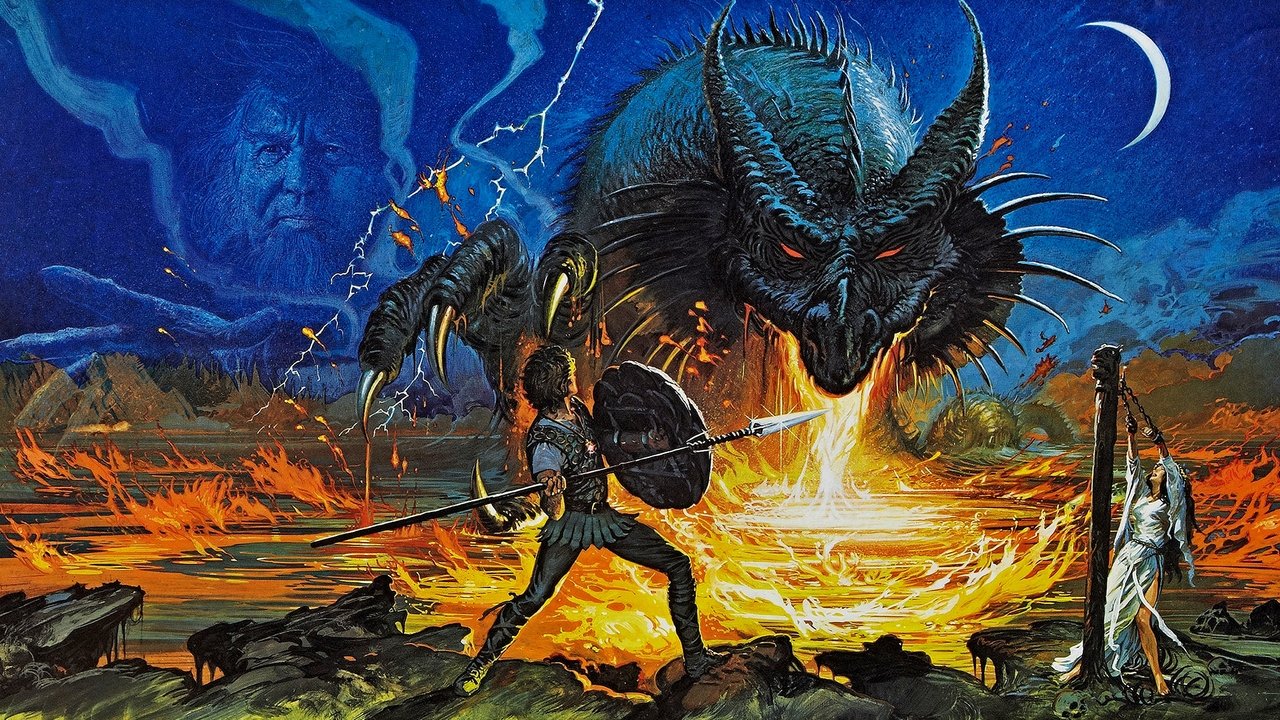
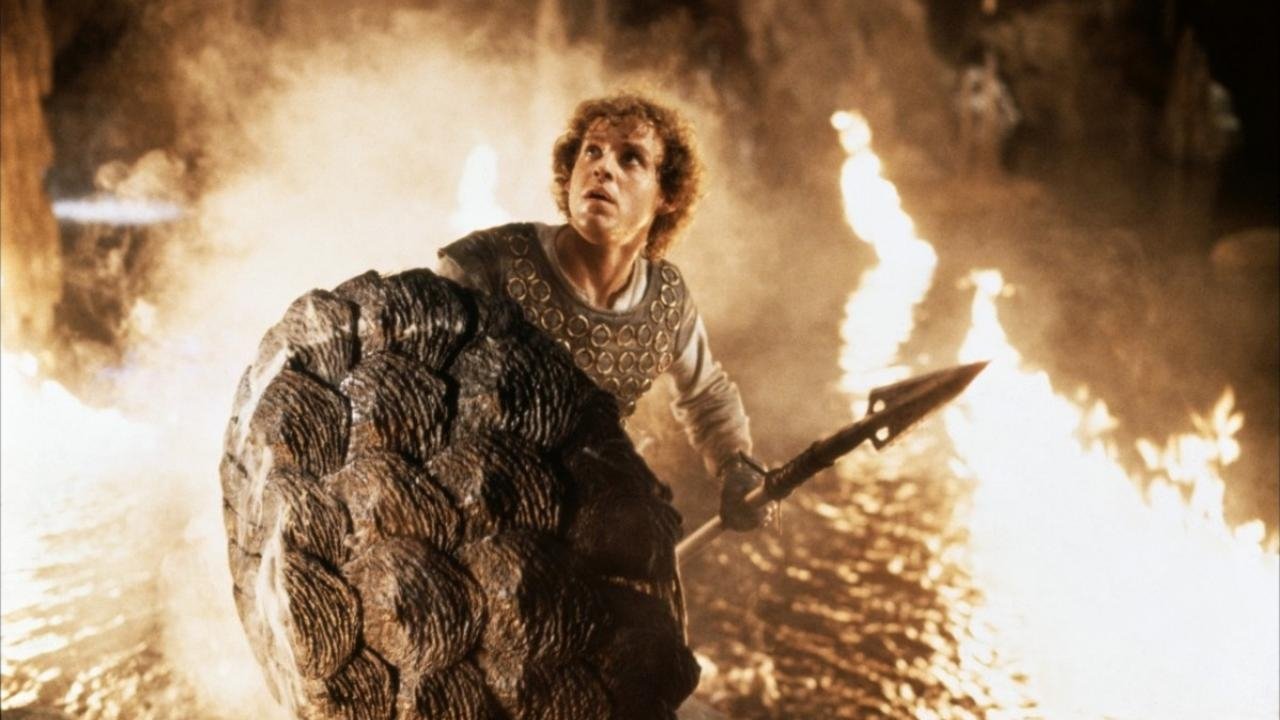
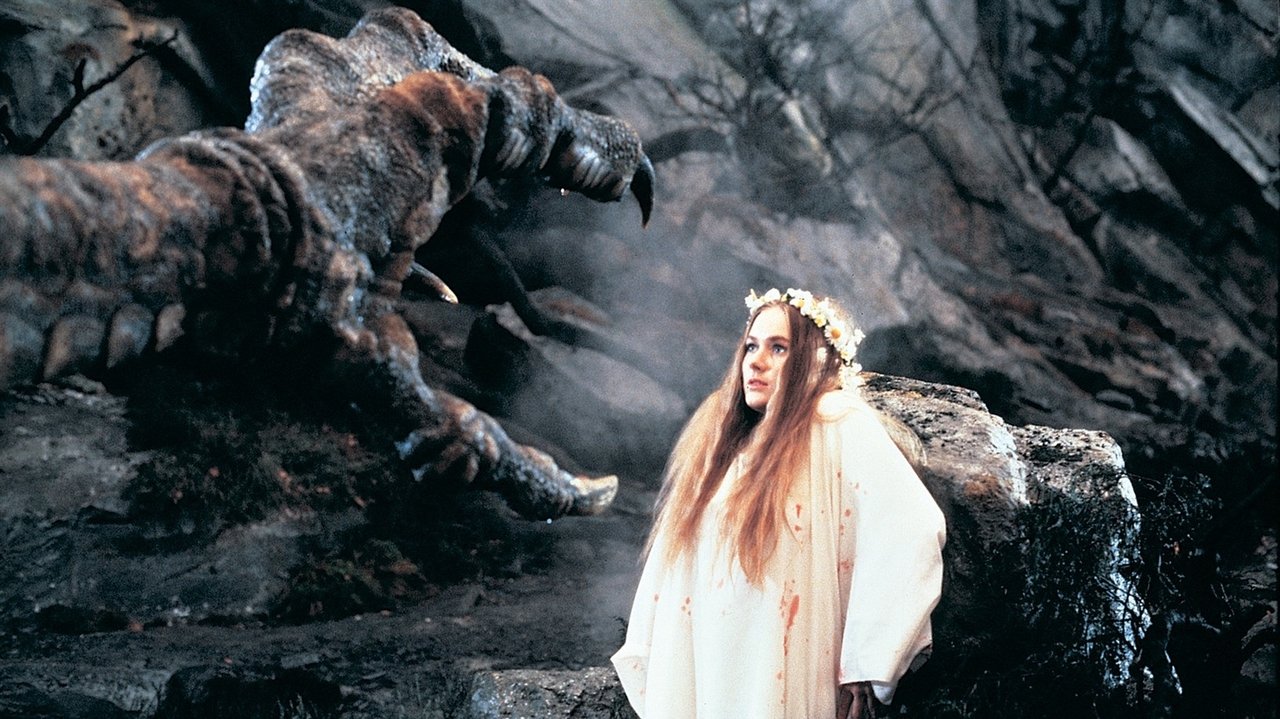
The premise itself is steeped in grim folklore. The remote kingdom of Urland lives under the shadow of a pact made centuries ago: sacrifice virgin girls via lottery to appease the monstrous dragon Vermithrax Pejorative, and the beast will leave the rest of the kingdom mostly alone. It’s a bleak setup, immediately establishing a world weary and resigned to its horrifying reality. When a desperate delegation seeks out the last known sorcerer, Ulrich of Cragganmore, hoping for salvation, they find him aged and perhaps less potent than legend suggests. Instead, it's his eager, slightly naive apprentice, Galen Bradwarden, played by a fresh-faced Peter MacNicol in his feature film debut, who takes up the mantle after Ulrich meets an untimely end (or does he?).
What follows isn't a straightforward hero's journey. Galen is often out of his depth, relying on inherited magical amulets and bluffing his way through situations. MacNicol brings a necessary vulnerability to the role; he’s not Conan, he’s a young man burdened with a task far bigger than himself. Alongside him is Valerian, portrayed with quiet strength by Caitlin Clarke. Valerian harbors secrets of her own and provides a grounded counterpoint to Galen’s sometimes reckless enthusiasm, challenging the very traditions that enslave her people. And holding court over the fading magic is the magnificent Sir Ralph Richardson as Ulrich, delivering lines with a twinkle in his eye and a voice like aged thunder, even when seemingly dispatched early on. His presence looms large over the entire film.
Enter the Dragon: A Masterclass in Menace
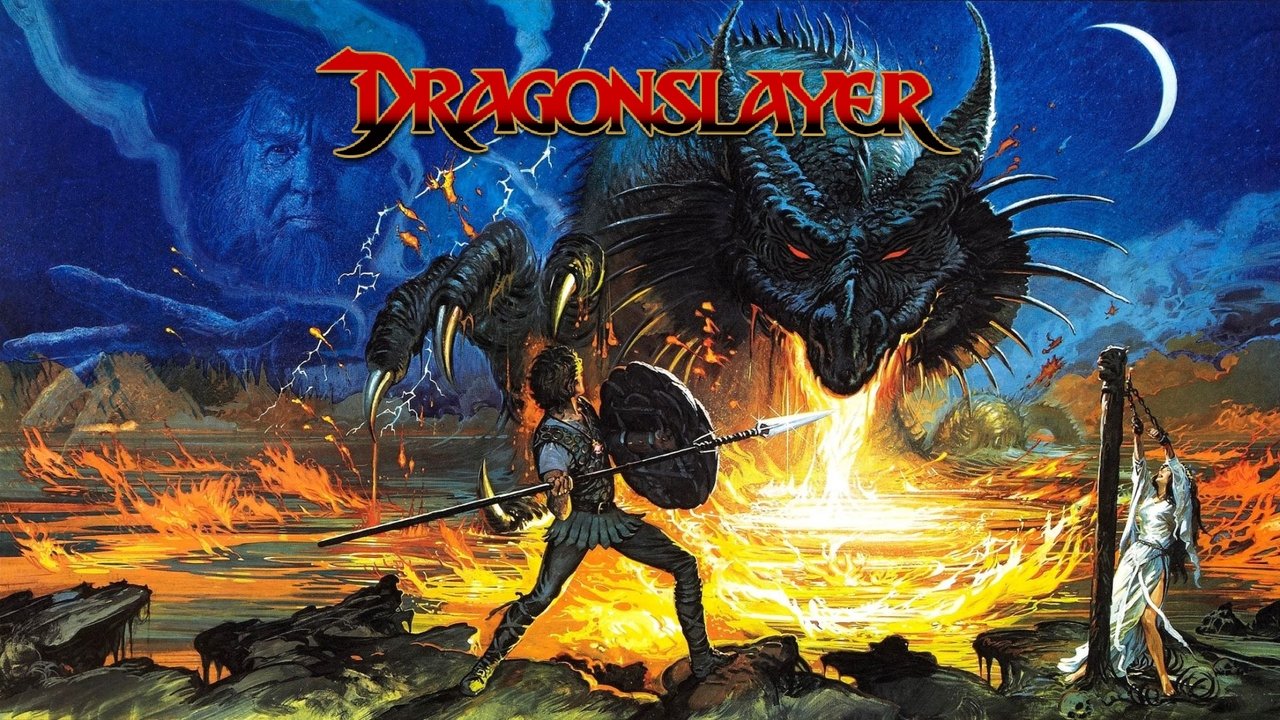
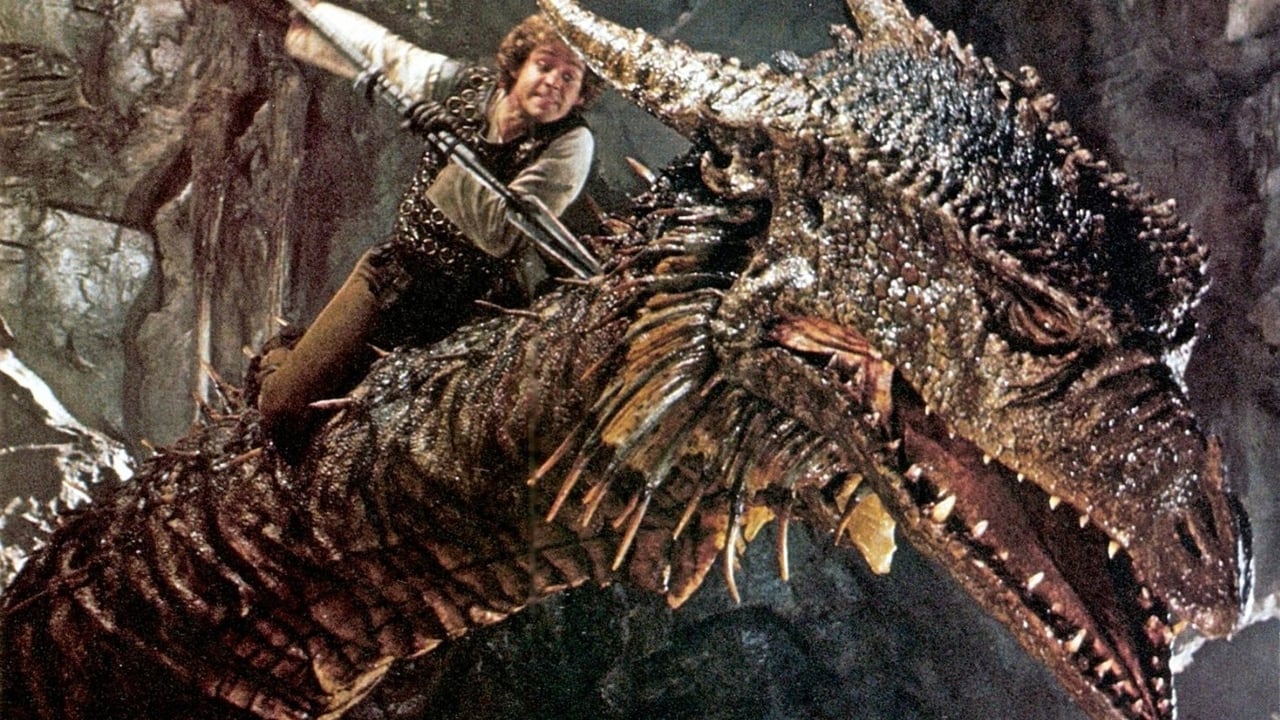
Let's be honest, though: the star, the reason Dragonslayer burned itself into our collective memory, is Vermithrax Pejorative. Forget CGI perfection; this creature, brought to life by the wizards at Industrial Light & Magic, including the legendary Phil Tippett (whose incredible work also graces Star Wars: Episode V - The Empire Strikes Back (1980) and Jurassic Park (1993)), was a triumph of practical effects. Utilizing a technique called 'go-motion' – a variation of stop-motion that incorporated motion blur for more realistic movement – Vermithrax felt alive. The slight judder, the weight in her steps, the sheer scale of her appearances... it was breathtaking. This wasn't just a monster; it was a character, ancient and terrifyingly powerful.
Director Matthew Robbins, working from a script he co-wrote with Hal Barwood (the duo also collaborated on Spielberg's The Sugarland Express (1974) and later the charming Batteries Not Included (1987)), understood that less is more. The dragon isn't constantly on screen. Its presence is felt through roars echoing from the mountains, through the fear in the villagers' eyes, and through the devastating aftermath of its attacks. When Vermithrax finally emerges from her fiery subterranean lair, the sequences are spectacular, showcasing some of the most convincing and frightening dragon effects ever put to celluloid, especially for the era. It’s a testament to the artistry involved that Vermithrax still holds up remarkably well today. Fun fact: the dragon's full name, Vermithrax Pejorative, apparently translates roughly from Latin as "The Worm of Thrace Who Makes Things Worse." Apt!
Grit, Gore, and Atmosphere
Dragonslayer wasn’t afraid to get its hands dirty. The film boasts a tangible sense of place, shot largely on location in the rugged landscapes of North Wales and Scotland. The castles look cold and damp, the villages feel impoverished, and the threat of violence is ever-present. This commitment to realism extends to its surprisingly dark tone. Characters die, sometimes brutally, and the film doesn't shy away from the grim realities of its premise, including the horrific lottery system. It earned a PG rating back in the day, but it pushed the boundaries, featuring moments that likely startled younger viewers expecting a lighter adventure.
The moody cinematography by Derek Vanlint (who stunningly shot Alien (1979)) captures the mist-shrouded landscapes and claustrophobic interiors beautifully. Paired with a robust, Oscar-nominated score by the legendary Alex North (composer for Spartacus (1960)), the film creates an immersive and often unsettling atmosphere. Despite its fantasy elements, Dragonslayer feels grounded, lending real weight to the magical and monstrous events unfolding.
Legacy of the Beast
Upon release, Dragonslayer wasn't a huge box office smash, pulling in around $14 million against its fairly hefty $18 million budget. Perhaps its darker, more mature tone, and less conventional hero, didn't quite align with audience expectations for a "Disney" co-production fantasy in 1981. Critically, however, the film, especially its visual effects, received significant praise, earning an Academy Award nomination for Best Visual Effects (ultimately losing to the juggernaut that was Raiders of the Lost Ark (1981) – talk about tough competition!).
Over the years, though, Dragonslayer has earned its place as a cult classic. Its influence can be seen in subsequent fantasy works that embrace a grittier aesthetic and more complex morality. You could argue that the terrifying dragons of Game of Thrones owe a spiritual debt to the pioneering work done on Vermithrax. It remains a unique and ambitious entry in the fantasy genre, a film that took risks and delivered a truly memorable cinematic beast. Watching it again on a worn VHS tape always felt like unearthing a slightly dangerous treasure.
VHS Heaven Rating: 8.5/10
Dragonslayer stands as a potent piece of 80s fantasy filmmaking. While the pacing occasionally meanders and Galen can sometimes grate slightly in his initial arrogance, the film’s strengths far outweigh its weaknesses. The palpable atmosphere, the committed performances (especially Richardson's), the surprisingly dark and mature themes, and above all, the absolutely stunning practical realization of Vermithrax Pejorative make it essential viewing. It dared to be different, offering a grimy, dangerous, and ultimately thrilling adventure that felt leagues away from shiny swords and sorcery.
For crafting one of cinema’s all-time greatest dragons and refusing to soften its harsh world, Dragonslayer remains a fiery gem from the age of analog adventure. A reminder that sometimes, the darkest fairy tales are the most compelling.