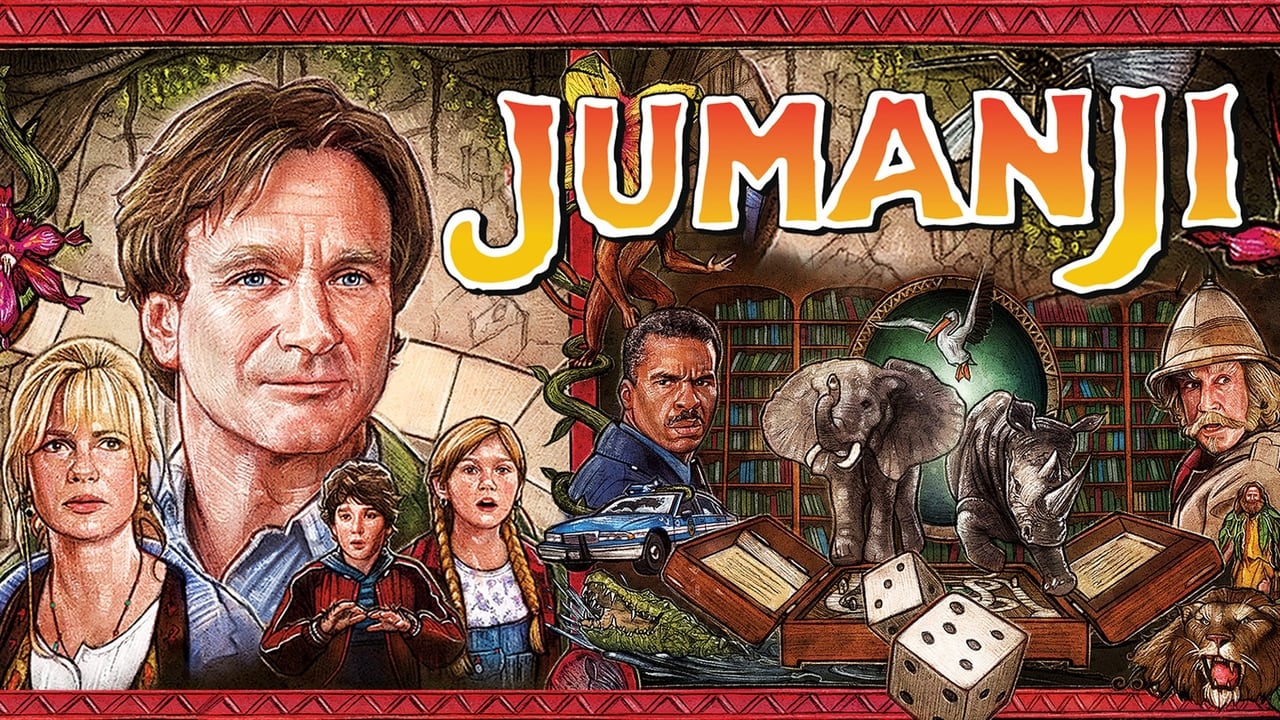
Okay, fellow travelers of the magnetic tape era, let's talk about a film that literally brought the game to life, spilling jungle chaos right onto shag carpets across suburbia. Before elaborate consoles and online worlds dominated playtime, there was a simple, terrifyingly tactile board game whispered about in hushed tones: Jumanji. The 1995 film adaptation didn't just capture the spirit of Chris Van Allsburg's hauntingly beautiful picture book; it amplified it into a full-blown, effects-laden adventure that felt thrillingly dangerous for a family movie night.
### The Roll of the Dice
Remember that feeling? The sheer concept was intoxicating. A board game so ancient, so powerful, that every roll of the dice could unleash actual peril – monsoon rains flooding the attic, mischievous monkeys commandeering police cars, or worse, a relentless hunter emerging from the jungle depths specifically for you. Director Joe Johnston, already well-versed in crafting adventure with heart thanks to his background on films like Raiders of the Lost Ark and later helming Honey, I Shrunk the Kids and The Rocketeer, was the perfect choice to bring this fantastical premise to the big screen. He understood how to blend spectacle with relatable characters caught in extraordinary circumstances.
The story kicks off when young Alan Parrish gets sucked into the game's inner dimension in 1969, only to be spat back out 26 years later when siblings Judy (Kirsten Dunst, already showing the promise that would lead to acclaimed roles later) and Peter (Bradley Pierce) discover the dusty box and resume the game. What follows is less a traditional narrative and more a series of brilliantly orchestrated set pieces, each triggered by a cryptic rhyme from the game board. It’s a race against escalating disaster, needing to finish the game to undo the chaos.

### Welcome (Back) to the Jungle
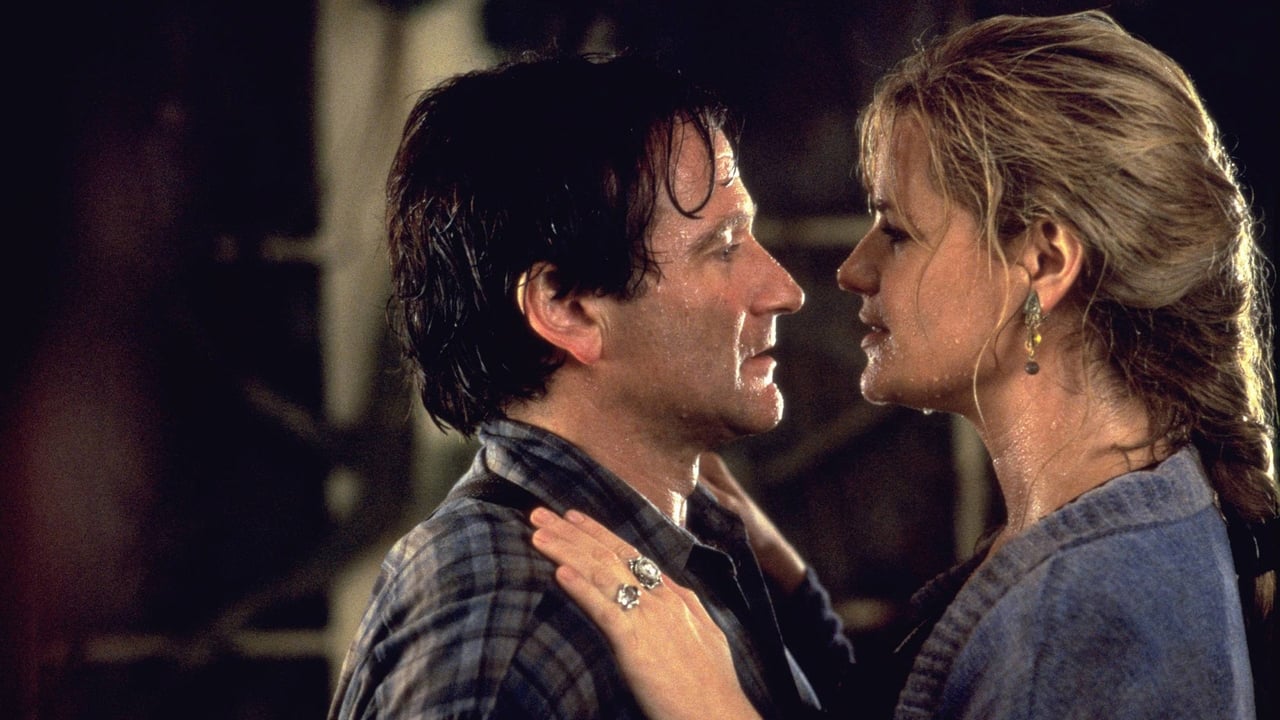
Of course, the film’s wild heart beats strongest with the arrival of adult Alan, played by the incomparable Robin Williams. Emerging bearded and bewildered from the Jumanji jungle, Williams brings his signature blend of manic energy, vulnerability, and surprising pathos to the role. It’s not just jokes; it’s the performance of a man ripped from his time, terrified but determined, carrying the weight of decades spent in a savage wilderness. His interactions with the traumatized Sarah Whittle (a wonderful Bonnie Hunt), who witnessed his disappearance all those years ago, provide the film’s emotional anchor amidst the mayhem.
The sheer thrill of Jumanji back in '95 was seeing the impossible unfold. Industrial Light & Magic (ILM) was pushing the boundaries of CGI, and while some effects might look a little dated to our spoiled modern eyes, they were groundbreaking then. The sight of that rhino stampede thundering through the house, the giant spiders skittering (shudder), or the lion prowling menacingly felt genuinely cutting-edge. What’s fascinating is how cannily Johnston blended this nascent CGI with impressive practical effects from Amalgamated Dynamics, Inc. (ADI). Those screeching monkeys causing havoc? Mostly convincing animatronics and performers in suits. This mix gave the film a tangible, weighty feel that pure CGI sometimes lacks, a hallmark of great 90s creature features. It cost a hefty $65 million back then (around $125 million today), but it paid off, roaring to a global gross of over $262 million.
### Hunter and Hunted, Father and Fear
One of the cleverest strokes is the casting of Jonathan Hyde. He masterfully plays two distinct but thematically linked roles: Alan’s stern, emotionally distant father, Sam Parrish, and the ruthless big-game hunter Van Pelt, who becomes Alan’s primary antagonist once unleashed from the game. Van Pelt isn't just a villain; he's the embodiment of Alan's childhood fears and unresolved paternal issues, manifested as a literal nightmare figure who won't stop until he bags his quarry. Hyde gives Van Pelt such chilling, single-minded focus; his arrival always signals a sharp intake of breath. It’s a brilliant piece of symbolic casting that adds a layer of depth beneath the adventure romp surface. Reportedly, initial choices for Van Pelt included names like Tom Hanks and even Arnold Schwarzenegger, but Hyde’s theatrical menace proved perfect.
Retro Fun Facts: Did you know the Parrish Shoes sign briefly visible in the film was painted over an existing furniture store sign in Keene, New Hampshire, where parts of the movie were shot? Also, the memorable scene where the house splits in two required complex hydraulics and careful coordination – a testament to the practical ingenuity often needed in pre-digital dominance filmmaking. That ominous drumming sound? It wasn't just stock audio; composer James Horner specifically crafted it to be unsettling and instantly recognizable.
### Enduring Appeal in a Wooden Box
Sure, you can pick apart some plot holes if you really squint, and maybe the sheer noise and chaos might feel overwhelming at times. But Jumanji wasn’t aiming for quiet introspection. It was aiming for breathless adventure, for that wide-eyed "What happens NEXT?!" feeling you got watching Saturday morning cartoons, amplified to blockbuster scale. It successfully captured the childhood fantasy (and terror) of imagination bleeding into reality. Its success cemented Joe Johnston as a reliable director of family-friendly spectacle and further proved Robin Williams could anchor a major effects-driven film with both humor and heart. The film’s popularity even led to an animated series and, decades later, a surprisingly successful legacy sequel franchise starring Dwayne Johnson and Jack Black, proving the core concept's enduring power, even if those later films shifted the game's mechanics significantly.
Rating: 8/10
Jumanji earns a solid 8. It’s a quintessential piece of 90s blockbuster filmmaking – loud, imaginative, slightly scary for the younger viewers (those spiders!), but ultimately full of heart and driven by a fantastic performance from Robin Williams. The blend of practical and early CGI effects holds a unique charm, and the core concept remains undeniably compelling. It perfectly captured that feeling of a game getting thrillingly out of hand.
For many of us, Jumanji wasn't just a movie we rented; it was an experience – a reminder that sometimes, the most incredible adventures can spring from the most unexpected places, even an old wooden box found in an attic. Now, who wants to roll?