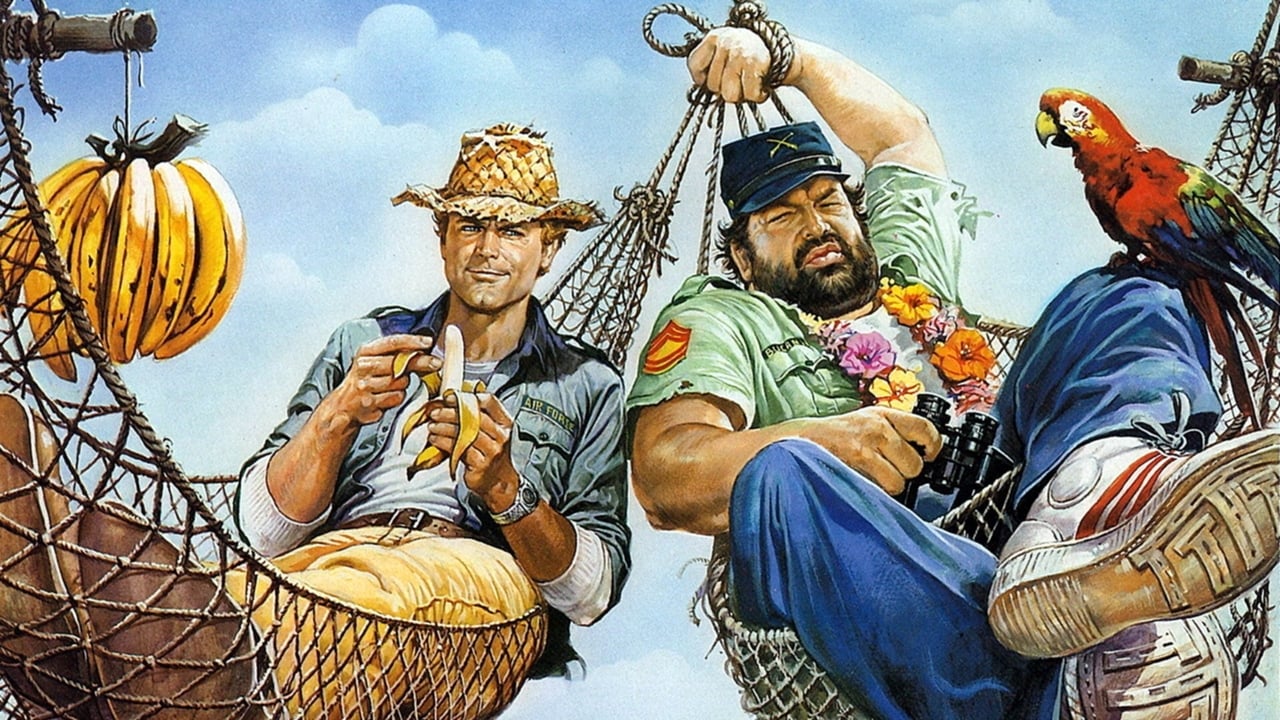
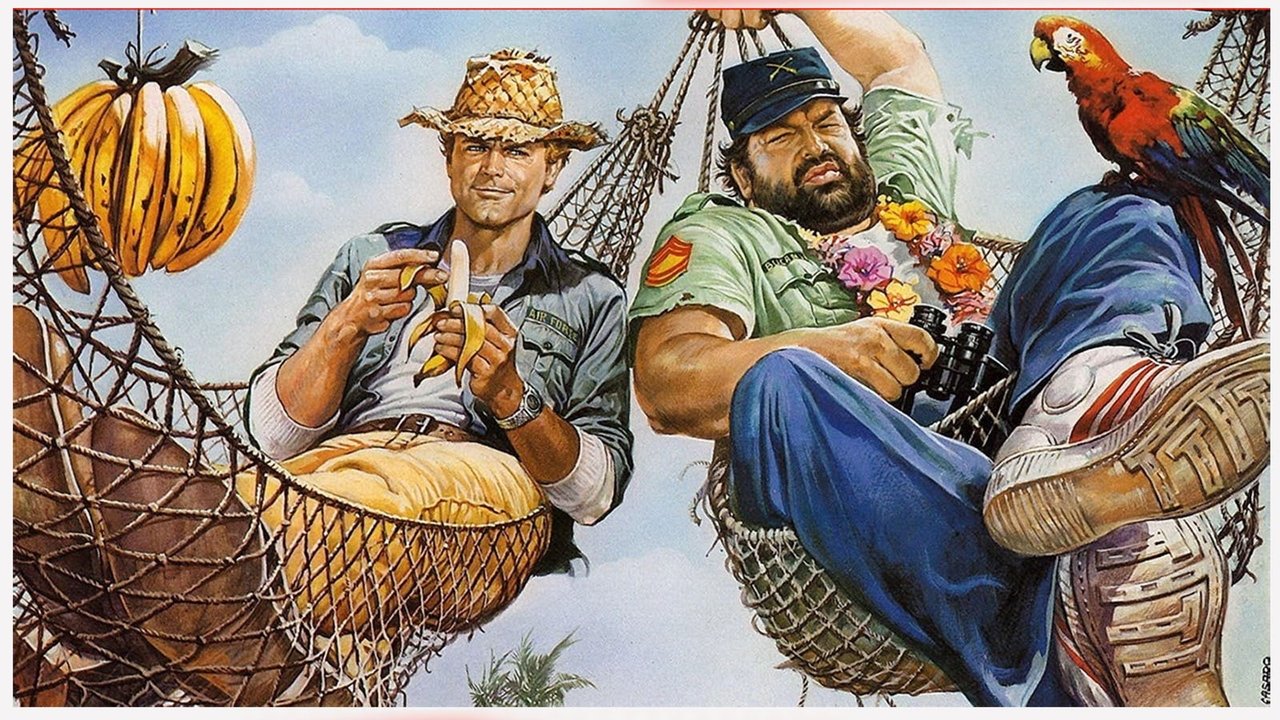
Alright, fellow tapeheads, rewind your minds back to those glorious days browsing the aisles of the local video rental shop. Remember spotting those covers featuring the lanky, blue-eyed trickster Terence Hill alongside the grumpy, bear-like Bud Spencer? You knew exactly what you were in for: sun, slapstick, and spectacularly silly punch-ups. And nestled amongst their Westerns and cop capers was 1981’s tropical absurdity, Who Finds a Friend Finds a Treasure (original title: Chi trova un amico trova un tesoro), a film that practically radiates sunshine and cheerful chaos right off the magnetic tape.
### Paradise Found... Sort Of
The premise is pure, unadulterated Spencer/Hill gold. Alan (Terence Hill, charmingly roguish as ever) is a lovable rogue on the run after a gambling scheme goes sideways. To escape some goons, he stows away on the boat of the perpetually hungry and easily irritated Charlie O'Brien (Bud Spencer, embodying grumpy affection). Alan, ever the opportunist, convinces Charlie that his "uncle" left him a map to a hidden treasure trove on a remote Pacific island. Naturally, Charlie, dreaming of endless beans and sausages, is eventually persuaded (read: tricked) into diverting course. What they find isn't quite buried gold, but Pongo Pongo, an island inhabited by friendly natives and, bizarrely, a lone, incredibly near-sighted Japanese soldier named Kamasuka (John Fujioka) who steadfastly believes World War II is still raging.
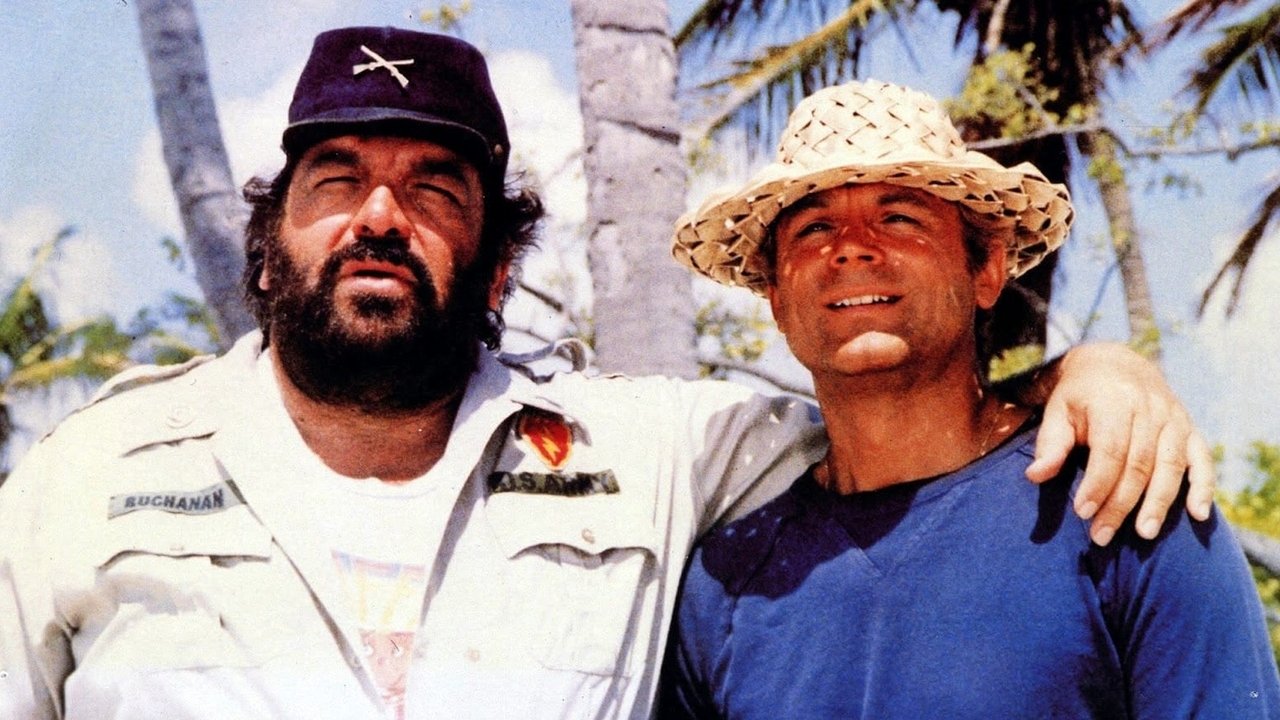
This setup is the perfect playground for the duo's established dynamic. Hill darts around, hatching schemes and flashing that infectious grin, while Spencer grumbles, eats, and delivers his signature thwack-ing punches that sound like giant hams colliding. Their chemistry is effortless, honed over nearly two decades and around 18 films together by this point. You believe these two mismatched souls somehow belong together, bickering and brawling their way through improbable situations. It’s a cinematic friendship that feels as comfortable and worn-in as your favourite armchair.
### Slapstick Over Substance, And That's Okay!
Let's be clear: the action here isn't the gritty, bullet-riddled realism of a Walter Hill picture or the high-octane martial arts of Hong Kong cinema that were also thriving around this time. This is pure, unadulterated slapstick symphony. When Spencer throws a punch, guys don't just fall; they fly backwards with exaggerated sound effects, often taking out scenery in the process. Remember how satisfyingly loud those punches sounded on a tinny CRT speaker? It’s cartoon violence brought to life, designed for laughs rather than gasps. There are no complex fight choreographies, just brilliantly timed haymakers and comical evasions.
The film relies entirely on practical gags and the actors' physical comedy. You won't find any CGI here – just real locations (mostly Key Biscayne, Florida, cleverly doubling for a Pacific paradise), real (if oversized) props, and stunt performers taking bumps that look more amusing than painful. It’s a style directed with breezy confidence by Sergio Corbucci, a filmmaker ironically best known for the ultra-violent Spaghetti Western masterpiece Django (1966). Seeing his name attached to such a light-hearted romp always brings a smile; it showcases a surprising versatility. The contrast between the bleakness of Django and the sunny silliness here is quite something.

### Island Shenanigans and Retro Charm
John Fujioka as Kamasuka is a definite highlight, delivering a performance that could easily have tipped into offensive caricature but instead lands as endearingly clueless. His interactions with Alan and Charlie, mistaking them for American soldiers and trying to capture them decades after the war ended, provide some of the film's funniest moments. Fujioka, incidentally, often played Japanese soldiers, notably appearing in the star-studded Midway (1976). Here, he leans fully into the comedy.
The film breezes along, powered by sunshine, misunderstandings, the inevitable arrival of bad guys (modern-day pirates this time, complete with a ludicrously over-the-top tank), and, of course, plenty of scenes involving food – a staple of the Spencer/Hill universe. Charlie’s constant quest for sustenance is a running gag that never gets old, probably because Spencer sells the hangry giant persona so perfectly. The plot involving the treasure map and the island's secrets is paper-thin, merely a framework to hang the gags and fights on, but honestly, who rents a Spencer/Hill movie for intricate plotting? I remember renting this one specifically because the cover promised adventure and laughs, and it delivered exactly that – uncomplicated joy.
These films were immensely popular, especially across Europe – particularly in Germany and Italy, where bespoke comedic dubs often added another layer of humour. While perhaps not hitting the massive box office numbers of their earlier Western spoofs like They Call Me Trinity (1970), Who Finds a Friend Finds a Treasure found its loyal audience on home video, becoming a comforting go-to for easy entertainment. It's the kind of movie you'd happily watch on a rainy Saturday afternoon, maybe with a bowl of popcorn (or beans, if you're feeling like Charlie).
### The Verdict
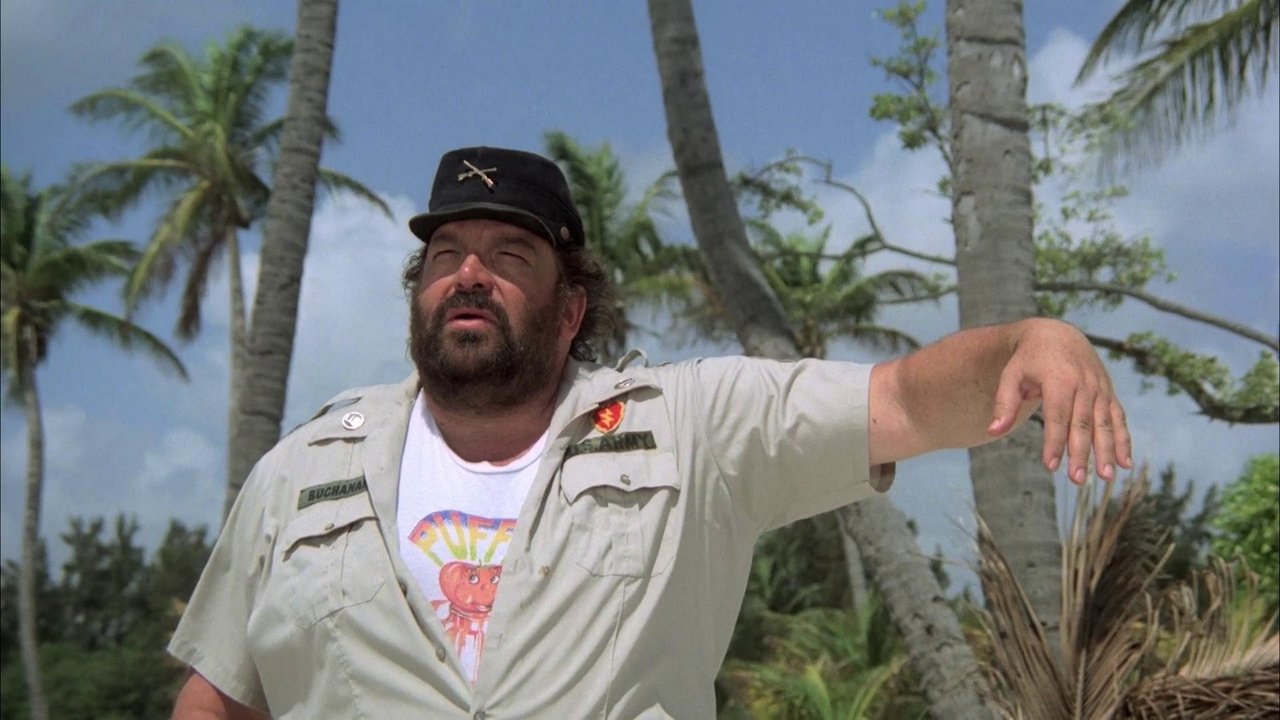
Who Finds a Friend Finds a Treasure isn't high art, nor does it pretend to be. It's a sun-drenched slice of early 80s escapism, driven by the unparalleled chemistry of its leads and a commitment to good-natured, over-the-top slapstick. The plot is flimsy, the villains are cartoonish, and the humour is broad, but it possesses an undeniable charm that's hard to resist, especially viewed through the warm glow of nostalgia. It perfectly captures that specific brand of action-comedy that felt tailor-made for the VHS era – repeatable, reliable fun.
Rating: 7/10 - Pure comfort food cinema. The story is nonsense, but the laughs are genuine, the locations are gorgeous, and the sheer joy of watching Hill and Spencer bounce off each other is infectious. It delivers exactly what it promises on the tin (or the oversized VHS clamshell).
Final Thought: In an age of hyper-realistic action, there's something wonderfully refreshing about a movie where the biggest impact comes from Bud Spencer landing a punch that sounds like a coconut hitting concrete. Pure, unadulterated Pongo Pongo power!