Alright, settle in, grab your preferred beverage, and let's talk about a film that felt like a lightning strike when it first appeared on fuzzy rental tapes and late-night TV screens. Forget the high-flying wire-fu theatrics that dominated Hong Kong cinema for a moment. 1982's Shaolin Temple (Shao Lin Si / 少林寺) felt… different. Rawer. Grounded. Like watching poetry written with fists and feet, performed by artists who bled authenticity. This wasn't just another kung fu flick; it felt like a transmission from a legendary source.
Stepping onto Hallowed Ground
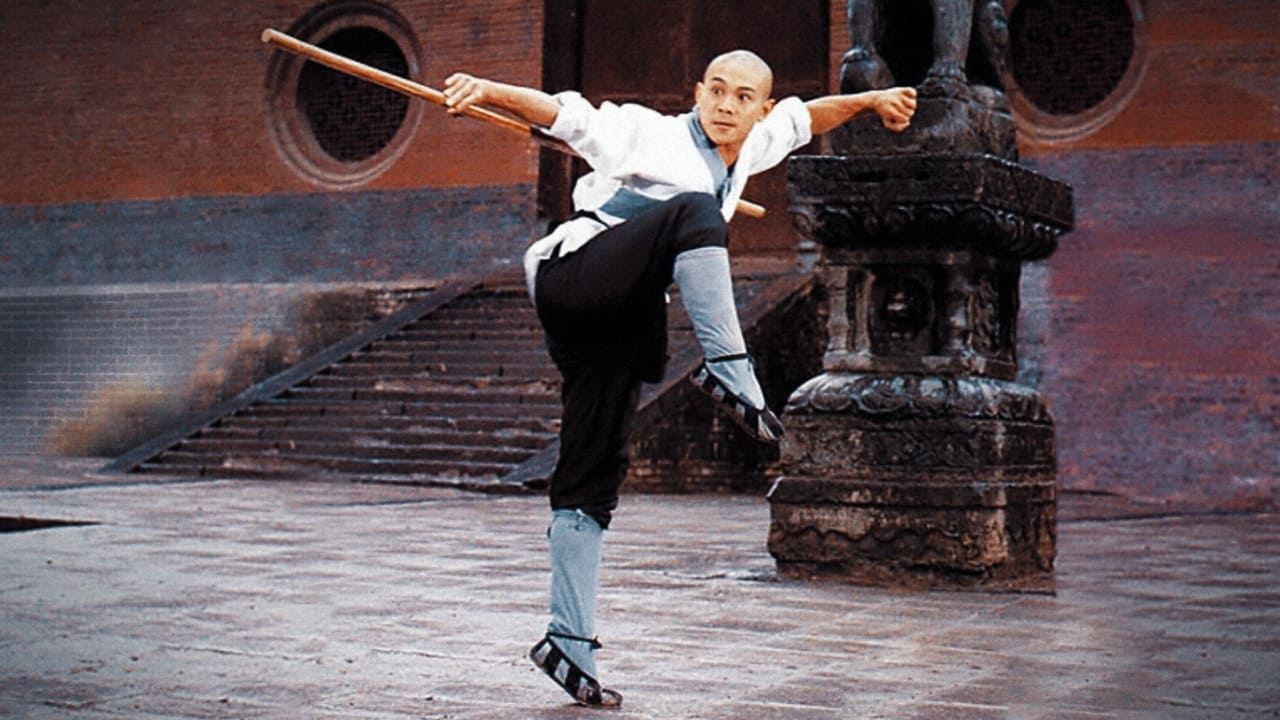
What immediately set Shaolin Temple apart was its staggering sense of place. This wasn't some studio backlot dressed up; director Chang Hsin Yen secured permission to film extensively at the actual Shaolin Temple in Henan province, China. Think about that! This was a monumental achievement, especially given the political climate, marking one of the first Hong Kong-Mainland collaborations post-Cultural Revolution. Suddenly, the legendary monks weren't just characters in a story; they were practicing their incredible Wushu skills against the backdrop of their ancient, revered home. You could almost smell the incense and feel the centuries of history baked into those stone walls. It lent the film an atmosphere no soundstage could ever replicate, a weightiness that elevated its simple revenge plot.
Enter the Dragon... Well, a Future Dragon
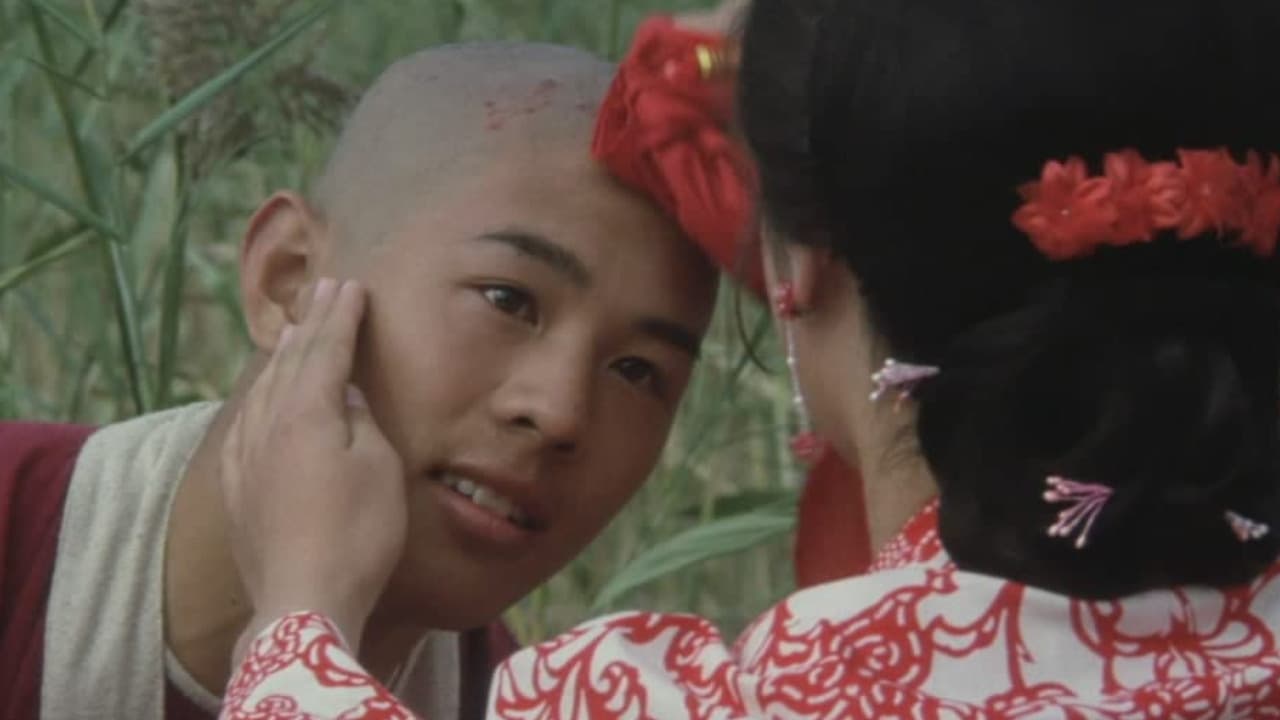
And then there was him. A fresh-faced teenager named Li Lianjie, who we all now know as the incomparable Jet Li. Barely 18 during filming, Li wasn't an actor who learned martial arts; he was a five-time national Wushu champion first. His screen presence here is electrifying, not through brooding intensity (that would come later), but through sheer, unadulterated physical prowess. Playing the young Jue Yuan, whose father is killed by a treacherous warlord, Li moves with a speed and precision that’s simply breathtaking. His character arc is straightforward – seek refuge, learn Shaolin kung fu, get vengeance – but watching him train and fight is the real story. Remember those training montages? The effortless flow, the whip-crack speed of his staff work? It was mesmerising, a glimpse of the global action superstar he would become. It's a fascinating Retro Fun Fact that Li was scouted specifically for his Wushu talents, alongside many other cast members who were also genuine martial arts practitioners, not seasoned actors. This commitment to authenticity over star power was a bold gamble that paid off spectacularly.
Wushu Wonders: The Real Stars
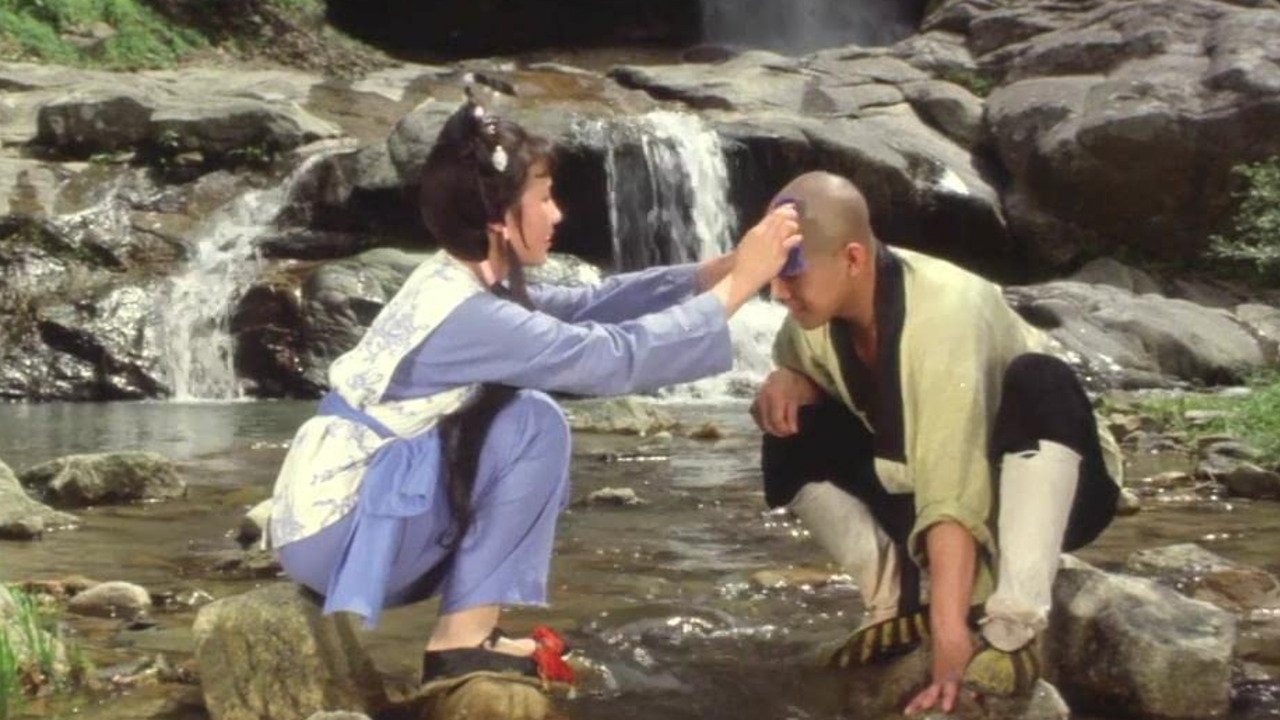
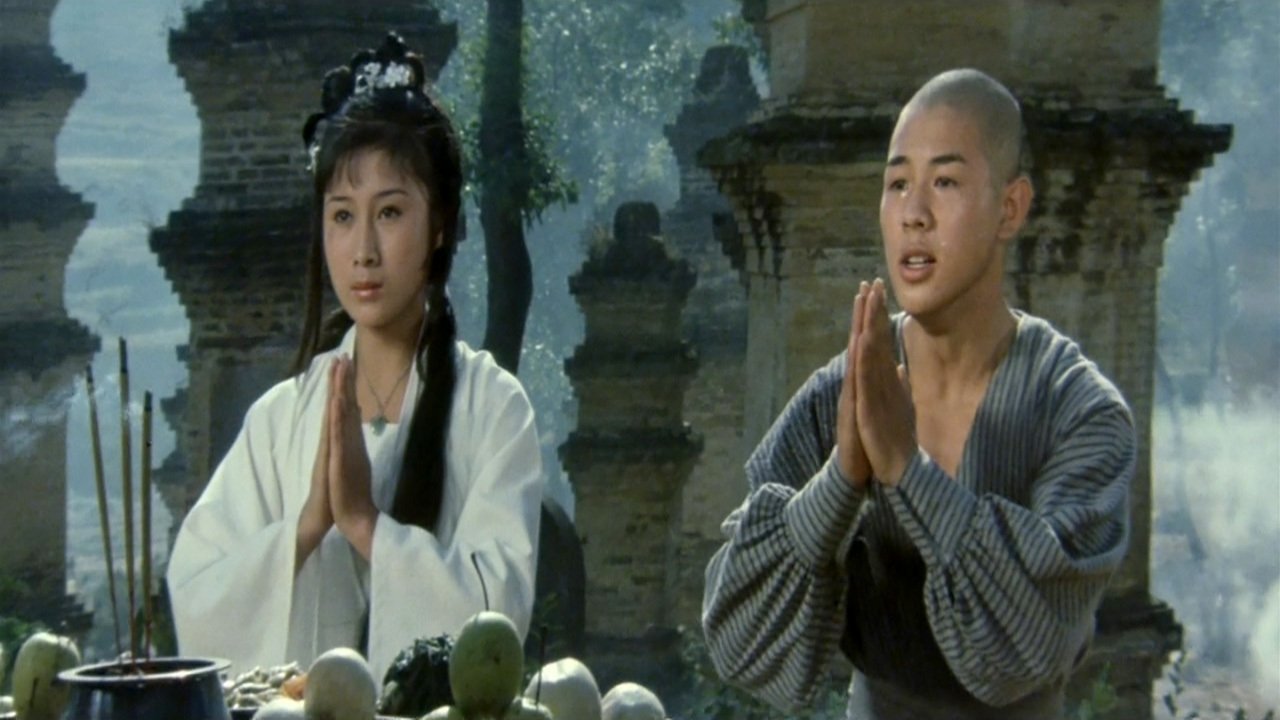
Let's talk action, because Shaolin Temple is a masterclass in showcasing traditional Wushu. The fight choreography feels less like staged combat and more like a dazzling, dangerous demonstration of skill. There's a distinct lack of the more exaggerated techniques or wirework prevalent in many contemporary Hong Kong films. Instead, we get intricate weapon forms (three-section staff, anyone?), fluid hand-to-hand exchanges, and incredible displays of flexibility and power. The performers, including the venerable Yu Hai as Jue Yuan's master Sifu Tan Zong and Ding Lan as the shepherdess Bai Wu Xia (who holds her own remarkably well), move with a grace born from years of dedicated practice.
The large-scale battles, particularly the finale where the monks defend the temple, are chaotic but thrilling. You feel the impact, the strain, the sheer physicality. It wasn't about impossible leaps; it was about speed, technique, and timing – performed by people who could actually do it. Was it as slickly edited as later action films? Maybe not. But did those moments feel incredibly real and dangerous back then, watching on a flickering CRT? Absolutely. There's a groundedness to the violence; it feels earned and consequential within the story's framework.
Beyond the Fists: Story and Impact
Okay, the plot isn't exactly Shakespeare. It’s a classic revenge tale, fueled by injustice and righteousness. Some of the dramatic acting, particularly from the non-martial artists, can feel a bit stiff by modern standards, a common trait when prioritising athletic performers. But the earnestness carries it through. The film cleverly navigates the Buddhist principles of non-violence with the monks' need to defend the innocent and uphold justice, providing a simple but effective moral core. Supporting players like Yu Cheng Hui as the villainous Wang Renze chew the scenery appropriately, providing a clear antagonist for our heroes.
But the story's real impact wasn't just on screen. This film was a phenomenon in Mainland China. We're talking hundreds of millions of tickets sold – figures that are almost unimaginable today. It single-handedly revitalised interest in the Shaolin Temple itself, turning it into a massive tourist destination and inspiring countless young people to take up Wushu. Imagine a single movie having that kind of cultural tidal wave effect! Another Retro Fun Fact: the film's success reportedly caused such a surge in young boys running away to the Temple that the government had to issue notices discouraging it. Now that's influence! While its box office in the West was more modest ($1.6 million in the US, which wasn't bad for a foreign martial arts film then), its arrival on VHS cemented its cult classic status among martial arts aficionados worldwide.
A Time Capsule of Pure Skill
Watching Shaolin Temple today is like opening a time capsule. It captures a specific moment where authentic martial arts skill took centre stage, presented with reverence and incredible energy. The filmmaking might show its age in places – the pacing, the occasional abrupt edit – but the physical performances remain timelessly impressive. It stands as a vital document of traditional Wushu, the film that launched Jet Li into the stratosphere, and a rare instance where the filming location itself became a character of profound significance.

VHS Heaven Rating: 8/10
Justification: While the plot is simple and some non-action dramatic elements are basic by today's standards, Shaolin Temple scores high for its groundbreaking authenticity, its historical significance in bringing Mainland Wushu and the real temple to a global audience, and launching Jet Li's iconic career. The action sequences are phenomenal showcases of genuine martial arts skill, possessing a raw energy that transcends flashy effects. It's a must-see for kung fu history buffs and anyone who appreciates practical athleticism captured on film. The sheer cultural impact in China alone elevates its importance.
Final Thought: Forget wires and digital doubles; Shaolin Temple is pure, unadulterated human skill unleashed – a reminder that sometimes, the most astonishing special effect is dedication honed over years of practice, captured forever on magnetic tape. Still kicks hard.