What truly separates us from the 'other'? Is it biology, belief, or simply the uniforms we wear? 1985's Enemy Mine plunges us onto a hostile alien world to confront this question head-on, not through grand space battles, but through the raw, intimate struggle for survival between two sworn enemies. It’s a film that, despite a troubled birth and initial commercial indifference, burrowed its way into the hearts of many a VHS renter, myself included, leaving a residue of profound empathy long after the tape finished whirring.

Stranded Worlds Apart
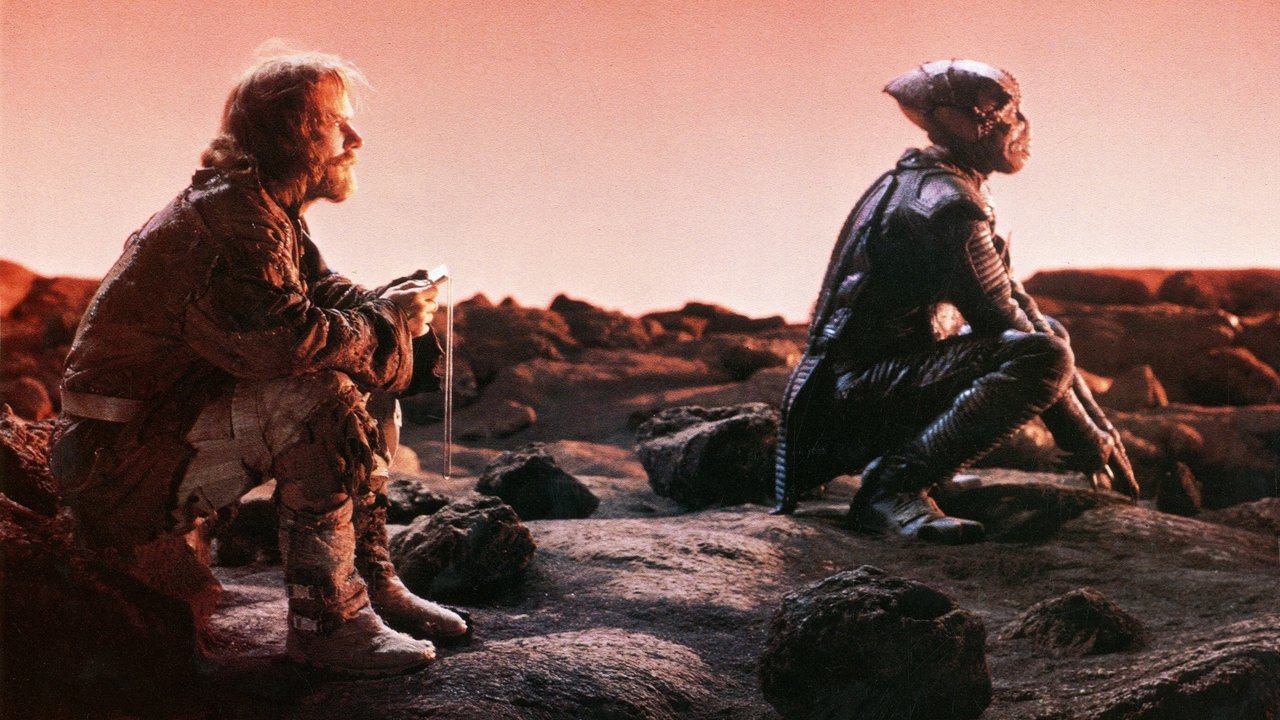
The premise is starkly effective: during a brutal space skirmish, human pilot Willis Davidge (Dennis Quaid) and his reptilian Drac adversary, Jeriba Shigan (Louis Gossett Jr.), crash-land on the desolate, meteor-pocked surface of Fyrine IV. With no rescue in sight and facing environmental hazards and ruthless scavengers (led by the always menacing Brion James), these representatives of warring species must overcome generations of ingrained hatred to simply stay alive. It’s a classic setup, reminiscent of wartime survival dramas, but transposed onto a visually striking science fiction canvas.
A Universe Within Two Performances
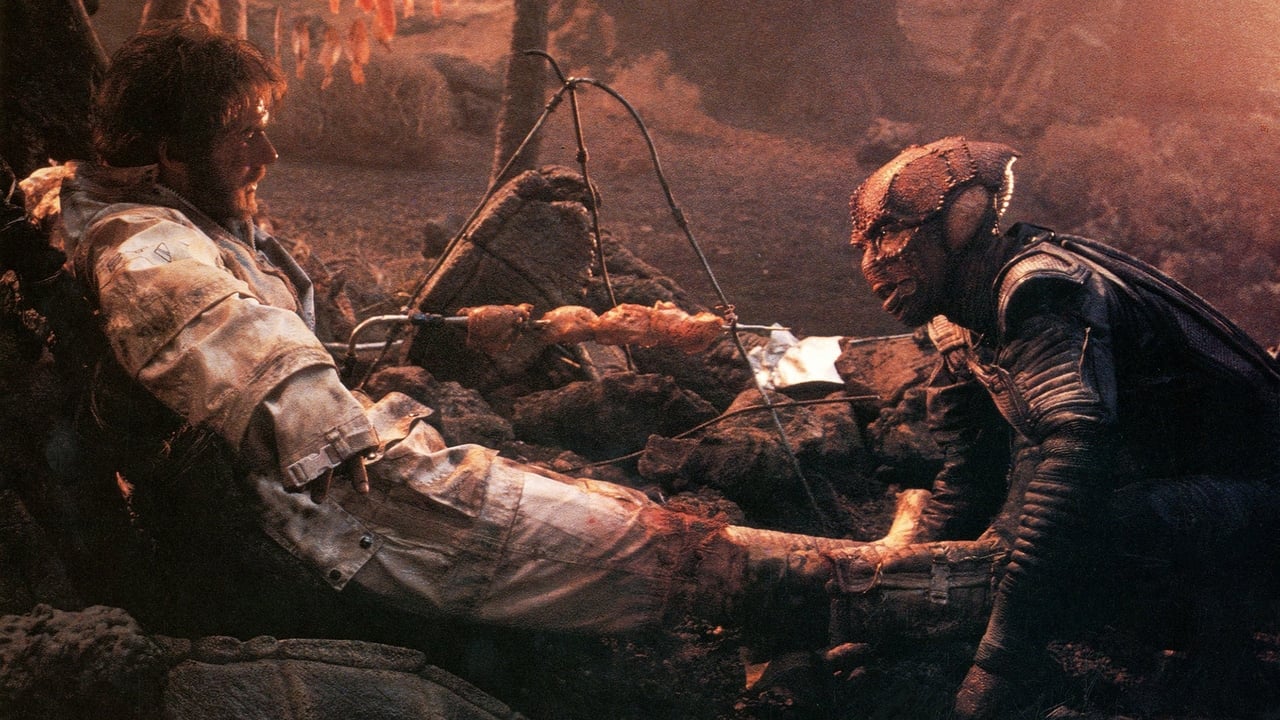
What elevates Enemy Mine beyond a standard sci-fi adventure is the sheer force and conviction of its central performances. Dennis Quaid, embodying the initially brash and prejudiced Davidge, charts a believable, deeply human arc from xenophobic soldier to someone capable of profound connection and sacrifice. You see the walls crumble, the suspicion replaced first by grudging respect, then by genuine care. It's a performance grounded in recognizable frustration, fear, and eventual understanding.
But the film truly belongs to Louis Gossett Jr. as Jeriba, affectionately nicknamed "Jerry" by Davidge. Encased in intricate, Oscar-nominated makeup designed by Chris Walas (who worked on Gremlins), Gossett Jr. delivers a performance of immense soulfulness and dignity. The challenges were considerable; reports from the set spoke of the intense heat inside the suit and the limited visibility Gossett Jr. endured. Yet, none of that translates into stiffness on screen. He developed a specific, guttural yet melodic voice and precise physical mannerisms for Jerry, conveying a rich inner life – wisdom, humor, weariness, and deep faith – through the alien visage. Watching Jerry teach Davidge the Drac language and share the tenets of his Talmud-like holy book, the Talmon, feels less like exposition and more like a genuine cultural exchange, the heart of the film beating strong in these quiet moments. It's a testament to Gossett Jr.'s immense talent (already an Oscar winner for 1982's An Officer and a Gentleman) that Jerry feels so utterly real, so completely knowable.
Crafting a Hostile Paradise

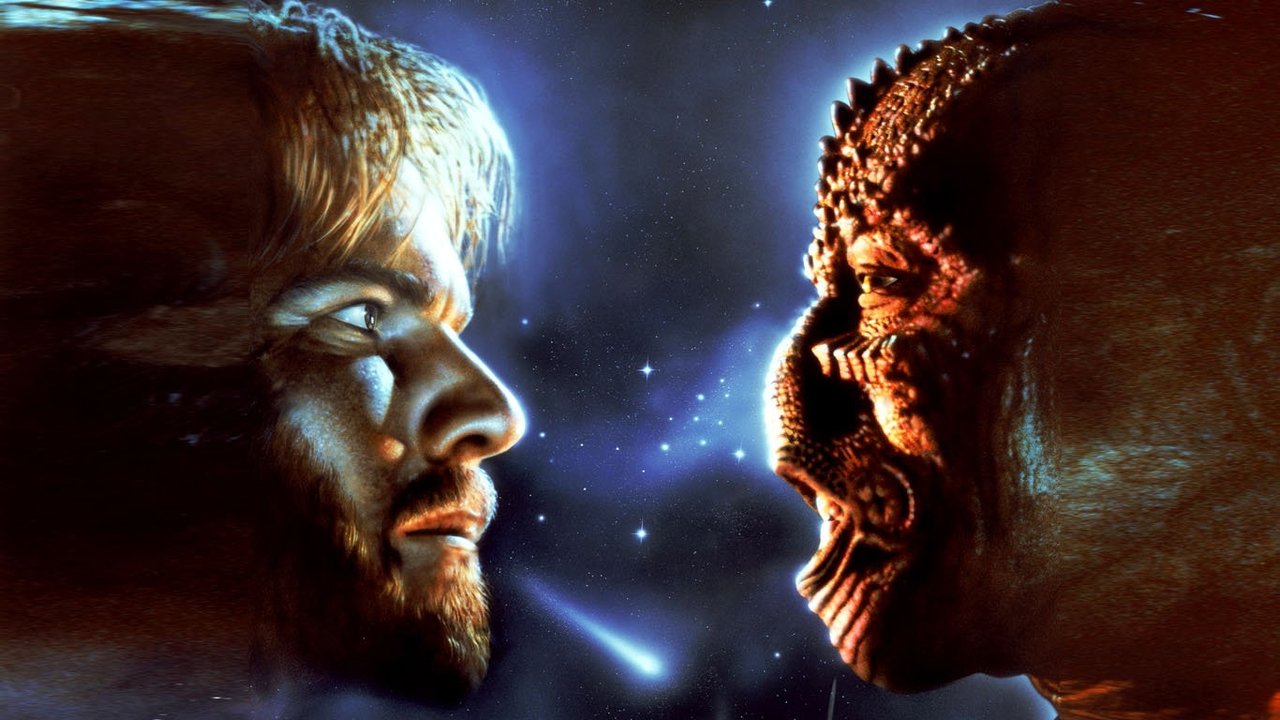
Director Wolfgang Petersen, who had already demonstrated his mastery of claustrophobic tension with Das Boot (1981) and fantastical world-building with The NeverEnding Story (1984), stepped into a difficult situation. Original director Richard Loncraine was fired weeks into shooting, leading to significant budget overruns – estimates place the final cost somewhere between $29 and $40 million, a hefty sum for the time. Petersen reshot large portions, bringing his signature visual flair and focus on character dynamics. The desolate landscapes of Fyrine IV, filmed partially on location in Iceland and within elaborate studio sets in Germany, feel genuinely alien and dangerous. The practical effects, from Jerry's design to the menacing 'sand-piranha' creatures, hold a certain charm today – tangible creations that required ingenuity in the pre-CGI era.
The creation of the Drac language, developed by novelist Barry B. Longyear for his Hugo and Nebula award-winning novella upon which the film is based, adds another layer of immersive detail. It’s these thoughtful touches, this commitment to building a believable (if hostile) world, that helps sell the central relationship.
More Than Meets the Eye
Beneath the sci-fi trappings and survival elements, Enemy Mine tackles enduring themes with sincerity. It’s a potent parable about prejudice, the absurdity of war, and the power of empathy to bridge seemingly insurmountable divides. The film doesn’t shy away from the ugliness of Davidge's initial bigotry, making his eventual transformation all the more impactful. When Jerry faces a life-altering biological event unique to the Drac species, the film pushes into territory exploring parenthood, legacy, and the promises we make. Doesn't this exploration of finding common ground despite vast differences feel particularly relevant, even decades later?
A Cult Classic Forged in Difficulty
Despite its craft and powerful core message, Enemy Mine was a significant box office disappointment upon release, recouping only about $12.3 million domestically. Critics were mixed, perhaps unsure what to make of its blend of gritty survival, thoughtful sci-fi, and heartfelt drama. Yet, like so many films of the era, it found a dedicated audience on home video. Renting that distinctive VHS box, perhaps drawn in by the intriguing cover art, felt like discovering a hidden gem. It became a staple of cable TV rotations, allowing its themes and performances to resonate with viewers who missed its theatrical run. It’s a film whose heart proved bigger than its initial reception. I distinctly remember being captivated by the alien design and the slow, earned friendship on my family's bulky CRT television, a feeling that lingers still.
Rating: 8/10
Enemy Mine is a triumph of character and theme over production hurdles and initial audience indifference. While some pacing might feel deliberate by modern standards, the powerhouse performances from Quaid and especially Gossett Jr., coupled with Petersen’s assured direction and the film's resonant message of understanding, make it a standout piece of 80s science fiction. It earns its 8/10 rating for its ambition, its emotional core, and its enduring ability to make us look beyond the surface.