Alright, fellow tapeheads, settle in. Pop that slightly worn cassette into the VCR, maybe give the tracking a little nudge, because tonight we’re diving deep into the glorious, baffling, and utterly unforgettable void that is Space Mutiny (1988). If you haunted the sci-fi/action aisles of your local video store back in the day, chances are you stumbled across this gem, possibly lured in by cover art promising interstellar dogfights and laser battles that the film… mostly delivers on. Sort of.
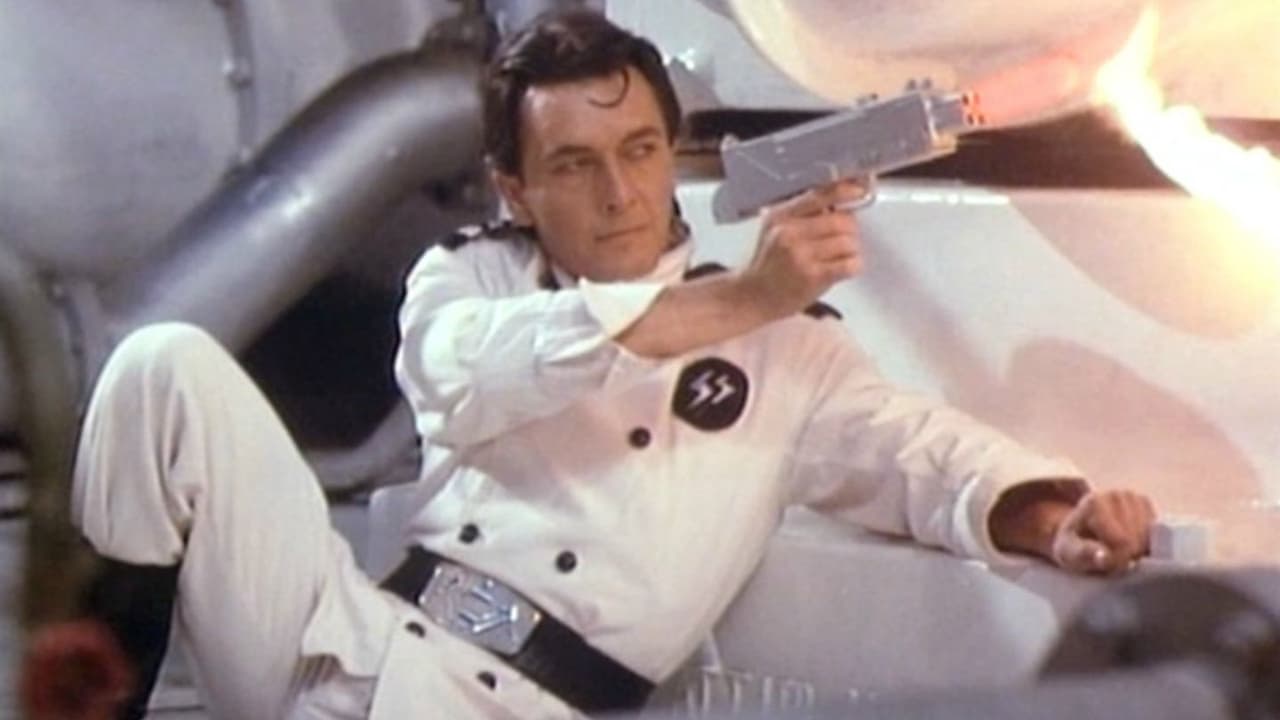
This isn't just any space opera; it's a South African-produced epic filmed largely in what appears to be an industrial complex, featuring reused spaceship footage and starring one of the most intensely committed slabs of beefcake the 80s ever produced. Forget your slick, modern CGI starscapes for a moment. Space Mutiny throws you headfirst into a world built on sheer moxie, questionable set design, and an endearing belief that sheer volume can substitute for convincing acting.
### Big McLargeHuge Takes Command
At the pulsing heart of this adventure is Dave Ryder, played with lung-bursting enthusiasm by the one and only Reb Brown. Yes, that Reb Brown of Yor, the Hunter from the Future (1983) fame. Ryder is the impossibly muscular, slow-talking, fast-acting pilot aboard the generational starship Southern Sun, a vessel plagued by – you guessed it – a mutiny! Led by the nefarious Kalgan, played with scenery-chewing relish by John Phillip Law (perhaps best remembered as the angel Pygar in Barbarella (1968)), the mutineers aim to seize control and divert the ship to a pirate planet. It’s up to Ryder, aided by the commander's daughter Lea (Cisse Cameron), to stop them.

Reb Brown doesn't just act; he reacts, primarily by yelling. A lot. His line readings are the stuff of legend, delivered with a bewildered intensity that suggests he might genuinely be surprised by the words coming out of his own mouth. But here's the thing: it works for this kind of movie. His sheer physical presence and unwavering commitment sell the absurdity. You believe this guy could punch his way through a bulkhead, even if he seems perpetually confused about which direction the enemy is coming from. A fun bit of retro trivia: Brown was actually a former USC Trojans fullback before turning to acting, which certainly explains the physique!
### Warehouse Wonders and Railing Deaths
Let's talk about the look and feel. The Southern Sun isn't exactly the Enterprise. Corridors look suspiciously like painted boiler rooms, the bridge resembles an office space hastily converted with blinking lights, and the engine room… well, it’s definitely a room. Directors David Winters (who reportedly took over from Neal Sundstrom mid-production, a classic B-movie tale) and the team did what they could with limited resources, leaning heavily on sparkly costumes and dramatic lighting to create a "futuristic" vibe. It’s charmingly unconvincing in the best way possible.


And the action? Oh, the action! It’s pure 80s practical mayhem. Forget weightless choreography; space combat here involves slow-motion floor buffer chases through corridors. The firefights feature plenty of sparks flying off walls (real pyro!) and dramatic, flailing deaths. Speaking of deaths, Space Mutiny gifted the world the phenomenon of the "railing kill." Countless henchmen meet their end by dramatically pitching over waist-high railings, often after being shot nowhere near a vital organ. It’s hilariously repetitive but strangely satisfying in its low-tech physicality. Remember how impactful those squib hits and stunt falls felt before digital blood and physics engines took over? This movie is a museum exhibit of that era's techniques, warts and all.
Adding to the unique visual tapestry is the spaceship footage. Sharp-eyed viewers (or anyone who watched TV in the late 70s/early 80s) will immediately recognize the exterior shots and space battles as being lifted directly from the original Battlestar Galactica television series. Apparently, the rights were secured for a bargain, leading to this bizarre but cost-effective mashup. It gives the film brief moments of surprising visual grandeur, immediately undercut when we return to the earthbound interiors.
### Bridge Bunnies and Baffling Baddies
Beyond the main conflict, the film populates its world with… characters. We get Lea, the commander's daughter, who falls for Ryder with baffling speed, and her mother, Dr. Lea (Cameron Mitchell, yes, that Cameron Mitchell, lending some veteran gravitas). Then there are the "Bellerians," mysterious, psychic women in flowing white robes who occasionally wander through scenes looking concerned. Their purpose is… unclear, adding another layer to the film’s delightful incoherence. James Ryan as the mutiny's chief enforcer, MacPhearson, provides a decent secondary villain, sneering effectively and engaging Ryder in some truly memorable (if clumsy) fistfights.
The film’s reception back then was, shall we say, muted. It wasn't a blockbuster, finding its audience primarily on home video and cable TV. Its true ascent to cult stardom, however, came years later thanks to its legendary skewering on Mystery Science Theater 3000 (Episode 820). While the MST3K treatment cemented its place in "so bad it's good" history, watching the film raw, as intended (or as close as possible), is its own unique pleasure. You appreciate the earnest attempt, the bizarre creative choices, and the sheer, unadulterated 80s-ness of it all.
### Final Orbit
Space Mutiny is a glorious mess. It’s cheap, technically inept in many ways, features howlingly bad dialogue, and logic takes a backseat to… well, railings. But it's also packed with unintentional humor, baffling creative decisions, Reb Brown operating at peak Reb Brown, and a certain ramshackle charm that’s impossible to fake. It’s a testament to the kind of go-for-broke, low-budget filmmaking that thrived in the direct-to-video era.
Rating: 3/10 (Objective Quality) / 7/10 (Sheer VHS Heaven Entertainment Value)
The low score reflects the obvious technical and narrative shortcomings. The higher score? That's for the laughs, the bewildering ride, and the pure, uncut nostalgia fuel. This is prime "watch with friends and yell at the screen" material, a beautiful relic from a time when all you needed was a warehouse, some sparkly fabric, reused spaceship footage, and a hero named Ryder.
Final Thought: It's the kind of movie where the hero has bigger muscles than the spaceship has believable corridors, and honestly? Sometimes, that's exactly what you need from the dusty shelves of VHS Heaven.