Dusting off the clamshell case for Target (1985) feels like unearthing a specific kind of mid-80s memory. It wasn't the flashiest thriller on the video store shelf, often nestled between louder action flicks, but it held a certain promise: Gene Hackman and Matt Dillon, directed by the legendary Arthur Penn. What unfolds isn't Penn’s incendiary Bonnie and Clyde (1967), nor the revisionist western brilliance of Little Big Man (1970). Instead, Target offers something quieter, more character-focused, yet built on a premise that rips the rug out from under suburban normalcy: what if your quiet, unassuming dad was actually a highly skilled former CIA agent?
When Dad's Past Comes Calling
The film wastes little time establishing the everyday life of the Lloyd family in Dallas, Texas. Walter Lloyd (Gene Hackman) runs a lumber yard, seemingly content with a life far removed from excitement. His son, Chris (Matt Dillon, fresh off cementing his teen idol status but clearly seeking more complex roles), sees him as predictable, maybe even a little boring. There's a palpable generational gap, a familiar friction. This relatable domesticity is shattered when Walter’s wife, Donna (Gayle Hunnicutt), is abruptly kidnapped while vacationing in Paris. The reason? Walter, known decades ago as "Duke," has a past entangled in Cold War espionage, and old enemies have resurfaced seeking retribution.
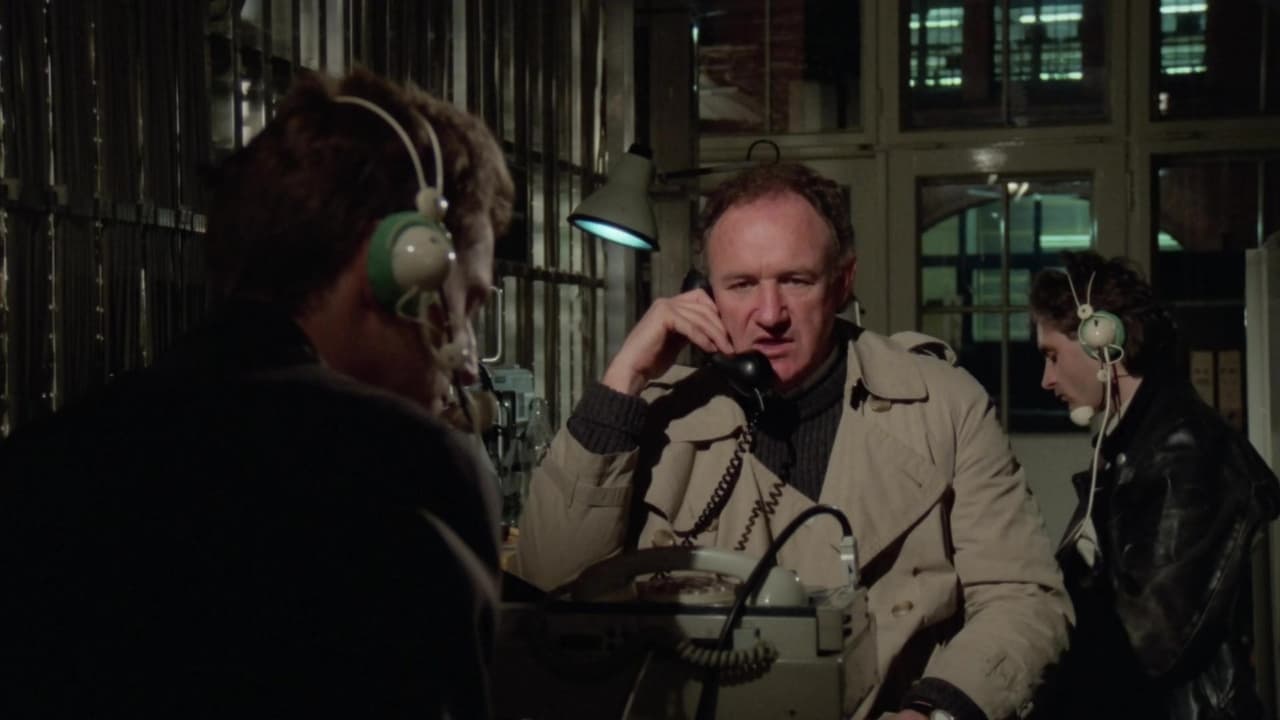
It's this sudden pivot that forms the core of Target. Watching Walter shed his mild-mannered persona to reveal the calculating, capable agent beneath is the film's primary draw. Hackman, as always, is magnificent. He doesn't just flip a switch; there’s a weariness to his competence, a reluctance mixed with lethal efficiency. Think of his subtle shift in posture, the hardening in his eyes – it’s a masterclass in contained transformation. He makes you believe entirely in this man who packed away his spy craft like an old suit, only to find it still fits perfectly when disaster strikes. It's a performance reminiscent of his grounded intensity in Penn's earlier, perhaps moodier thriller, Night Moves (1975).

A Father and Son European Vacation (with Guns)
The heart of the film, beyond the espionage plot, lies in the evolving relationship between Walter and Chris. Dragged along to Europe on a desperate rescue mission, Chris is forced to reconcile the image of his passive father with this suddenly dangerous stranger. Dillon effectively portrays the confusion, the fear, and ultimately, the grudging respect that blossoms. Their shared ordeal becomes a crucible, forging a connection that their comfortable life back home never could. Seeing them navigate the streets of Paris and the tense atmosphere of Cold War-era Berlin, dodging bullets and piecing together clues, feels less like a slick spy caper and more like an intensely stressful, high-stakes family therapy session. Doesn't this dynamic, the sudden need to truly see one's parents as complex individuals with hidden histories, resonate beyond the realm of spy fiction?
Interestingly, the script itself had a somewhat complex parentage, with three credited writers: Howard Berk, Don Petersen, and Leonard Stern (perhaps best known for his work on the spy spoof Get Smart!). While speculation about numerous writers can sometimes signal trouble, here it might simply reflect the blending of a straight-faced espionage plot with the more personal father-son drama. The film largely succeeds in balancing these elements, thanks in no small part to the central performances.
Penn's Steady Hand and Retro Charm
Arthur Penn directs with a steady, unfussy hand. The European locations – Paris, Hamburg, West Berlin – are captured with a gritty realism that grounds the action. This isn't the glossy, hyper-stylized Europe of later thrillers; it feels lived-in, slightly dangerous, fitting for the Cold War backdrop. While Target might lack the visual flair or thematic ambition of Penn’s most celebrated works, his focus remains squarely on the characters and their psychological journey amidst the gunfire and car chases. Reportedly made for around $12 million, it performed modestly at the box office, pulling in about $9 million domestically. Perhaps audiences expecting another French Connection (1971) from Hackman, or maybe another teen drama from Dillon, weren't quite sure what to make of this hybrid.
The action sequences, while competent, feel distinctly of their time – more practical grit than elaborate spectacle. Remember those solid, slightly chunky car chases common in 80s thrillers? Target delivers those, adding to its authentic VHS-era feel. There's a certain satisfaction in watching Walter employ old-school tradecraft, relying on wits and experience rather than improbable gadgets. It feels... well, possible, in a way that many modern thrillers don't.
Final Reflections
Target isn't a film that redefined the genre, nor is it typically the first title that springs to mind when discussing the careers of Hackman, Dillon, or Penn. Yet, watching it again after all these years, it holds up remarkably well as a solid, character-driven thriller. Its strength lies not in explosive set pieces, but in the believable portrayal of a family thrown into chaos and the compelling central relationship forged in the fires of that crisis. It's a reminder that sometimes, the most interesting secrets aren't state secrets, but the ones hidden within the people we think we know best. I distinctly remember renting this one, probably drawn in by the familiar faces on the cover, and finding something a bit more thoughtful than I'd anticipated.
Rating: 7/10
This score reflects the film's undeniable strength in its lead performances, particularly Hackman's textured portrayal, and the compelling father-son dynamic. Arthur Penn delivers a professionally crafted, engaging thriller, even if it doesn't reach the heights of his earlier masterpieces. It loses a few points for a somewhat conventional plot and perhaps not fully capitalizing on its espionage potential, but it remains a thoroughly worthwhile watch, especially for fans of the leads or anyone nostalgic for the grounded feel of mid-80s thrillers.
It leaves you pondering: how much do we ever truly know about the people closest to us, and what hidden capabilities might surface when they're pushed to the absolute limit?