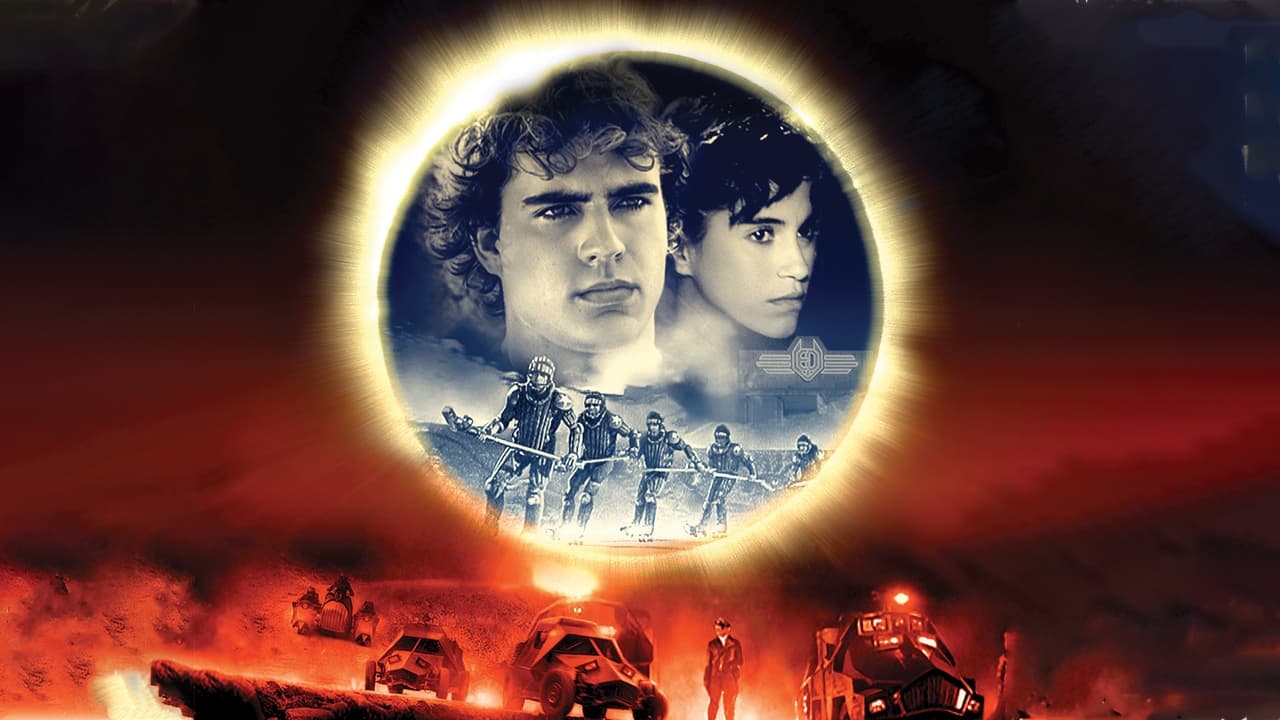
Okay, fellow travelers of the magnetic tape, let's rewind to a corner of the video store that felt both familiar and utterly bizarre. Tucked somewhere between Mad Max wannabes and earnest teen dramas, there often sat a box adorned with desert landscapes, determined youths on roller skates, and maybe, just maybe, a glowing orb. I'm talking about Solarbabies (1986), a film so ambitious, so strange, and so quintessentially '80s in its execution that just thinking about it brings a smile – and maybe a slight head-shake – of recognition. This wasn't just another post-apocalyptic romp; this was something else entirely, a cinematic fever dream fueled by hope, water scarcity, and... roller hockey?
### An Oasis of Oddity
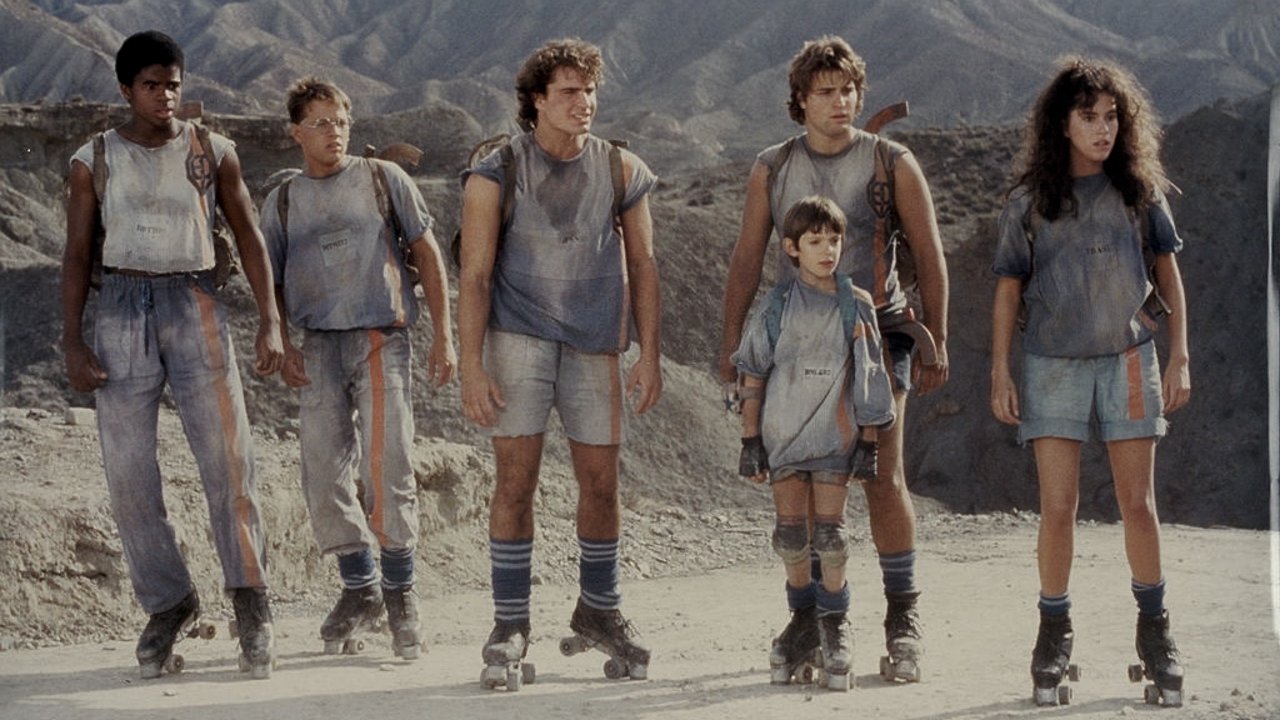
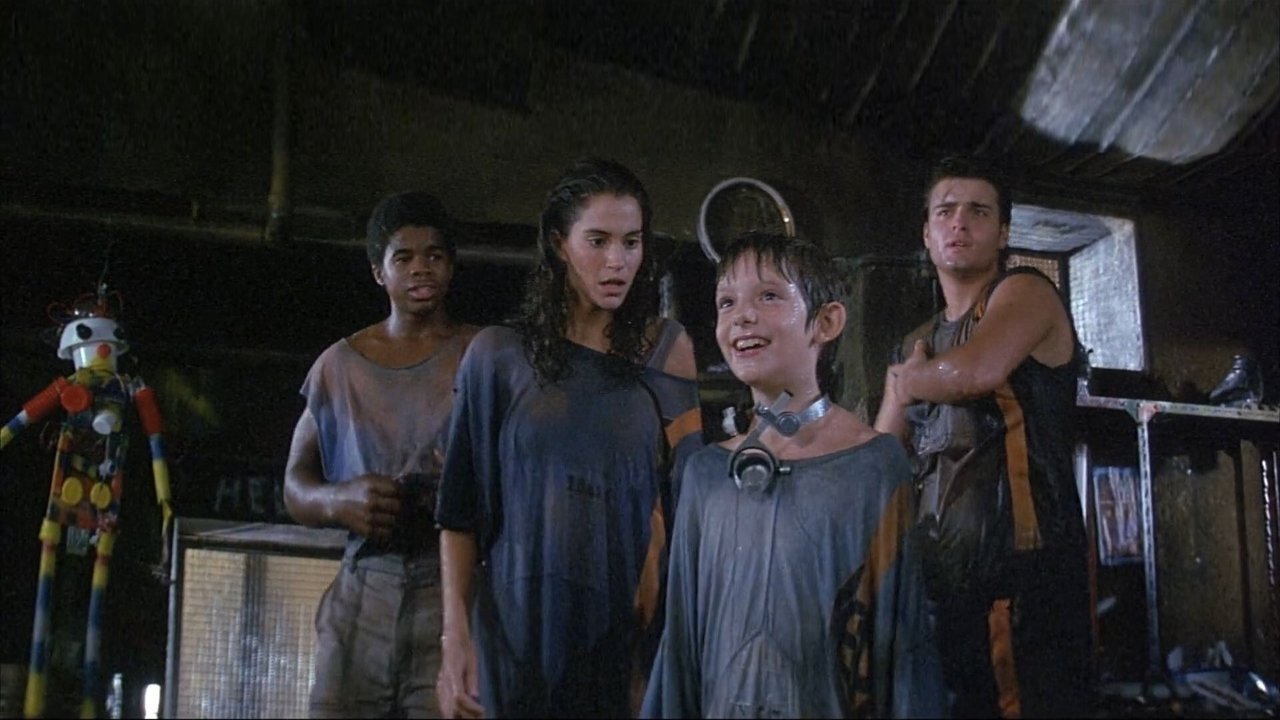
Picture this: a bleak future where the evil Protectorate controls the world's remaining water. Orphaned teens live in regimented facilities, their only escape a brutal, futuristic sport played on roller skates called "Solarball" (think lacrosse meets roller derby in the desert). Among these kids are the earnest Jason (Jason Patric, just before hitting stardom in The Lost Boys), the determined Terra (Jami Gertz, already charming audiences after films like Sixteen Candles), the wise Daniel (Lukas Haas, fresh off his memorable role in Witness), and the imposing Tug (Peter DeLuise). Their grim existence takes a turn when a mysterious, glowing sphere named Bodhi – seemingly sentient and possessing strange powers – falls into their laps. Believing Bodhi holds the key to freedom and finding water, they embark on a perilous escape across the wasteland, pursued by the ruthless Grock (Richard Jordan, clearly having a blast in villain mode) and his enforcer, Strictor (Terrence Mann, later known for Critters).
The plot itself feels cobbled together from familiar tropes – dystopian oppression, chosen ones, a quest for a MacGuffin – but filtered through such a peculiar lens that it becomes uniquely memorable. The sheer earnestness of the young cast trying to sell lines about mystical orbs and the importance of hydration while decked out in desert-punk gear and zooming around on eight wheels is something to behold.
### Brooksfilms' Bold Gamble?
Here's where things get really interesting. Peek behind the curtain, and you'll find that Solarbabies was produced by Brooksfilms. Yes, that Brooksfilms, the company founded by comedy legend Mel Brooks! Known for producing more serious fare alongside his comedies (like David Lynch's The Elephant Man), Brooksfilms swung for the fences here, reportedly backing Solarbabies with a hefty budget – estimates hover around $25 million, which was serious money in 1986 (roughly $70 million today). Unfortunately, this bold gamble didn't pay off financially; the film barely made a splash at the box office, pulling in only about $1.4 million.
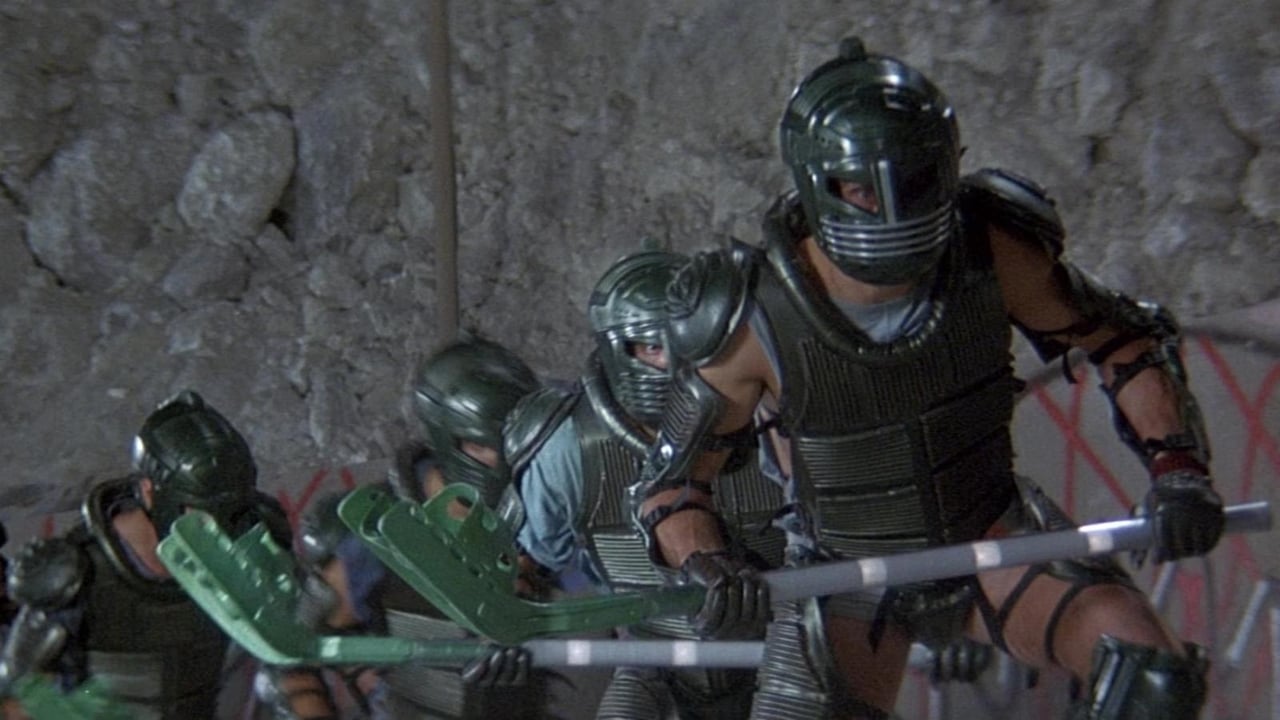
Adding another layer of intrigue is the director, Alan Johnson. While a capable director, Johnson was far more renowned as a choreographer, having staged iconic numbers for films like West Side Story (1961), The Producers (1967), and even Brooks' own Blazing Saddles (1974). Does this explain the heavy emphasis on the admittedly well-shot roller-skating sequences? Perhaps. The action, particularly the Solarball games and the escape sequences, has a certain kinetic energy, even if the logic sometimes takes a backseat.
### Desert Skates and Dated Wonders
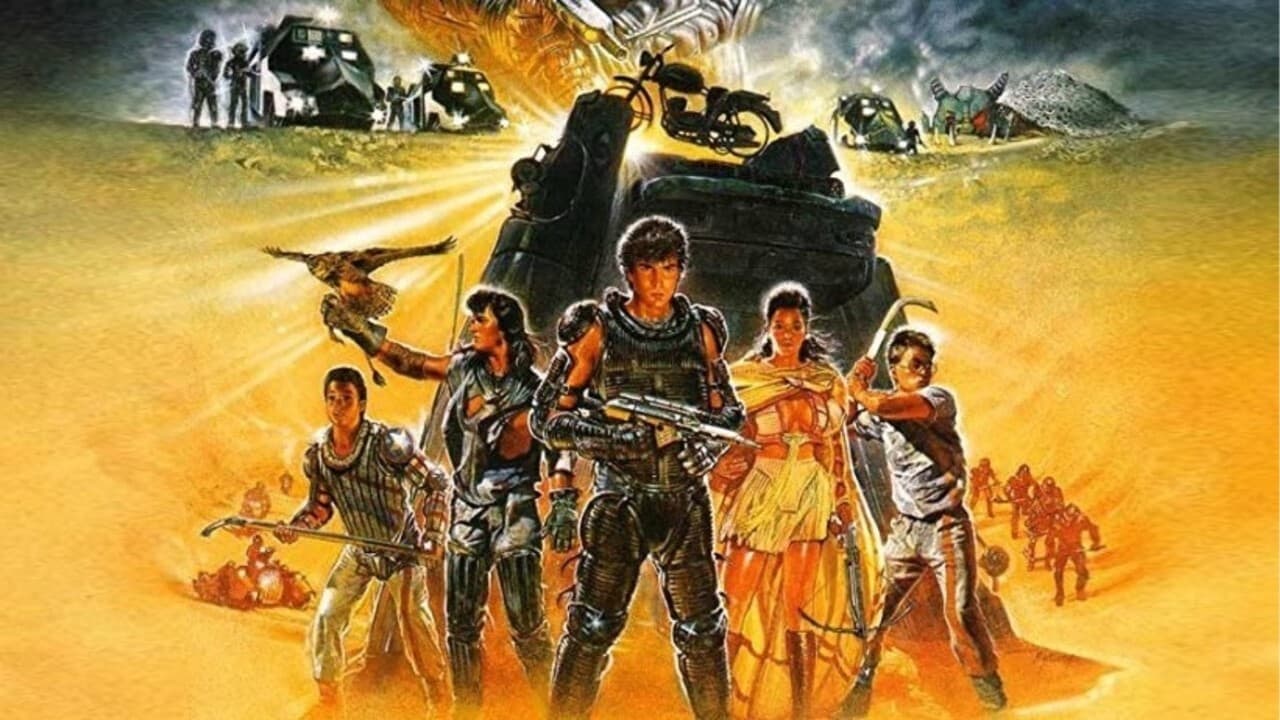
Visually, Solarbabies benefits greatly from its Spanish filming locations, which provide genuinely impressive, desolate vistas. The production design leans into the '80s post-apocalyptic aesthetic – lots of repurposed gear, leather, and questionable hairstyles. It creates a distinct, if slightly silly, world. And then there's Bodhi. The little glowing ball, achieved through practical effects, has a certain retro charm. It communicates through light pulses and ethereal sounds, and you can't help but root for the little guy, even if its powers seem conveniently plot-driven.
The film certainly has its flaws. The script, credited to Walon Green (who penned the much grittier The Wild Bunch) and Douglas Anthony Metrov, often feels disjointed, lurching between teen angst, sci-fi mysticism, and action set pieces. The tone can be wildly inconsistent, sometimes aiming for serious drama, other times feeling like a Saturday morning cartoon writ large. Critics at the time were not kind (it still languishes with near-zero approval on Rotten Tomatoes and an IMDb score hovering around 4.0/10), and it's easy to see why from a purely objective standpoint.
### Why We Still (Sort Of) Love It
So, why revisit Solarbabies? For many of us who stumbled upon it during those endless video store aisles explorations, it holds a strange nostalgic pull. It represents a kind of filmmaking that feels distinctly of its era – ambitious, sometimes technically impressive, but also gloriously, unashamedly weird. It’s a film that tried to blend Mad Max, The Goonies, and maybe even a dash of E.T., all on roller skates. Did it succeed? Not really. Is it entertaining in its own unique way? Absolutely.
It’s the kind of movie where you find yourself chuckling at the earnest dialogue one minute and genuinely appreciating a well-staged skate-chase the next. It's a testament to the kind of high-concept risks studios were occasionally willing to take back then, even if they didn't always land. Seeing Patric and Gertz so young, giving their all to such an odd premise, adds another layer of nostalgic enjoyment. It wasn't trying to be cool or ironic; it was utterly sincere in its strangeness.
VHS Heaven Rating: 4/10
Let's be honest, Solarbabies isn't a conventionally "good" movie. The plot is messy, the tone is uneven, and the core concept is fundamentally silly. However, its sheer audacity, its earnest performances from a young cast, the Brooksfilms connection, and its status as a high-budget '80s oddity earn it a unique place in the annals of VHS history. It fails spectacularly in many ways, but it does so with a certain naive charm and visual flair that makes it a fascinating watch, especially for connoisseurs of cinematic curiosities.
It remains a gleaming, slightly wobbly artifact from a time when studios threw money at desert-bound teens on roller skates guided by a magical glowing orb – and honestly, wasn't the video store shelf all the more interesting for it?