The title itself whispers of forbidden sweetness, a sticky, cloying promise that hints at something far more venomous beneath. The Devil's Honey (1986, originally Il Miele del Diavolo) isn't your typical late-night creature feature rental, the kind you grab for jump scares and popcorn thrills. No, this is Lucio Fulci territory, but a different kind of dark landscape than the zombie-infested streets of City of the Living Dead (1980) or the decaying grandeur of The Beyond (1981). This is the maestro of gore turning his unflinching gaze towards the twisted corridors of human desire and obsession, crafting an experience that lingers like a fever dream long after the credits roll and the VCR clicks off.

### A Different Kind of Darkness
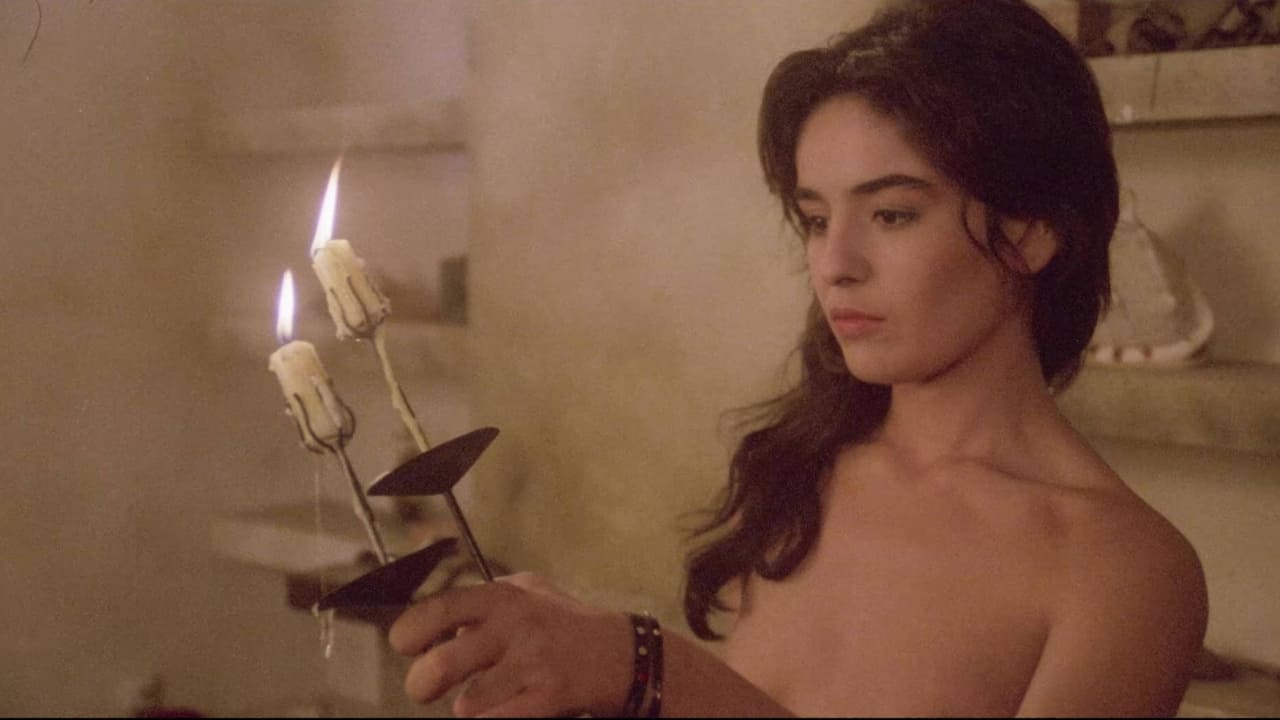
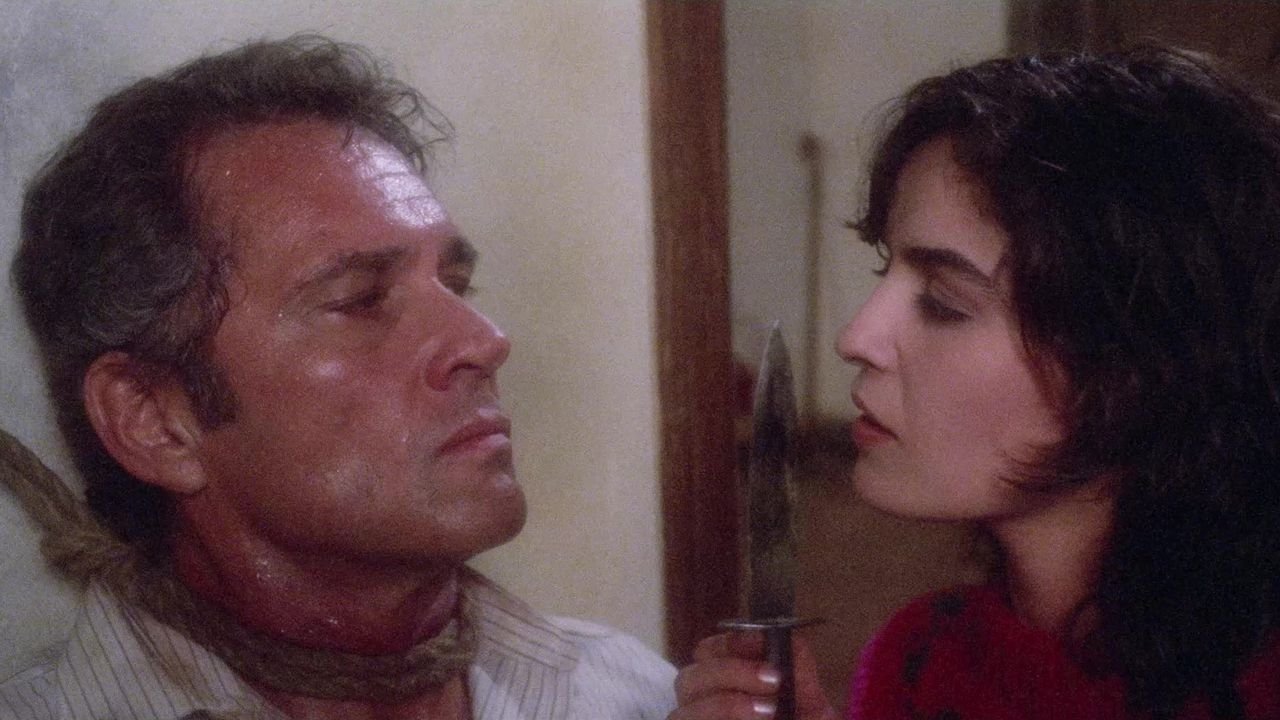
Forget the supernatural dread for a moment. The horror here is starkly, uncomfortably human. The premise is deceptively simple, bordering on lurid melodrama: young, beautiful Alma (Blanca Marsillach) kidnaps the esteemed Dr. Johnny Simpson (Brett Halsey), the surgeon she blames for the death of her lover during a routine operation. She chains him up in her secluded apartment, intending to subject him to a slow, agonizing demise fueled by her grief and rage. But what unfolds is less a straightforward revenge plot and more a claustrophobic, increasingly perverse psychodrama, a dangerous dance of power, submission, and burgeoning, toxic intimacy between captor and captive. Watching it unfold feels voyeuristic, almost intrusive, trapping you in that apartment alongside them.
Fulci, even working with the tighter budgets and perhaps strained circumstances that marked his later career (rumors persisted about his declining health impacting productions around this time), still knew how to suffocate his audience with atmosphere. The single apartment setting becomes a pressure cooker. Cinematographer Alejandro Ulloa, who also shot Fulci's surreal Aenigma (1987) the following year, uses tight framing and shadowy lighting to emphasize the confinement and the shifting psychological states. The air feels thick, heavy with unspoken tensions and the gradual erosion of conventional morality. It’s a far cry from the wide-open zombie apocalypses, focusing instead on the internal decay.
### The Sting of Obsession
Blanca Marsillach, in a demanding and often daring role, truly anchors the film. Her Alma isn't just a vengeful fury; she's volatile, vulnerable, seductive, and cruel, sometimes all within the same scene. It's a performance that requires navigating extreme emotional and physical territory, and she commits fully. You see the flickers of the broken woman beneath the calculated tormentor. Brett Halsey, a veteran familiar to genre fans from countless European productions, brings a weary gravitas to the captive doctor, his initial terror slowly morphing into something more complex and disturbing. And then there's Corinne Cléry, unforgettable from Story of O (1975) and as a Bond girl in Moonraker (1979), playing Simpson's concerned wife. Her attempts to find her husband provide the film's narrative momentum outside the apartment, but the real heat, the unsettling core, remains locked inside with Alma and Johnny.
Fulci doesn't shy away from the eroticism inherent in the power dynamics, nor from the sadomasochistic undertones. This film courted controversy for its explicitness, pushing boundaries even for the era's often permissive European genre cinema. There were certainly whispers of cuts being demanded for various releases, a common battle Fulci faced throughout his career. Yet, the explicit moments often feel less gratuitous than they are extensions of the psychological warfare. The score by Claudio Natili underscores this, shifting between mournful melodies reflecting Alma's loss and tense, pulsating rhythms that mirror the escalating psychosexual tension. It’s not just about titillation; it’s about exploring the dark, often irrational, connections that can form under duress.

### Fulci's Bitter Pill
This isn't peak Fulci for many fans. If you strapped this into your VCR expecting the fountains of gore and surreal logic of his early 80s masterpieces, you might have felt bewildered, maybe even cheated. The film feels more aligned with the wave of Italian erotic thrillers popular at the time, albeit filtered through Fulci's uniquely grim lens. Some find the pacing uneven, the central relationship unbelievable or repellent. And yes, the low-budget seams occasionally show. A particular scene involving spilled motorcycle oil and its aftermath is pure Fulci in its strange, visceral disruption, feeling almost like a signature inserted into a different kind of movie.
But The Devil's Honey has a peculiar power. It digs under your skin in a way different from his zombie epics. It’s unsettling because it feels grounded, however heightened the scenario. It explores the messy, often destructive nature of obsession and the thin line between love, hate, pain, and pleasure. Did Fulci intend it as a serious psychological study wrapped in exploitation clothing? Knowing his penchant for injecting deeper themes into genre work, it’s entirely possible. He wasn't just throwing sleaze at the screen; there's a deliberate, if uncomfortable, exploration happening here.
***
VHS Heaven Rating: 6/10
Justification: The Devil's Honey is a challenging, often uncomfortable watch that won't appeal to everyone, even die-hard Fulci fanatics. Its pacing can drag, and its blend of psychodrama and erotic thriller elements feels raw and sometimes uneven due to budget constraints and its place in Fulci's later, less celebrated period. However, it scores points for its oppressive atmosphere, Blanca Marsillach's committed performance, and Fulci's willingness to explore dark psychological territory with his trademark unflinching, albeit less gory, style. It’s a potent dose of 80s Euro-sleaze with a surprisingly bitter aftertaste.
Final Thought: More psychological venom than supernatural horror, The Devil's Honey remains a fascinating, divisive entry in Fulci's canon – a sticky, unsettling reminder that sometimes the most disturbing monsters are the ones staring back from the mirror, or chained up in the next room. It’s the kind of film that leaves you feeling a bit unclean, pondering the darkness that desire can unleash.