Okay, fellow tapeheads, let’s rewind to that glorious moment: scanning the shelves at the local video store, maybe "Action/Adventure," maybe "Horror" (because, hey, House was spooky!), and your eyes land on the box for House II: The Second Story (1987). You grab it, maybe expecting more haunted house mayhem like the original. What you got instead... well, that was something else entirely, wasn't it? This wasn't just a sequel; it felt like someone spiked the punch at the haunted house party with pure, unadulterated Saturday morning cartoon energy and maybe a dash of peyote.
Not Your Father's Haunted House
Forget the Vietnam vet angst and genuine scares of the 1986 original. Writer Ethan Wiley, who penned the first film, stepped into the director's chair for this follow-up and clearly decided to build something wildly different within those familiar walls. This time, we follow Jesse (Arye Gross, who many would later know from sitcoms like Ellen) as he inherits a sprawling, almost Mayan-looking family mansion. He moves in with his girlfriend Kate (Lar Park Lincoln) and soon his delightfully sleazy best buddy Charlie (Jonathan Stark, who also co-wrote the excellent horror-comedy Fright Night Part 2!) shows up with his aspiring singer girlfriend Lana (Amy Yasbeck).
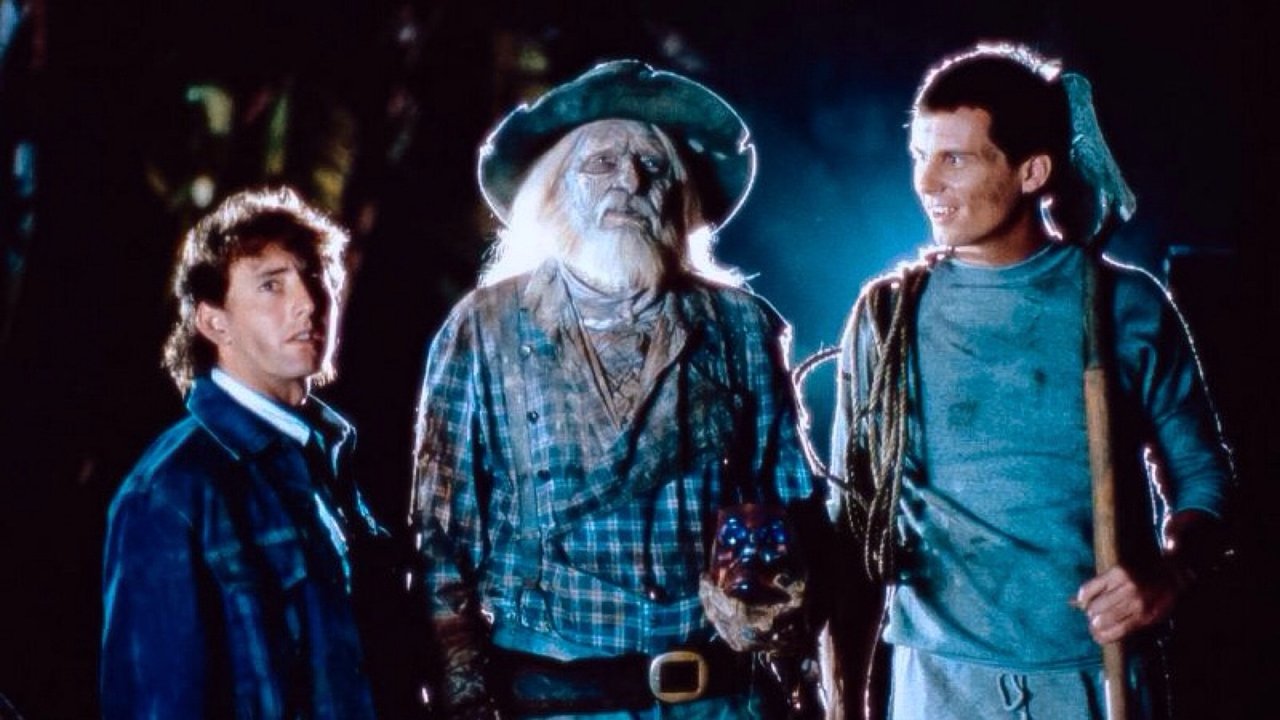
The plot, such as it is, kicks off when Jesse and Charlie discover photos suggesting Jesse's great-great-grandfather unearthed a mystical Crystal Skull with alleged powers of rejuvenation. Naturally, they decide the best course of action is to dig up Gramps. And wouldn't you know it, Gramps (Royal Dano, in a truly inspired piece of casting) returns as a remarkably spry and friendly zombie cowboy, ready to help find that skull! What follows is less a horror movie and more a bizarre, episodic adventure through time and weird dimensions, all taking place within the endlessly configurable rooms of this magic house.
Where Practical Effects Ran Wild
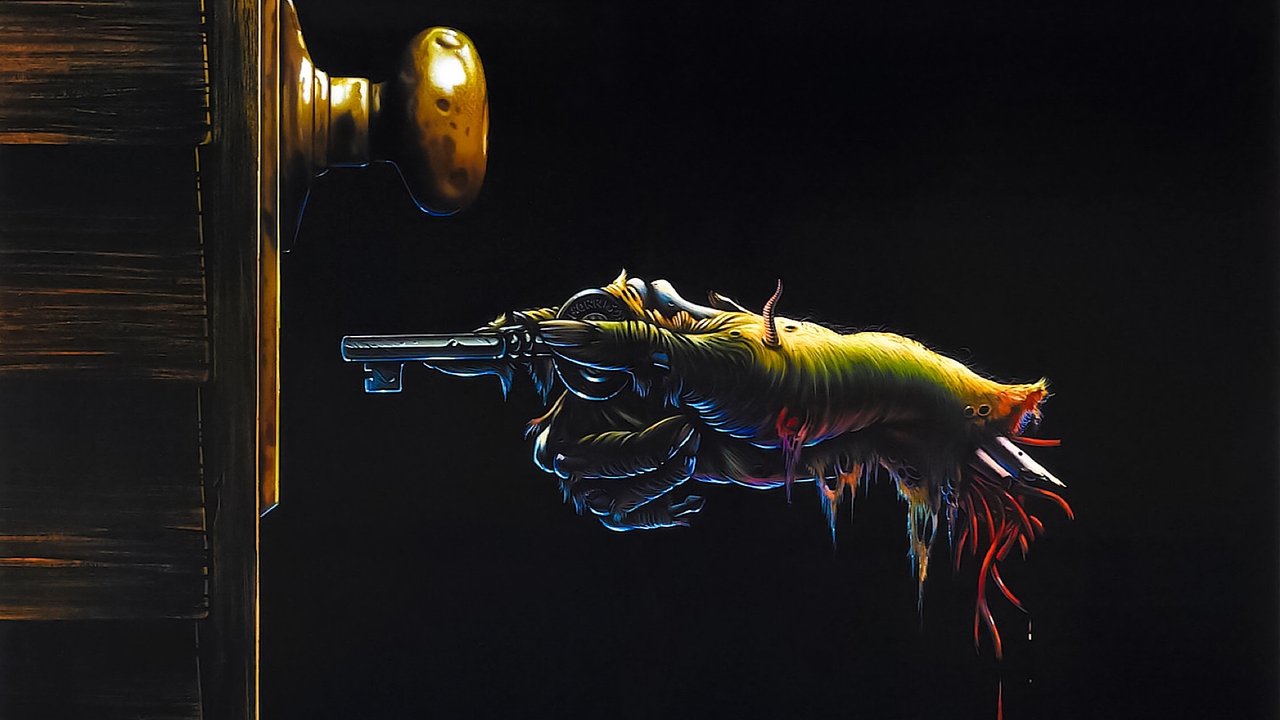
This is where House II really shines for us VHS connoisseurs. Forget polished CGI; this movie is a glorious testament to 80s practical effects, the kind that felt tangible, handcrafted, and often gloriously weird. Remember Gramps? That makeup, designed by Chris Biggs and James Cummins' team, is fantastic – expressive, slightly decayed, but never truly grotesque, perfectly fitting the film’s lighter tone. Ethan Wiley himself had previously worked on the special effects crew for Return of the Jedi (1983), and you can feel that kind of imaginative creature-shop energy here, albeit on a much tighter budget (around $3 million, similar to the first film despite its lower box office haul of about $8 million).
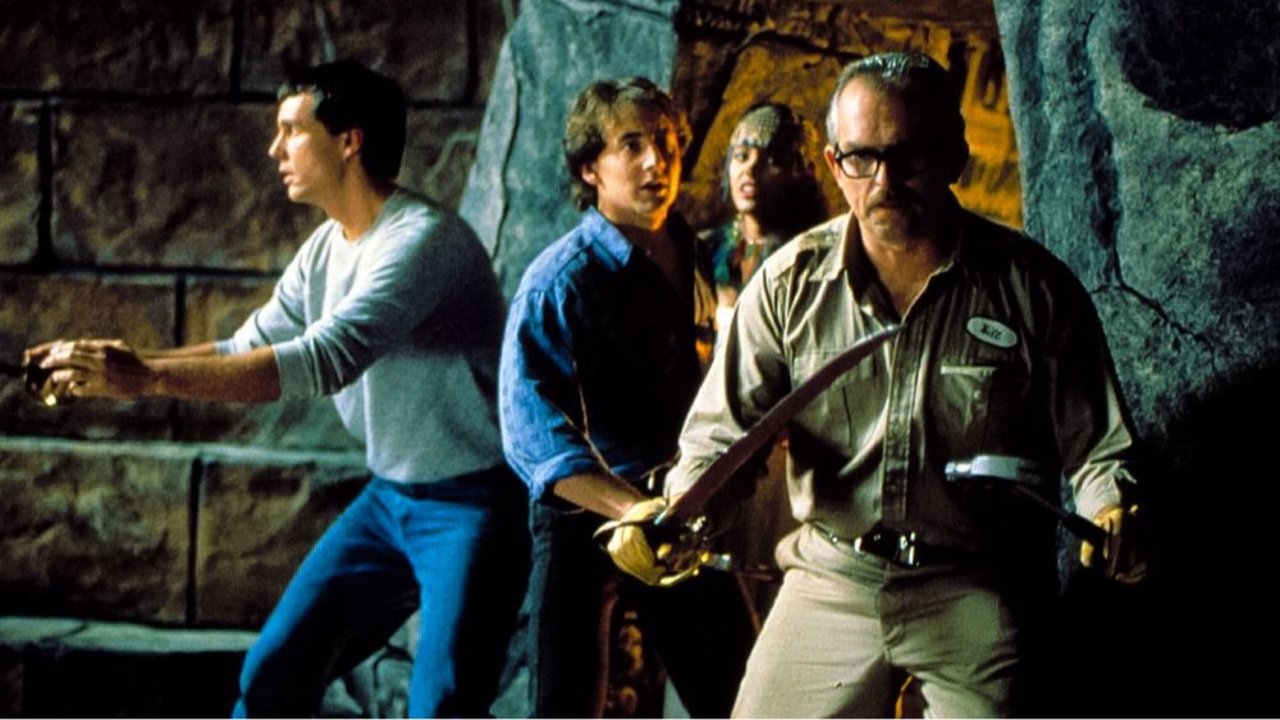
And the creatures! Oh, the creatures. Who could forget the "Caterpuppy"? A dog… with a caterpillar body? It’s exactly as strange and strangely endearing as it sounds, a puppet brought to life with pure, uninhibited imagination. Then there are the goofy cavemen, the Aztec warriors guarding the skull room, and even a brief encounter with some pterodactyls. Each effect feels made. You can almost sense the latex, the mechanics, the sheer effort involved. Was it perfectly convincing even then? Maybe not. But wasn't there a special kind of magic to seeing something physically there on screen, battling our heroes? It had a weight, a presence, that pixels sometimes struggle to replicate. The sequence where a barbarian breaks into Charlie's car, only to be bewildered by the electric window, is pure gold.
A Goofy Charm Offensive
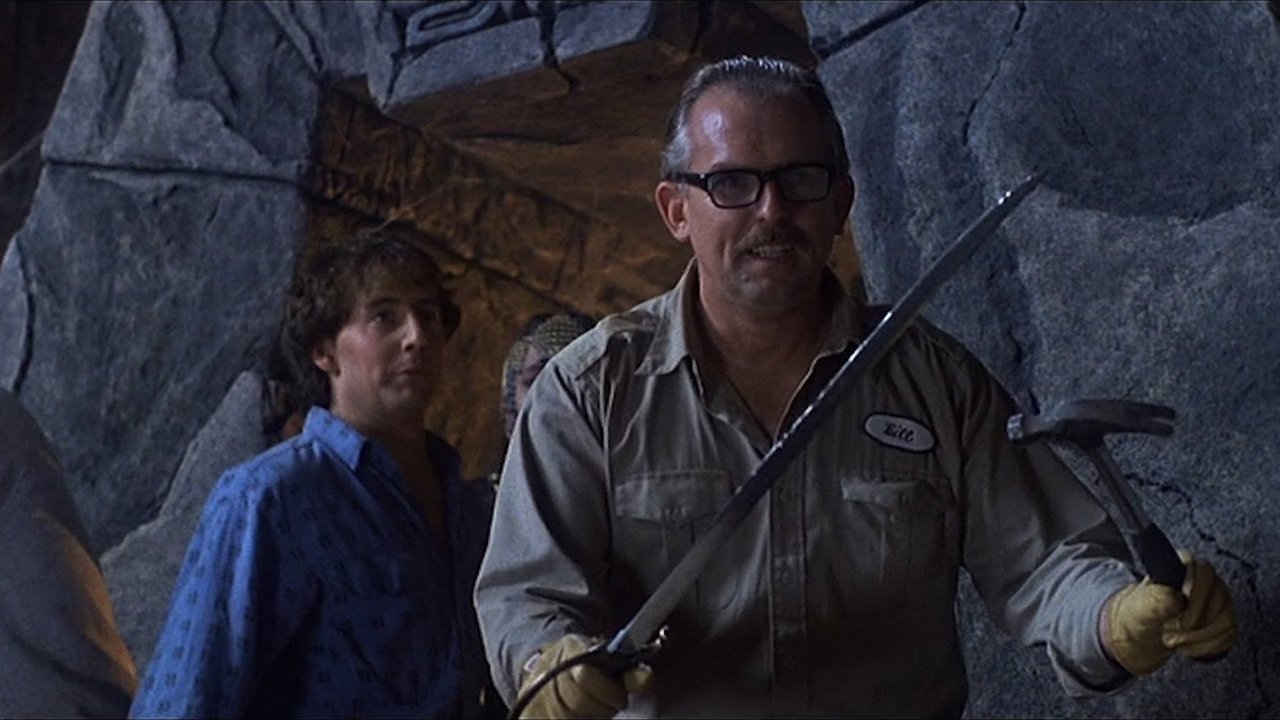
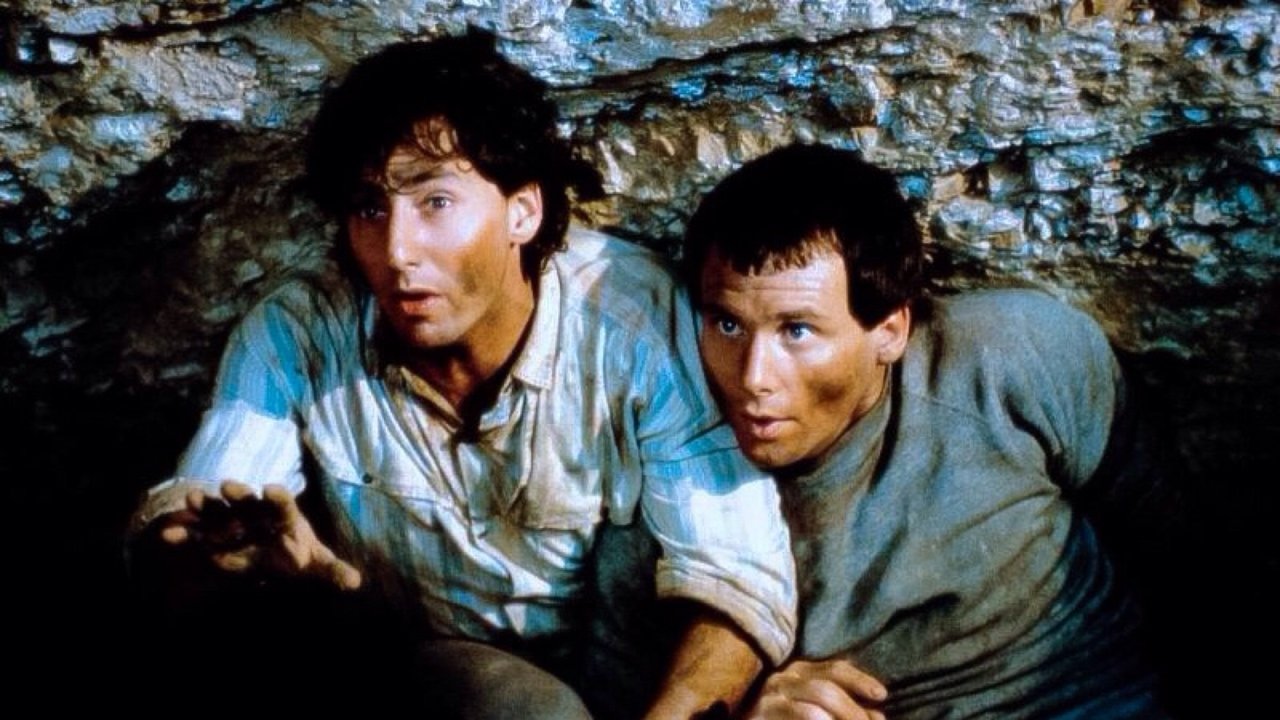
The heart of the film really lies in the chemistry between Arye Gross and Jonathan Stark. Gross plays Jesse as the slightly bewildered straight man, swept up in the escalating chaos, while Stark's Charlie is the opportunistic, fast-talking buddy who dives headfirst into the weirdness. Their banter feels natural and carries much of the film's lighthearted spirit. But the real scene-stealer is the legendary Royal Dano as Gramps. Dano, a veteran of countless Westerns, brings such warmth and grizzled charm to the role of a gun-slinging, cigar-chomping undead prospector. His presence elevates the whole affair, grounding the absurdity with a performance that’s utterly committed and genuinely funny. Seeing him navigate this bizarre new world is a constant delight. And yes, that's a young, pre-pundit Bill Maher as Jesse's high-strung boss, John – a fun bit of retro casting trivia!
The house itself, reportedly the same exterior used for TV's Remington Steele, becomes less a place of dread and more a portal fantasy playset. One room opens into a prehistoric jungle, another into an Aztec temple. The film abandons any pretense of traditional horror plotting early on, opting instead for a series of disconnected, almost Vaudevillian sketches linked by the quest for the skull. It doesn't always make sense, but it rarely stops moving. The score by Harry Manfredini (yes, the Friday the 13th guy!) reflects this shift, moving away from horror stings towards more adventurous, whimsical themes.
Beyond the Second Story
House II didn't achieve the same success as its predecessor and certainly didn't scare anyone, which likely confused audiences expecting more of the same. Critics were mostly baffled or dismissive. But over the years, it's cultivated a fond following among those who appreciate its sheer, unpretentious weirdness and its anything-goes 80s spirit. It feels like a movie made by people having fun, throwing every bizarre idea they could think of onto the screen, held together by charm and creature effects. It has almost zero connection to the first House (or the subsequent House III: The Horror Show (1989) and House IV: The Repossession (1992), which tried to swing back towards horror).
I distinctly remember renting this tape, probably multiple times, drawn in by the promise of more haunted house antics but staying for the sheer imaginative silliness of it all. It was the kind of movie you’d watch late at night, maybe with the tracking slightly off, making the already surreal visuals even dreamier. It’s undeniably dated, a bit ramshackle in its structure, but its heart is in the right place.
Rating: 6.5 / 10
Justification: While the plot is paper-thin and the tone wildly uneven compared to the original, House II scores points for its boundless creativity, charming performances (especially Royal Dano), and its wonderful showcase of endearing 80s practical effects. It's goofy, messy, but undeniably fun if you embrace its bizarre adventure spirit.
Final Comment: Less a "Second Story" and more a completely different blueprint scribbled on a napkin during a fever dream, House II built a bizarrely charming, effects-driven funhouse onto 80s fantasy-comedy that remains a delightful curiosity from the VHS shelves.