Okay, fellow tapeheads, let's rewind to a time when the video store shelves offered more than just the guaranteed blockbusters. Sometimes, nestled between the action epics and slasher flicks, you'd find something... different. Something that blended genres like a mad scientist mixing potions, leaving you wondering exactly what you just watched, but knowing you kind of loved its weirdness. That perfectly describes 1989’s Dream a Little Dream, a film that tried to pour teen angst, philosophical musings, body-swapping fantasy, and romance into one brightly coloured, synth-poppy bottle.
### More Than Meets the Eye (Or Is It?)
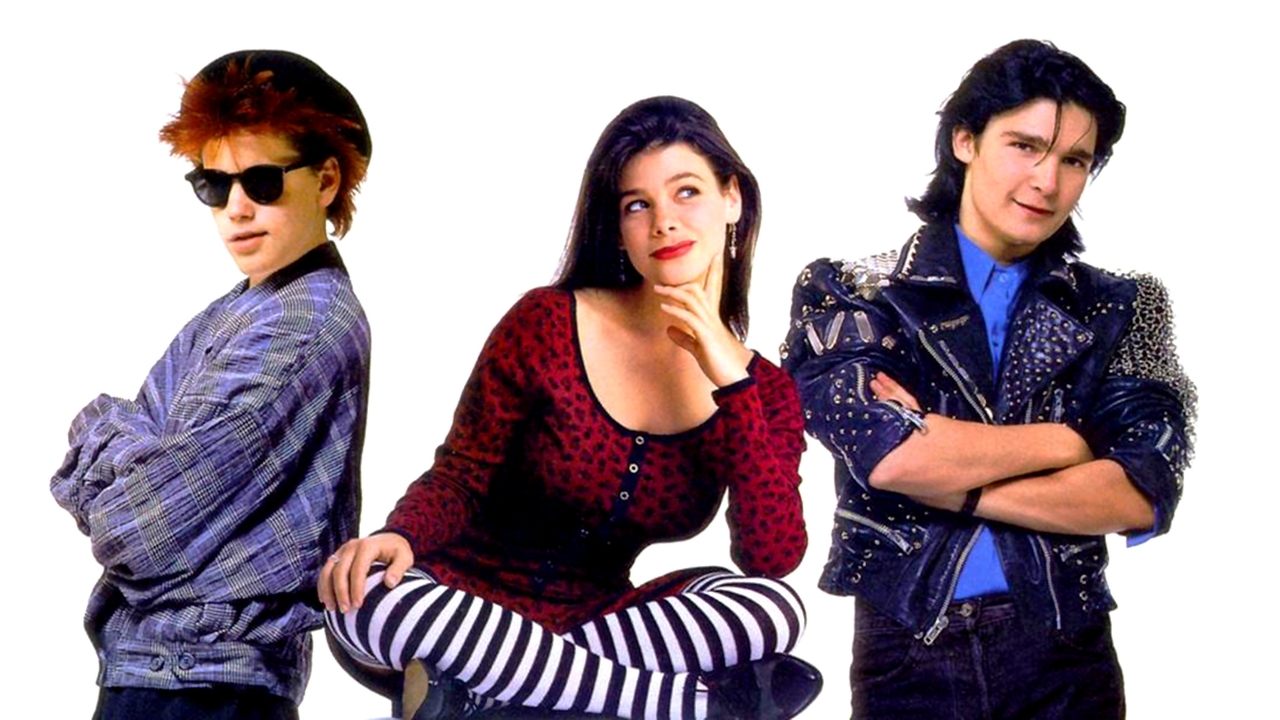
At first glance, Dream a Little Dream looks like standard late-80s teen fare, especially starring the inseparable duo of Corey Feldman and Corey Haim, fresh off hits like The Lost Boys (1987) and License to Drive (1988). Feldman plays Bobby Keller, a rebellious high schooler navigating the usual trials: dodging bullies, mooning over the popular girl Lainie Diamond (played with charm by Meredith Salenger, who we adored in The Journey of Natty Gann (1985)), and generally trying to survive adolescence alongside his wisecracking best friend, Dinger (Corey Haim stealing scenes as only he could). But director Marc Rocco (who would later helm the intense prison drama Murder in the First (1995)) wasn't content with just making another teen comedy. Oh no.
The film takes a sharp left turn into the metaphysical when Bobby stumbles—quite literally—into a transcendental meditation experiment being conducted in his backyard by an elderly couple, Coleman and Gena Ettinger. Coleman, played by the legendary Jason Robards, is seeking a way to achieve immortality through shared dreaming. One accidental collision later, and poof – Bobby’s consciousness is periodically invaded by Coleman's, while Coleman himself lies comatose. It’s a body-swap premise, sure, but filtered through a lens of new-age philosophy and dream logic that feels uniquely... well, 1989.
### When Teen Dreams Meet Hollywood Royalty
What truly sets Dream a Little Dream apart, for better or worse, is its bizarrely prestigious supporting cast. Alongside the two Coreys and Salenger, you have not only two-time Oscar winner Jason Robards bringing surprising gravitas to the role of the dying philosopher, but also Piper Laurie (an Oscar nominee herself for films like Carrie (1976) and Children of a Lesser God (1986)) as his devoted wife, Gena. And if that wasn't enough indie cred, the perpetually cool Harry Dean Stanton pops up as Ike Baker, Coleman's skeptical but concerned friend. Seeing these seasoned actors interact with the teen leads creates a fascinating, sometimes jarring, contrast. Robards, in particular, commits fully, delivering philosophical lines that feel airlifted from a much more serious film, yet somehow grounding the fantastical elements. It’s a testament to his talent that it almost works seamlessly.
The film asks Feldman to carry a lot of weight, portraying not just the goofy Bobby but also the increasingly desperate, sometimes sinister, psyche of Coleman battling within him. It's an ambitious performance, showcasing more range than his usual roles demanded, even if the script sometimes struggles to make the internal conflict truly coherent. Meanwhile, Haim gets some classic Dinger moments, offering comic relief and that signature Haim energy, though his character feels somewhat sidelined by the central metaphysical plot.
### Echoes in the Dreamscape: Trivia and Tone
This film wasn't a runaway smash hit; its $5.5 million domestic gross barely doubled its estimated budget, meaning it likely found most of its audience, like many of us, on home video. Critics at the time were somewhat baffled, reflected in its less-than-stellar Rotten Tomatoes score, struggling with the film's tonal shifts between slapstick comedy, earnest romance, and pseudo-philosophical drama. Yet, that tonal juggling act is part of its enduring charm for those who discovered it back then.
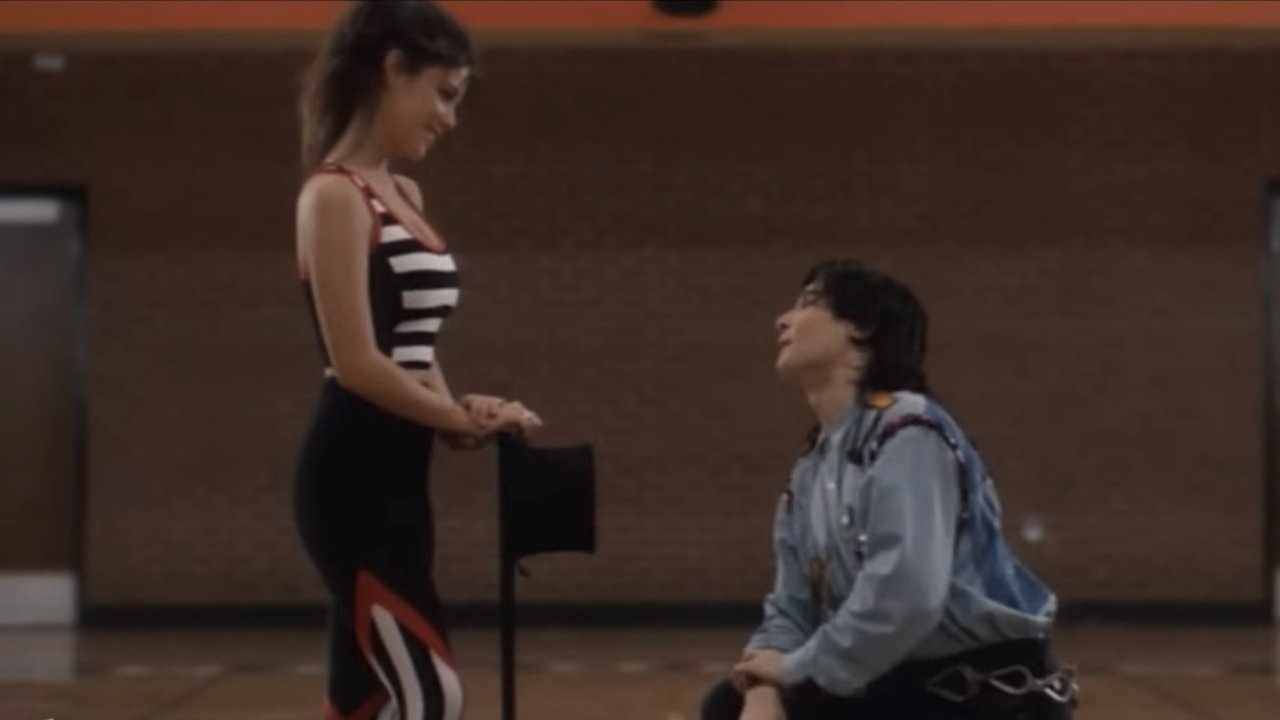
One undeniable highlight is the soundtrack. Packed with 80s goodness, it famously featured Mickey Thomas (of Starship fame) singing the title track, a cover of the classic song, which became a minor hit. The blend of contemporary pop and older standards mirrors the film's own collision of youth culture and older themes. Director Marc Rocco, son of veteran actor Alex Rocco (Moe Greene in The Godfather (1972)), clearly had ambition, even if the script, co-written by Rocco, Daniel Franklin, and D.E. Eisenberg, sometimes gets tangled in its own dream logic. Remember that bizarre sequence where Bobby, channeling Coleman, expertly dances the tango with Lainie? Utterly inexplicable within the plot, yet somehow unforgettable. It’s moments like these – baffling, stylish, slightly nonsensical – that stick with you.
### Finding the Charm in the Quirks
Watching Dream a Little Dream today is like unearthing a time capsule filled not just with familiar faces and fashions, but with a specific kind of late-80s cinematic ambition that wasn't afraid to get a little weird. It doesn't always succeed; the plot can feel convoluted, and the blend of comedy and serious themes isn't always smooth. Is it a profound exploration of consciousness and mortality? Probably not. Is it a laugh-a-minute teen romp? Not entirely.
But there's an undeniable sincerity to it, a willingness to reach for something more than the standard formula. It has heart, largely thanks to the earnest performances, particularly from Salenger and the unexpected depth Robards brings. For fans of the Coreys, it offers a different flavour than their more straightforward comedies or horror outings. It’s the kind of film you might have rented on a whim, drawn in by the cover art or the familiar stars, and come away from feeling like you’d experienced something unique, even if you couldn’t quite put your finger on why.
Rating: 6/10
Justification: This score reflects the film's undeniable nostalgic appeal, its ambitious (if messy) blend of genres, the charm of its cast (especially the unexpected gravitas from Robards and Laurie), and its memorable soundtrack. It loses points for its uneven tone, sometimes confusing plot, and moments where the reach exceeds its grasp. It's not a masterpiece, but it's a fascinating and fondly remembered piece of late-80s oddity.
Final Thought: Dream a Little Dream might be a bit of a fever dream itself, but like any good dream, it leaves behind strange, vivid images and a feeling you won't easily shake – a perfect slice of VHS-era curiosity.