A Chinese Odyssey Part Two: Cinderella
Alright fellow tape travelers, gather ‘round the flickering glow of the CRT. Tonight, we’re cracking open a true Hong Kong cinematic paradox, a film that initially baffled many but became a cornerstone of 90s cult worship: Jeffrey Lau's magnificent, maddening A Chinese Odyssey Part Two: Cinderella (1995). If you rented Part One: Pandora's Box expecting a straightforward adaptation of Journey to the West and found yourself bewildered by time travel and reincarnated pigs, well, buckle up. Part Two takes that glorious chaos, cranks it past eleven, and somehow finds a deep, resonant soul amidst the lunacy.
### From Slapstick to Unexpected Heartbreak
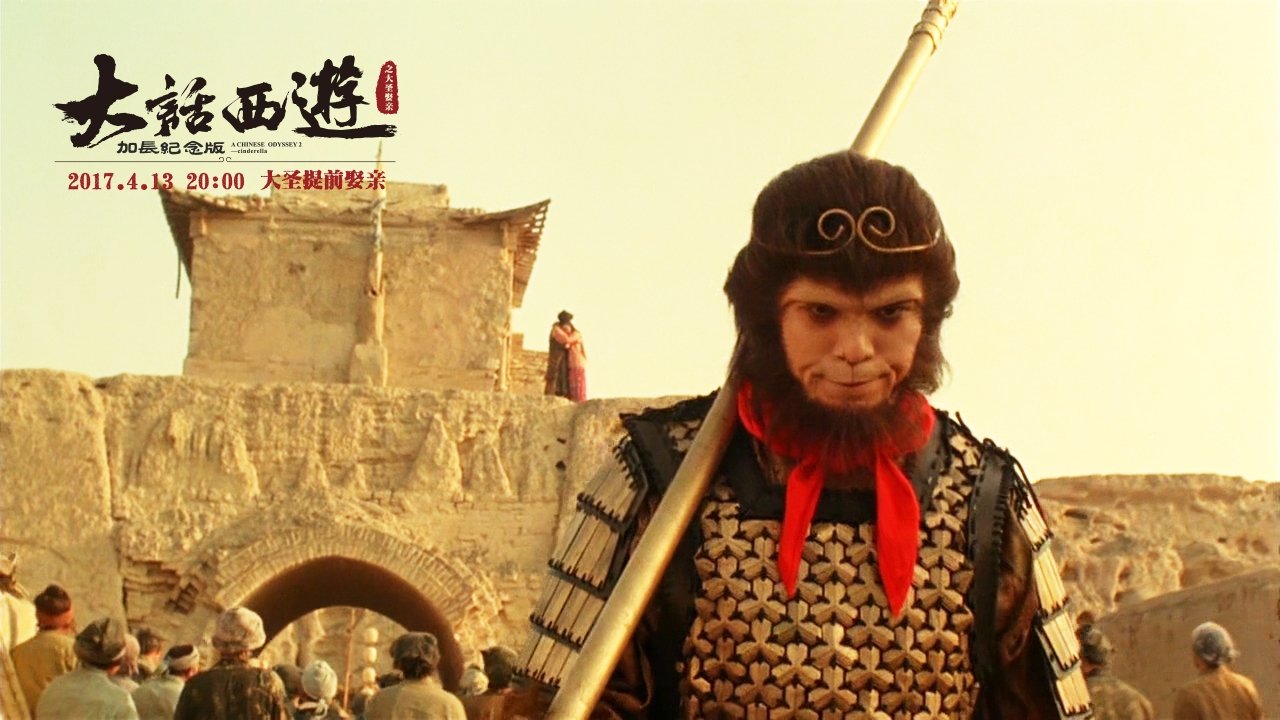
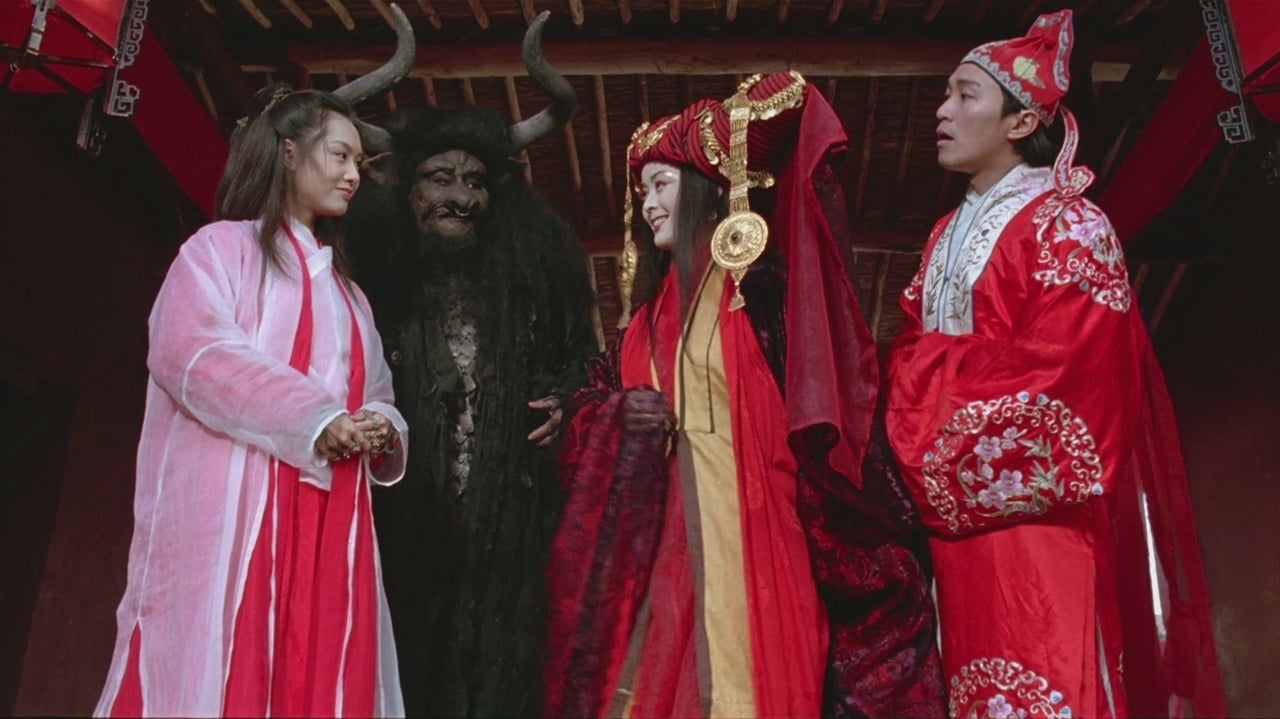
Picking up precisely where Part One left off (remember needing both those chunky tapes from Blockbuster?), Joker (Stephen Chow) has used the Pandora's Box to travel back 500 years, hoping to save his beloved Bak Jing-jing. Instead, he lands slap-bang in the path of the Zixia Fairy (Athena Chu, in a star-making turn that practically radiated off the rental tape). She steals the box, marks Joker as her fated lover (by leaving three dots on the sole of his foot, naturally), and sets in motion a destiny he desperately tries to avoid: accepting his true identity as Sun Wukong, the Monkey King.
What follows is pure, unadulterated "Mo Lei Tau" – Stephen Chow’s signature brand of nonsensical, rapid-fire Cantonese wordplay and anarchic physical comedy. The plot twists and turns with the logic of a fever dream, involving bull demons, heavenly deities, sentient grapes, and Longevity Monk (Law Kar-ying, stealing scenes with his incessant, irritating singing). It’s the kind of film where logic takes a backseat to sheer comic velocity. I distinctly remember rewinding certain sequences on my trusty VCR, not just because the subtitles flew by, but because I genuinely couldn't believe what I was seeing. It was Hong Kong cinema at its most creatively unhinged.

### That Old School Hong Kong Magic
Let's talk action, because amidst the gags, Cinderella delivers. This isn't the slick, CG-heavy spectacle of today; this is glorious, tangible 90s wire-fu and practical wizardry. Remember how real those mid-air clashes felt? The performers, particularly Chow himself, are flung across beautifully stark landscapes – a key retro fun fact is that both Odyssey films were shot back-to-back on location in Mainland China, primarily near Xi'an and the vast Ningxia deserts, lending an authentic ancient scale often missing from studio-bound HK flicks.
The effects have that charming, almost handcrafted feel. When the Bull Demon King transforms or Zixia unleashes her powers, you see the wires, you sense the practical rigging, the cleverly edited cuts, the bursts of real (or real-looking!) pyrotechnics. It possesses an energy, a certain weight, that modern digital effects often smooth away. There's an inventiveness born from limitation here, a hallmark of the Hong Kong industry at the time, forcing filmmakers like Lau to find creative solutions rather than just painting over problems with pixels.

### More Than Just Jokes: The Cult Phenomenon
Here’s the twist nobody saw coming back in '95: buried beneath the reincarnated Ng Man-tat (playing Joker’s loyal, dim-witted second-in-command and the Pigsy character Zhu Bajie – classic!) and the cross-talking absurdity is a genuinely moving story about love, fate, and sacrifice. Chow's performance evolves from pure slapstick buffoonery to something surprisingly profound as Joker wrestles with becoming the detached, powerful Monkey King, thereby losing his mortal capacity for love just as he finds it with Zixia.
Athena Chu is luminous as Zixia, embodying both mischievous charm and tragic romanticism. Her belief that her hero will arrive on a cloud of seven colours became an iconic, almost defining romantic image for a generation. That final confrontation, the shift in Chow's eyes when he fully embraces his destiny... it hits surprisingly hard. It’s this unexpected depth that explains the film’s fascinating trajectory. Another retro fun fact: A Chinese Odyssey Parts 1 & 2 were initially box office disappointments in Hong Kong. Critics were mixed, audiences perhaps weren't ready for this radical deconstruction of a classic tale mixed with such modern absurdity. It was only later, through rampant VCD and television proliferation (especially in Mainland China), that it achieved its colossal cult status. Suddenly, everyone was quoting lines, debating interpretations, and hailing it as a masterpiece.
The chaotic energy on screen perhaps mirrored the production itself. Stories abound of Jeffrey Lau and Stephen Chow (who reportedly exerted considerable creative influence, a common theme in his 90s peak) constantly rewriting scenes on the fly, improvising dialogue, and letting the film find its strange, wonderful shape during the demanding back-to-back shoot. This wasn't just adapting Journey to the West; it was filtering it through the specific genius and anxieties of mid-90s Hong Kong.
### Final Reel
A Chinese Odyssey Part Two: Cinderella is a whirlwind. It's baffling, hilarious, action-packed, and ultimately, deeply poignant. It demands you keep up with its breakneck pace and surreal logic, but the reward is immense. It captures a specific moment in Hong Kong cinema where boundless creativity, low-tech ingenuity, and star power collided to create something utterly unique. For newcomers, watching Part One first is almost essential, but even then, prepare for a wild ride.
Rating: 9/10 - This score reflects its standing as a beloved cult masterpiece, elevated by Chow and Chu's iconic performances and its surprisingly potent blend of extreme comedy and genuine tragedy. Its initial HK reception doesn't diminish its eventual, massive impact. It's manic, messy, but also brilliant.
Final Thought: It’s a film that feels like it could only have emerged from the glorious, slightly worn grooves of a well-loved VHS tape – utterly bonkers, surprisingly beautiful, and impossible to replicate.