Okay, fellow travelers on the magnetic tape highway, let's dust off a slightly less-worn cassette from the late 80s shelf. Remember that feeling when a movie promised not just action or laughs, but a journey? A real, honest-to-goodness road trip unfolding on your flickering CRT screen, miles away from your living room? That's the spirit captured in Gabriele Salvatores' warm and wanderlust-fueled Marrakech Express from 1989, a film that feels like rediscovering a faded postcard from an unforgettable adventure.
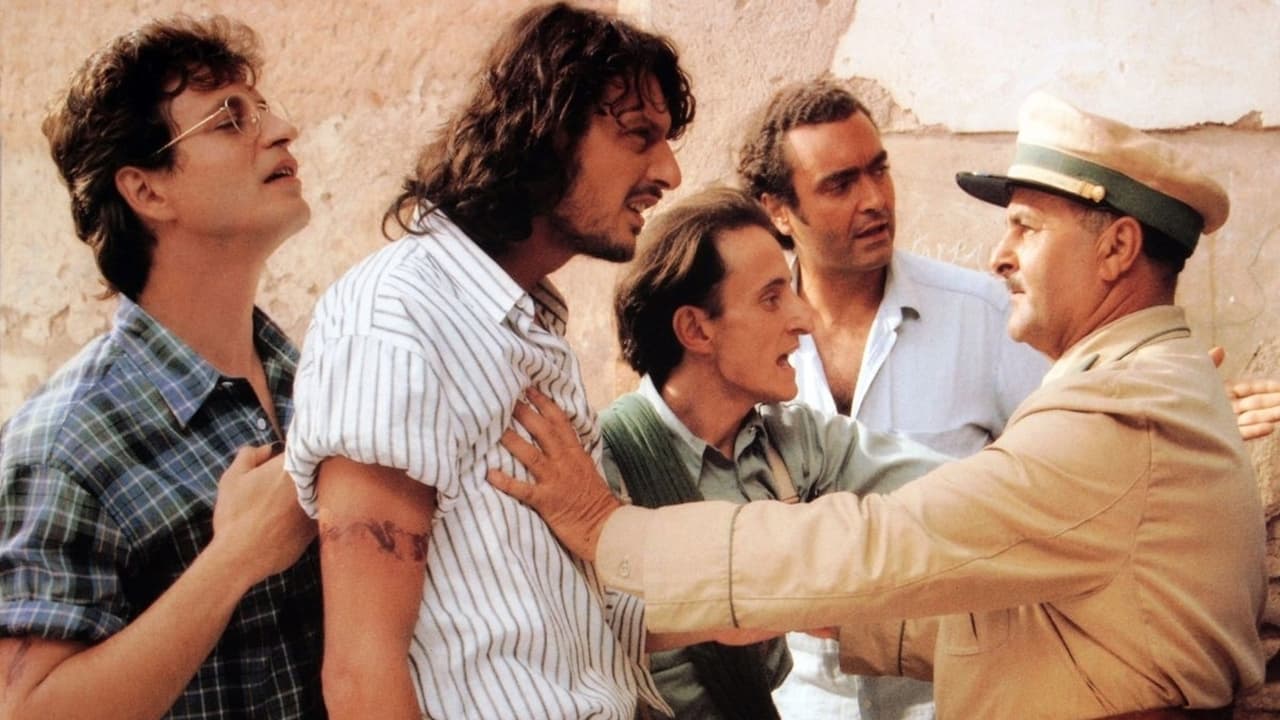
It wasn't playing at every multiplex, certainly not like the big Hollywood blockbusters of the era, but finding this gem at the video store felt like uncovering a secret map. The premise itself has that classic hook: four Italian men, once inseparable university pals, now adrift in the predictable currents of their thirties – job dissatisfaction, relationship woes, the general malaise of realizing youth hasn't lasted forever. Their comfortable ruts are suddenly jolted when Teresa (Cristina Marsillach, who brought a captivating intensity to films like Argento's Opera (1987)) appears, bearing news that their fifth musketeer, Rudy, is languishing in a Moroccan jail. The mission? Pool their resources, buy a rugged old 4x4, and drive south to bail him out.
### Answering the Call (Again)
What follows is less a high-octane rescue mission and more a beautifully observed road movie about reconnection – both with each other and with the idealistic, adventurous selves they thought they'd left behind. Salvatores, who would later charm the world and win an Oscar with Mediterraneo (1991), crafts something truly special here. Marrakech Express is often cited as the first film in his informal "escape trilogy" (followed by Turné and Mediterraneo), and you can feel those themes taking shape: the longing for freedom, the disillusionment with modern life, and the allure of simpler, distant shores.
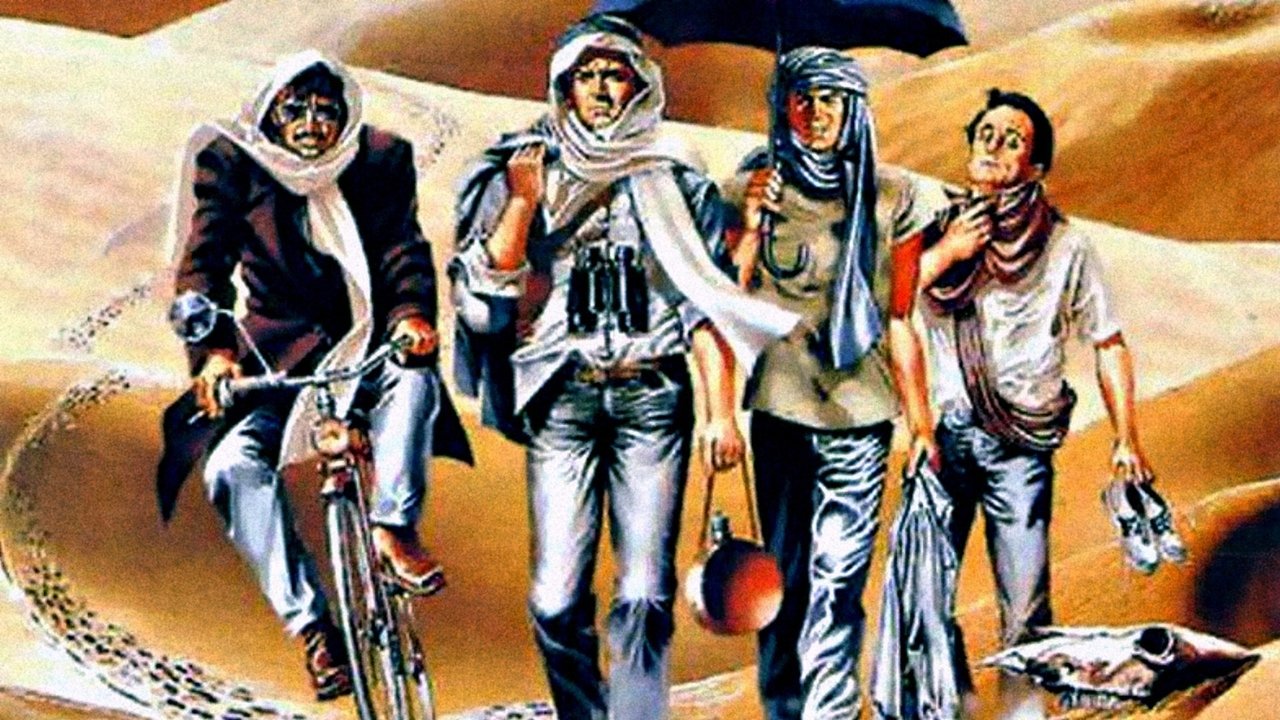
The quartet heading south is a fantastic slice of late-80s Italian manhood, brought to life by a superb cast. There's Marco (Fabrizio Bentivoglio), the nominal leader trying to keep things focused; Ponchia (Diego Abatantuono, a genuine Italian screen legend often known for broader comedy, here showing wonderful nuance), the pragmatic garage owner providing the wheels and a dose of weary realism; Paolino (Giuseppe Cederna), the quiet teacher perhaps most disconnected from his adventurous past; and Cedro (Ugo Conti), the perpetually spaced-out member of the group. Their chemistry feels lived-in, the bickering and bonding carrying the weight of shared history. Watching them gradually shed their thirty-something anxieties and rediscover their old rhythms is the heart of the film.
### Dust, Dreams, and Desert Drives
The journey itself is the star. Forget slick CGI landscapes; this is pure, practical filmmaking. Salvatores takes us through sun-drenched European highways, across the Strait of Gibraltar, and deep into the dusty, vibrant landscapes of Morocco. You can almost smell the diesel fumes and feel the Saharan heat haze shimmering off the screen. The sturdy, slightly battered off-road vehicle they buy becomes a character in itself – a symbol of their shared, perhaps foolish, endeavor. There's a tangible sense of place here, a far cry from generic movie backdrops. Apparently, filming on location in Morocco presented its fair share of logistical hurdles, but the resulting authenticity is undeniable. It feels like a real trip, undertaken by real people.
It’s not all smooth driving, naturally. Breakdowns happen, tempers flare, old tensions resurface, and the mysterious Teresa adds a layer of romantic complication and intrigue. The script, co-written by Salvatores, Carlo Mazzacurati, and Enzo Monteleone, balances the gentle humour arising from the characters' quirks and their fish-out-of-water experiences with moments of genuine reflection. What are they really trying to rescue? Rudy, or some lost part of themselves?
### A Different Kind of Adventure Movie
Marrakech Express might not have the pyrotechnics of a Hollywood blockbuster, but its adventure feels deeply resonant. It taps into that universal fantasy: dropping everything for a grand, perhaps ill-advised, quest with the people who knew you when. It’s about the journey, not just the destination – a cliché, perhaps, but one the film explores with sincerity and charm. The score subtly underscores the shifting moods, from hopeful departure to the contemplative quiet of the desert night.
While it didn't achieve the global fame of Mediterraneo, Marrakech Express was well-received in Italy and remains a beloved entry in Salvatores’ filmography. It showcases his talent for capturing naturalistic performances and finding the poignant heart within a comedic setup. For viewers outside Italy, stumbling upon this film on VHS felt like discovering a wonderful European import, a different flavour of cinematic adventure.
***
VHS Heaven Rating: 8/10
Marrakech Express earns a solid 8 for its heartfelt portrayal of friendship rekindled on the open road, its evocative sense of place, and its charming blend of humor and melancholy. The performances are uniformly excellent, capturing the nuances of middle-aged men confronting their past selves, and Salvatores directs with a warm, humanistic touch. It might lack explosive action, but its emotional journey and nostalgic portrait of escape resonate deeply, making it a truly rewarding watch, especially if you missed it back in the day.
It’s the kind of film that makes you want to call up your oldest friends and plan an adventure – maybe leaving the jailbreak part out. A truly lovely road trip for the soul, straight from the golden age of video rentals.