Alright, fellow tape travelers, let's rewind to a time before cinematic universes dominated the multiplex, back when finding a superhero movie on the video store shelf felt like unearthing a rare treasure... or sometimes, something a little more... unusual. Today, we're slotting in that slightly battered copy of Albert Pyun's Captain America from 1990, a film that’s less star-spangled blockbuster, more like a fascinating, slightly wonky transmission from an alternate dimension of comic book adaptations.

Forget the slick polish of today's heroes. This Cap, played with earnest square-jawed sincerity by Matt Salinger (yes, son of that Salinger – a fun fact that always added a layer of unexpected trivia!), feels distinctly like a product of its time and, more specifically, its notoriously troubled production. This wasn't Marvel Studios with nine-figure budgets; this was Cannon Group offshoot 21st Century Film Corporation, run by Menahem Golan, navigating choppy financial waters. That reported $10 million budget feels both surprisingly high for the end result and tragically low for the ambition.
From Fascist Foe to 90s Fish Out of Water
The film actually kicks off with a surprisingly atmospheric, almost sepia-toned World War II sequence set in Fascist Italy. It’s here we meet the Red Skull (played with sneering menace under prosthetics by Scott Paulin), originally portrayed, controversially, as an Italian officer tied to Mussolini before later dialogue vaguely retcons him into the more familiar Nazi affiliation. The origin story hits the key beats: Steve Rogers, the volunteer, the Super Soldier serum, and the fateful mission where he ends up strapped to a missile aimed at the White House, only to crash-land and freeze in the Alaskan ice for fifty years. It’s pure pulp, delivered with a kind of straight face that’s almost endearing.
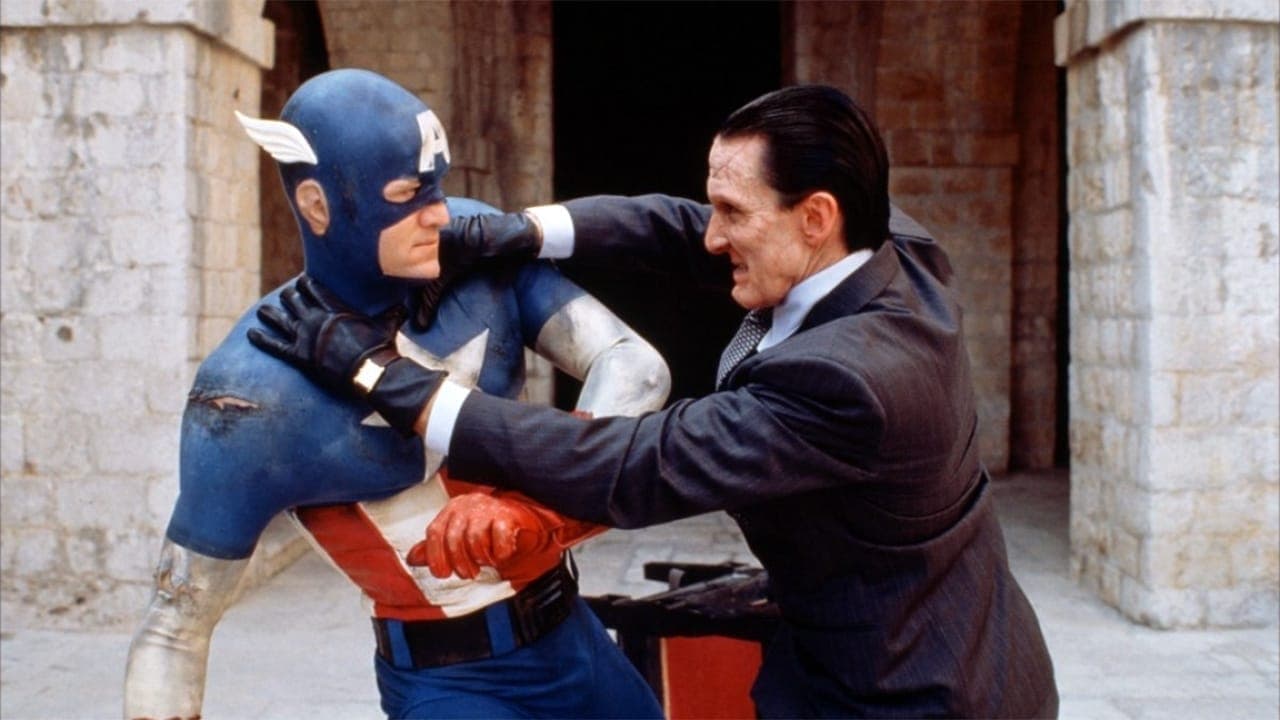
When Cap thaws out in the distant future of 1990, the fish-out-of-water elements are played less for laughs and more for a kind of bewildered melancholy. Salinger does capture a sense of disorientation, a man fundamentally out of step. He reconnects with his wartime sweetheart, Bernice (played briefly by Kim Gillingham), now elderly, and meets her daughter, Sharon (also Gillingham), who becomes his reluctant modern-day ally. This whole section has a slower, more character-focused pace than you might expect, punctuated by Cap occasionally looking baffled by nineties life or having rather poignant flashbacks.
Pyun Power and Practical Punch-Ups
Now, let's talk action, because this is an Albert Pyun joint, the director who gave us gritty, low-budget gems like Cyborg (1989). Forget seamless CGI wire removal or digitally enhanced explosions. The action here feels distinctly grounded, almost clunky at times, but undeniably physical. Remember how real those bullet hits used to look, with squibs popping on impact? You get that here. The fights are straightforward brawls, often relying on basic stunt work and close-ups. There’s a certain charm to seeing Cap physically wrestle goons or execute a straightforward kick that sends someone flying just off-camera.
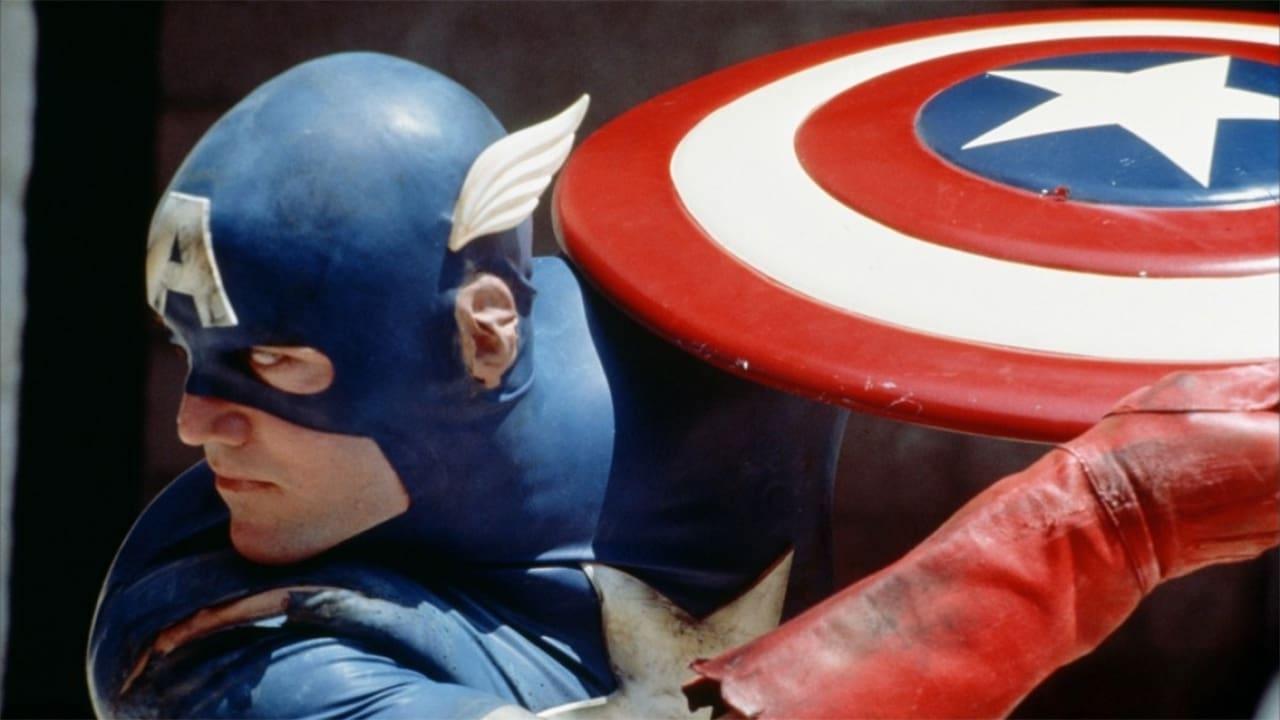
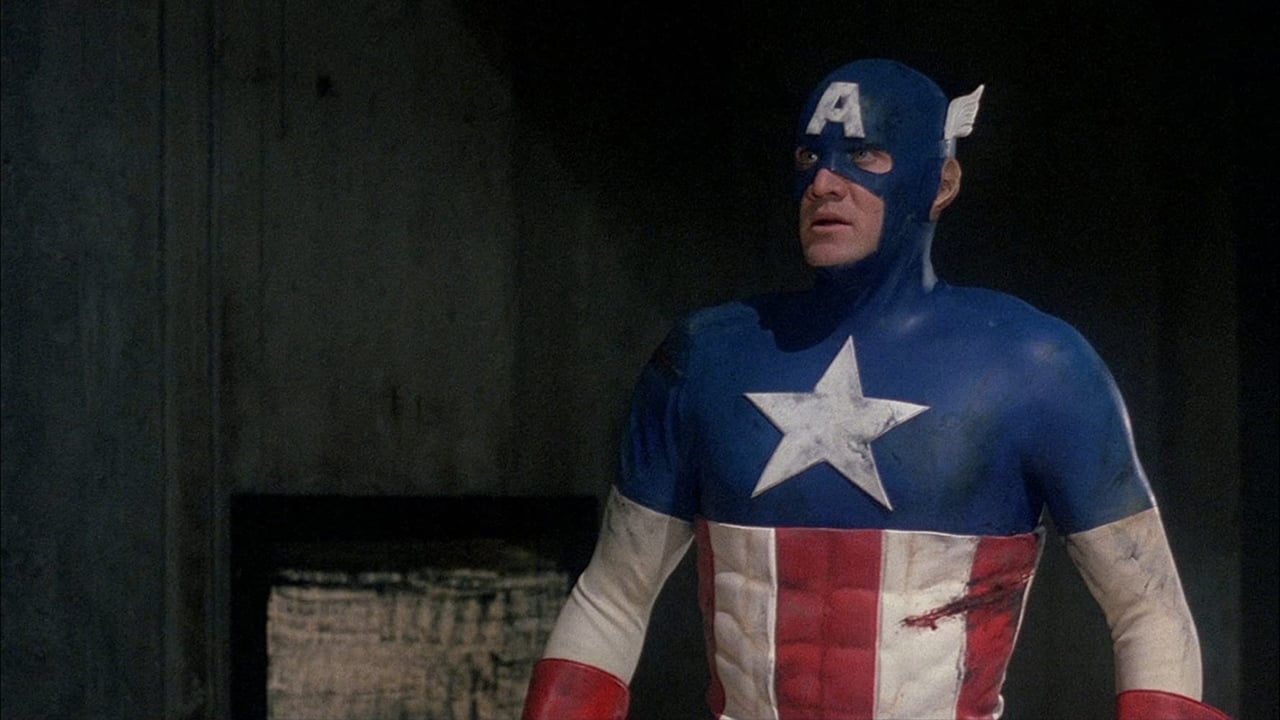
The practical effects have that distinct late-80s/early-90s feel. The Red Skull's makeup is ambitious, if perhaps a bit rubbery by today's standards. Cap's shield throwing often involves clever editing and sound effects rather than impossible physics. It feels tangible, even when it looks a bit rough around the edges. Filming primarily in Yugoslavia (standing in for both Italy and the US) likely stretched the budget, giving some scenes an interesting, if not always entirely convincing, European flavour. Wasn't there something undeniably cool about seeing actual cars getting dented in chases back then, even if they weren't the sleekest models?
A Cast of Familiar Faces
Beyond Salinger, the film boasts some welcome character actors. The great Ronny Cox (RoboCop, Total Recall) plays Tom Kimball, initially a childhood friend of Rogers who grows up to be the President of the United States (!), targeted by the Red Skull's shadowy organization. And Ned Beatty (Superman, Deliverance) pops up briefly as Sam Kolawetz, a wartime buddy turned reporter who helps uncover the conspiracy. Their presence lends a touch of gravitas, even when the script (credited to Stephen Tolkin with uncredited work by Lawrence J. Block) occasionally wobbles.
The Long Road to the VCR
This film's journey was almost as dramatic as Cap's. Filmed in 1989, it was plagued by the financial collapse of 21st Century Film Corporation. It sat on the shelf, eventually receiving limited theatrical releases overseas in 1990 before quietly debuting on VHS and cable TV in the United States in 1992. No wonder it felt like a slightly mysterious find at the video store! It wasn't heavily promoted; it just appeared, this strange, earnest, slightly off-model version of a hero many of us only knew from comics or cartoons. Critics were largely unkind, and it certainly didn't make waves financially, but for kids discovering it late at night on a flickering CRT, it was Captain America on screen.
The Verdict
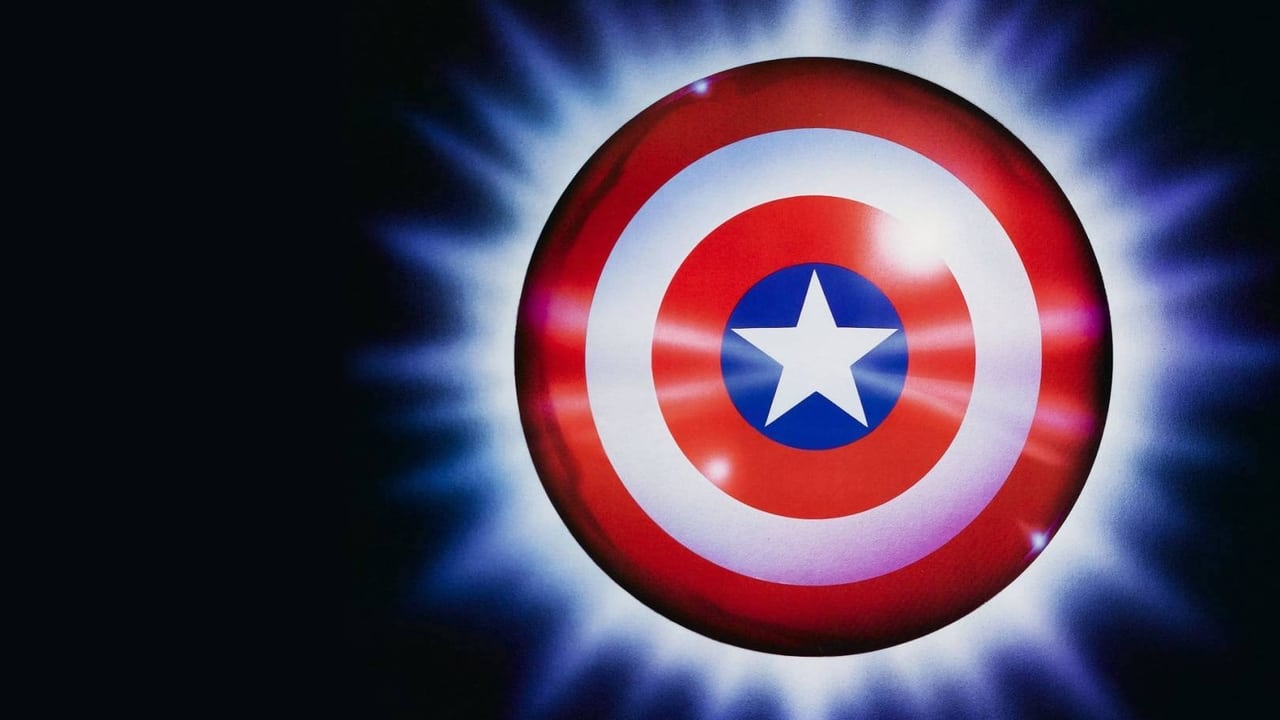
Captain America (1990) is undeniably flawed. The pacing is uneven, the budget constraints are often visible, and the tone sometimes veers unexpectedly into moody drama when you might expect more heroic derring-do. Matt Salinger is likeable but perhaps lacks the dynamic charisma needed to fully carry the film. Yet... there's something undeniably compelling about its sincerity. It tries, bless its heart, to tell a Captain America story with the tools and sensibilities of its specific, pre-blockbuster era. It’s a fascinating time capsule, a testament to Albert Pyun's ability to deliver genre filmmaking under challenging circumstances, and a crucial, if often overlooked, piece of pre-MCU superhero history.
Rating: 5/10 - The score reflects its technical shortcomings and unevenness, but that number doesn't fully capture the nostalgic charm or historical curiosity factor. The review above highlights why it’s still worth a watch for fans of the era.
Final Thought: Forget polished perfection; this is pure, unfiltered VHS-era ambition colliding with budgetary reality – a charmingly clunky shield throw from a bygone age of superhero cinema.