Alright team, grab your wood-paneled station wagon keys, adjust the rabbit ears on the Zenith, and let’s take a spin back to a time before cinematic universes, before billion-dollar opening weekends, when seeing a Marvel hero on screen felt like a rare, slightly peculiar treat. I’m talking about the 1979 made-for-TV movie, Captain America. If your memories of this one are hazy, maybe filtered through the static of a well-worn rental tape from ‘Video Barn’, you’re in the right place.
### Not Quite the First Avenger
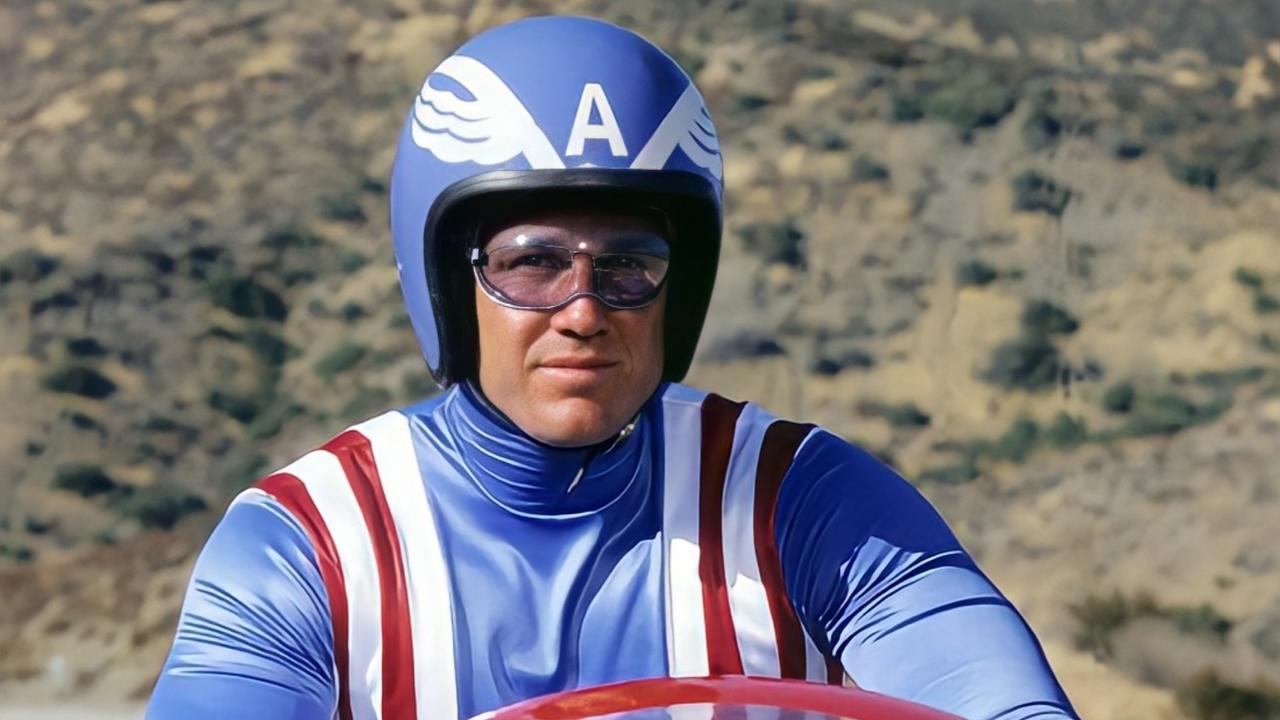
Forget the scrawny kid from Brooklyn. This Steve Rogers, played with unwavering sincerity by the impressively built Reb Brown, is a contemporary dude. Like, really contemporary for 1979. He drives a customized van (peak coolness!), lives a chill life as an artist, and seems more concerned with sketching landscapes than fighting HYDRA. His dad? A 1940s government agent, nicknamed Captain America for his patriotic spirit, whose murder kicks off Steve’s reluctant journey. No super-soldier serum here, folks. Instead, Steve survives a near-fatal accident thanks to an experimental steroid concoction called FLAG – Full Latent Ability Gain. Rolls right off the tongue, doesn't it?
This FLAG formula essentially unlocks Steve’s peak human potential, which mostly translates to impressive motorcycle stunts and the ability to look really, really determined. Reb Brown, a former USC fullback, certainly looked the part physically, bringing a raw, athletic presence that the low budget desperately needed. Interestingly, Brown reportedly performed some of his own motorcycle stunts, adding a layer of genuine risk that characterized action filmmaking back then. You felt the bumps in the road because, well, they were real bumps!
### That Suit, That Shield... Oh My
Okay, let's address the star-spangled elephant in the room. The suit. Designed by Dr. Simon Mills (Len Birman, bringing some necessary gravitas), it’s… something. It retains the classic colours but features a motorcycle helmet painted like Cap’s cowl and, most infamously, that shield. Instead of vibranium, we get a hefty chunk of transparent plexiglass – supposedly versatile enough to detach from his bike and double as a windscreen before becoming a defensive tool. It’s wonderfully absurd, a prime example of translating comic book logic through the lens of 70s TV practicality and budget. Was it kind of goofy even then? Absolutely. But there was an earnest charm to it, a sense that they were genuinely trying to make it work within their limitations.
The plot itself is standard TV fare: Steve, equipped with his FLAG powers and government tech (including that tricked-out bike), must stop some generic bad guys involved in corporate espionage and neutron bomb threats. It moves at a pace that modern audiences might find glacial, spending considerable time on Steve’s internal conflict and his relationship with Dr. Mills and fellow agent Wendy Day (Heather Menzies, forever beloved as Louisa von Trapp in The Sound of Music and Jessica 6 in Logan's Run). The script, penned by Don Ingalls (who wrote classic episodes of Star Trek and Bonanza), tries to ground the superheroics in relatable character beats, sometimes successfully, sometimes feeling like padding between action scenes.
### Real Riders, Real Roads
Where the movie sparks to life, much like Steve's suped-up motorcycle, is in the action sequences. Director Rod Holcomb, a prolific TV director who would later helm episodes of everything from ER to Lost, understood how to stage a decent chase on a television budget. The motorcycle scenes are the clear highlight. Seeing Cap weave through traffic, launch off ramps (often just conveniently placed dirt mounds), and chase down villains feels tangible and real in a way that glossy CGI struggles to replicate.
Remember how convincing those practical bike stunts looked on a fuzzy CRT screen late at night? There’s a weight and grit to them. When a car flips or a bike skids out, you know someone actually did that. It might not be Michael Bay levels of destruction, but the commitment to practical effects provides a specific kind of thrill – the thrill of seeing real vehicles pushed to their limits by skilled stunt performers. There's an undeniable charm in seeing Cap deploy his bike's "silent mode" or boost function via chunky handlebar buttons. It's pure, unadulterated 70s tech-fantasy.
### Finding Cap on Channel 3
Airing on CBS, this Captain America (and its quickly produced sequel, Captain America II: Death Too Soon) was part of the network's attempt to capture the magic Kenneth Johnson had found with The Incredible Hulk. While it never reached those heights of popularity, it found its audience on home video, becoming one of those tapes you'd grab when the blockbuster hits were all checked out. Reviews at the time were mixed; some critics appreciated Reb Brown's physical performance and the earnest attempt, while others found it slow and a far cry from the comic book source material. But for kids discovering superheroes outside the comic page, it was Captain America on TV, and that felt like an event.
It’s easy to laugh at the groovy van, the see-through shield, and the general 70s-ness of it all. But beneath the polyester and plexiglass, there’s a genuine effort to tell a superhero story for its time. It’s a fascinating snapshot of how mainstream entertainment grappled with comic book characters before the modern blockbuster era codified the approach.
VHS Heaven Rating: 5/10
Justification: While undeniably dated, slow-paced, and hampered by its TV budget and baffling creative choices (the shield!), Captain America '79 earns points for Reb Brown's committed performance, some genuinely decent practical motorcycle stunt work for the era, and its undeniable status as a nostalgic curio. It’s far from a great superhero film, but its earnestness and late-70s charm offer a unique, if sometimes unintentionally funny, viewing experience.
Final Thought: Before the shield became an icon of blockbuster cinema, it was a transparent piece of plastic bolted to a motorbike – a perfectly groovy, slightly awkward symbol of superheroics trying to find their footing on the small screen. Dig it out for a dose of pure, unadulterated 70s Marvel magic, van and all.