Alright, pop that tape in, hit play, and ignore the slightly fuzzy tracking lines for a moment. We’re diving back into 1984, a time when the coolest piece of military hardware wasn't real, but lived inside our TVs and VCRs. I’m talking about the machine, the myth, the legend: Airwolf. Specifically, the feature-length pilot that kicked off the whole high-flying phenomenon, often packaged and rented as Airwolf: The Movie. Forget sleek CGI for a second; this was the era of tangible tech dreams, and Airwolf felt impossibly, thrillingly real.
### The Mach 1 Attack Chopper That Stole Our Hearts (and Itself)
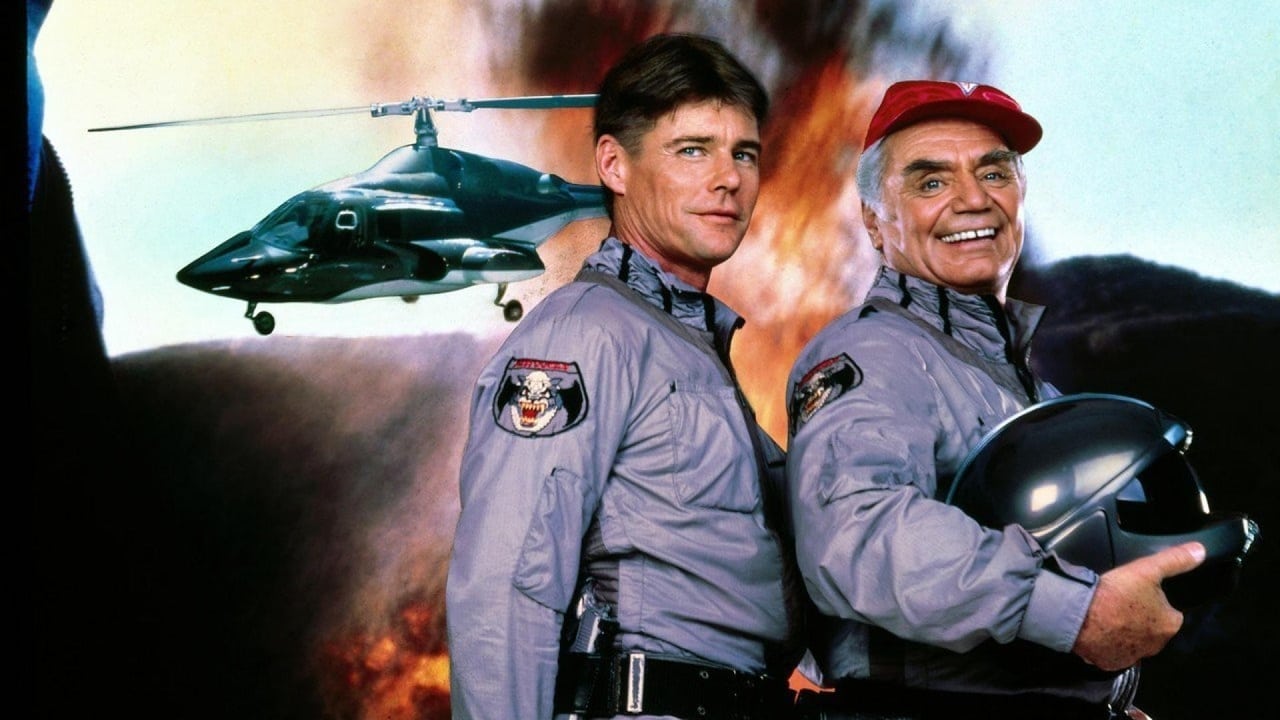
The setup, cooked up by the legendary Donald P. Bellisario (the mind behind Magnum P.I. and Quantum Leap), is pure, distilled 80s gold. Dr. Charles Henry Moffet, the brilliant but dangerously unhinged creator of Airwolf – a supersonic, stealth-capable attack helicopter packing more firepower than a small army – decides to demonstrate its capabilities by stealing it and taking it to Libya. Enter the shadowy government agency known simply as "The Firm," represented by the enigmatic, eye-patch-wearing Michael Coldsmith Briggs III, better known as Archangel (Alex Cord, oozing cool sophistication). Archangel needs his stolen thunder back, and there’s only one man for the job: Stringfellow Hawke (Jan-Michael Vincent).
Hawke is the quintessential brooding 80s hero: a reclusive, haunted Vietnam vet living in a remote mountain cabin, finding solace only in his priceless Stradivarius cello and the company of his trusted friend and co-pilot, Dominic Santini (Ernest Borgnine, bringing warmth and gravitas). Hawke was the only other test pilot capable of handling Airwolf. Archangel cuts a deal: retrieve the chopper, and The Firm will help find Hawke's brother, St. John, listed as MIA in Vietnam. It’s a premise loaded with Cold War tension and personal stakes, setting the stage perfectly for some serious aerial action.
### Before Pixels, There Was Power: The Practical Magic of Airwolf
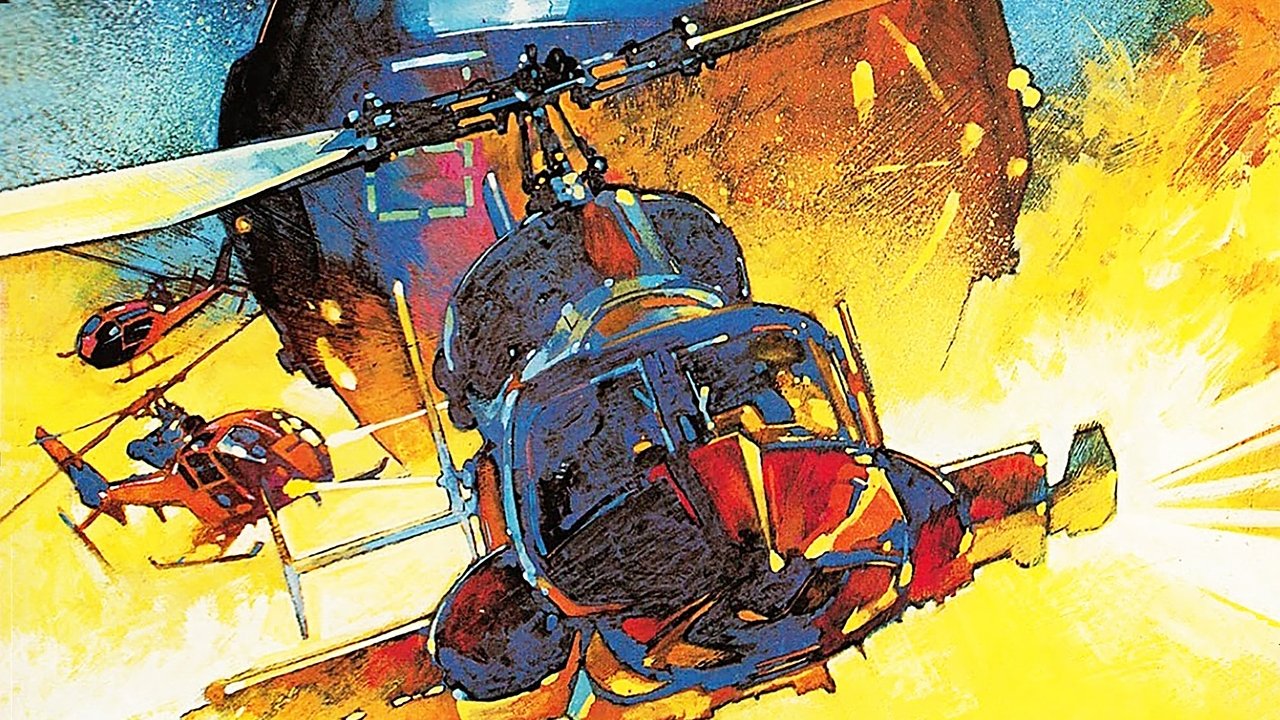
Let's talk about the star: Airwolf itself. Based on a modified Bell 222 helicopter – a $5 million investment by Universal back in the day, which would be over $14 million today! – the machine was simply breathtaking for its time. The sleek black design, the hidden weapon pods deploying with menacing clicks, the promise of "whisper mode" stealth and blistering Mach 1 speed… it captured the imagination like few other fictional vehicles. Remember arguing with friends on the playground about whether it could really outrun a jet?
The action sequences in Airwolf: The Movie hold up remarkably well, precisely because they rely so heavily on practical effects and genuinely daring aerial stunt work. When Airwolf engages Libyan MiGs (actually cleverly disguised jets), you're seeing real aircraft maneuvering, real (though carefully controlled) explosions, and miniatures used effectively for some of the more destructive moments. There's a weight and physicality to it that modern CGI, for all its smoothness, sometimes lacks. The dogfights feel genuinely perilous because, well, flying helicopters and jets in close proximity is perilous. It required incredible skill from the pilots and camera crews. It’s a testament to the craft that these sequences still thrill. Wasn't that low-level canyon run absolutely heart-stopping back then?
### More Than Just Hardware: The Men Behind the Machine
While the helicopter is the icon, the human element is crucial. Jan-Michael Vincent perfectly embodied Hawke's quiet intensity. A man of few words but deep currents running beneath the surface, he projected the image of a wounded warrior capable of incredible skill and violence when pushed. It’s worth noting that Vincent was a skilled pilot in real life, even holding a helicopter license, which undoubtedly added a layer of authenticity to his portrayal. His chemistry with the legendary Ernest Borgnine as Dom is the heart of the show. Borgnine, an Oscar winner for Marty (1955) and beloved from countless roles, provides the necessary warmth and loyalty, grounding Hawke's solitary nature. You believe in their friendship, forged in the crucible of combat and kept alive by mutual respect and Dom's endless supply of Italian cooking.
Alex Cord's Archangel is another standout – suave, manipulative, yet ultimately driven by patriotic duty (and keeping his super-weapon out of enemy hands). His all-white suit and eye-patch became instantly iconic, the face of the shadowy government forces pulling the strings. Bellisario created complex characters wrestling with duty, loss, and the morality of wielding immense power, elevating Airwolf beyond simple action fare. The slightly darker, more mature tone of the movie/pilot, dealing with themes of betrayal, state secrets, and the psychological toll of war, feels distinctly cinematic compared to some later, more formulaic episodes of the series it spawned.
### The Soundtrack to Supersonic Stealth
We can't talk Airwolf without mentioning its theme music. Composed by Sylvester Levay, that driving, synthesized beat overlaid with the heroic brass fanfare is pure, unadulterated 80s awesome. It perfectly captured the blend of high-tech thrills and underlying tension. Crank it up today, and you're instantly transported back.
### Legacy on Magnetic Tape
Originally aired as a two-hour television film in January 1984, Airwolf was a ratings success, quickly greenlit for a series that ran for three seasons with the original cast before a controversial, lower-budget fourth season with a new cast and network. The pilot movie, however, frequently found its way onto VHS rental shelves as a standalone feature, introducing countless fans to Hawke, Dom, and their incredible flying machine. Watching it on tape, perhaps on a rainy Saturday afternoon, felt like witnessing something special – a movie-level event right in your living room.
It captured that specific 80s blend of cutting-edge (for the time) technology, Cold War intrigue, and a brooding hero with a hidden heart. While some elements, like the depiction of computer interfaces or Middle Eastern politics, are undeniably dated, the core appeal remains strong.
VHS Heaven Rating: 8/10
Justification: Airwolf: The Movie earns a solid 8 for its iconic central concept (the super-copter!), genuinely thrilling practical aerial action that still impresses, strong central performances from Vincent and Borgnine, a memorable villain, and Bellisario's signature blend of character depth and military hardware fetishism. It perfectly encapsulates the high-tech optimism and anxieties of the mid-80s. Points are deducted slightly for pacing that occasionally betrays its TV-movie origins and some plot elements that feel a bit thin by today's standards.
Final Thought: More than just a pilot, Airwolf: The Movie is a potent shot of 80s action nostalgia, showcasing an era when practical effects and daring stunt work made the impossible feel tangible, right there on your flickering CRT screen. It’s the kind of high-flying adventure that CGI rarely captures with the same visceral thrill. Fire up the VCR (or your streaming equivalent) – the Lady still flies high.