Alright, fellow tape travelers, let's rewind to 1991. You stroll into Blockbuster, neon buzzing overhead, the smell of popcorn and plastic clamshells in the air. You spot it: a new release with Bruce Willis front and center, smirking right off the cover. Fresh off Die Hard and its sequel, you grab Hudson Hawk, expecting another dose of blue-collar wisecracking and explosive action. You get home, pop it in the VCR… and encounter one of the most gloriously weird, ambitious, and spectacularly miscalculated studio pictures of the entire decade. And you know what? Decades later, there's still something fascinating about this cinematic train wreck pulling into WTF station.
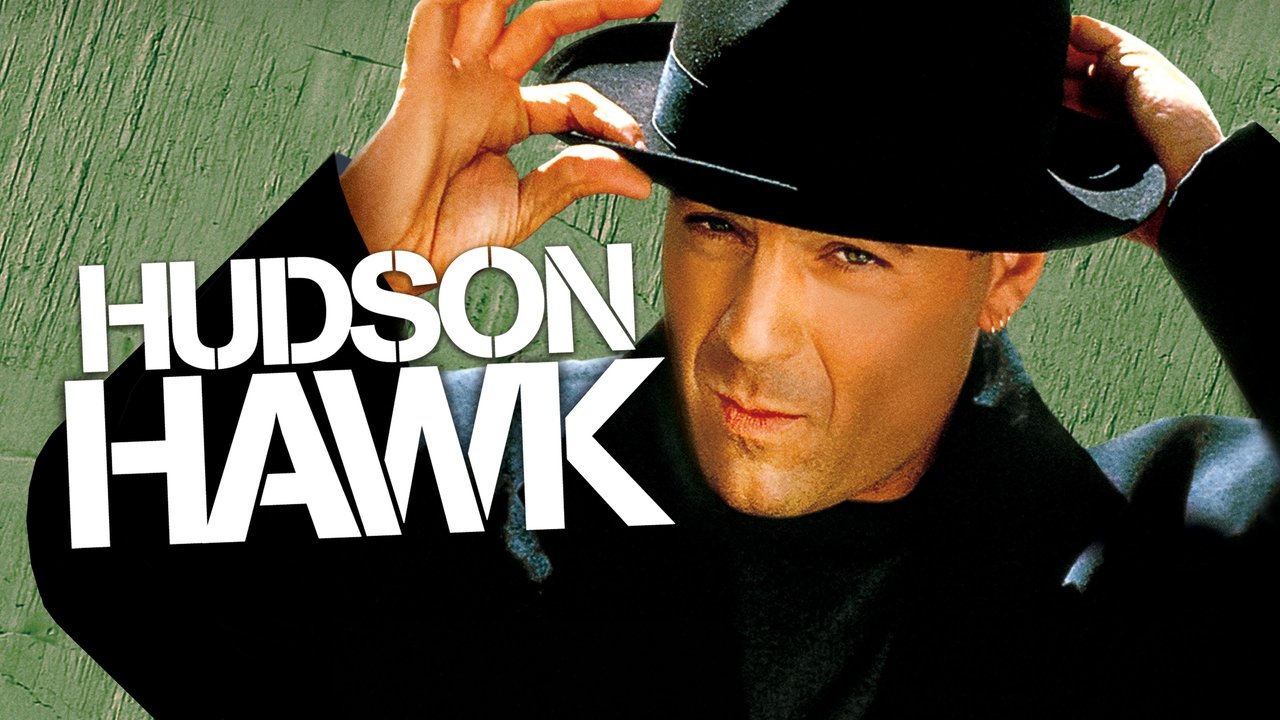
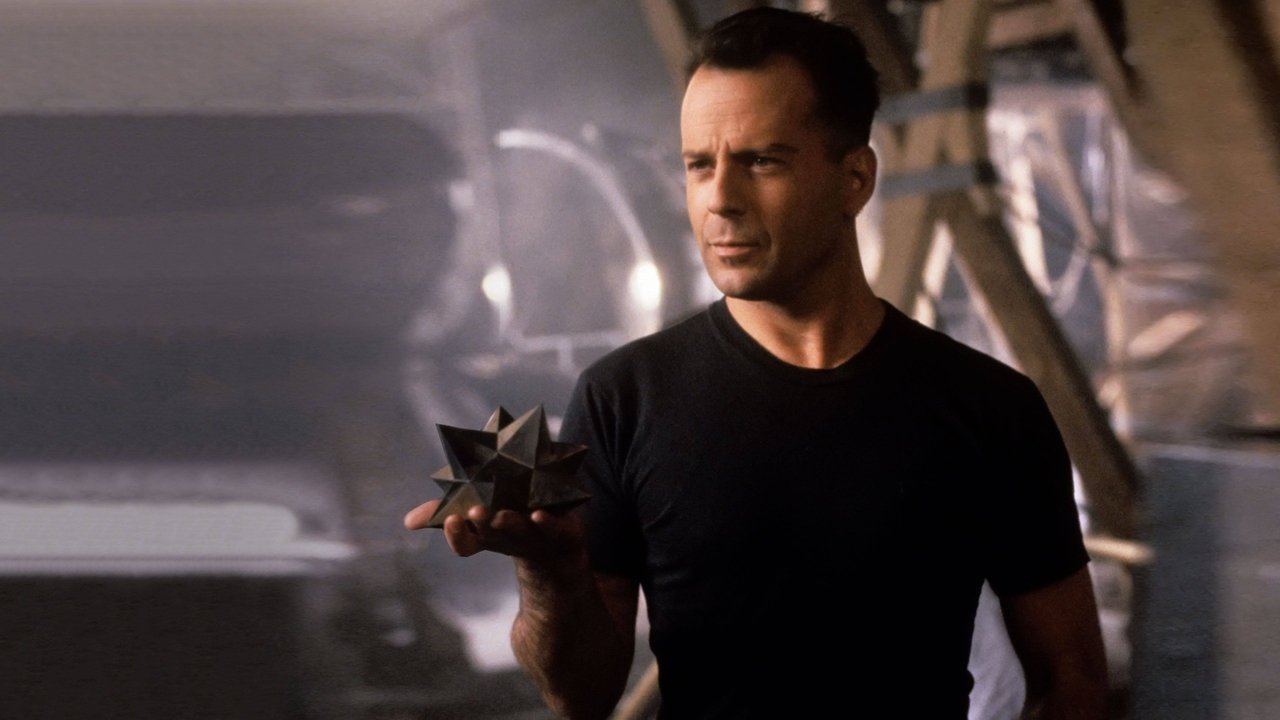
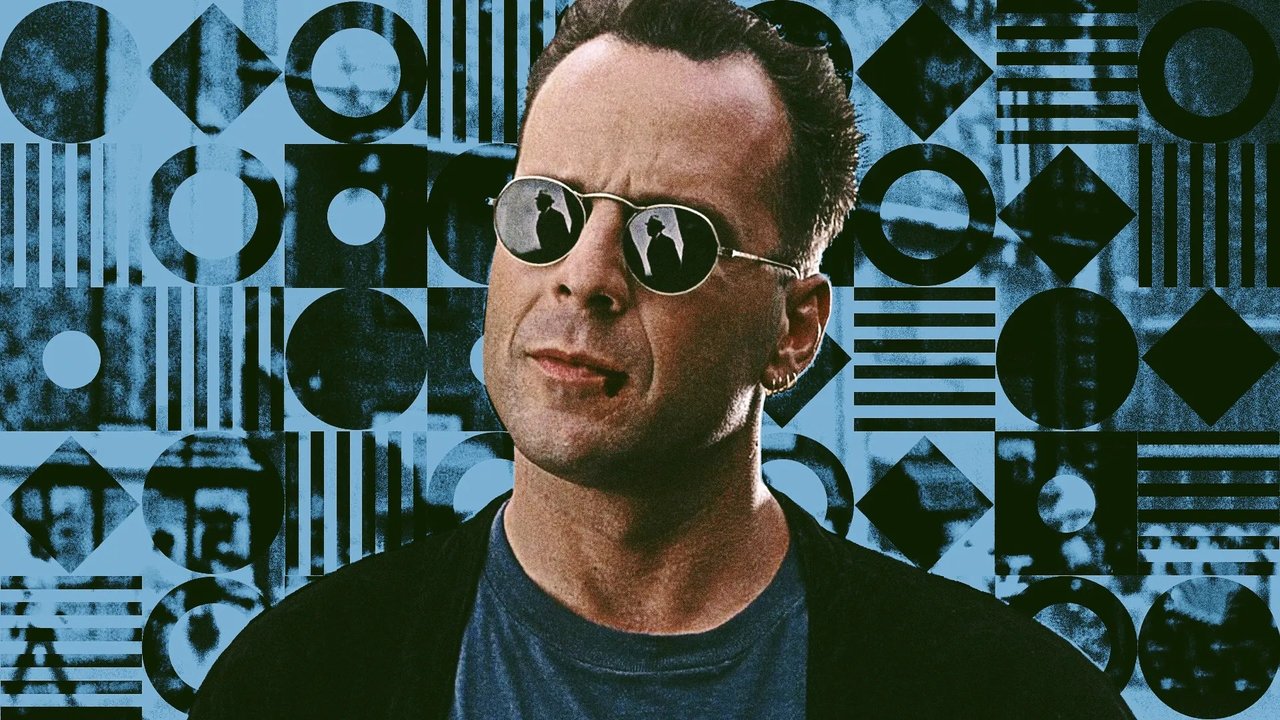
Hudson Hawk wasn't just another movie; it felt like an event, albeit one nobody quite knew how to react to. Eddie "Hudson Hawk" Hawkins (Bruce Willis, who also co-wrote the story) is a master cat burglar, just released from prison and craving nothing more than a good cappuccino. Naturally, he's immediately blackmailed back into the game by everyone from the mob to rogue CIA agents (led by the always cool James Coburn) and, most memorably, the maniacal Mayflower couple. Their goal? To force Hawk to steal components of Leonardo da Vinci's legendary gold-making machine. It's a plot that throws everything at the wall – Vatican conspiracies, Renaissance alchemy, slapstick comedy, musical numbers, and high-stakes thievery – hoping something will stick.
### Swingin' Through Heists
What immediately set Hudson Hawk apart, for better or worse, was its tone. This wasn't your typical gritty action flick. Hawk and his partner Tommy Five-Tone (Danny Aiello, bringing genuine warmth and pathos) time their elaborate heists by singing classic swing tunes like "Swinging on a Star" and "Side by Side." Remember watching that first heist? The sheer audacity of it? Willis and Aiello crooning their way past lasers and pressure plates felt bizarrely charming, a throwback sensibility dropped into a modern blockbuster framework. Their chemistry is undeniable, offering glimpses of the buddy comedy this might have been in another dimension. It’s a genuine highlight, even if the rest of the film struggles to match that specific energy.
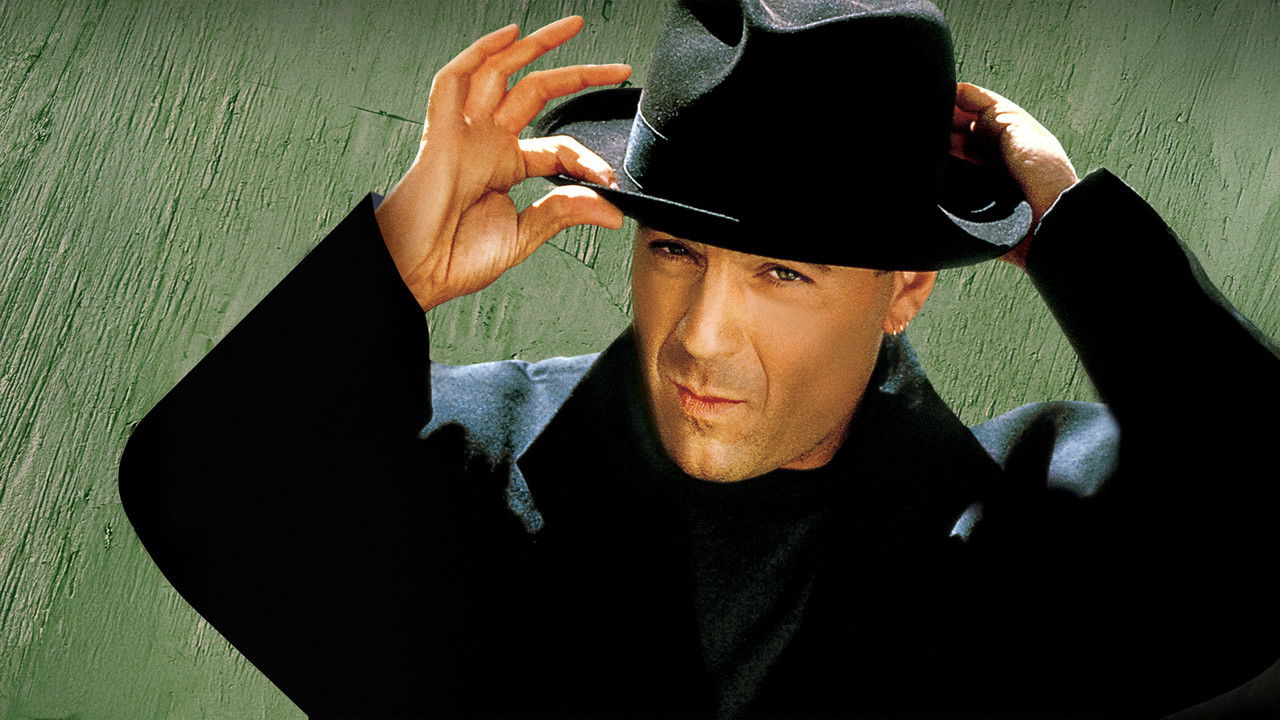
This off-kilter vibe likely stemmed from its chaotic creation. With a story conceived by Willis himself and Robert Kraft, the script went through the wringer, eventually credited to action maestro Steven E. de Souza (Die Hard) and quirky satirist Daniel Waters (Heathers). Add director Michael Lehmann, fresh off the cult black comedy Heathers (1988), and you have a recipe for tonal whiplash. Rumors swirled about Willis wielding immense creative control, constant rewrites happening during filming, and the budget ballooning to a reported $65 million – an astronomical sum back then (easily over $130 million today!). You can almost feel the push-and-pull on screen, a tug-of-war between star vehicle, action romp, and absurdist comedy.
### Mayhem, Mayflowers, and... Dolphins?
Speaking of absurd, let's talk villains. Richard E. Grant and Sandra Bernhard as Darwin and Minerva Mayflower are chewing scenery with delightful abandon. They're cartoon characters brought to life, delivering threats with theatrical flair and engaging in violence that feels more Looney Tunes than lethal. Their motivations are pure comic book evil, and while wildly over-the-top, they inject a manic energy the film desperately needs. Grant, in particular, seems to be having an absolute blast.
Then there's Andie MacDowell as Anna Baragli, the Vatican art expert (or is she?) who becomes Hawk's reluctant partner and love interest. MacDowell, a rising star after sex, lies, and videotape (1989), tries her best, but her character is saddled with some truly baffling writing choices. The most infamous? Her tendency to communicate complex emotions through… dolphin noises. Yes, you read that right. It's a quirk so utterly out of left field, it became one of the film's most ridiculed elements, a symbol of its overall tonal confusion. Was it meant to be funny? Endearing? Who knows, but it certainly was memorable.
### Action, Cartoons, and Catastrophe
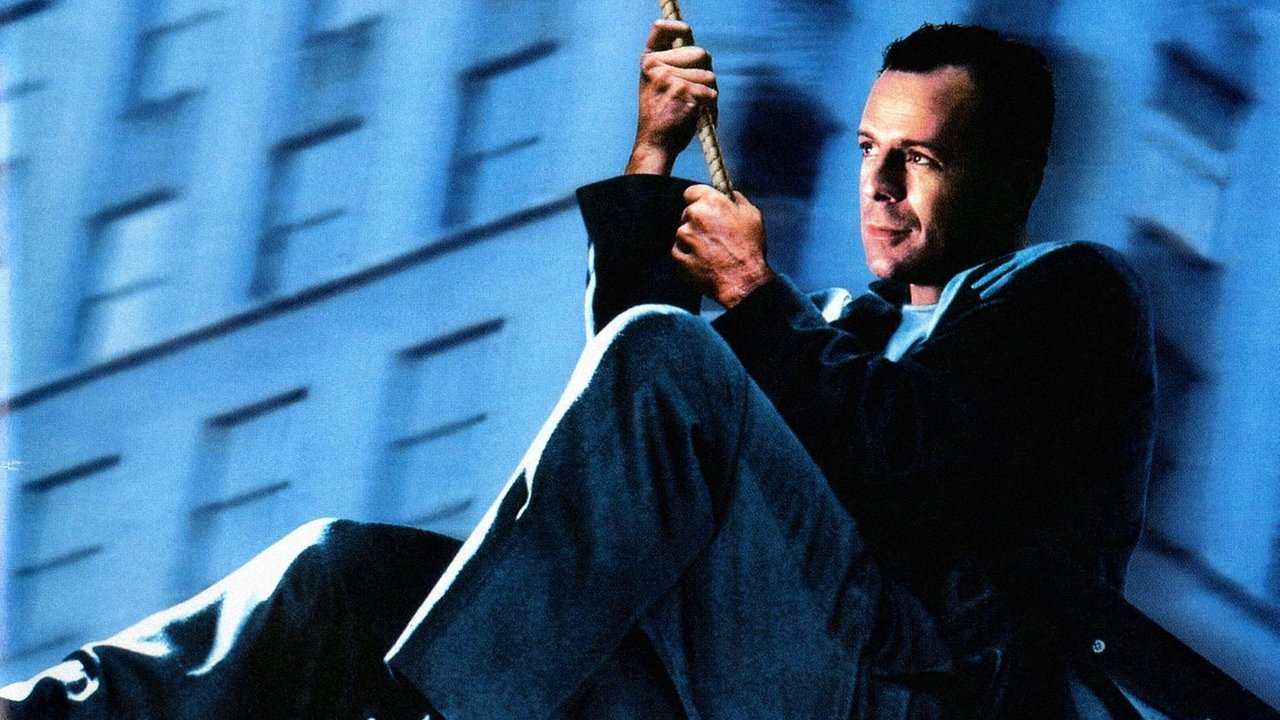
While not packed with the raw, gritty practical stunt work of its contemporaries, Hudson Hawk features elaborate set pieces that lean into the surreal. Think less fiery explosions, more Rube Goldberg contraptions and physics-defying escapes. The ambulance gurney sequence careening through Rome, or Hawk's rooftop slide using a Da Vinci-esque flying machine – these moments embraced a kind of live-action cartoon logic. It wasn’t grounded, but it was certainly big. This commitment to elaborate, physical gags, even when they border on the nonsensical, feels distinctly of its time, a far cry from today's often weightless CGI spectacle.
Unsurprisingly, Hudson Hawk was met with near-universal critical scorn upon release. Siskel & Ebert famously tore it apart. Audiences, likely expecting Die Hard 3, stayed away in droves, making it one of the biggest box office bombs of 1991. It swept the Razzies, cementing its reputation as a legendary Hollywood folly. And yet... time can be kind to cinematic oddities. Watched today, freed from the weight of expectation and box office disappointment, Hudson Hawk reveals itself as something else: a fascinatingly ambitious, utterly unique, and sometimes genuinely funny mess. It’s the product of too many cooks, too much money, and perhaps too much star power, but it swings for the fences with such baffling confidence that you almost have to admire it.
VHS Heaven Rating: 6/10
Justification: It's undeniably flawed, tonally incoherent, and occasionally cringe-worthy (the dolphin!). But the Willis/Aiello chemistry is gold, the villains are memorable, the swing-timed heists are charmingly unique, and the sheer, unadulterated weirdness of the whole enterprise makes it a fascinating watch. It’s not traditionally ‘good’, but it’s far from boring. The high budget and star power colliding with such bizarre choices create a cinematic artifact unlike almost anything else from the era.
Final Thought: Forget Die Hard on repeat; sometimes you need a movie that makes you scratch your head, chuckle inappropriately, and marvel at the sheer, cappuccino-fueled audacity of it all. Hudson Hawk is that glorious, swingin' catastrophe – a true relic of when a movie star could will almost anything onto the screen, even if nobody else quite understood why.