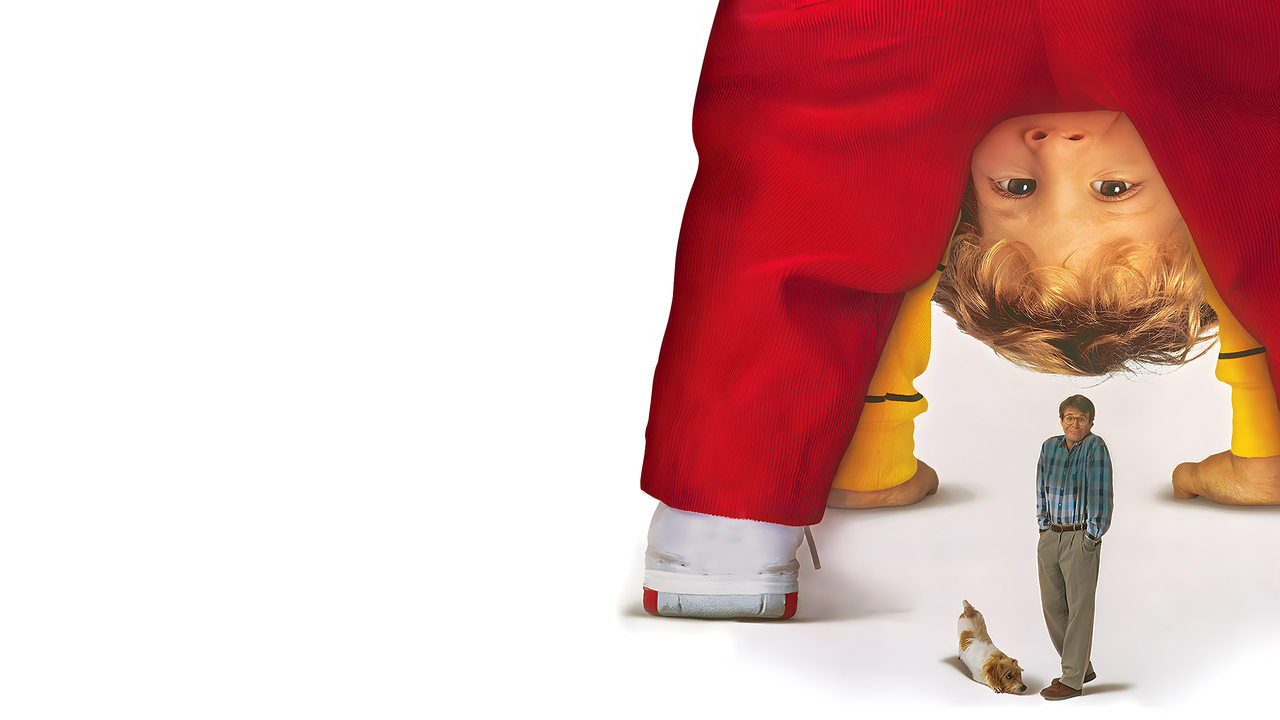
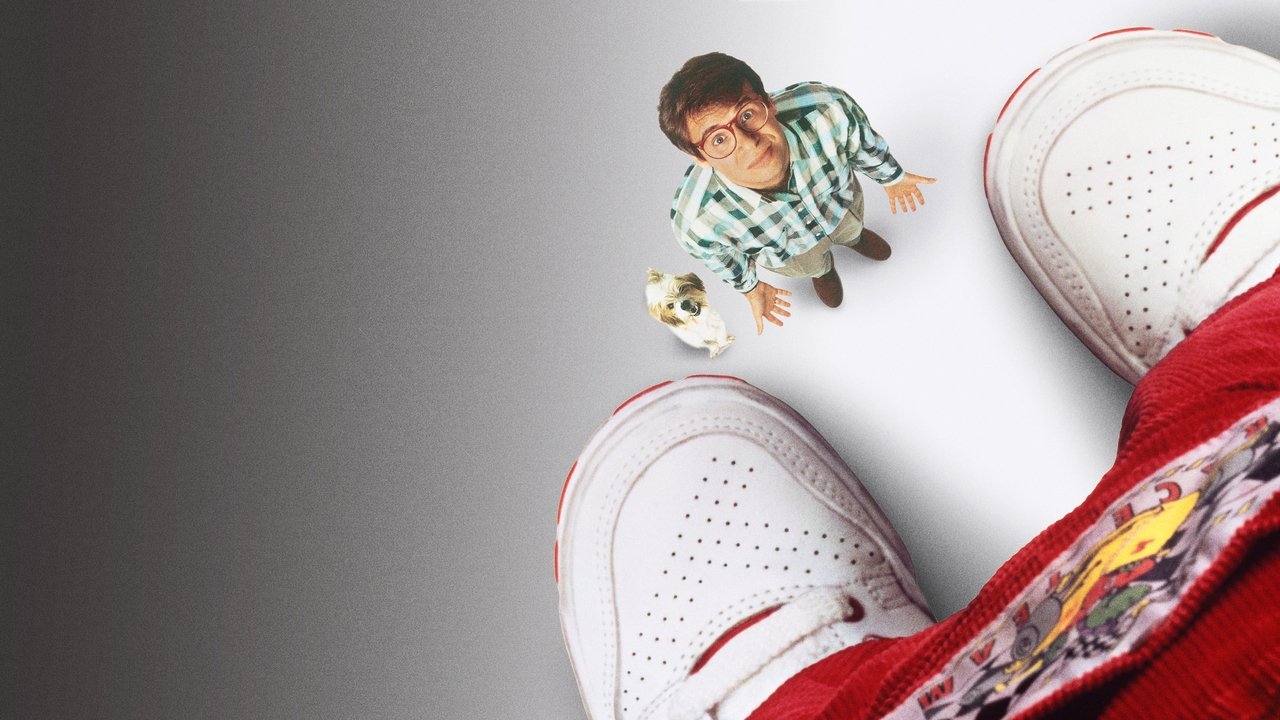
It’s one thing to accidentally miniaturize your offspring; it’s quite another to supersize them. Following the surprise smash hit Honey, I Shrunk the Kids (1989), the pressure was on for a follow-up. Disney and director Randal Kleiser, taking over the reins, didn't just revisit the Szalinski household; they decided to flip the concept entirely with 1992's Honey, I Blew Up the Kid. Forget tiny adventures in the backyard; this time, the chaos was scaled up to toddler-taming, city-stomping proportions, delivering a dose of early 90s spectacle that lodged itself firmly in the VCRs of families everywhere.
### Back in the Szalinski Zone
We return to find scatterbrained inventor Wayne Szalinski (Rick Moranis) and his ever-patient wife Diane (Marcia Strassman) trying to adjust to a new life in Nevada, having moved so Wayne could work at Sterling Labs. Their family has expanded with the arrival of adorable two-year-old Adam, while older kids Amy (now played by Amy O'Neill, though her role is significantly reduced) and Nick (Robert Oliveri, now a slightly more confident teen) are still navigating the usual Szalinski brand of domestic weirdness. Moranis, bless him, slips back into Wayne’s oversized glasses and well-meaning incompetence effortlessly. He remains the heart of the series, his comedic timing perfectly balancing the increasingly outlandish situation unfolding around him. It’s his sheer panic and frantic problem-solving that grounds the absurdity, making us root for him even as he triggers yet another scientific catastrophe.
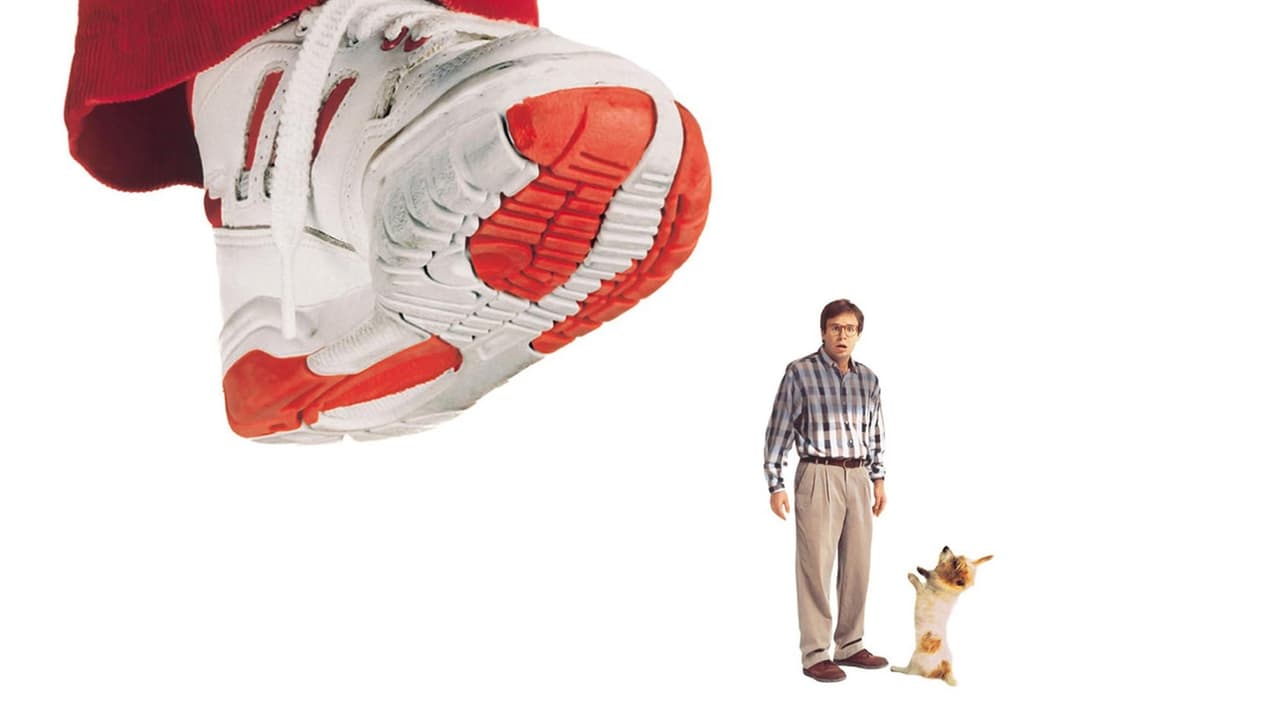
The setup is classic Szalinski: Wayne’s new invention, designed to enlarge objects, naturally misfires during a lab visit, zapping little Adam instead of the intended apple. The twist? Adam only grows when exposed to electricity. Cue a series of escalating growth spurts triggered by microwaves, televisions, and eventually, the neon glow of Las Vegas itself. Kleiser, who gave us the visual wonders of Flight of the Navigator (1986), brings a different energy than Joe Johnston did to the first film – less intimate discovery, more large-scale comedic mayhem.
### Growing Pains and Practical Magic
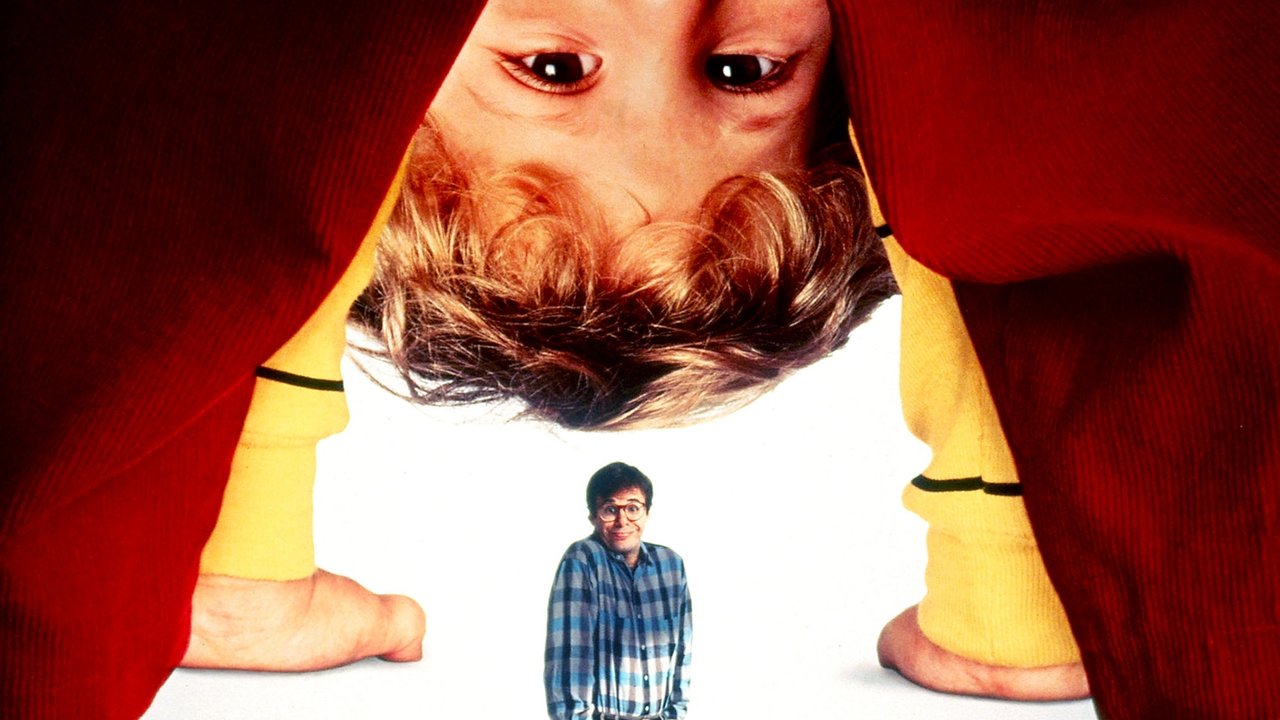
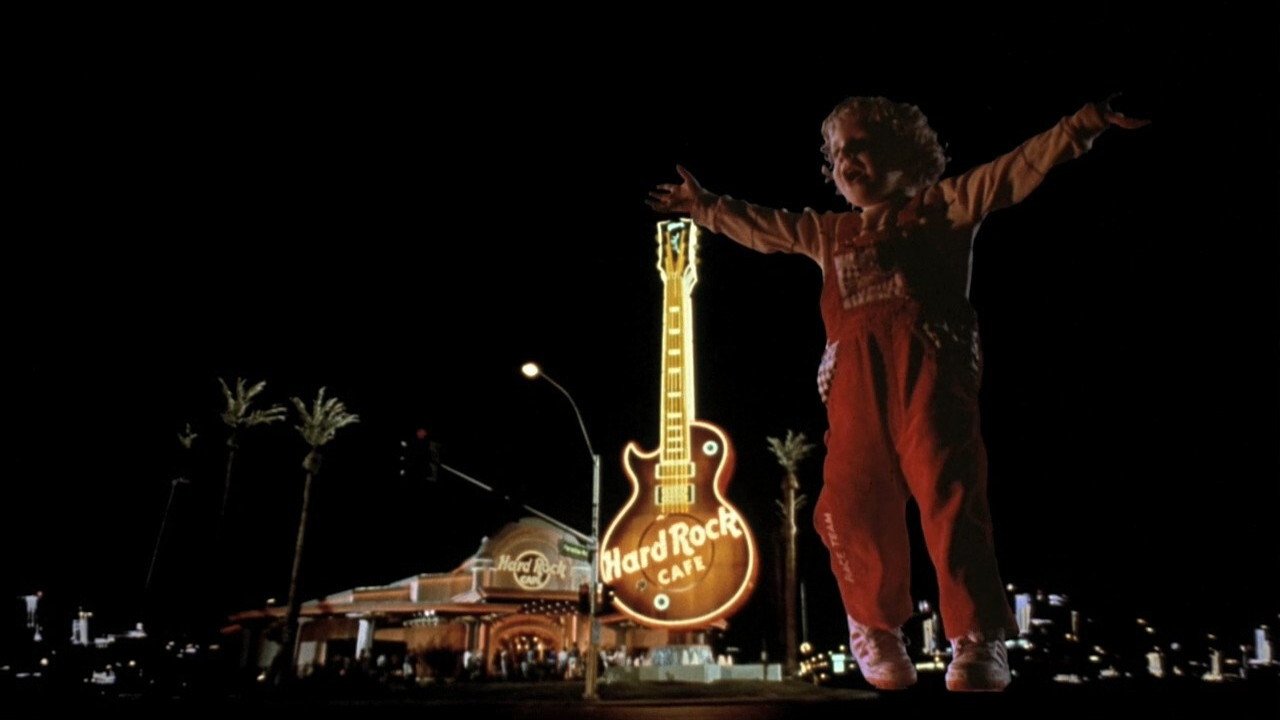
The real star, arguably, is the spectacle itself. Watching Adam, played alternately by twins Daniel & Joshua Shalikar, balloon from a cute toddler into a house-sized, then city-block-sized giant is the film's central draw. And for its time, the effects work is genuinely ambitious. This wasn't the era of seamless CGI toddlers; achieving Adam's massive scale relied heavily on old-school practical effects wizardry. Think oversized props – giant cookies, a colossal playpen, a truly enormous electric guitar that Adam gleefully strums (or rather, smashes) – combined with expertly crafted forced perspective shots. When Adam interacts with the "normal-sized" world, it often involved meticulous bluescreen compositing, placing the enlarged toddlers against miniature sets or live-action plates.
One particularly memorable sequence involves Adam escaping in a tiny car (from his perspective) strapped to the back of a truck. The blend of techniques required to make that convincing – matching lighting, scale, and interaction – showcases the kind of practical filmmaking ingenuity that defined so many beloved VHS-era adventures. It’s this tactile quality, the feeling that something real, however cleverly manipulated, is on screen, that gives these effects a certain charm often missing today. Reportedly, the production team built sections of Las Vegas streets at 1/8th scale for Adam's rampage, a testament to the effort involved. Interestingly, this sequel also marked the feature film debut of a young Keri Russell as Mandy, Nick's potential love interest and Adam's babysitter, who gets swept up in the giant toddler chaos.
### Retro Fun Facts: Bigger Budget, Big Baby Blues
- The film originally went through development under the title "Big Baby," signaling its high-concept core from the start. Several writers contributed, including Thom Eberhardt (Night of the Comet) and Peter Elbling, building on the characters created by Stuart Gordon, Brian Yuzna, and Ed Naha for the original.
- Filming with twin toddlers presented unique challenges. The Shalikar brothers were only two and a half during production, requiring patience and clever workarounds from the crew to capture the needed performances (often involving strategically placed toys or treats just off-camera!).
- While the original film was a surprise hit made for around $18 million, the sequel boasted a significantly larger budget, reported estimates ranging from $32 million to $40 million. It performed respectably at the box office, pulling in approximately $58.7 million domestically, but didn't quite replicate the phenomenal success ($222 million worldwide) of its predecessor. Adjusted for inflation, that budget is roughly $70-88 million today, with the gross around $128 million – solid, but not a runaway blockbuster.
- Initial critical reception was more mixed compared to the universally beloved original. Some found the plot thinner and more reliant on the central gimmick, though Moranis's performance was often praised. It currently sits at 40% on Rotten Tomatoes, a far cry from the original's 78%.
### Spectacle Over Story?
Let's be honest: Honey, I Blew Up the Kid isn't quite the tightly plotted gem its predecessor was. The narrative logic sometimes feels stretched thin (even for a Szalinski adventure), and the focus shifts heavily towards the visual spectacle of Giant Adam. The wonder of exploring a familiar world from a new perspective is replaced by the more straightforward comedic threat of an oversized, uncontrollable force of nature – albeit an adorable one.
Yet, there's an undeniable fun factor here. The film leans into its own absurdity with gusto. Diane's fierce motherly instincts kicking in ("He's MY baby!"), Wayne's desperate attempts to reverse the process, and Nick's teenage awkwardness amidst the chaos all provide reliable laughs. The Las Vegas finale, with Adam mesmerized by the Hard Rock Cafe guitar sign like a giant toy, is pure early 90s excess, a visual feast of neon lights and comedic destruction that feels perfectly pitched for its time. It might lack the heart-string-tugging moments of the original, but it doubles down on sheer, unadulterated Szalinski mayhem.
Rating: 6/10
Honey, I Blew Up the Kid earns its score by fully committing to its outlandish premise and delivering impressive practical effects spectacle for the era. Rick Moranis anchors the film with his perfect blend of panic and paternal love, and the visual gags involving the giant toddler are often genuinely funny and memorable. While it doesn't quite recapture the inventive magic or emotional depth of the original, feeling more formulaic and less surprising, it still provides a hefty dose of nostalgic family fun. It's a louder, brasher, and arguably sillier sequel, but one that understood the core appeal: putting an ordinary family in extraordinary, science-gone-wrong circumstances.
It might not be the best Szalinski adventure, but watching a giant toddler treat Las Vegas like his personal playground? That’s a VHS memory that’s hard to shrink.