What lingers most profoundly after the curtains fall – or, perhaps more fittingly for us here at VHS Heaven, after the VCR sputters to a stop – on James Ivory's The Remains of the Day (1993)? Is it the crushing weight of unspoken words, the ache of missed opportunities, or the suffocating embrace of duty worn like impenetrable armour? This film, adapted with exquisite care by Ruth Prawer Jhabvala from Kazuo Ishiguro's Booker Prize-winning novel, doesn't just tell a story; it steeps you in an atmosphere thick with regret and the ghosts of choices never made. I remember finding this on the rental shelf, its stately cover a stark contrast to the usual explosions and aliens, and feeling drawn into a world far removed yet strangely resonant.
A Portrait in Repression
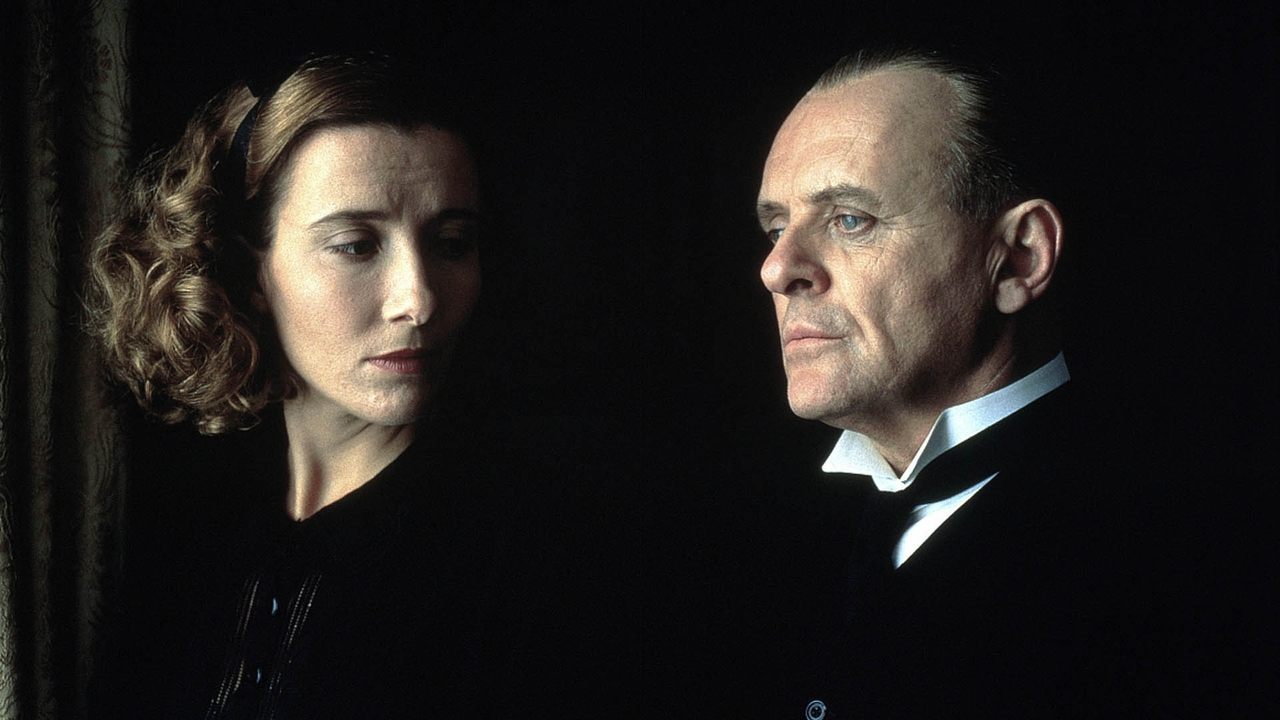
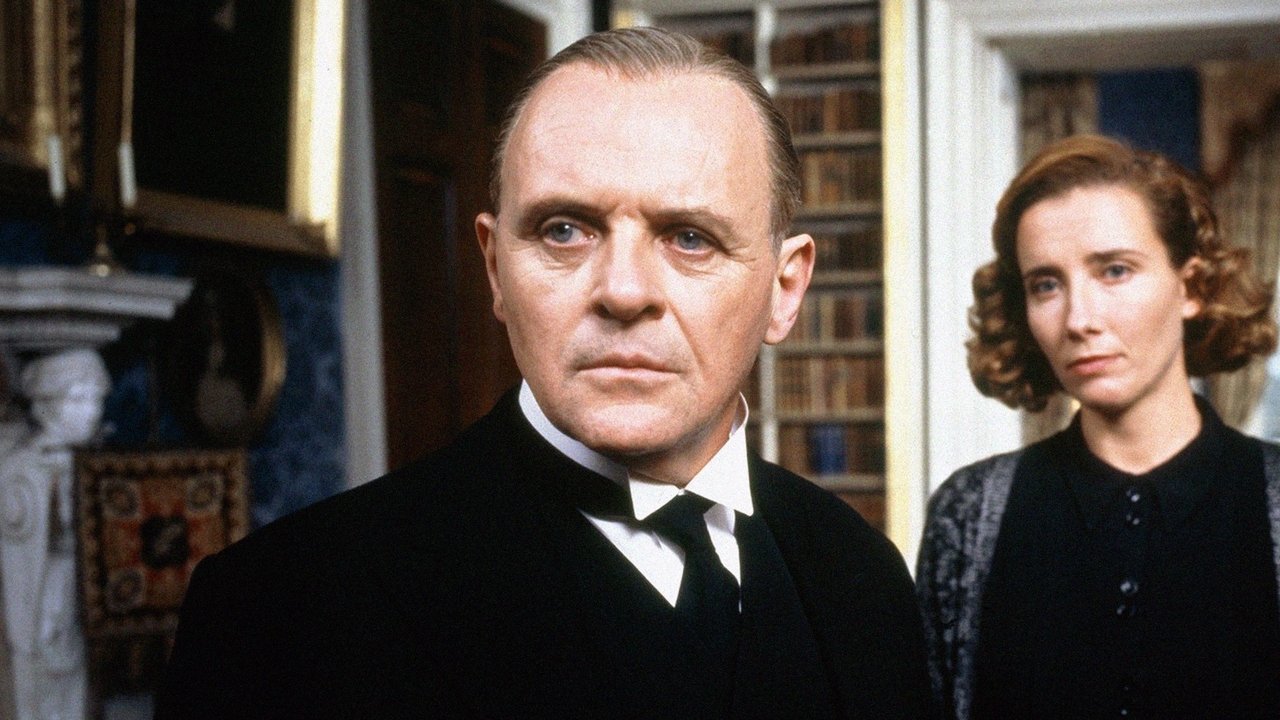
At the heart of this world stands Stevens, the impeccably devoted head butler of Darlington Hall, embodied by Anthony Hopkins in a performance that feels less like acting and more like the meticulous chiselling away of any outward sign of inner life. Fresh off his chilling Oscar win for The Silence of the Lambs (1991), Hopkins executes a stunning pivot. His Stevens is a masterclass in control, his posture ramrod straight, his voice a low, deferential murmur. Every gesture, every clipped phrase, is dictated by an unwavering commitment to service and propriety, a dedication so absolute it walls off his own humanity. We watch him navigate the shifting tides of pre-WWII British aristocracy under Lord Darlington (James Fox), a well-meaning but tragically misguided nobleman flirting with appeasement, and later, the estate's transfer to a pragmatic American congressman (Christopher Reeve, in one of his affecting later roles). Through it all, Stevens remains steadfast, the perfect butler, even as the world – and his own heart – quietly crumbles around him.
The Spark of Unlived Life
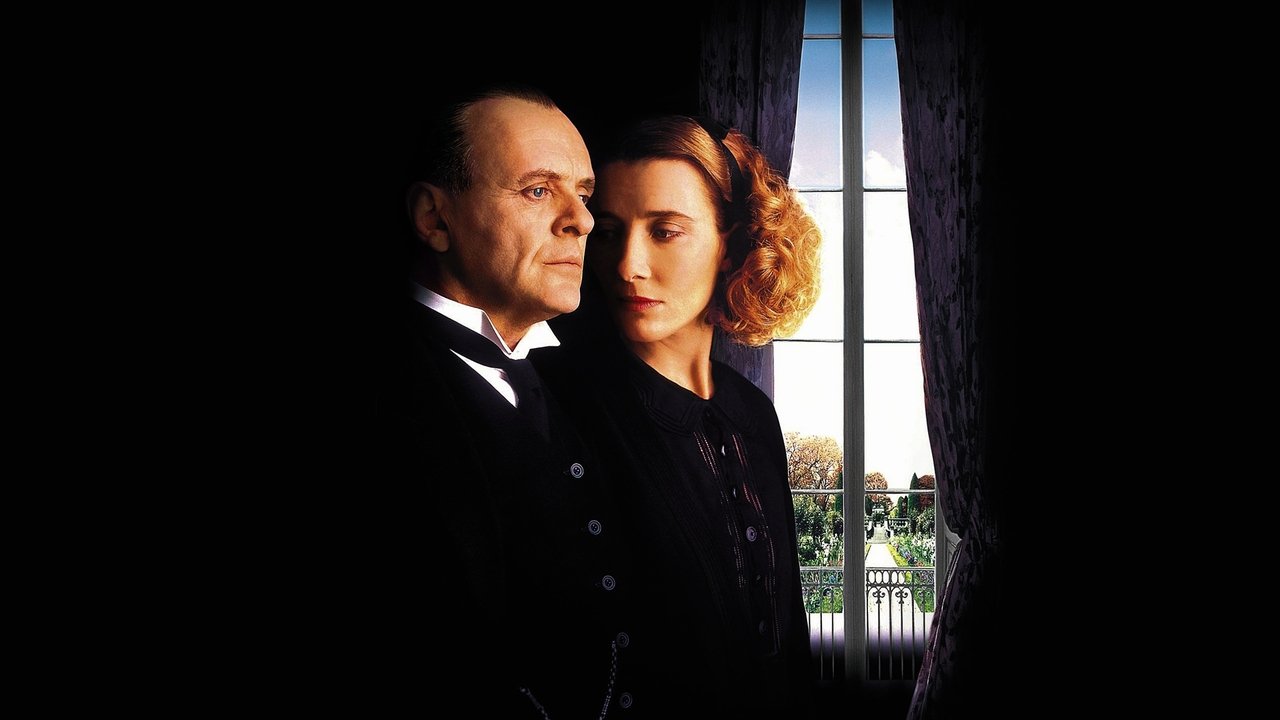
Into this meticulously ordered, emotionally sterile environment walks Miss Kenton, the new housekeeper, played with vibrant intelligence and barely concealed longing by Emma Thompson. Reuniting with Hopkins after their stellar work together in Ivory's own Howards End (1992), their chemistry here is electric, albeit charged with excruciating tension rather than overt romance. Thompson is magnificent, her Miss Kenton a force of warmth, competence, and feeling that constantly probes the defences of Stevens's reserve. She challenges him, subtly at first, then with growing frustration, trying to coax out the man buried beneath the uniform. Their scenes together are the film's soul – quiet battles of wit and will, fraught exchanges in firelit libraries, moments brimming with possibilities that hang, agonisingly, just out of reach. What does it say about a life when the most significant relationship is defined by what isn't said, what isn't done?
Behind the Polished Silver
The Merchant Ivory production team (Ismail Merchant producing, James Ivory directing, Ruth Prawer Jhabvala writing) were masters of this kind of literate, character-driven period drama, and The Remains of the Day might be their magnum opus. The attention to detail is breathtaking, from the authentic grandeur of locations like Dyrham Park and Powderham Castle standing in for Darlington Hall, to the subtle nuances of the class structure that dictate every interaction. Interestingly, the journey to screen wasn't entirely straightforward. Before Merchant Ivory took the reins, director Mike Nichols was attached, envisioning Jeremy Irons as Stevens. Even playwright Harold Pinter penned an unproduced screenplay adaptation. It makes you wonder how different the film might have felt, though it's hard to imagine anyone but Hopkins capturing Stevens's profound stillness. The film, made for a modest $11.5 million, resonated deeply, earning over $63 million worldwide and securing 8 Academy Award nominations, including Best Picture, Actor, Actress, and Director, though remarkably, it won none – a testament perhaps to the sheer strength of competition in 1993 (which included Schindler's List and The Piano).
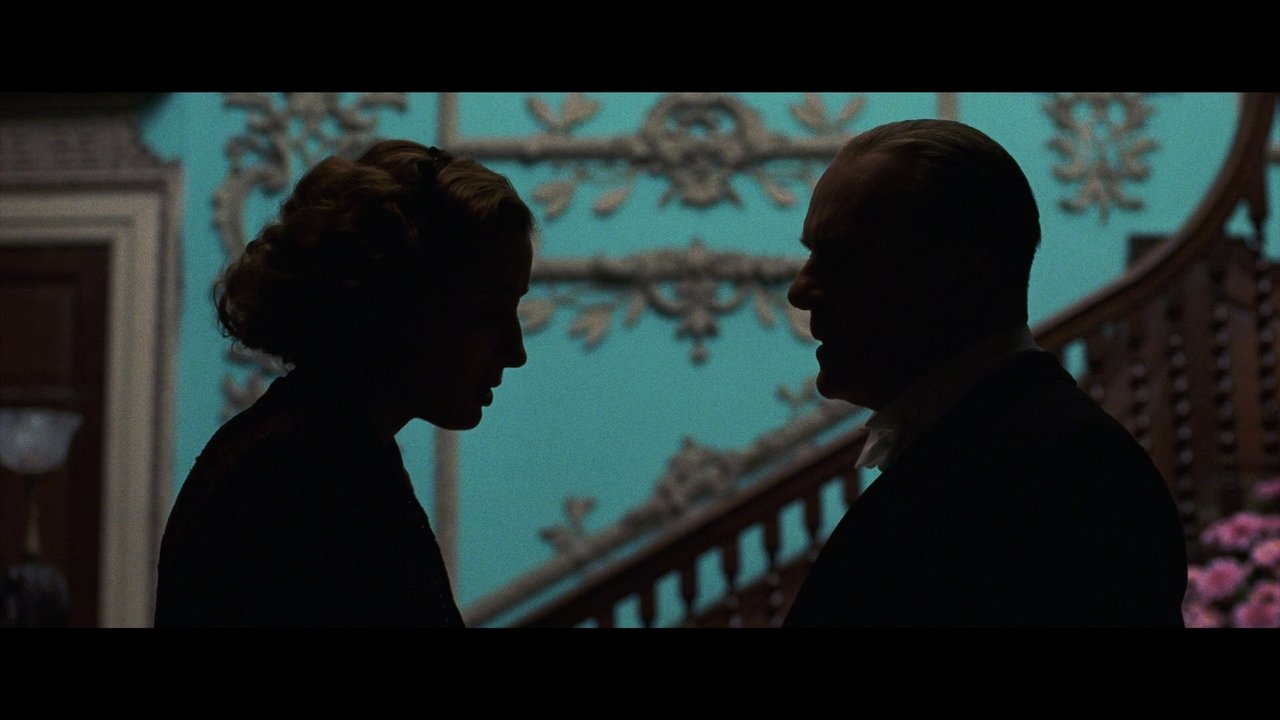
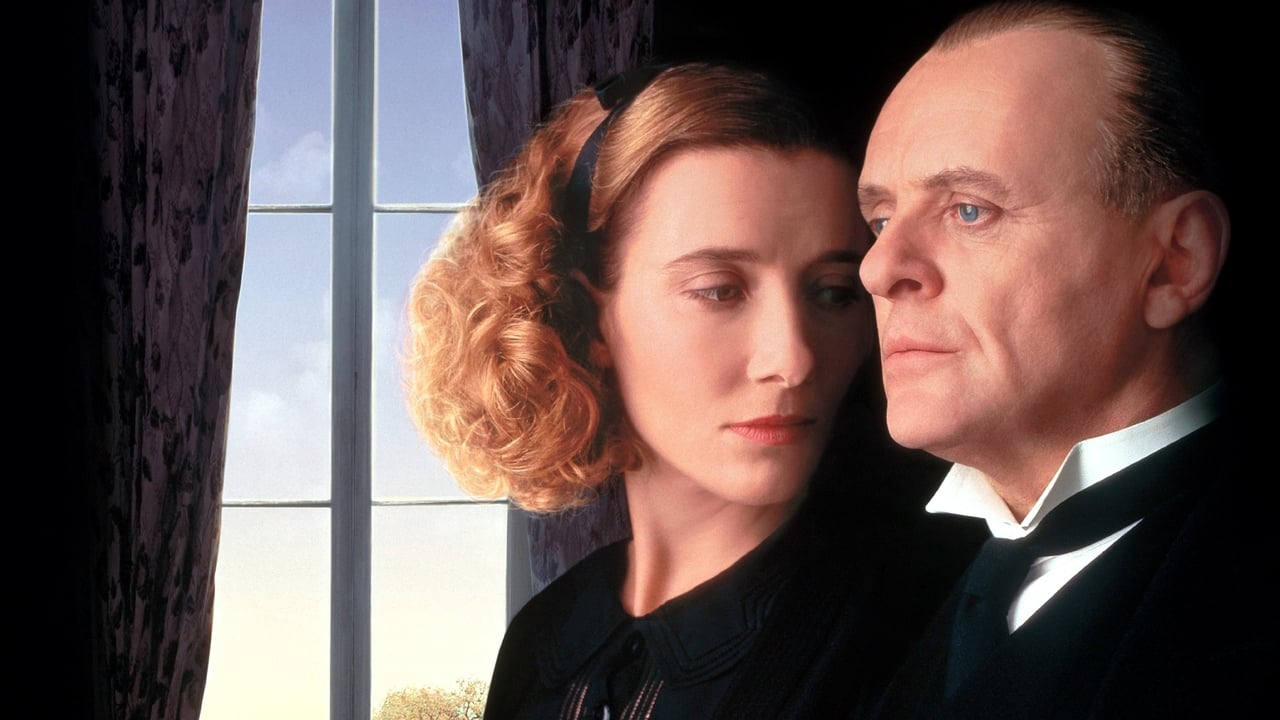
The adaptation itself is a marvel. Jhabvala deftly translates Ishiguro's internal monologue-driven novel into visual storytelling. Stevens's 1950s motoring trip, intended as a reunion with Miss Kenton, becomes the framing device, allowing flashbacks to illuminate the crucial pre-war years. We see his unwavering dedication – polishing silver while his father lies dying upstairs, dismissing warnings about his employer's political leanings – not necessarily as nobility, but as a tragic flaw, a self-imposed blindness. Does unwavering loyalty become complicity when serving a misguided cause? The film leaves that question hanging, heavy in the air.
The Weight of the Past
Watching The Remains of the Day again, decades after first sliding that tape into the VCR, its power hasn't diminished. If anything, the themes of regret, the passage of time, and the consequences of prioritizing duty over personal connection feel even more poignant. It’s a film that doesn't offer easy answers or emotional catharsis. Instead, it leaves you with a quiet ache, a profound sense of empathy for Stevens, even as you lament his choices. The final scene, small and seemingly inconsequential, is utterly devastating in its depiction of a man finally acknowledging, perhaps too late, the vast emptiness of the life he meticulously constructed.
Rating: 9.5/10
This rating reflects the film's near-perfect execution. The performances by Hopkins and Thompson are career highlights, the direction is subtle and assured, the adaptation is masterful, and the emotional resonance is profound and lasting. It falls just shy of a perfect 10 only because its deliberate pacing and emotional restraint, while entirely fitting, might feel distancing for some viewers expecting more overt drama. Yet, it’s precisely this restraint that makes the film so powerful.
The Remains of the Day is more than just a period drama; it's a haunting meditation on the human condition, a reminder that a life spent serving ideals, however noble they seem, can leave one utterly adrift when the service ends. It's a film that stays with you, prompting reflection long after the credits roll – a true gem from the twilight of the VHS era.