## From Spock to Saskatchewan: A Curious Case of Culture Clash
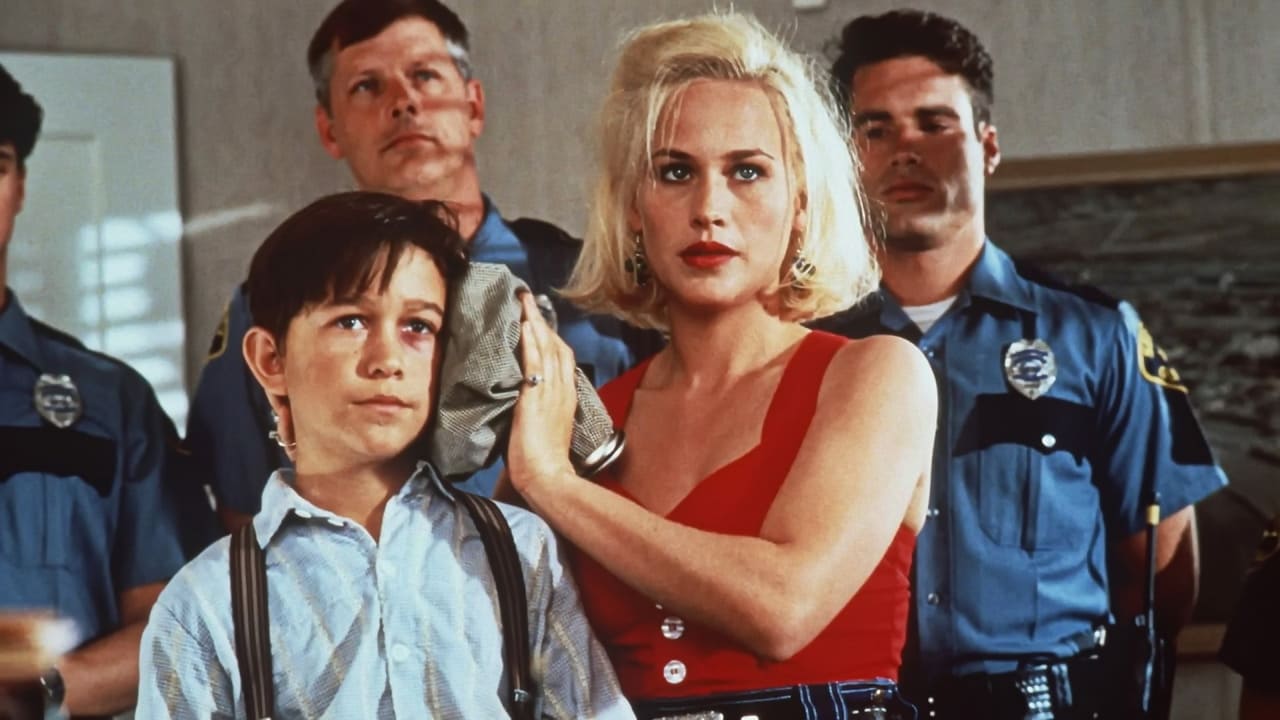
Sometimes, reaching back onto the dusty shelves of memory – or perhaps, more literally, the packed shelves of a collector's den – unearths a film that makes you blink and murmur, "Wait, that got made?" 1994's Holy Matrimony is precisely one of those delightful oddities. It's a film whose very premise feels like a fever dream cooked up during a late-night cable surf: a brassy Vegas showgirl hides out in a strict Hutterite community and, through a series of unfortunate events, ends up legally married to a 12-year-old boy. It sounds utterly bizarre, and frankly, it often is. Yet, revisiting it now feels less like excavating a disaster and more like appreciating a genuinely peculiar, sometimes charming, attempt at something different, spearheaded by a director many might not associate with this kind of quirky Americana: Leonard Nimoy.
Yes, that Leonard Nimoy. The man synonymous with Starfleet logic stepped behind the camera for this fish-out-of-water tale, a far cry from the bridge of the Enterprise or even the mainstream appeal of his smash hit Three Men and a Baby (1987). Knowing Nimoy directed lends an immediate layer of intrigue. Was this a passion project? A studio assignment gone rogue? Whatever the reason, his involvement casts the film in a unique light, inviting us to look closer at its construction. The screenplay itself came from David Weisberg and Douglas Cook, a writing duo who would, astonishingly, go on to pen the scripts for Michael Bay's explosive actioner The Rock (1996) and the Ashley Judd thriller Double Jeopardy (1999). Talk about a career trajectory! Seeing their names attached to this gentle, albeit strange, comedy-drama feels like discovering an early, folksy demo tape from a future stadium rock band.
City Heat Meets Country Quiet
The plot hinges on Havana (Patricia Arquette), a character bursting with cheap sequins and street smarts, who goes on the run with her boyfriend Peter (Tate Donovan) after they knock over a county fair concession stand (mistaking it for the cash office). Their refuge is Peter's estranged childhood home: a remote, conservative Hutterite colony in Canada (though primarily filmed in scenic Montana and Alberta). The Hutterites, for those unfamiliar, are an Anabaptist group living communally, similar in some ways to Amish or Mennonites, dedicated to simple living and faith. Peter, it turns out, had secretly married Havana purely for green card purposes before their ill-fated heist attempt. When Peter tragically dies in a car crash shortly after their arrival, Hutterite tradition dictates that his widow must marry his next unmarried brother to be cared for – who happens to be the solemn, observant 12-year-old Zeke (Joseph Gordon-Levitt).
What unfolds is a clash of cultures played sometimes for laughs, sometimes for gentle drama. Arquette, who was just on the cusp of breaking big with films like True Romance (1993), throws herself into the role of Havana with infectious energy. She’s initially all sharp edges and vibrant colours against the Hutterites' muted, pious backdrop. Her transformation from cynical outsider to someone finding unexpected connections feels earned, largely thanks to her ability to convey vulnerability beneath the bravado. You genuinely believe her bewildered frustration and eventual, grudging affection for her new, strange situation.
A Pre-Teen Powerhouse and Nimoy's Gentle Hand
The real surprise, looking back, is seeing a very young Joseph Gordon-Levitt. Already showing flashes of the thoughtful intensity that would define his later career, he imbues Zeke with a quiet dignity and surprising maturity. His scenes with Arquette are the heart of the film. Their relationship, fraught with awkwardness and the absurdity of their legal bond, slowly evolves into a believable, protective friendship. Zeke isn’t just a plot device; Gordon-Levitt makes him feel like a real kid grappling with grief, responsibility, and the baffling intrusion of this worldly woman into his cloistered life. Reports from the set often highlighted Leonard Nimoy's gentle and patient direction, particularly with his young star, and that care seems evident in the nuanced performance Gordon-Levitt delivers. Adding weight to the proceedings is the ever-reliable Armin Mueller-Stahl as Uncle Wilhelm, Peter and Zeke's uncle, whose stern, watchful presence adds a necessary layer of suspicion and dramatic tension regarding Havana's hidden past and the stolen money.
The film treads a fine line tonally. Is it a comedy? A drama? A light crime caper? It tries to be all three, and doesn't always succeed seamlessly. Some of the humour feels a bit broad, leaning on easy 'city slicker vs. simple folk' tropes. The crime subplot, involving the stolen money Havana has hidden, feels somewhat underdeveloped and occasionally disrupts the more interesting character dynamics. Yet, there's an undeniable sincerity to it. Nimoy doesn't mock the Hutterite lifestyle; while fictionalized, it's depicted with a degree of respect, focusing on their communal bonds and deep faith as a counterpoint to Havana's lonely individualism. The production design effectively contrasts Havana's flashy attire with the community's plainness, visually underscoring the central conflict.
A Box Office Blip, A VHS Curiosity
Perhaps unsurprisingly, Holy Matrimony wasn't a hit. Grossing a mere $6.4 million against a reported $12 million budget, it quickly faded from theaters and became one of those titles you'd glance past in the video store, maybe intrigued by the cover art or the familiar faces, but likely opting for something splashier. Critics at the time were largely unkind (it still languishes with low scores online). But removed from the pressures of box office expectations, viewed through the warm glow of VHS nostalgia, the film reveals its modest charms. It’s a story about finding family in the most unlikely of circumstances, about bridging divides between vastly different worlds.
It’s not perfect, by any means. The pacing sometimes drags, and the resolution feels a tad convenient. But the earnest performances, particularly from Arquette and Gordon-Levitt, and the sheer peculiarity of the premise make it memorable. It feels like a film from a time when studios were occasionally willing to take a chance on something a little left-of-center, even if they weren't quite sure how to market it. I remember renting this one weekend, probably drawn in by Arquette, and being utterly perplexed but strangely moved by it. It stuck with me, not as a masterpiece, but as a curious cinematic artifact.
Rating: 6/10
This score reflects a film that's undeniably flawed – its tonal inconsistencies and slightly underdeveloped plot hold it back from greatness. However, the strong central performances from Patricia Arquette and a young Joseph Gordon-Levitt, Armin Mueller-Stahl's grounding presence, the inherent sweetness at its core, and the sheer oddball charm of the concept elevate it beyond mere failure. Add the fascinating trivia of Leonard Nimoy directing and the The Rock writers penning it, and you have a definite VHS-era curiosity worth revisiting for its gentle heart and unique premise.
It leaves you wondering not just about the film itself, but about the creative paths not taken – what other quirky, character-driven stories might Nimoy have told? What other strange cinematic brews were bubbling away in the mid-90s, waiting for their moment on the New Release shelf?