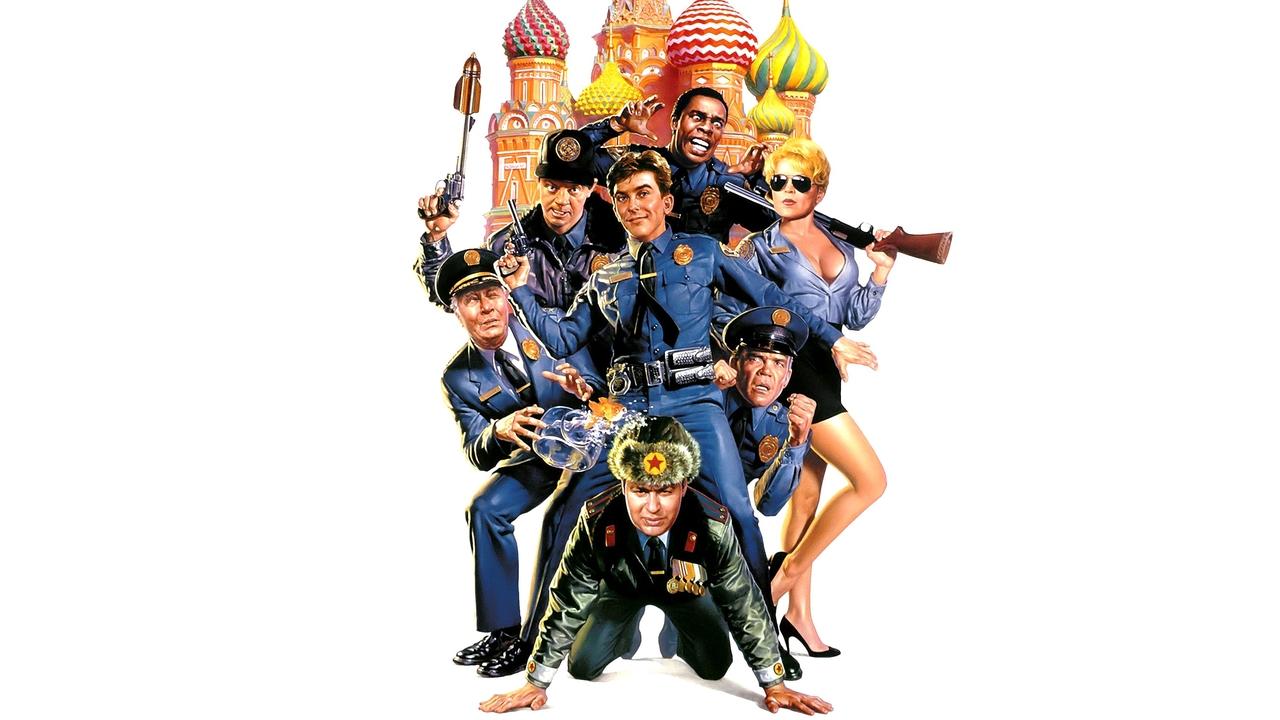
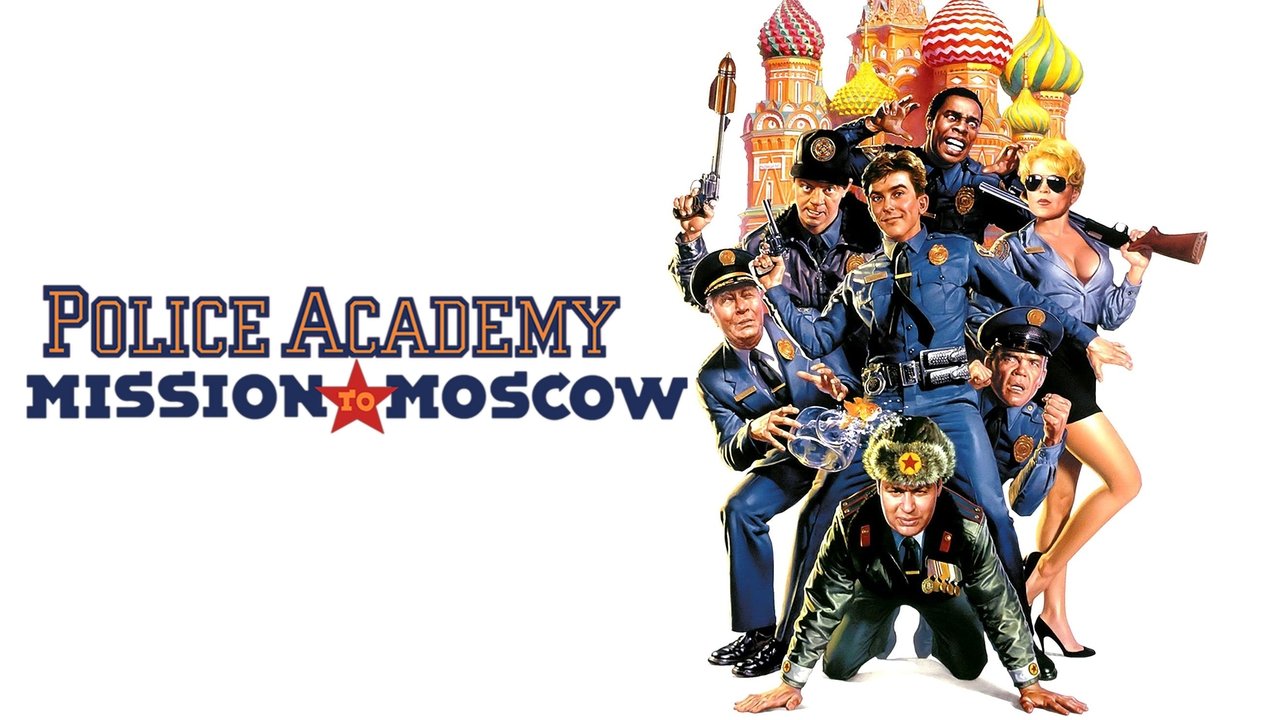
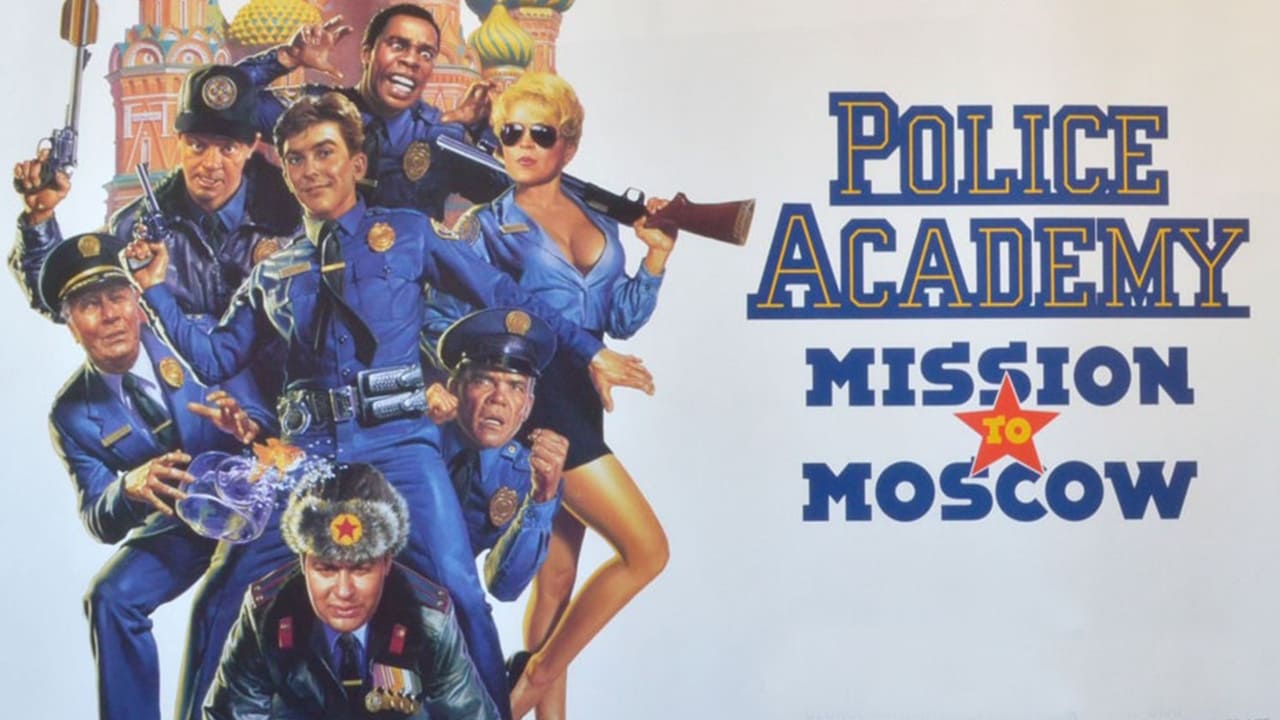
Alright, fellow tape travelers, let's rewind to a time when franchises just… kept going. Remember shuffling through the racks at Blockbuster, maybe on a Friday night, looking for that familiar comfort food viewing? You spot it: the familiar blue uniforms, the goofy faces, but wait… is that the Kremlin on the cover? Yes, friends, grab your ushanka and your poorly dubbed cassette of Russian pop, because we’re digging into Police Academy: Mission to Moscow (1994). The seventh installment. Let that sink in. Seventh.
### From Metropol City to Red Square
By 1994, the Police Academy series wasn't exactly scaling new comedic heights. Steve Guttenberg’s Mahoney had long since vanished, the roll call of beloved misfits had thinned, and the formula felt stretched thinner than Mahoney’s credibility as a police officer. Yet, like a trooper determined to make retirement, the series marched on, this time sending our remaining heroes behind the recently fallen Iron Curtain. The premise? Commandant Lassard (George Gaynes, bless his perpetually befuddled heart), Sgt. Jones (Michael Winslow, the man of 10,000 sound effects), Sgt. Tackleberry (David Graf, still gleefully gun-obsessed), Captain Callahan (Leslie Easterbrook, still deploying lethal sex appeal), and the perpetually sputtering Captain Harris (G.W. Bailey) are dispatched to Moscow. Their mission: help the Russian police nail a powerful mob boss named Konali, played with surprising gravitas (or perhaps just contractual obligation?) by none other than Ron Perlman.
The whole setup screams "late-franchise desperation," trying to inject novelty by transplanting the chaos to a completely different culture. And honestly? That fish-out-of-water angle provides most of the flick's fleeting charm. Seeing Tackleberry try to navigate Russian firearms regulations or Jones unleash his vocal arsenal on confused Muscovites offers faint echoes of the inspired silliness from the earlier films.
### Roll Call: The Old Guard and Surprising Cameos
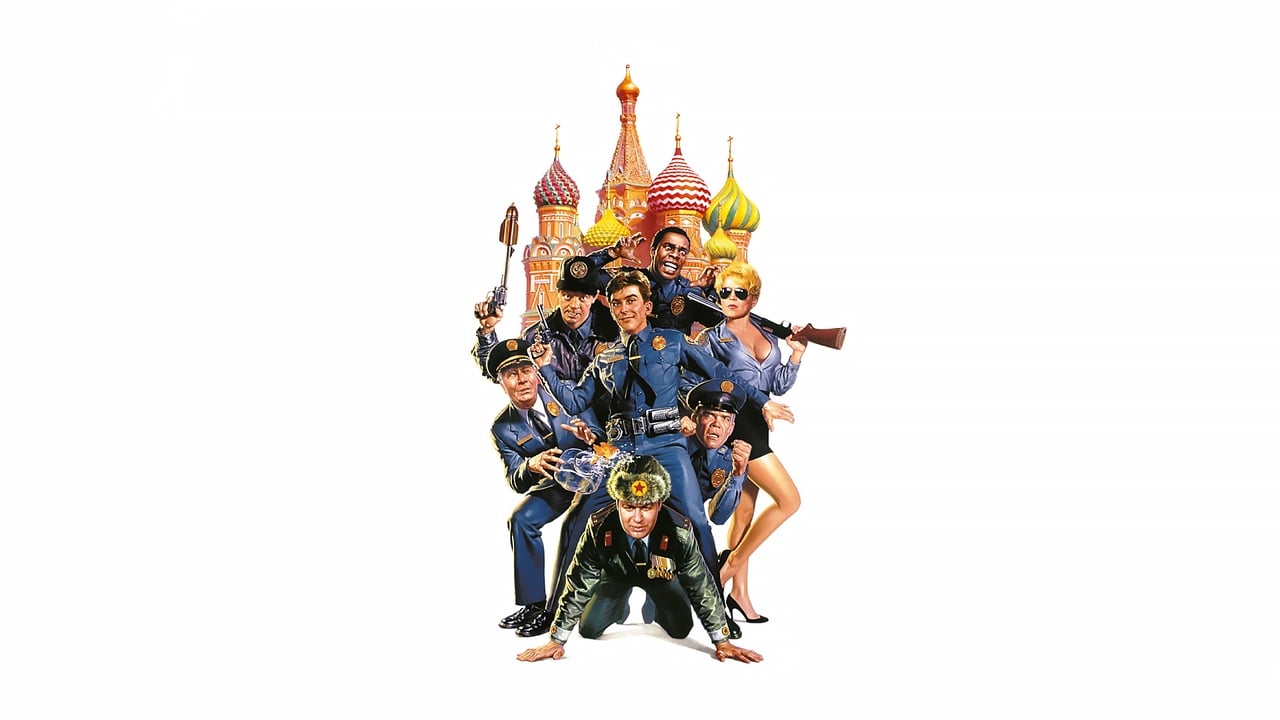
Let's be honest, the main reason most of us probably rented this tape back in the day was for the familiar faces. George Gaynes remains a delight as Lassard, his wide-eyed innocence providing a constant, if predictable, source of gags. Michael Winslow still does his thing, though the novelty might have worn off slightly by film number seven. And David Graf clearly relishes playing Tackleberry, even if the material isn't always up to his energetic commitment. G.W. Bailey as Harris feels almost contractually obliged to suffer indignities, partnered yet again with his hapless stooge Proctor (Lance Kinsey).
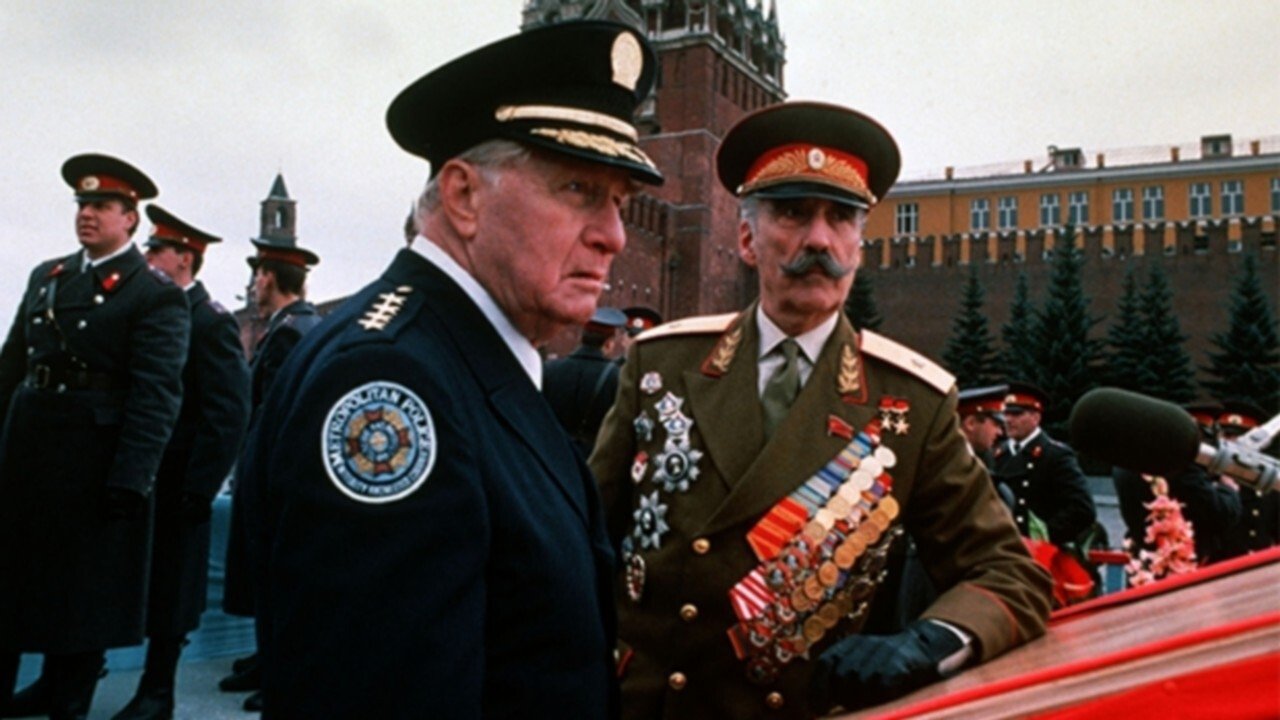
But the real head-scratcher here, the trivia nugget that makes you pause the tape and squint at the screen, is the presence of not just Ron Perlman (years before Hellboy cemented his iconic status) but also the legendary Christopher Lee as the Russian Commandant Rakov. Seeing Dracula himself share screen time with the Police Academy crew is a surreal piece of cinematic history. Reportedly, Lee, a known Russophile, partly took the role simply because it offered him the chance to film in Moscow. You can almost see him mentally cataloging historical sites between takes. It's a bizarre casting coup that lends the film an unexpected, almost kitschy distinction. It does feel a bit sad, however, noting the absence of series stalwarts like Bubba Smith (Hightower) and Marion Ramsey (Hooks), whose presence is definitely missed.
### Cold War Comedy, Lukewarm Laughs
The direction by Alan Metter, who previously gave us the genuinely funny Back to School (1986) starring Rodney Dangerfield, feels competent but uninspired here. He captures the visual novelty of Moscow – and yes, a surprising amount was actually filmed on location in Red Square and beyond, a fascinating time capsule of early 90s Russia – but the comedic timing often feels sluggish. The gags rely heavily on predictable culture clashes, Lassard wandering off, and Harris falling victim to elaborate pranks.
There isn't much "action" in the traditional sense. No explosive car chases or bone-crunching fights here. This is Police Academy, remember? The set pieces involve slapstick, misunderstandings, and maybe a comical pursuit through Gorky Park. The practical effects are limited to Jones's sound effects and the occasional pratfall. It’s a far cry from the gritty practical stunt work of 80s action classics, leaning entirely into cartoonish mayhem. Did anyone really expect gritty realism from Police Academy 7 though? Probably not.
Interestingly, this mission was a box office disaster, reportedly grossing a mere $126,000 domestically against its $10 million budget. It effectively put the franchise on ice for decades, becoming the final cinematic outing for this particular crew. It’s a footnote, a curiosity, a testament to the law of diminishing returns.
### The Verdict
Police Academy: Mission to Moscow isn't a hidden gem rediscovered on VHS. It's exactly what you'd expect from the seventh film in a comedy series running on fumes: tired, formulaic, but intermittently amusing thanks to the remaining familiar faces and the sheer oddity of its premise and guest stars. It lacks the scrappy charm of the original or even the slightly more polished silliness of the first few sequels.
Rating: 3/10
Why this score? While objectively not a good film, the rating gets a slight bump purely for the nostalgic value of seeing the old gang (or what's left of them), the "Wait, Christopher Lee is in this?!" factor, and the genuine curiosity of seeing Moscow in the immediate post-Soviet era used as a backdrop for slapstick. It fulfills the basic requirements of a Police Academy film, just barely.
Final Thought: It might have been the end of the road for the Academy on the big screen (for a long time, anyway), but finding this tape felt like checking in one last time with old, goofy friends, even if their adventure was less "mission critical" and more "mission questionable." A weak vodka shot compared to the strong stuff served earlier, but hey, at least they got a trip out of it.