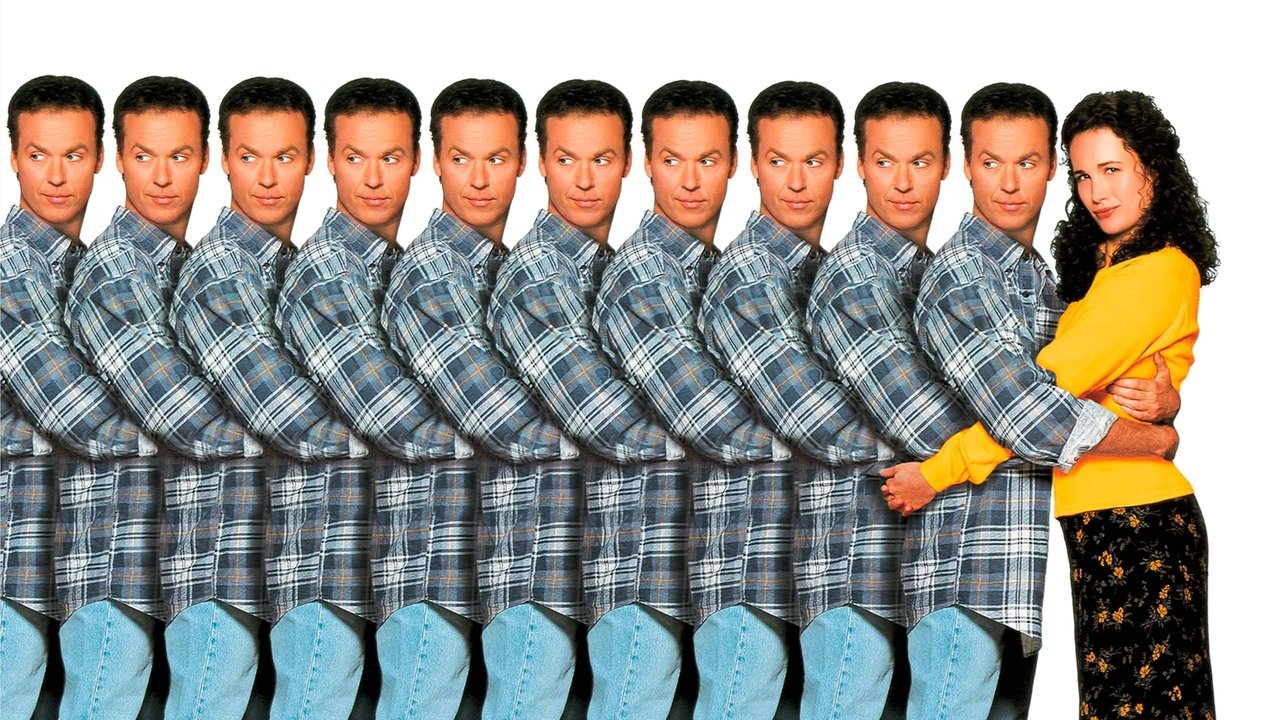
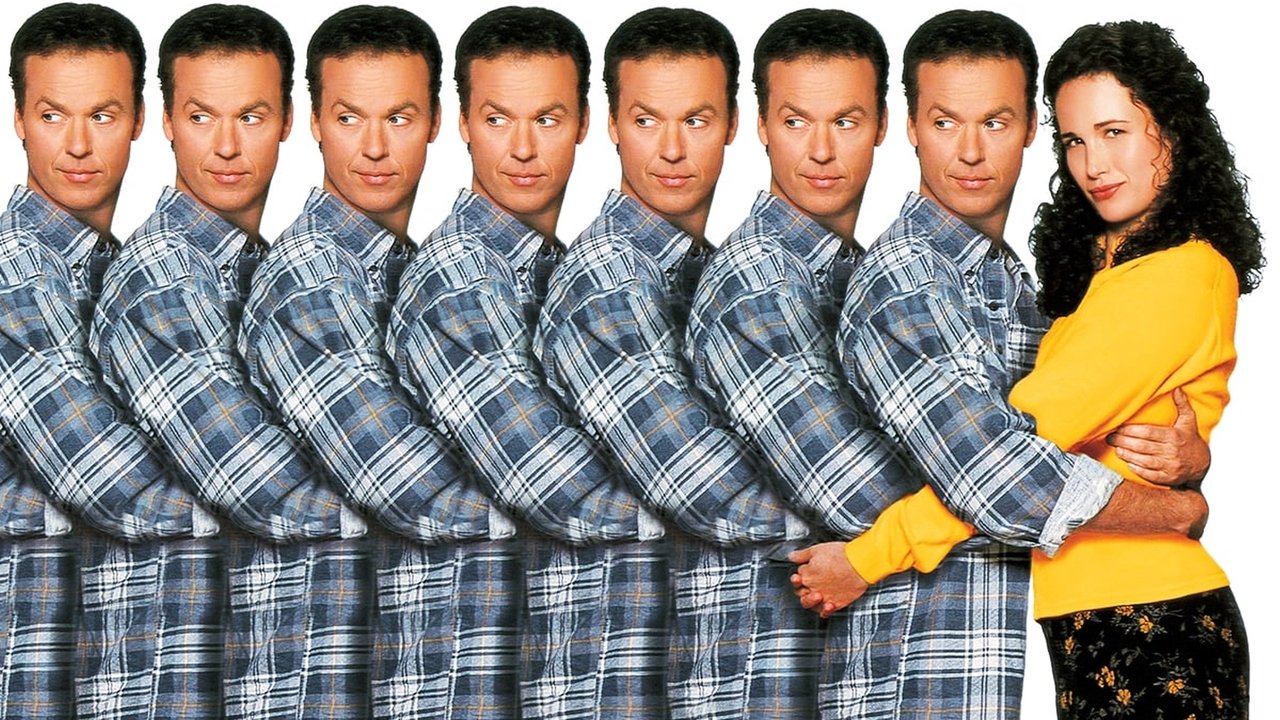
Okay, rewind your mind back to Blockbuster on a Friday night, circa 1996. The fluorescent lights hum, the smell of popcorn and plastic tape cases fills the air, and you’re scanning the New Releases wall. What catches your eye? Maybe that intriguing cover featuring multiple Michael Keatons looking slightly perplexed. That’s Multiplicity, a high-concept comedy that felt perfectly pitched for the era, landing right after director Harold Ramis had gifted us the timeless Groundhog Day (1993). It promised a familiar comedic star grappling with a fantastical premise, and boy, did it try to deliver.
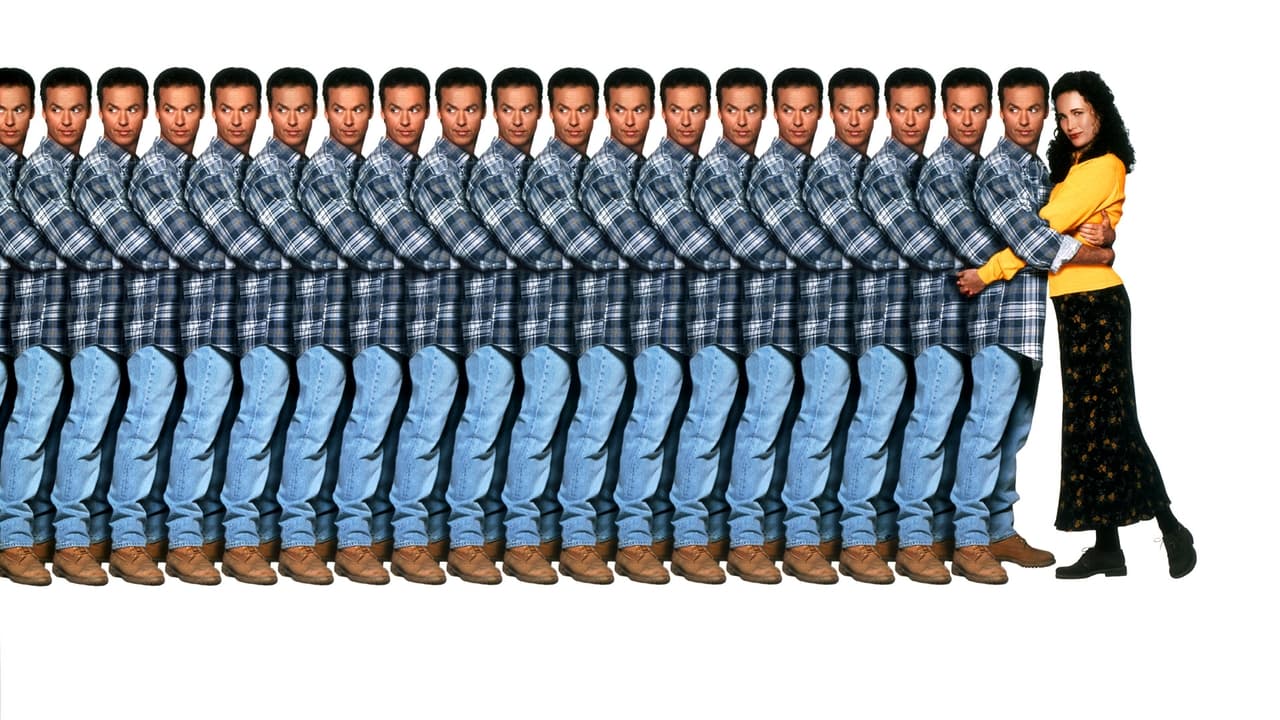
The setup is pure 90s wish-fulfillment: Doug Kinney (Michael Keaton) is a construction supervisor drowning in the demands of his job, his marriage to the lovely Laura (Andie MacDowell), and raising two kids. He’s stretched thinner than cheap cling film. Enter Dr. Owen Leeds (a perfectly cast Harris Yulin), a kindly geneticist working at a suspiciously well-funded (and conveniently nearby) institute who offers a seemingly simple solution: cloning. Why not make a copy of yourself to handle the workload? What could possibly go wrong?
Keaton Times Four
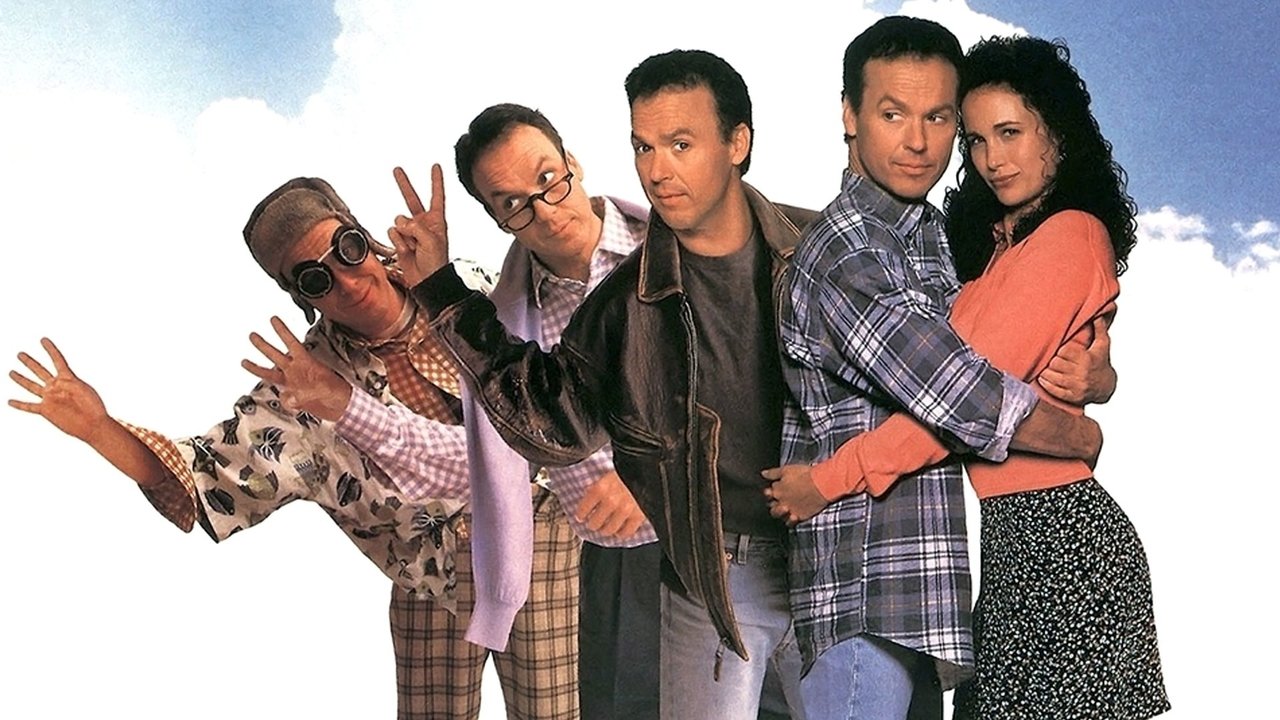
This movie lives and breathes on the shoulders of Michael Keaton. Forget the plot mechanics for a moment; the real joy here is watching Keaton differentiate between the Doug clones. We get the original, stressed-out Doug. Then there’s Clone #2 ("Lance"), the macho, assertive workaholic who takes charge on the job site. Clone #3 ("Rico") is the sensitive, domesticated type, eager to handle home life and charm Laura. And then... there's Clone #4 ("Lenny"). Oh, Lenny. Created as a copy of a copy (a big no-no, apparently), Lenny is… well, let’s just say he’s not operating with a full deck of chromosomes. He’s the childlike, impulsive wildcard, essentially embodying the degradation of the original template, a concept the film amusingly, if broadly, explores.
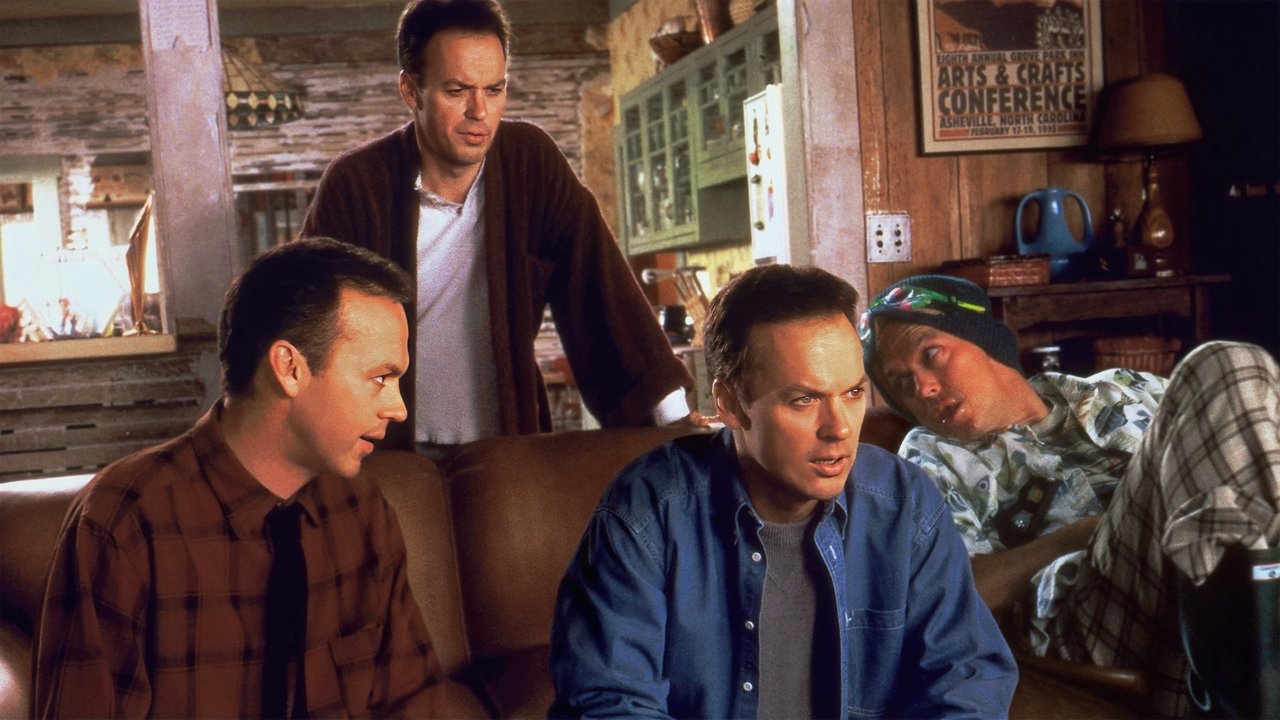
Keaton throws himself into each persona with gusto. It's a comedic masterclass in physical performance and subtle shifts in voice and mannerism. Lance struts, Rico preens (and cooks!), Lenny… bounces. Seeing them interact, often in the same frame, was pretty impressive stuff back in the VCR days. Remember how convincing those split-screen shots felt before seamless digital compositing became the norm?
The Mid-90s Tech Behind the Laughs
Pulling off multiple Keatons wasn't simple magic in '96. This was the era just before CGI completely took over, relying heavily on clever camera work and precise execution. They used motion control cameras – those big rigs programmed to repeat the exact same camera movement multiple times – allowing Keaton to perform as one clone, then change costume and position to play another against, essentially, himself. They also employed split-screen techniques, often hiding the seams in vertical lines within the set (door frames, wall corners), and relied heavily on body doubles like Zack Duhame for over-the-shoulder shots or when a clone's back was to the camera. It required meticulous planning and Keaton hitting his marks perfectly, take after take. While it might look a little less slick than today’s effects, there's a certain tangible quality to it, a sense of the actor really being there multiple times. A fun fact: the script, originally by Chris Miller, got punched up by the legendary comedy writing duo Lowell Ganz and Babaloo Mandel (Splash, Parenthood, A League of Their Own), who knew a thing or two about crafting relatable human comedy amidst quirky premises.
More Than Just a Concept?
While the premise is the main draw, Harold Ramis tries to inject some heart. The film touches on the pressures of modern life, the elusive work-life balance, and the idea that maybe, just maybe, trying to compartmentalize ourselves isn't the answer. Andie MacDowell does her best as Laura, the increasingly bewildered wife who senses something is off but can't quite pinpoint the absurdity unfolding around her. She grounds the film, reacting as any sane person would when confronted with slightly 'off' versions of her husband showing up at random times.
However, Multiplicity didn't quite capture the magic (or the box office) of Groundhog Day. Released in July 1996, it faced stiff summer competition and grossed only around $21 million domestically against a reported $45 million budget. Critics were mixed, often praising Keaton but finding the script somewhat formulaic or repetitive. Looking back, you can see why. The initial setup is brilliant, but the plot sometimes struggles to escalate beyond variations on the theme of "which clone will screw up next?". The jokes related to Lenny, while providing some big laughs, occasionally skirt the edge of good taste, feeling very much like a product of mid-90s comedy sensibilities.
Was It Worth the Rental Fee?
Watching Multiplicity today is like unearthing a specific type of 90s artifact. It's a high-concept studio comedy driven by a major star's tour-de-force performance and directed by a comedy legend. It relies on clever (for the time) practical and optical effects to sell its central gimmick. Does it feel a bit dated? Sure, the technology, the pacing, some of the humour. But Keaton's energy is infectious, and the core idea remains amusing. I distinctly remember renting this on VHS, drawn in by the Keaton-Ramis pairing, and finding it a perfectly enjoyable Friday night flick, even if it didn't stick with me quite like Groundhog Day did.
Rating: 6.5/10
Justification: Multiplicity earns points for its clever premise and Michael Keaton's phenomenal multi-role performance, a true comedic showcase. Harold Ramis provides a steady directorial hand. However, the script doesn't fully capitalize on the concept's potential, leading to some repetitive scenarios and jokes that haven't all aged gracefully. The technical execution was impressive for its time, adding to the nostalgic appeal. It falls short of classic status but remains a fun, watchable example of mid-90s high-concept comedy.
Final Rewind: It’s a charmingly analogue take on digital problems, a testament to Keaton’s versatility before pixels could paint infinite copies with ease. Worth revisiting if you miss when movie magic felt a bit more hands-on.