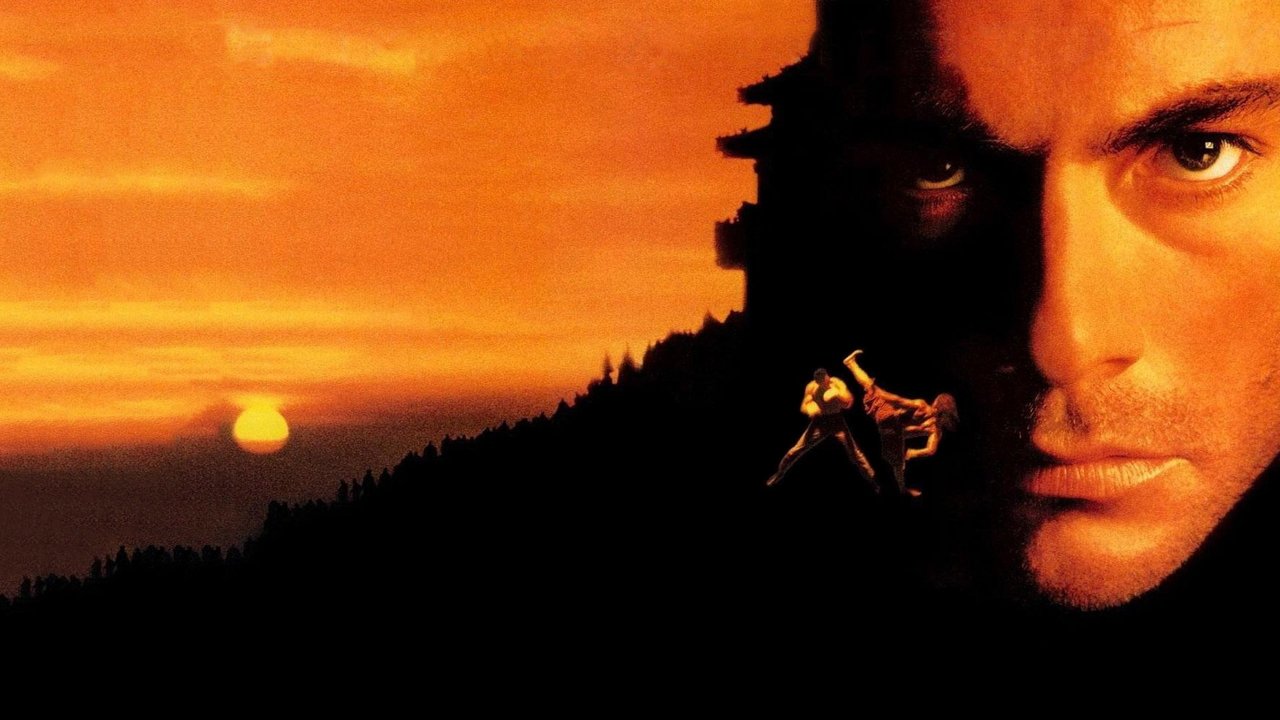
Okay, rewind your minds with me. Picture this: Friday night, the glow of the video store sign cutting through the dark. You scan the action section, past the well-worn copies of Die Hard and Lethal Weapon, and your eyes land on it. A familiar face – the Muscles from Brussels himself, Jean-Claude Van Damme – front and center, promising exotic locales and high-kicking mayhem. But wait… he directed this one too? That was the hook for 1996's The Quest, a film that arrived carrying the hefty weight of expectation, especially for anyone who'd worn out their tape of Bloodsport.
### From Mean Streets to Ancient Arenas
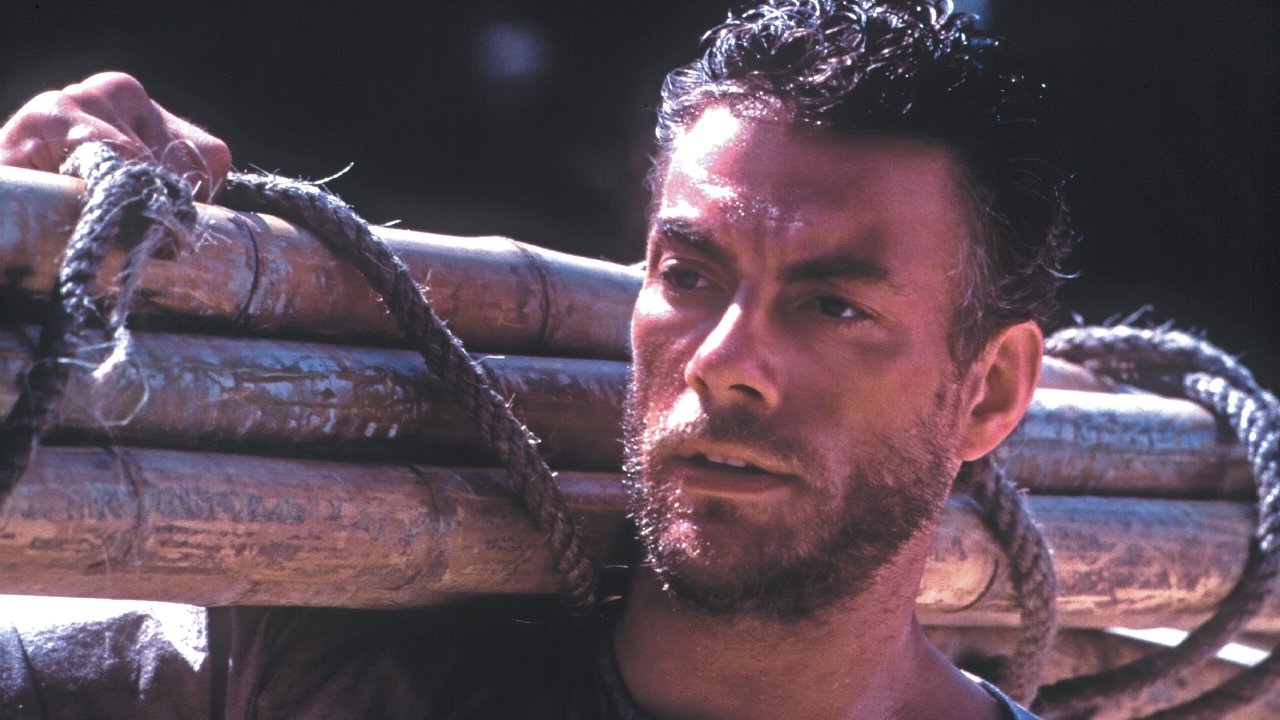
The Quest throws us back to 1920s New York, introducing us to Chris Dubois (Van Damme), a kind-hearted street performer and petty thief who gets tangled up with local gangsters. A quick escape lands him stowed away on a ship bound for Siam (modern-day Thailand), where he’s promptly enslaved by gun smugglers. So far, so standard action-adventure setup. But things take a turn when Dubois is rescued – sort of – by the charmingly roguish Lord Edgar Dobbs, played with undeniable flair by none other than Roger Moore. Yes, that Roger Moore, bringing a dash of suave Bond-esque charisma (and perhaps a touch of delightful absurdity) to the proceedings. Dobbs, along with tough-as-nails American boxer Maxi Devine (James Remar, always excellent value as a gritty character actor, think The Warriors or 48 Hrs.), sees potential in Dubois' fighting skills. Their plan? Enter him into the Ghang-gheng, a legendary, secret martial arts tournament where the world's greatest fighters compete for a priceless solid gold dragon.
If that premise sounds familiar, well, you're not wrong. The shadow of Bloodsport looms large over The Quest. In fact, Frank Dux, the man whose alleged life story inspired Bloodsport, actually has a story credit here (alongside Van Damme himself and others) and later sued Van Damme, claiming The Quest was essentially the Bloodsport sequel Dux had written. That whole legal tangle adds a layer of behind-the-scenes intrigue that feels very much of the era. It's one of those "retro fun facts" that makes you nod knowingly now – ah, the tangled webs of 90s action movie lore!
### The Grand Tournament: Practical Pageantry
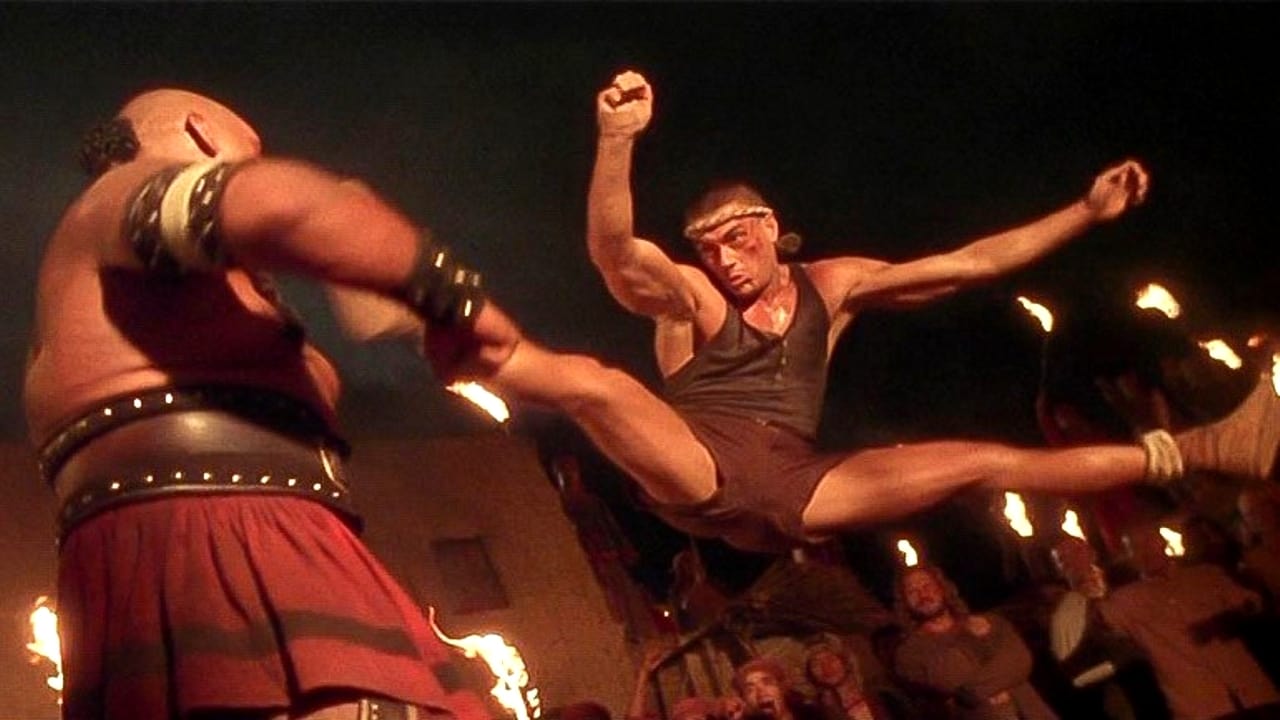
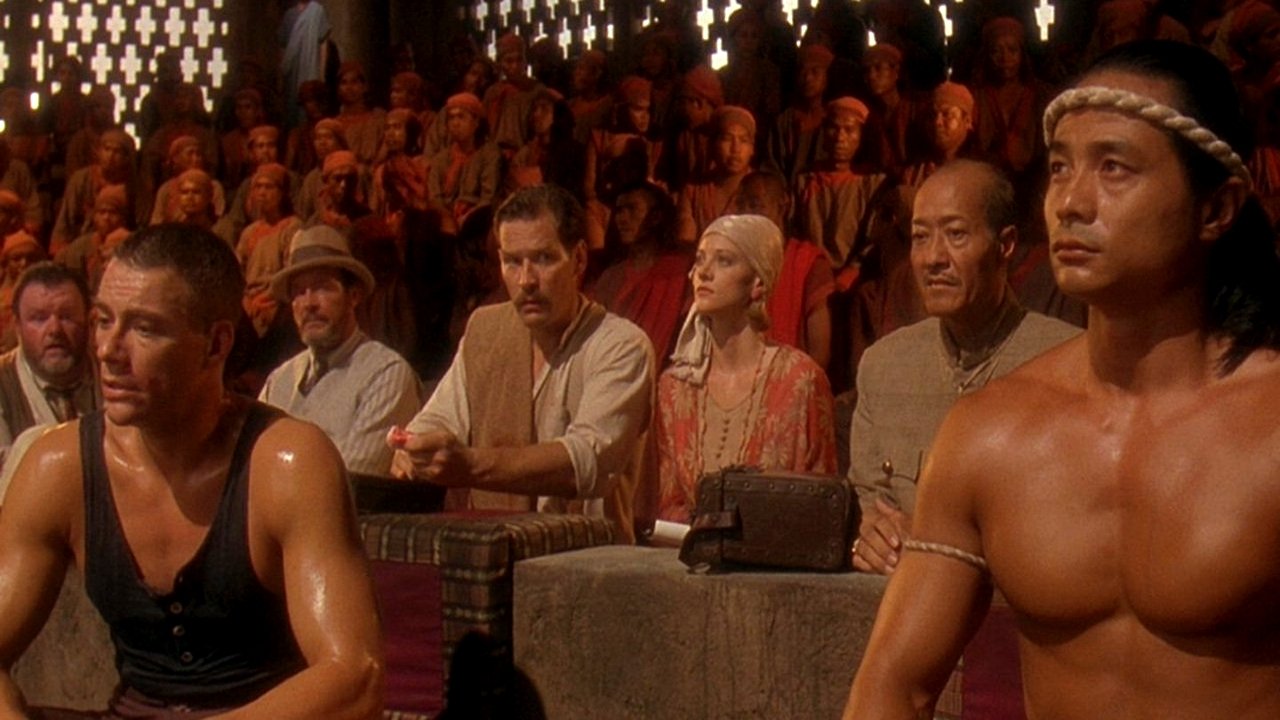
Let's be honest, the setup is merely the appetizer. The main course is the Ghang-gheng itself. And this is where Van Damme, in his directorial debut, clearly poured his passion (and a decent chunk of the reported $30 million budget). The tournament sequences aim for epic. We get fighters representing different nations and distinct styles – Capoeira from Brazil, Sumo from Japan, Savate from France, Muay Thai from Siam, and more. It’s a visual feast of martial arts diversity, staged with a sense of grandeur.
And the fighting? This is pure, unadulterated 90s practical action. Remember how real those kicks and punches felt before CGI smoothing took over? The Quest delivers that raw impact. You see the strain, you hear the thuds, you believe these guys are genuinely connecting (sometimes maybe a bit too genuinely!). The choreography is intricate, showcasing Van Damme's incredible flexibility and power, but also giving moments to the other performers representing unique global fighting arts. There's a tangible quality to the action – real bodies, real movement, captured on film. Compared to some of today's hyper-edited, physics-defying sequences, there's a grounded intensity here that's immensely satisfying, even if it lacks modern polish. It’s the kind of stuff that made you lean closer to the fuzzy CRT screen back in the day.
### A Director's Dream?
As a director, Van Damme shows ambition. He clearly wanted to make something bigger, more sweeping than his usual fare. The period setting, the international scope, the attempt at creating a legendary tournament – it's all admirable. You can feel him reaching for that classic adventure serial vibe, blended with the martial arts tournament formula he knew so well. Does it always work? Maybe not perfectly. The pacing can feel a little uneven in the first act, and some of the character arcs feel secondary to the spectacle. But you can't deny the effort. He gets solid performances from his cast, especially Moore, who seems to be having an absolute blast, and Remar, who adds some welcome grit. Van Damme himself plays Dubois with earnest sincerity, the underdog hero we expect. Considering this was his first time calling the shots on a project this size, filmed partly on location in Thailand, it's a respectable effort. It didn't exactly set the box office on fire (grossing around $57 million worldwide), nor did it launch a major directing career for JCVD, but it stands as a testament to his desire to do more than just kick bad guys.
### Does the Quest Still Thrill?
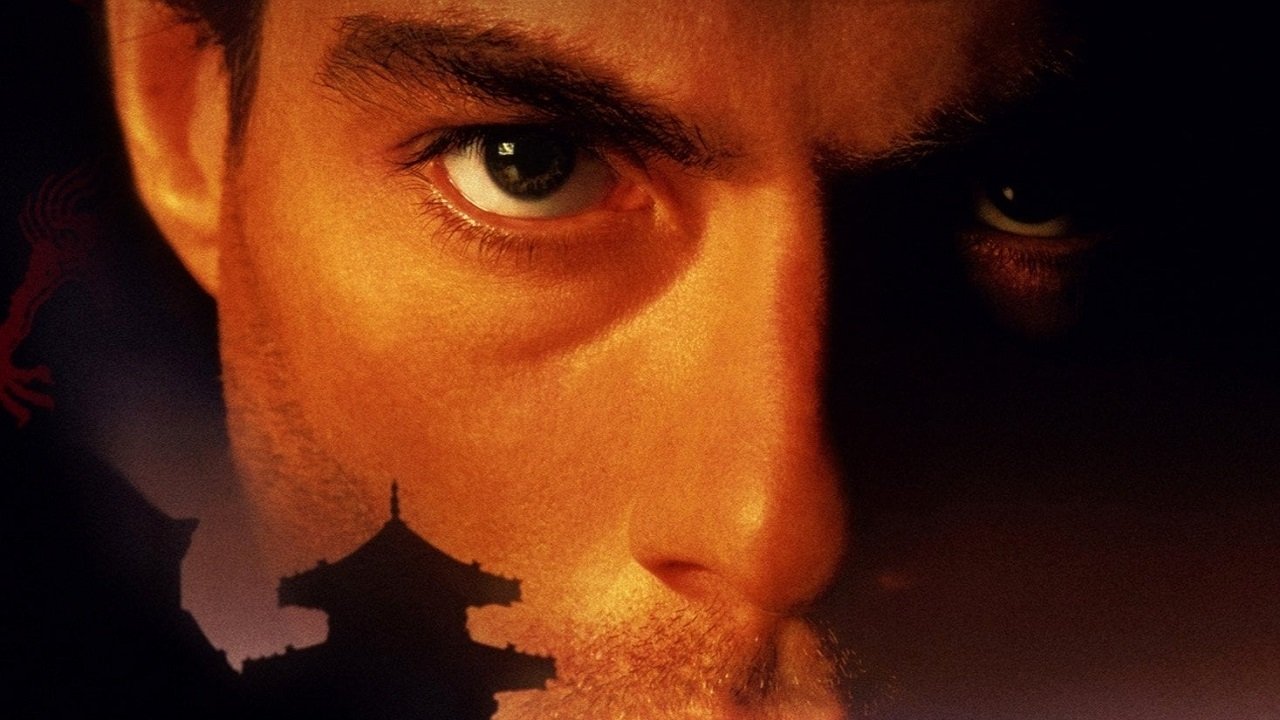
Watching The Quest today is like unearthing a well-preserved time capsule. It's undeniably a product of its time – the earnest tone, the straightforward plot, the slightly grandiose presentation. It never quite escapes the Bloodsport comparisons, and perhaps lacks that film's raw, almost documentary-like feel in its tournament scenes. Yet, there's a genuine charm to it. The practical fight choreography remains impressive, Roger Moore is a delight, and the sheer ambition of the project is palpable. It’s the kind of movie that might have felt a little disappointing if you rented it expecting Bloodsport 2, but judged on its own merits, it’s a solid, entertaining slice of 90s action-adventure with a distinct flavour. I definitely remember grabbing this one from the shelves, intrigued by the epic promise on the cover art, and settling in for a night of martial arts mayhem.
VHS Heaven Rating: 7/10
Justification: While the story treads familiar ground and the direction isn't flawless, The Quest delivers handsomely on its promise of diverse, practical martial arts action within an ambitious, globe-trotting framework. Van Damme's passion project feel, combined with Roger Moore's charismatic presence and solid fight choreography, make it a highly watchable piece of 90s action cinema that stands as more than just a footnote in JCVD's filmography.
Final Thought: It may not have found the Holy Grail of action cinema, but The Quest remains a noble and thoroughly entertaining journey back to when martial arts tournaments felt epic and the kicks landed with analogue authenticity. Worth tracking down for a dose of pure 90s Van Damme spectacle.