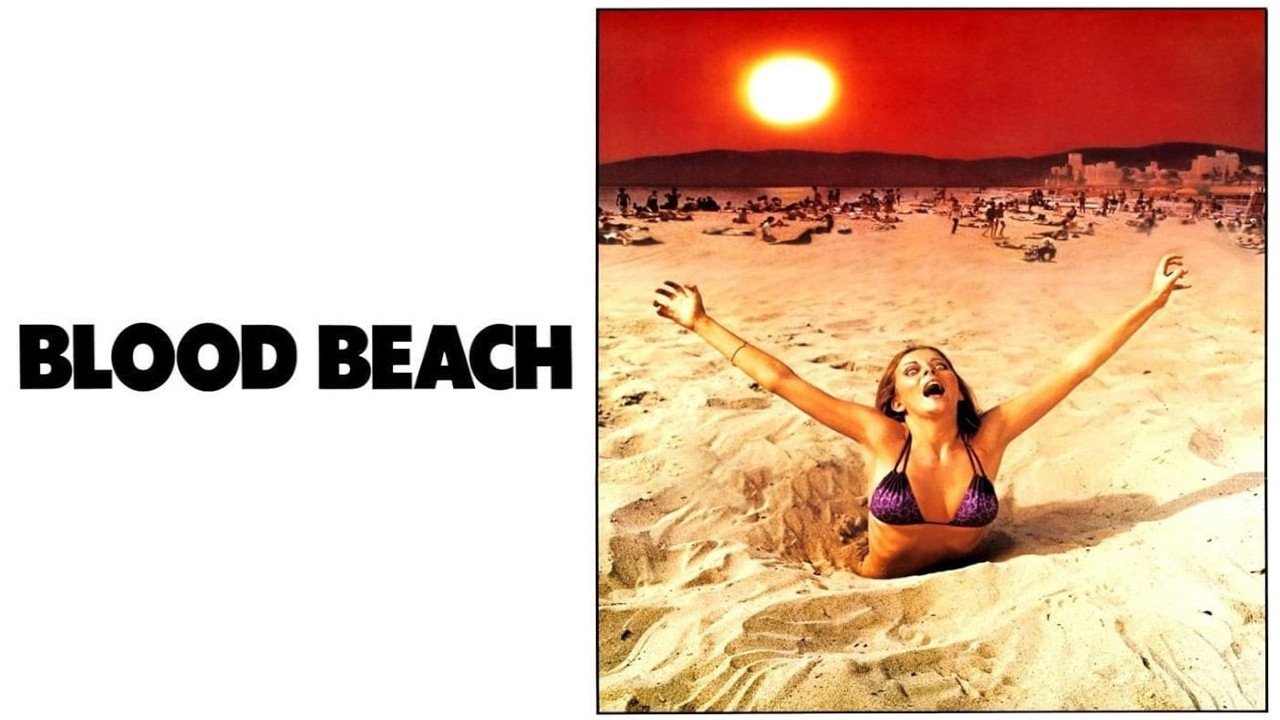
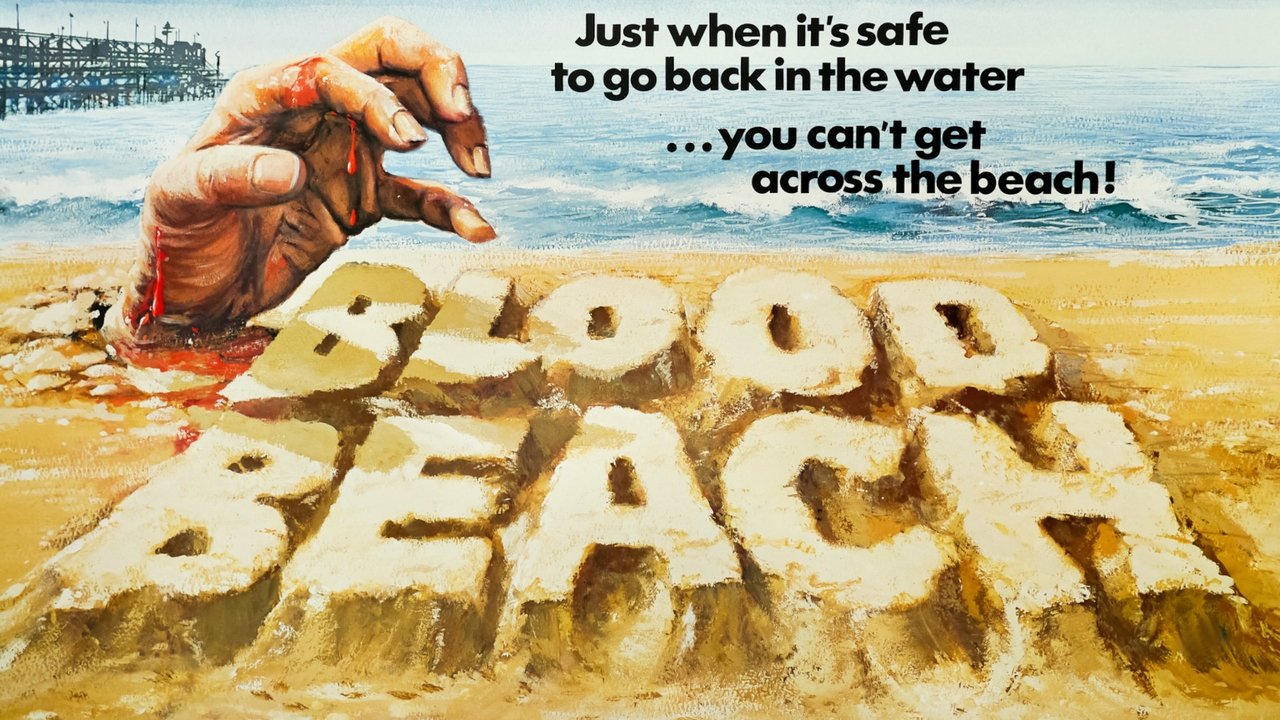
There's a peculiar dread that settles when the familiar becomes the source of terror. California beaches, synonymous with sun-drenched escape, transform into something altogether more sinister in Jeffrey Bloom's Blood Beach. Forget the dangers lurking beneath the waves; here, the very ground beneath your feet conspires against you. The film’s infamous tagline practically echoes from the faded sticker on a well-worn VHS box: "Just when you thought it was safe to go back in the water—you can't get to it." That promise of terrestrial terror, a bizarre inversion of the aquatic menace popularised by Jaws (1975), was enough to guarantee a rental back in the day, wasn't it?
Beneath the Boardwalk, Something Waits
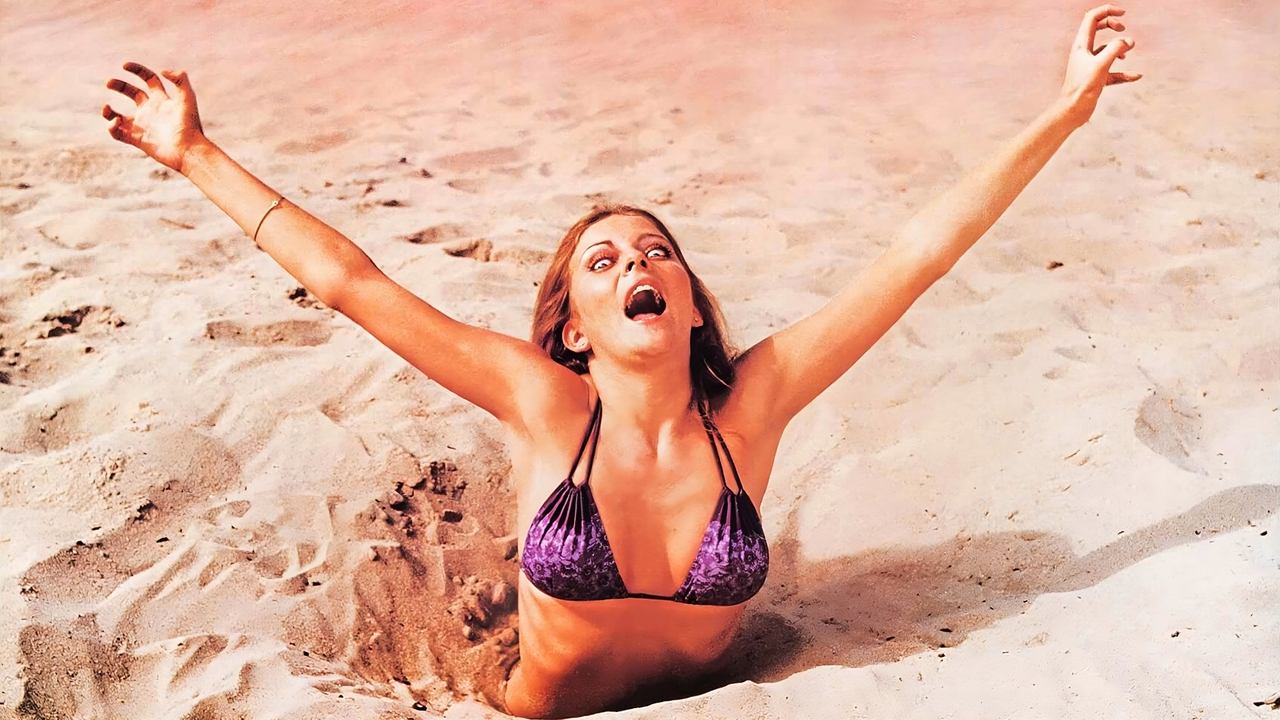
The setup is classic creature-feature gold: sunbathers and strollers on Santa Monica beach are vanishing, seemingly swallowed whole by the sand. No dorsal fin slicing through water, just sudden, muffled screams and a vortex of swirling grains. Police Sergeant Royko (Burt Young, forever etched in our minds as Paulie from the Rocky series) is baffled, barking orders and chewing scenery with the gusto we expect. Meanwhile, lifeguard Harry Caulder (David Huffman) teams up with Catherine (Marianna Hill, who brought cool intensity to films like High Plains Drifter (1973)), the mother of one of the first victims, to uncover the sandy secret. The film attempts to build suspense through these disappearances, punctuating moments of seaside normalcy with sudden, subterranean violence.
The atmosphere Bloom tries to cultivate is one of unease amidst the everyday. The bright, open spaces of the beach should feel safe, yet they harbor a hidden predator. However, the execution often leans more towards B-movie languor than sustained tension. Much of the runtime is dedicated to Royko's increasingly frustrated investigation and the burgeoning relationship between Harry and Catherine, sometimes slowing the pace considerably when what we really crave is another glimpse of that sand-dwelling horror. It's a pacing typical of many lower-budget efforts from the era, stretching a killer concept thin between the attack scenes.
That Sinking Feeling: Effects and Execution
Let's talk about the monster. Or rather, the lack of monster for much of the film. Born from a modest $2.5 million budget, Blood Beach wisely, perhaps necessarily, keeps its creature largely hidden. We see its POV rushing towards victims, the terrifying sinkholes it creates, and eventually, glimpses of... well, something vaguely plant-like and toothy. Designed by Dell Rhoades Jr. and Michael McCracken, the creature reveal, when it finally comes, might feel underwhelming by today's standards. Yet, watching this on a flickering CRT screen back in the 80s, those moments of someone being inexorably pulled down held a unique kind of horror. The sheer helplessness, the inability to escape the very ground you stand on – doesn't that idea still carry a primal chill? The practical effects, while dated, aimed for that visceral reaction. Filming these sand attacks on location at Venice Beach surely presented its own unique set of challenges for the effects team, trying to make simple pits look like monstrous maws.
Burt Young Steals the Sand
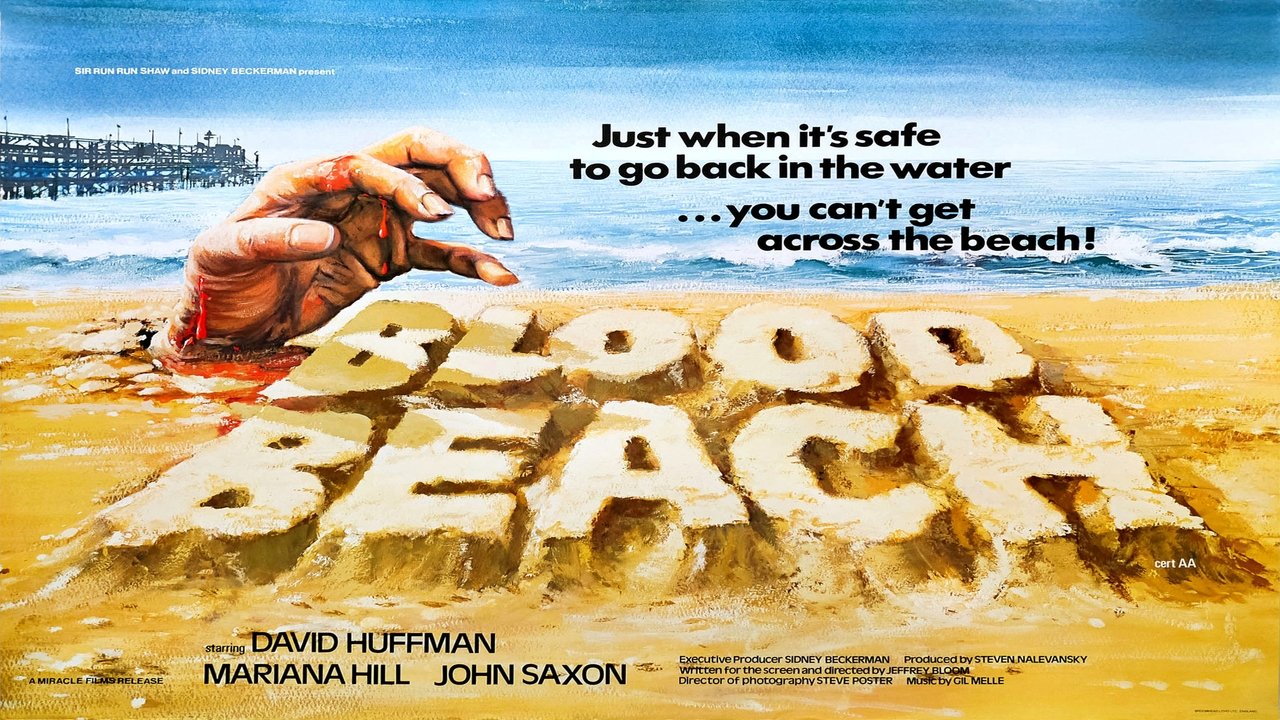
While David Huffman (whose career was tragically cut short in 1985) provides a capable, if somewhat bland, leading man, and Marianna Hill adds a touch of class, it's Burt Young who truly anchors the film's strange charm. His Sgt. Royko is a whirlwind of exasperation, vulgarity, and surprisingly sharp observations. He feels like a real, disgruntled cop dropped into an unreal situation, grounding the film even as the premise spirals into absurdity. His performance elevates the procedural elements and provides some of the film's most memorable, darkly comedic lines. He reportedly took the role seriously, trying to find the gritty reality within the fantastic scenario.
A Relic of the Video Store Age
Blood Beach is undeniably a product of its time – a post-Jaws creature feature banking on a high-concept gimmick. Its initial critical reception was largely negative, and it wasn't a massive box office success, but it found its audience on home video. I distinctly remember the stark, simple VHS cover art promising something deeply unsettling. It became one of those titles whispered about, rented out of morbid curiosity fueled by that unforgettable tagline. Did it deliver on the promise? Partially. The core concept remains wonderfully creepy, even if the film surrounding it is uneven. It lacks the polish of bigger studio horrors but possesses a certain grubby appeal. It never spawned sequels or remakes, remaining a standalone oddity in the annals of 80s horror.
Watching it now evokes that specific nostalgia – the slightly murky picture quality, the synth score trying its best to build dread, the earnest performances grappling with a fundamentally silly idea. It’s a reminder of a time when a killer concept and a great tagline were often enough to get a movie made and onto rental shelves, regardless of budget limitations.

VHS Heaven Rating: 5/10
The rating reflects a film brimming with potential thanks to its unique core premise and a standout performance from Burt Young, hampered by uneven pacing, dated (though nostalgically charming) effects, and a script that doesn't fully exploit its own terrifying idea. It earns points for sheer concept originality and its status as a memorable VHS-era rental, but loses them for sluggish execution and a less-than-terrifying monster reveal.
Blood Beach may not be a forgotten masterpiece, but it’s a fascinating slice of early 80s horror – a film built on a brilliantly unsettling idea that lingers long after the rather clunky execution fades. It’s the kind of movie that perfectly encapsulates the gamble of the video store era: sometimes you found gold, sometimes you found sand, and sometimes, like here, you found something weirdly compelling in between.