There's a certain kind of loneliness that feels uniquely Parisian, particularly when captured in stark, luminous black and white. It's the feeling that washes over you watching Leos Carax's audacious debut, Boy Meets Girl (1984). This isn't your typical 80s fare, certainly not the kind of tape you'd grab for a Friday night pizza party. No, this was more likely lurking in the "Foreign" or "Art House" section of the more adventurous video rental stores, a stark monochrome spine promising something… different. And different it certainly was.
### Echoes in Monochrome Paris
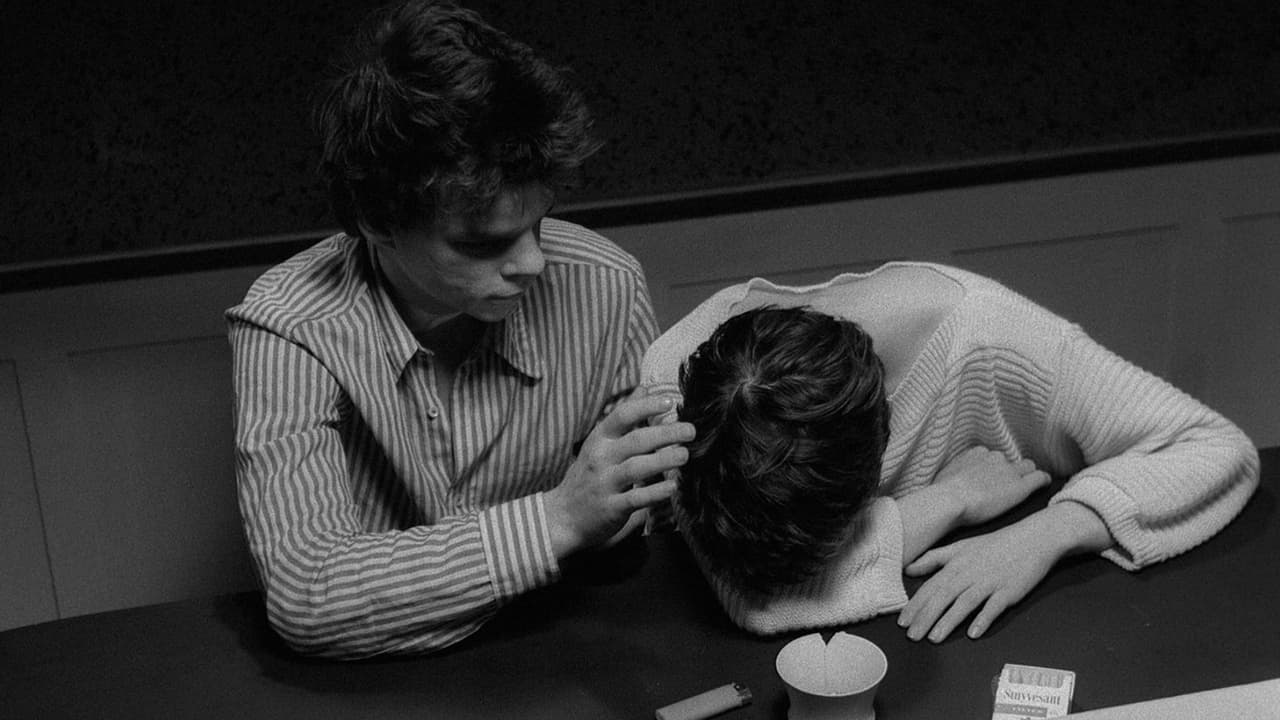
The film follows Alex (Denis Lavant), a young, aspiring filmmaker nursing a broken heart, wandering the nocturnal streets of Paris. He becomes obsessed with Mireille (Mireille Perrier), another soul adrift after her own relationship ends, whom he first overhears expressing her despair through an apartment intercom. What unfolds isn't a conventional romance, but rather a haunting, sometimes frustrating, exploration of alienation, the clumsy yearning for connection, and the vast gulfs that can exist between people even when they occupy the same space.
Carax, barely 24 when he directed this, bursts onto the scene with a style already deeply indebted to the French New Wave, particularly Jean-Luc Godard, but filtered through his own burgeoning, deeply romantic and melancholic sensibility. The visuals, courtesy of cinematographer Jean-Yves Escoffier (who would later shoot Carax's Les Amants du Pont-Neuf and Gus Van Sant's Good Will Hunting), are simply stunning. Paris at night becomes a character in itself – bridges, apartments, the Seine – all rendered in gorgeous, high-contrast monochrome that feels both timeless and specifically rooted in a certain cinematic tradition. It's said that Carax partially funded the film himself, a testament to the passion driving this debut, pouring every franc into achieving this specific, poetic aesthetic on a shoestring budget.
### A Dance of Desperation
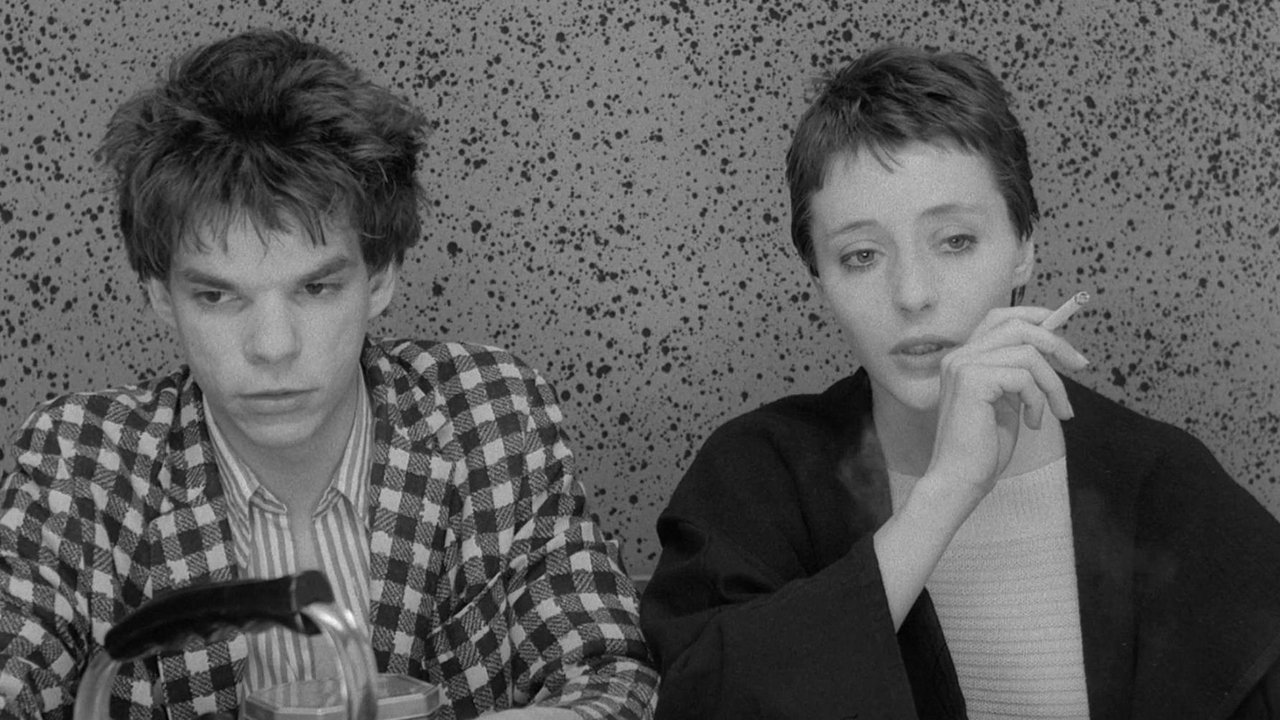
At the film's heart is the electrifying presence of Denis Lavant. This was his first major role and the beginning of a long, iconic collaboration with Carax. Lavant isn't conventionally handsome, but he possesses an extraordinary physical intensity. His Alex is all restless energy, sharp angles, and sudden bursts of movement – sometimes lurching, sometimes almost balletic. There's a clear influence from silent film comedians like Buster Keaton or Charlie Chaplin in his performance, a physicality that communicates Alex's inner turmoil more profoundly than dialogue often could. He's frustrating, self-absorbed, almost pitiable in his inability to truly see beyond his own romanticized despair, yet Lavant makes him utterly compelling.
Mireille Perrier as Mireille offers a counterpoint – quieter, more enigmatic, trapped in her own solitude. Her interactions with Alex are less a meeting of minds and more a collision of lonely orbits. Their extended conversation in her apartment, the film's centerpiece, is a masterclass in awkward intimacy, punctuated by long silences, philosophical ramblings, and sudden shifts in mood. Does it feel entirely natural? Perhaps not always. The dialogue occasionally tips into the overly mannered or self-consciously poetic, a trait sometimes found in youthful, ambitious works. Yet, it captures a specific kind of intense, navel-gazing conversation you might actually have in your early twenties when everything feels monumentally important and potentially tragic.
### Finding Beauty in the Bleak
Boy Meets Girl isn't concerned with plot in the traditional sense. It's a mood piece, an evocation of a feeling. The narrative drifts, much like its protagonist, lingering on moments, gestures, and the sheer atmosphere of the city. There's a famous scene involving tap dancing in a kitchen – a sudden, unexpected explosion of movement that feels both jarring and strangely perfect, encapsulating the film's blend of youthful energy and underlying sadness. It reminds you that even in profound isolation, life can erupt in bizarre ways.
Did audiences flock to this in 1984? Not in the way they did for Ghostbusters or Beverly Hills Cop. But it made waves where it counted, premiering at the prestigious International Critics' Week section of the Cannes Film Festival and announcing Carax as a major new voice in French cinema. Finding it on VHS back in the day felt like unearthing a secret, a transmission from a different cinematic world operating on its own poetic, often inscrutable, logic. It demands patience, a willingness to sink into its specific rhythm and visual language.
What lingers most after the credits roll? It’s the stark beauty of those black-and-white images, the ghost of youthful heartbreak haunting the Paris night, and the raw, physical performance of Denis Lavant. It’s a film about the desperate, often failed, attempts we make to connect, and the painful beauty that can sometimes be found even in that failure. It asks, perhaps, how much of love is genuine connection, and how much is merely projecting our own needs onto another solitary figure glimpsed across a lonely city?
Rating: 7.5/10
Justification: While its deliberate pacing, sometimes pretentious dialogue, and navel-gazing characters might test some viewers' patience, Boy Meets Girl is a visually stunning and emotionally resonant debut. Its unique atmosphere, Carax's already potent directorial vision, and the unforgettable performance by Denis Lavant make it a significant piece of 80s arthouse cinema. It’s not always an easy watch, but its raw poetry and aching melancholy leave a lasting impression.
Final Thought: A haunting time capsule of youthful angst and cinematic ambition, reminding us that sometimes the most profound connections in film are not between the characters, but between the viewer and the unmistakable ache of loneliness captured on screen.