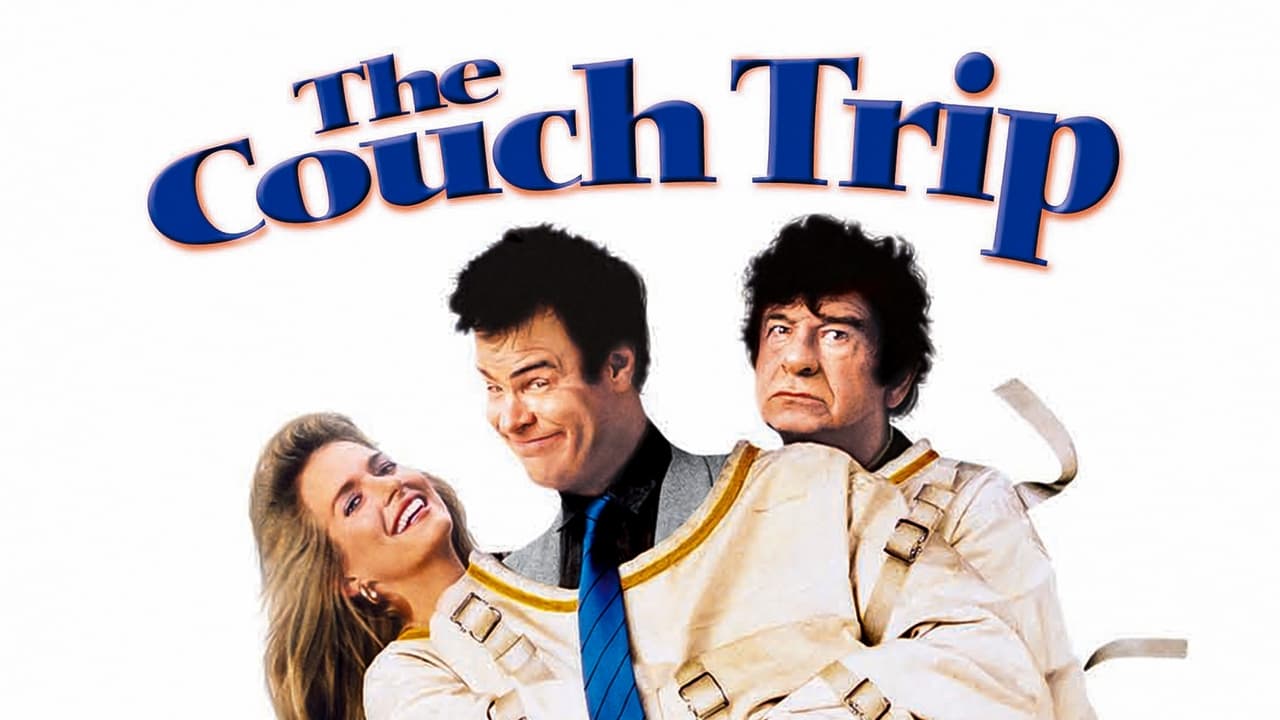
Alright, rewind your minds with me. Picture this: it's Friday night, you're scanning the 'New Releases' wall at Blockbuster (or maybe your local mom-and-pop video joint), and your eyes land on a familiar face – Dan Aykroyd, maybe flanked by the craggy charm of Walter Matthau and the perpetually exasperated Charles Grodin. The box art for The Couch Trip (1988) practically buzzes with chaotic energy. You grab it, maybe along with a pizza and some questionable fizzy drink, ready for some late-night laughs on that fuzzy CRT screen. And chaos, my friends, is exactly what this wonderfully weird little comedy delivers.
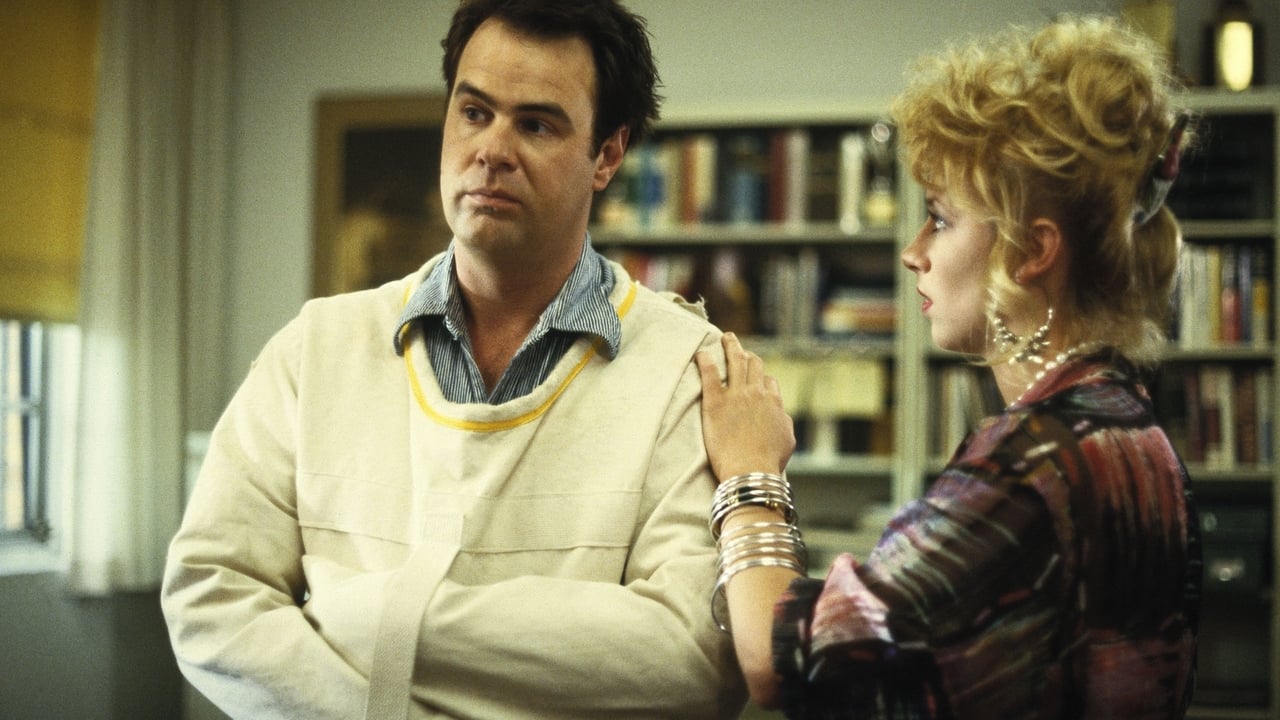
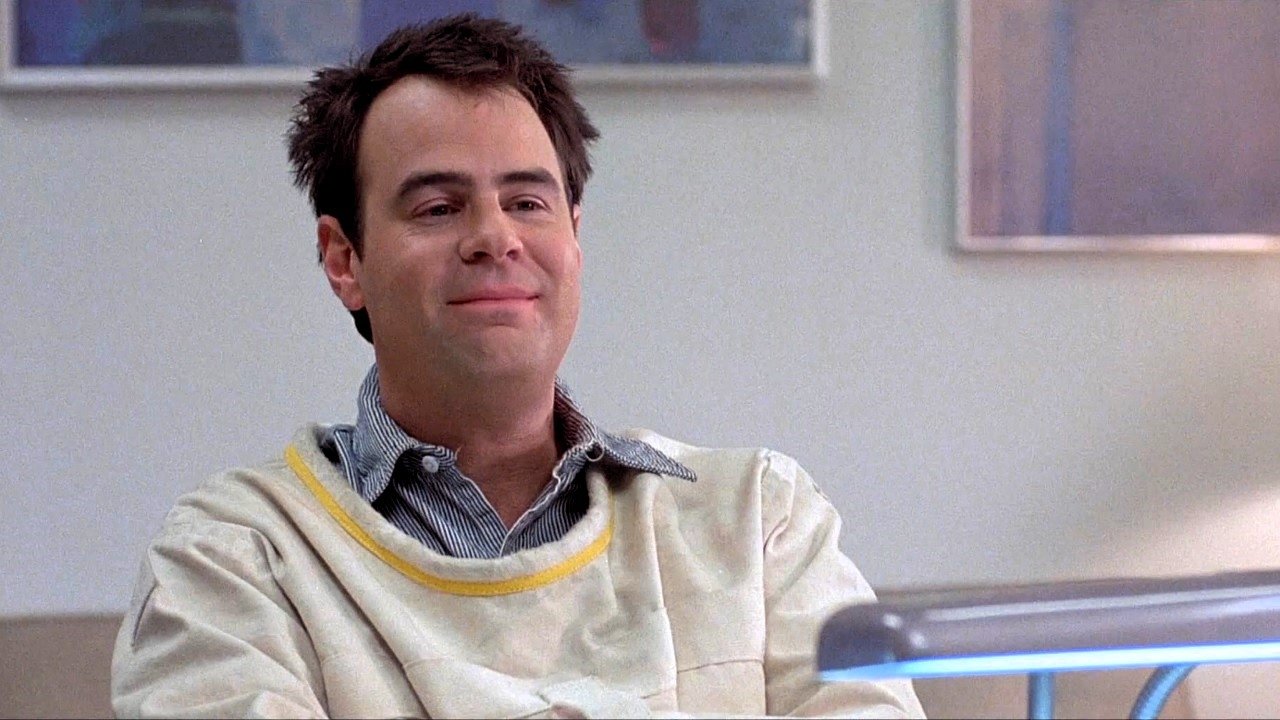
It kicks off with a premise so perfectly absurd, it could only fly in the 80s: John Burns (Aykroyd), a con man doing time in a mental institution after faking insanity to dodge prison, intercepts a job offer meant for his tightly-wound psychiatrist, Dr. Maitlin (a brief but memorable cameo). Through a series of increasingly implausible events, Burns escapes and finds himself posing as the renowned Dr. Lawrence Baird (Grodin, who is having his own breakdown elsewhere) – hosting a hit radio therapy show in the heart of Beverly Hills. Yeah, you read that right. An escaped mental patient giving psychiatric advice to the rich and neurotic of LA, live on air. What could possibly go wrong?
All Aboard the Crazy Train
This is Aykroyd in peak post-Ghostbusters form, radiating that unique blend of fast-talking huckster charm and barely contained manic energy. He's not playing dumb; Burns is sharp, observant, and uses his institutionalized "insights" to cut through the jargon and actually... help people? His unconventional methods – blunt, often outrageous – make him an instant sensation, much to the horror of the real Dr. Baird's handlers. It’s pure wish-fulfillment fantasy mixed with social satire, watching this imposter thrive by simply being direct in a world drowning in psycho-babble. Remember how refreshing his bluntness felt, even back then?
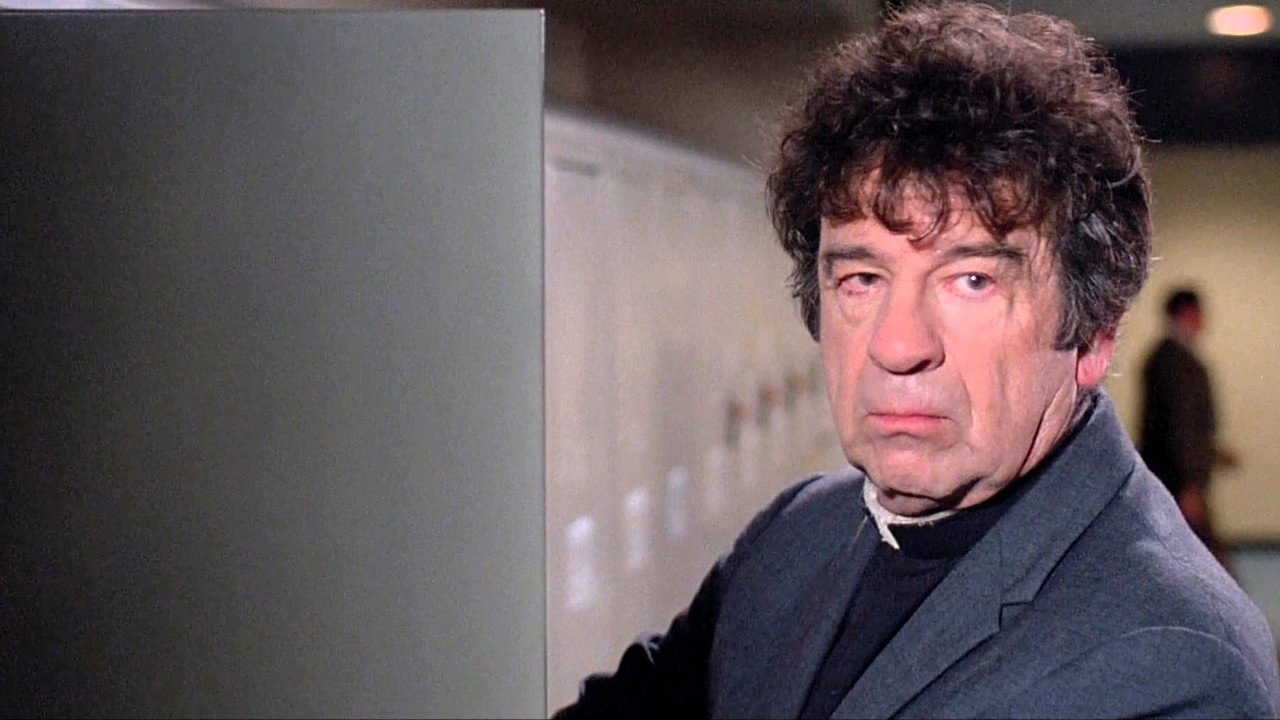
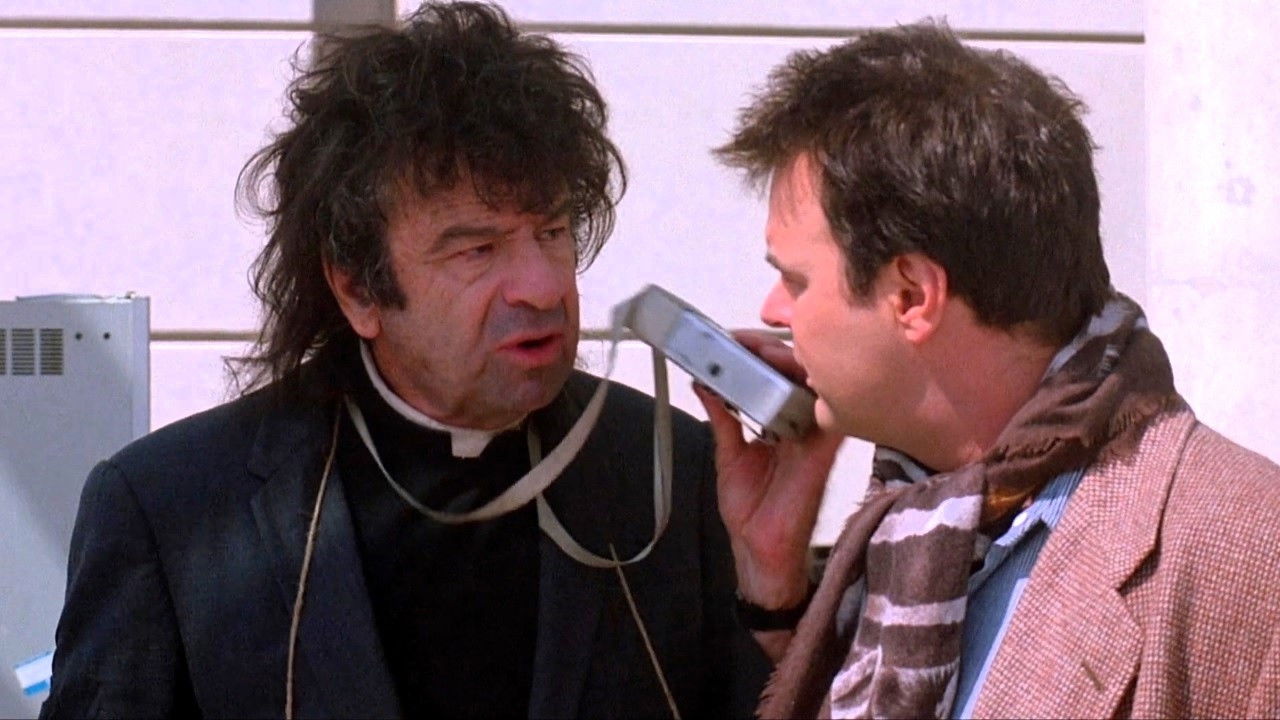
The film absolutely crackles when Aykroyd shares the screen with the legendary Walter Matthau. Matthau plays Donald Becker, a down-on-his-luck, street-smart guy pretending to be disabled who becomes Burns' unlikely accomplice. Their chemistry is fantastic – Aykroyd’s hyperactive scheming bouncing off Matthau’s seen-it-all weariness. It’s a joy watching these two comedic heavyweights play off each other. Matthau’s character was reportedly expanded significantly from the 1971 Ken Kolb novel the film is based on, a wise move that gives the movie much of its heart.
And then there's Charles Grodin as the actual Dr. Baird. Grodin is the master of simmering, repressed frustration, and watching his meticulously controlled world unravel while he’s stranded in London having a meltdown is comedic gold. It’s almost a separate movie running in parallel, highlighting the absurdity of both the high-strung professional and the effective imposter. Grodin just nails that specific frequency of privileged panic.
Ritchie's Skewering Style
Behind the camera is Michael Ritchie, a director who knew his way around character-driven comedy and gentle satire – think Fletch or The Bad News Bears. He keeps the pacing brisk, letting the ridiculous situations escalate naturally (well, as naturally as possible given the premise!). Ritchie captures that distinct late-80s Beverly Hills vibe – the pastel colours, the oversized shoulder pads (shout out to Donna Dixon as Dr. Baird's skeptical colleague), the sheer self-absorption of the radio callers. It’s a snapshot of an era, viewed through a slightly cracked lens.
Interestingly, despite the stellar cast and Ritchie's track record, The Couch Trip wasn't a massive hit. It pulled in around $12.4 million in the US on a $13 million budget, making it something of a commercial disappointment. Critics were mixed too; maybe the blend of farce and satire was a bit too quirky for mainstream tastes back then. Yet, finding it on VHS felt like discovering a hidden gem, didn't it? Its tagline perfectly captured the madness: "He's answering questions. He's solving problems. He's doing radio. He's doing therapy. He's doing time."
Why It Still Plays (Mostly)
Sure, some of the humour feels distinctly 'of its time', and the plot requires a suspension of disbelief the size of Aykroyd's ego in the film. But the energy is infectious. It relies on the sheer force of personality of its leads and the cleverness of its central conceit, not elaborate effects. The comedy feels practical – rooted in dialogue, timing, and reaction shots. Watching Aykroyd improvise his way through therapy sessions or Matthau grifting his way through LA has a raw, unpredictable quality that’s often missing in more polished modern comedies.
It’s the kind of film that thrived in the video rental era – maybe not aiming for Oscar glory, but delivering solid laughs and memorable characters. It’s a perfect example of a high-concept 80s comedy powered by star charisma, a slightly subversive script (penned by a team including Steven Kampmann and Will Porter, known for WKRP in Cincinnati), and Ritchie’s assured direction.
VHS Heaven Rating: 7/10
Justification: The Couch Trip earns a solid 7 for its fantastic lead performances, particularly the manic energy of Aykroyd and his chemistry with Matthau, plus Grodin’s hilarious parallel breakdown. The premise is brilliantly absurd, and Ritchie’s direction keeps the comedic engine running smoothly. It loses a few points for a plot that stretches credulity thin even for a farce, and some elements feeling dated, plus its somewhat underwhelming original reception reflects it wasn't quite firing on all cylinders. However, its core comedic performances and quirky charm hold up surprisingly well.
Final Thought: Forget self-help tapes; sometimes the most entertaining therapy session came in a chunky plastic VHS case, offering 97 minutes of pure, unadulterated 80s comedic chaos. A worthwhile trip, even decades later.