It begins with a title that immediately throws down a gauntlet, doesn't it? Scenes from a Mall. Invoking Ingmar Bergman's intense, claustrophobic dissection of a marriage, Scenes from a Marriage (1973), and then immediately placing us not in a stark Swedish apartment, but amidst the gleaming, artificial paradise of a late 20th-century American shopping mall. It's a contrast so deliberately jarring, you have to wonder: is this brilliant satire, or a misjudged collision of high art and popular entertainment? Watching Paul Mazursky's 1991 film today, that question still hangs in the air, much like the Muzak echoing through those fictionalized retail corridors.

Anniversary Anxieties Amidst Escalators
The setup is deceptively simple, almost sitcom-esque. Nick (Woody Allen) and Deborah (Bette Midler), a wealthy Los Angeles couple – he a sports lawyer, she a successful therapist/author – descend upon a pristine shopping mall to celebrate their 16th (or is it 17th? Even they seem unsure) wedding anniversary. They plan to buy sushi, maybe some frozen yogurt, exchange gifts. But within minutes, Nick casually confesses a long-term affair. Deborah reacts with understandable fury, then, in a turn fueled perhaps by shock and a need for retaliatory parity, confesses her own infidelity. The carefully curated facade of their upper-middle-class life shatters right there between the Sharper Image and the food court, setting off a chain reaction of accusations, recriminations, reconciliations, and further revelations, all played out against the backdrop of relentless consumerism.
A Clash of Comic Titans
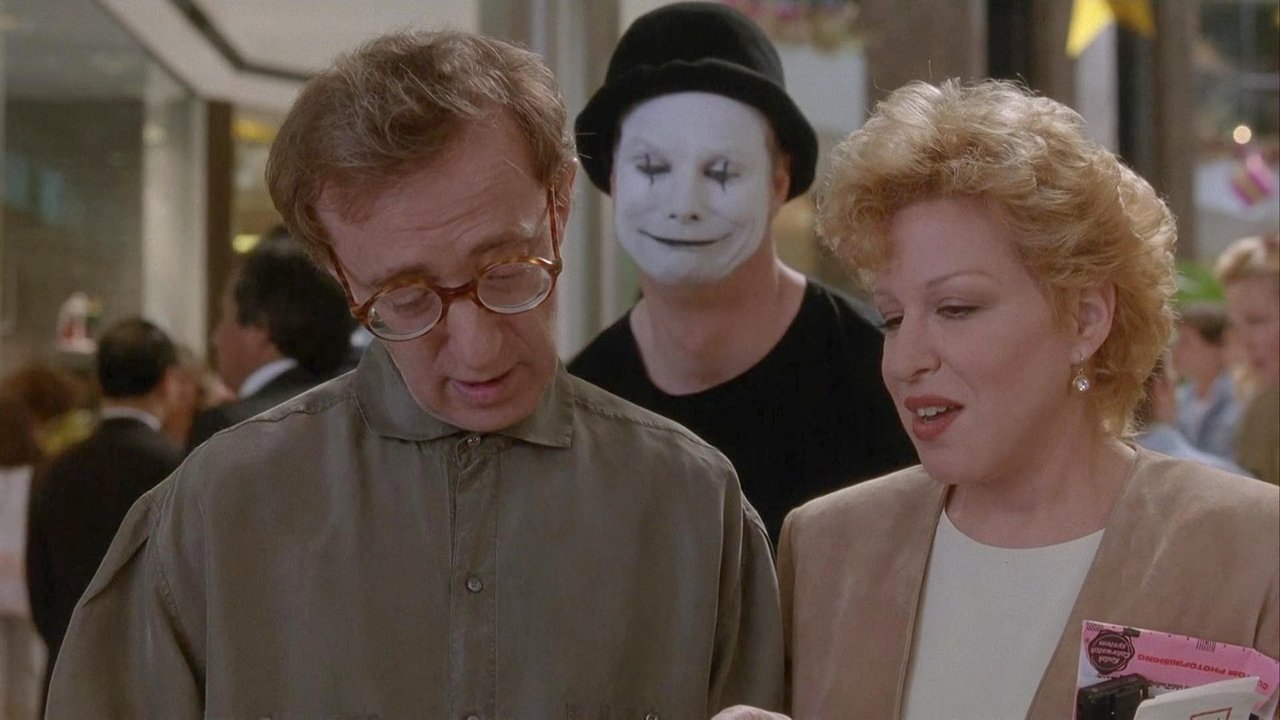
The main draw, then and now, is undoubtedly the pairing of Woody Allen and Bette Midler. On paper, it sounds intriguing – Allen's neurotic intellectualism meeting Midler's brassy, larger-than-life energy. In practice, it’s a fascinating, if not always seamless, experiment. Allen is essentially playing his established screen persona: anxious, articulate, prone to philosophical hand-wringing even amidst chaos. Midler, often typecast in more broadly comedic or purely dramatic roles, gets to stretch here, navigating sharp tonal shifts from betrayed wife to calculating adversary to wounded partner, often within the same scene.
Do they have chemistry? Yes, but it's a volatile, often abrasive kind. Their arguments crackle with a certain energy, fueled by years of ingrained marital patterns and unspoken resentments. Yet, the moments demanding genuine tenderness or vulnerability sometimes feel strained, as if their distinct comedic universes can't quite align. It's less a harmonious duet, more like two powerful soloists attempting a complex piece, occasionally hitting discordant notes. A standout, however brief, is the appearance of the brilliant physical comedian Bill Irwin as a mime, whose silent commentary on the couple's unraveling provides some of the film's most genuinely funny and poignant moments – a welcome relief from the verbal sparring.
Mazursky's Mall Muse
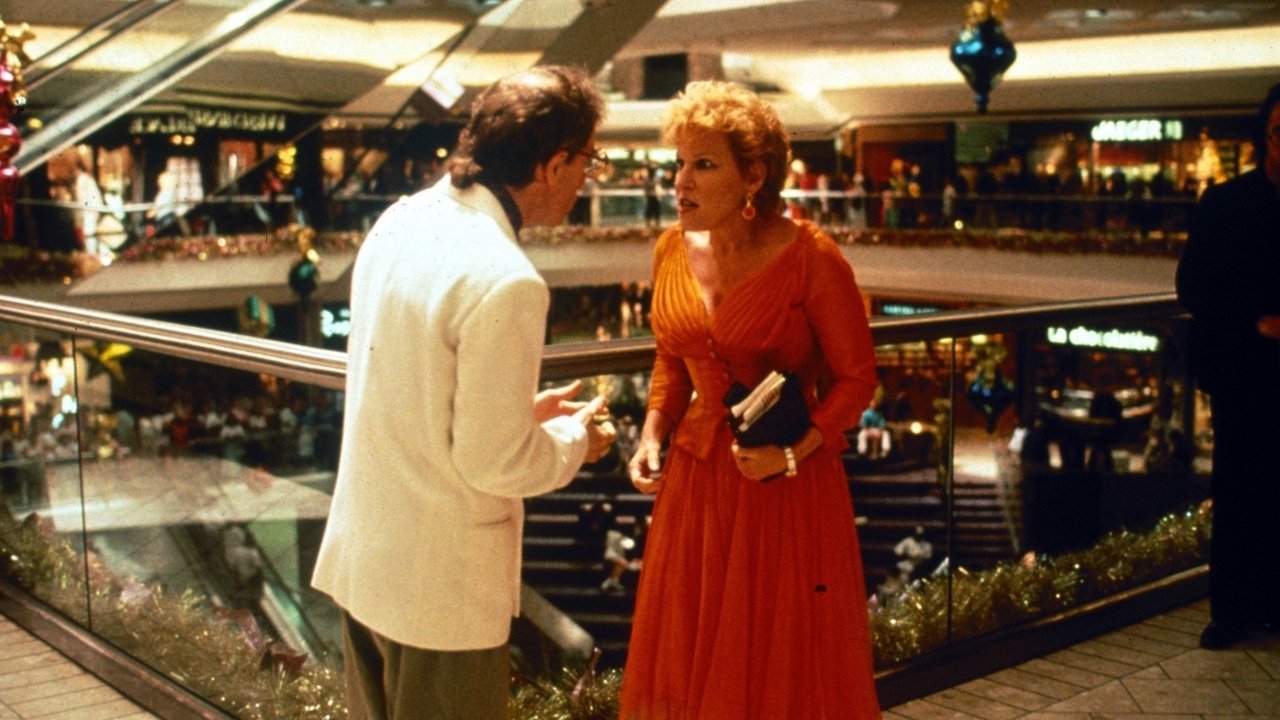

Director Paul Mazursky, a filmmaker often adept at exploring the messy emotional landscapes of relationships (An Unmarried Woman (1978), Bob & Carol & Ted & Alice (1969)), seems intrigued by the potential symbolism of the mall. It's a temple of surface appearances, distractions, and fleeting gratifications – a potentially potent metaphor for a marriage built on shaky foundations and materialistic comforts. The film was largely shot on location at the Stamford Town Center in Connecticut, with additional interiors at Kaufman Astoria Studios in Queens, lending it an authentic, slightly sterile early-90s sheen. You can almost smell the Cinnabon and feel the cool, recycled air.
However, the film struggles to fully integrate its setting thematically. Is the mall merely a convenient, contained location for the drama to unfold, or is it meant to be a critique of the consumer culture that perhaps papers over the cracks in Nick and Deborah's lives? Mazursky and co-writer Roger L. Simon seem unsure, vacillating between sharp observational humor and broader, almost farcical slapstick (a chase through the mall, public meltdowns) that dilutes the intended Bergmanesque intensity. The tagline – "A comedy about divorce, adultery, therapy, reconciliation... and shopping." – perfectly encapsulates this sometimes awkward tonal blend.
Retro Fun Facts & Lasting Impressions
Pulling this tape off the rental shelf back in the day, the star wattage alone was a major pull. It's amusing to learn that Mazursky initially considered pairing Allen with his frequent collaborator Diane Keaton, but it was Allen himself who suggested Bette Midler, perhaps sensing the potential for fireworks. While the film wasn't a box office smash (earning roughly $9.6 million domestically against production costs that were likely significant given the stars involved) nor a critical darling, it remains a fascinating curio. It captures a specific moment – the peak of mall culture, the particular anxieties of affluent Boomers entering middle age, and the unique screen personas of its leads.
Does Scenes from a Mall fully succeed in its ambitious blend of marital drama, social satire, and star-driven comedy? Not entirely. The shifts in tone can be jarring, and the central relationship sometimes feels more like a conceit than a deeply felt connection. Yet, there's something undeniably watchable about it. Perhaps it's the sheer audacity of the premise, the spectacle of Allen and Midler bouncing off each other (and the mall walls), or maybe it's just the potent dose of early 90s nostalgia the setting provides. It's a film that aims high, misses the mark occasionally, but offers enough interesting moments and committed performances to warrant a look, especially for fans of the actors or Mazursky's unique brand of flawed humanity.
Rating: 6/10
This rating reflects the film's undeniable star power and intriguing premise, weighed against its tonal inconsistencies and underdeveloped thematic potential. While Allen and Midler offer compelling moments, their chemistry doesn't always ignite, and the film never quite decides if it wants to be a biting satire or a relationship dramedy. It's a flawed but fascinating time capsule, worth watching as a specific artifact of its era and its stars, even if it doesn't quite reach the heights suggested by its Bergman-echoing title. What lingers isn't deep insight into marriage, but rather the bizarre, sometimes funny, sometimes uncomfortable spectacle of deep personal crisis played out under the fluorescent lights of consumer heaven.