Okay, fellow tapeheads, let’s rewind to a time when shoulder pads were high, bank accounts (for some) were higher, and Disney decided it was time to grow up… just a little. Pop the tape in, adjust the tracking, and settle in for 1986’s Down and Out in Beverly Hills. You wouldn’t necessarily expect a biting satire of Reagan-era California excess to spring from a 1919 French play (Boudu sauvé des eaux), later filmed by the great Jean Renoir, but that's exactly the surprising pedigree director Paul Mazursky tapped into for this glossy, hilarious culture clash.
### From Despair to Dior
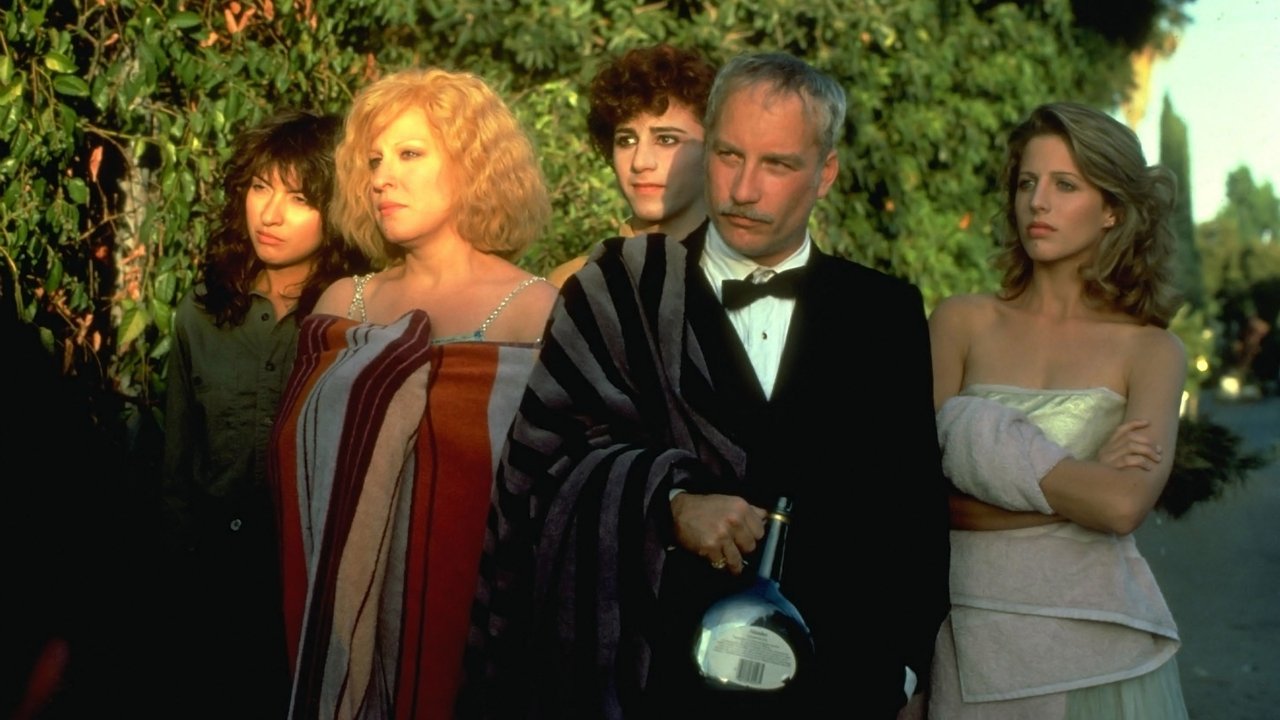
We’re plunged into the sun-drenched, manicured world of Dave and Barbara Whiteman (Richard Dreyfuss and Bette Midler), a couple drowning in nouveau riche anxiety despite their palatial Beverly Hills estate. Dave runs a successful coat hanger empire (an appropriately mundane source of immense wealth), while Barbara embraces every trendy self-help fad imaginable, seeking enlightenment amidst yoga poses and primal screams. Their life is a whirlwind of neuroses, status symbols, and barely concealed dissatisfaction – a perfect storm waiting for a catalyst. And oh boy, does it get one.
### The Uninvited Guru
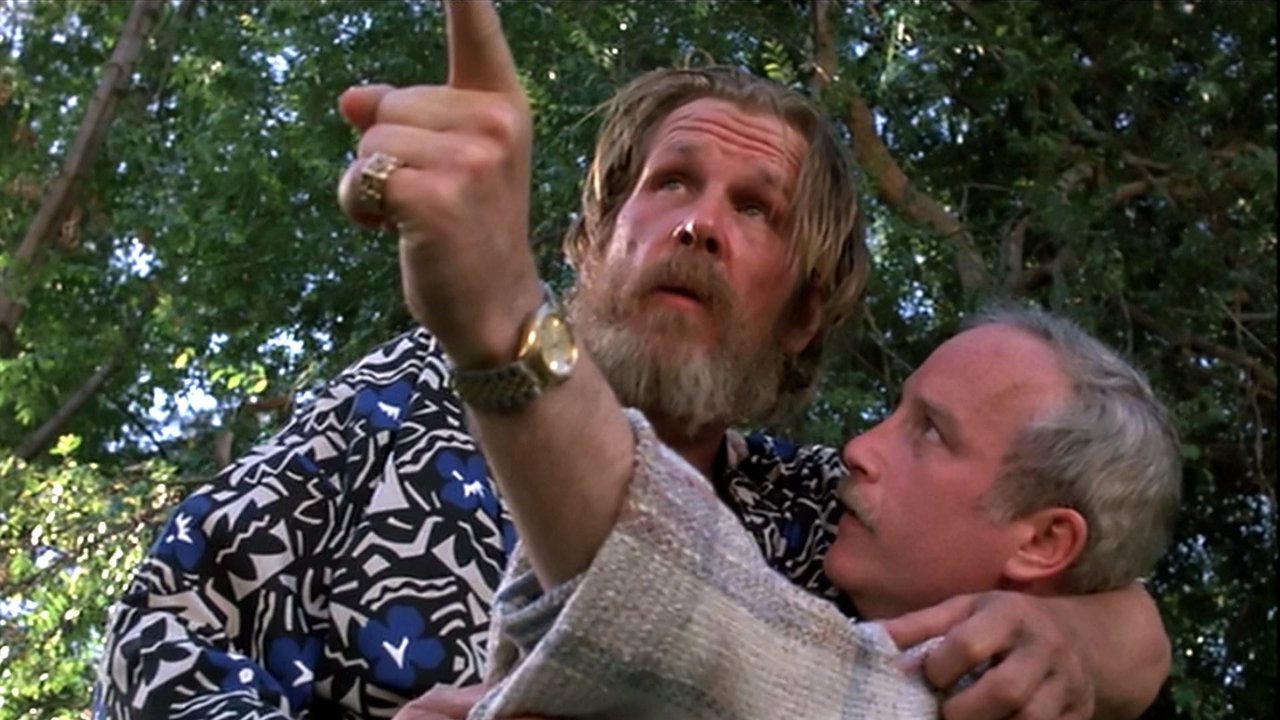
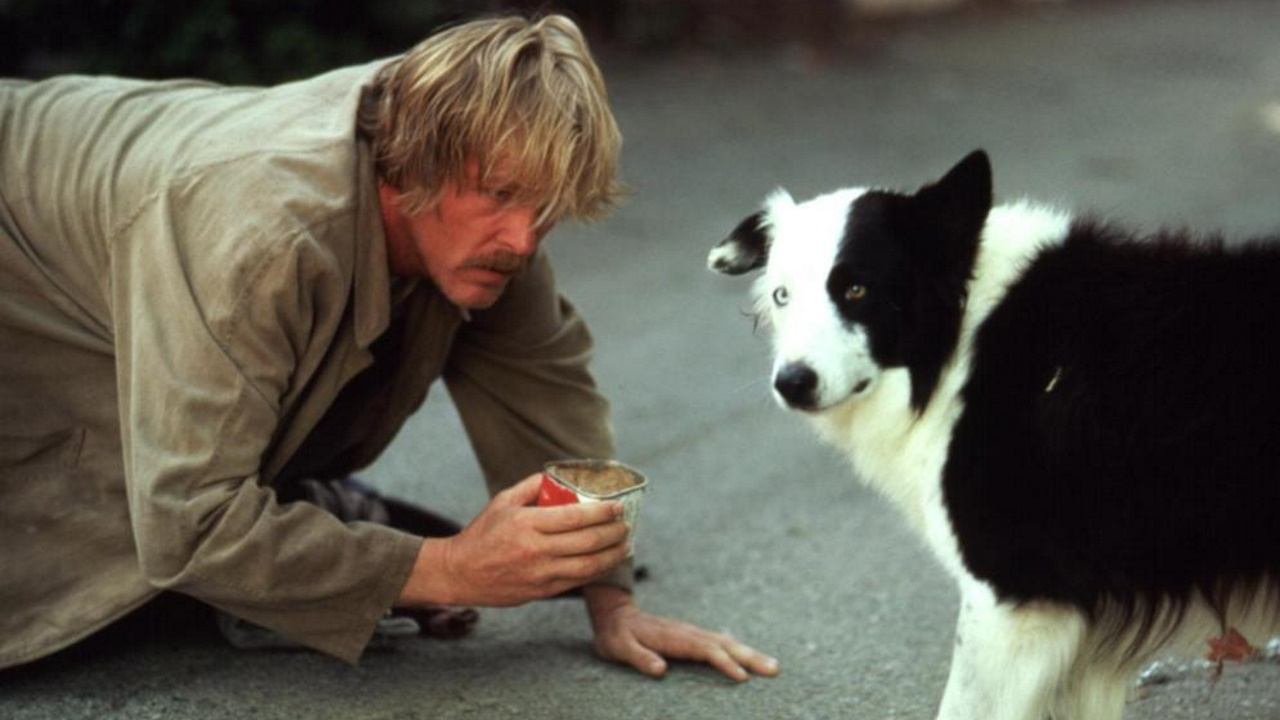
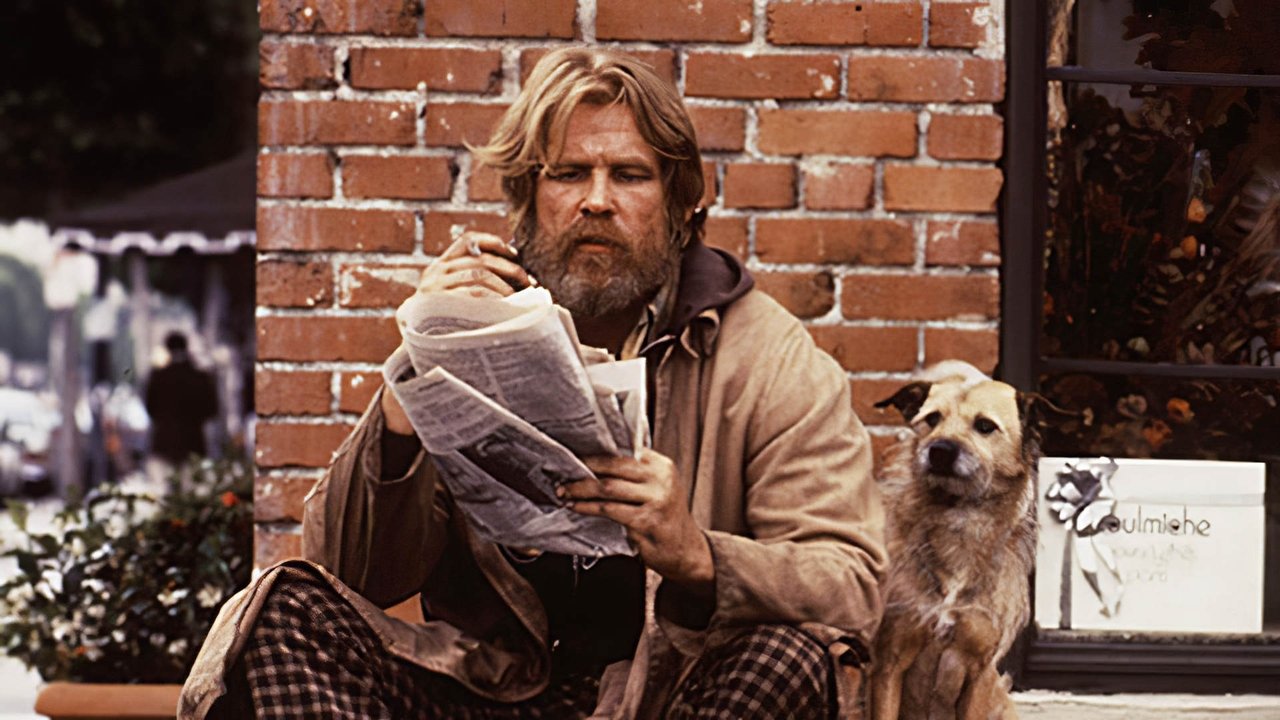
Enter Jerry Baskin (Nick Nolte), a scruffy, philosophical transient who decides to end it all in the Whitemans' ridiculously opulent swimming pool. When Dave impulsively saves him, Jerry becomes the ultimate unwelcome houseguest. Nolte is simply magnetic here. Apparently, he spent time living amongst the homeless on the streets of LA to prepare for the role, and that lived-in weariness mixed with an unexpected charisma feels utterly authentic. Jerry isn't just a bum; he’s a disruptive force of nature, a mirror reflecting the emptiness of the Whitemans' lives back at them. He somehow charms everyone: Barbara, their politically awakening son Max (Evan Richards), their dissatisfied daughter Jenny (Tracy Nelson), and even Carmen (Elizabeth Peña), the family's sharp-eyed maid who sees right through the Beverly Hills facade. Remember Matisse, the Whitemans' neurotic Border Collie? Even he falls under Jerry's spell, transforming from a pampered pooch into Jerry’s devoted shadow. That dog practically steals scenes!
### Mazursky’s Magic Mix
Paul Mazursky, a master of blending comedy with astute social observation (An Unmarried Woman, Bob & Carol & Ted & Alice), absolutely nails the tone. He skewers the pretensions and hypocrisies of the wealthy elite with precision, yet never loses sight of the humanity (however flawed) of his characters. The dialogue crackles with wit, and the situations escalate beautifully from awkwardness to outright chaos. This wasn't just any comedy; it was a significant release for Disney. Under their newly minted Touchstone Pictures banner, Down and Out was their first R-rated film, a deliberate move to capture an adult audience. It paid off handsomely, becoming a major box office success, raking in over $62 million domestically against a roughly $14 million budget – proving grown-up laughs could mean big bucks for the Mouse House.

### That Sweet '80s Sting
Watching it now, the film is practically a time capsule of mid-80s aesthetics – the architecture, the fashion, the sheer volume of it all. But the satire? It still bites. The obsession with wealth, status, therapy fads, and the yawning gap between the haves and have-nots feels startlingly relevant. Mazursky doesn't offer easy answers; Jerry’s presence heals some rifts but creates others, exposing the fragile foundations upon which the Whitemans' world is built. And who could forget the neighbor, Orvis Goodnight, played with flamboyant perfection by the legendary Little Richard? His appearances are pure electric energy, adding another layer of glorious absurdity to the proceedings.
The ensemble cast is firing on all cylinders. Dreyfuss, fresh off hits like Close Encounters of the Third Kind (1977) and The Goodbye Girl (1977), perfectly captures Dave’s manic energy and underlying decency. Midler, already a force of nature from stage and screen (The Rose - 1979), is hysterically brittle and searching as Barbara. Their chemistry, alongside Nolte's grounded counterpoint, creates comedic gold. Did you know this even spawned a short-lived TV sitcom? Yeah, that tape probably got recorded over pretty quickly.
### The Verdict
Down and Out in Beverly Hills isn't just a nostalgic chuckle; it's a genuinely sharp, funny, and surprisingly thoughtful film. The performances are top-tier, Mazursky's direction is assured, and the script deftly balances broad comedy with pointed social commentary. It perfectly captured a specific moment in 80s culture while telling a story with timeless observations about class and contentment. Sure, some of the decor might make your eyes water now, but the laughs and the message hold up remarkably well.
Rating: 8.5 / 10 - The score reflects the brilliant comedic performances, Mazursky’s sharp direction, the successful blending of satire and heart, and its significance as a smart, adult-oriented 80s comedy hit. It’s funny, insightful, and perfectly cast.
Final Thought: Like finding a pristine copy with the original sleeve art, this movie remains a satisfying find – a potent cocktail of 80s excess and timeless truths, still capable of making you laugh and think, long after the VCR clicks off.