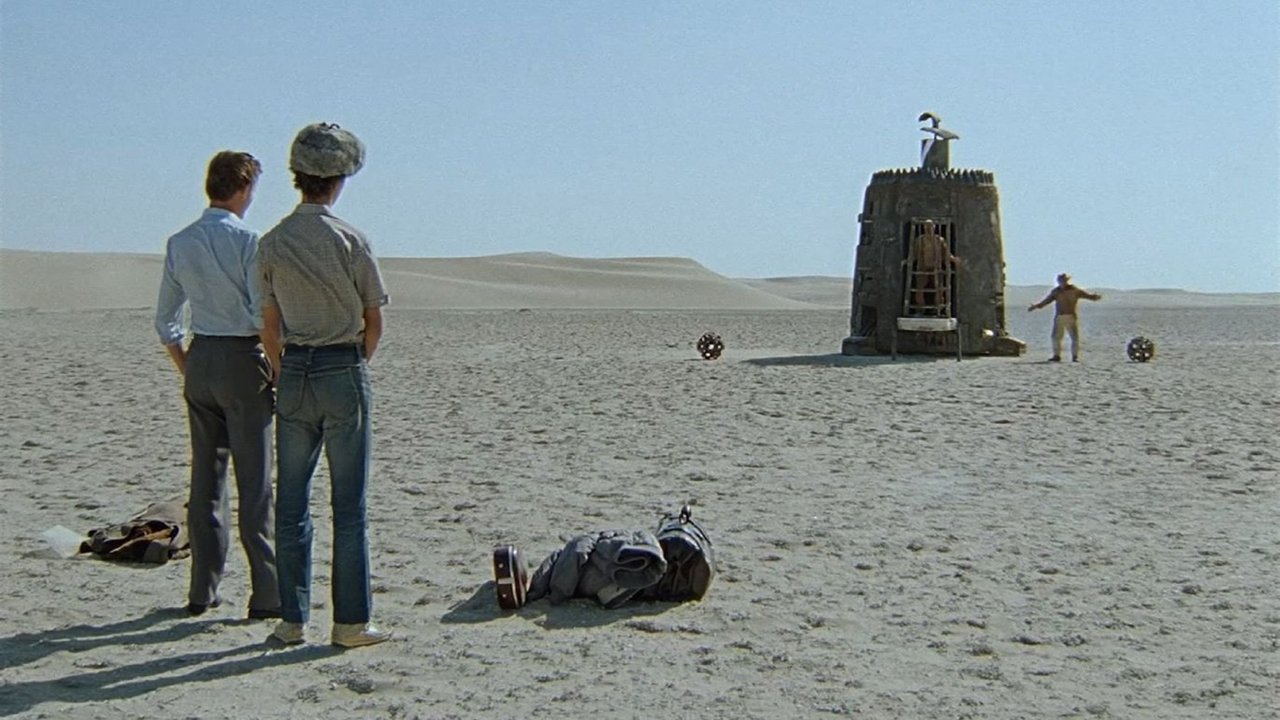
It starts with the mundane – a trip for macaroni and sugar. But step outside onto a Moscow street in winter, press a button on a strange device proffered by a barefoot man claiming to be an alien, and suddenly… desert. Endless, ochre desert under a pale, indifferent sky. This abrupt, almost careless displacement is our entry point into Georgiy Daneliya’s wonderfully strange and surprisingly profound 1986 Soviet sci-fi satire, Kin-dza-dza!. Forget sleek starships and laser battles; this is science fiction filtered through a lens of weary absurdity and resource scarcity, landing it squarely in the realm of unforgettable VHS discoveries for those lucky enough to stumble upon it back then.
Lost in Translation, Found in Rust
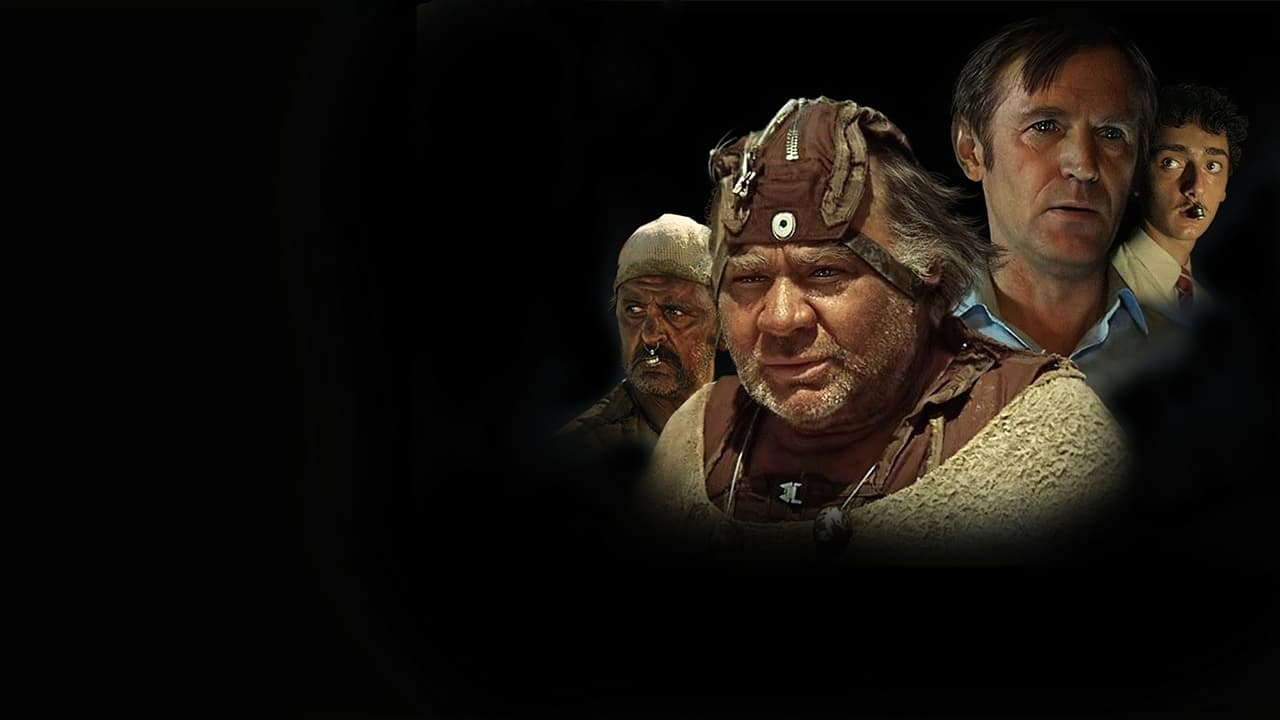
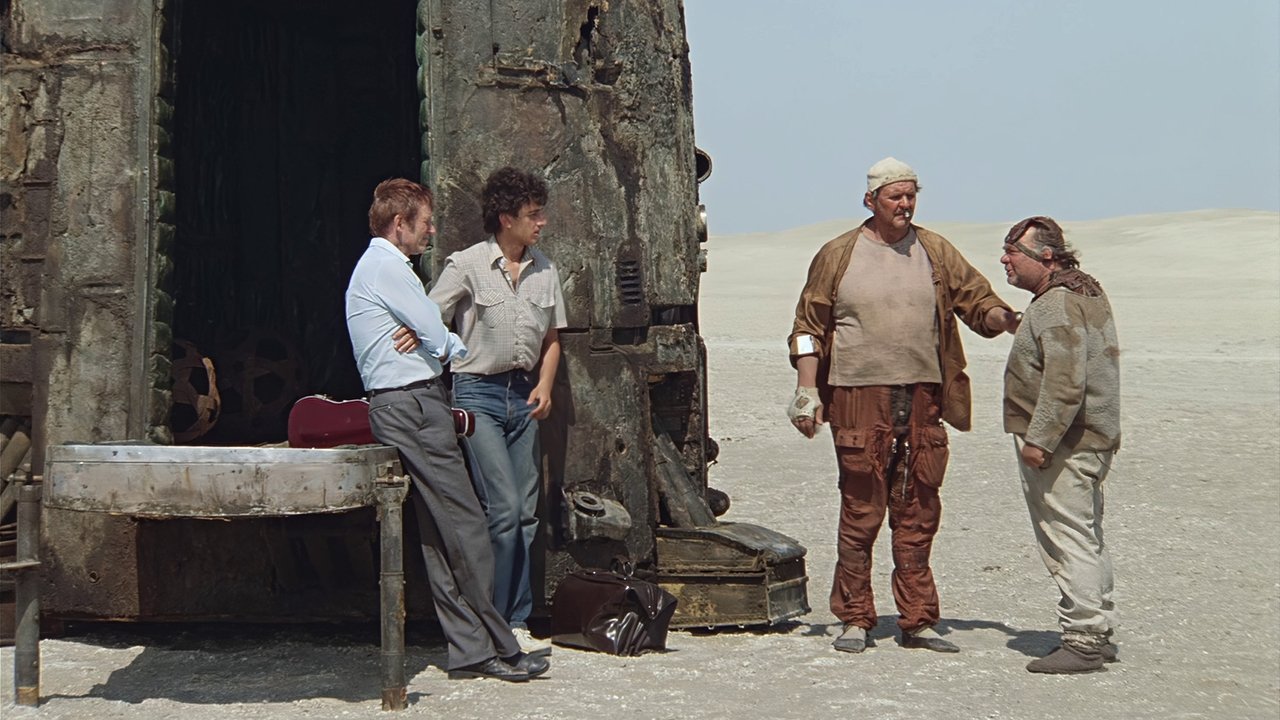
Our bewildered Muscovites are Vladimir Mashkov (Stanislav Lyubshin), a pragmatic construction foreman, and Gedevan Aleksandrovich (Evgeniy Leonov), a gentle Georgian student clutching his cello. Stranded on the planet Pluke in the Kin-dza-dza galaxy, they encounter two locals: Uef (Yuriy Yakovlev) and Bi (Levan Gabriadze, son of director Georgiy Daneliya and co-writer Revaz Gabriadze), cynical performers who travel in a rattling, wheezing, utterly dilapidated contraption called a pepelats. Communication is... challenging. The Plukanian language seems to consist almost entirely of "Koo!" (everything good or permissible) and "Kyoo!" (a swear word, denoting disapproval). Understanding relies on a small telepathy device, the mishok, but the real communication happens through weary sighs, exasperated gestures, and the dawning horror on our protagonists' faces.
The genius of Kin-dza-dza! lies in its meticulously crafted, yet deliberately low-fi, world-building. Pluke isn't just alien; it's exhausted. The rust-bucket aesthetic wasn't merely a stylistic choice; it reflected the realities of Soviet-era filmmaking, where resources were often scarce. The pepelats itself, looking like a repurposed boiler crossed with a samovar, became an iconic piece of design born from this necessity. Filming in the harsh Karakum Desert in Turkmenistan provided an authentically desolate backdrop, adding immense weight to the characters' isolation. You feel the grit, the heat, the sheer otherness of it all, amplified by the grainy transfer on those cherished VHS tapes.

Pants Maketh the Man (or Chatlanian)
Beneath the absurdist surface, Daneliya and Gabriadze smuggled in sharp social commentary. Plukanian society is rigidly stratified, instantly recognizable by the color of one's trousers. Those in yellow pants are the privileged elite (Patsaks), while the majority wear lesser colors and are known as Chatlanians, forced to squat and say "Koo!" in deference. Matches, known as "ketse," are inexplicably valuable currency, leading to bizarre economic exchanges. Does this nonsensical hierarchy feel uncomfortably familiar, reflecting arbitrary systems of status and power back on Earth, whether in the Soviet Union or elsewhere? The film doesn't preach; it simply presents this surreal reality, allowing the viewer to draw their own parallels.
The performances are key to grounding the film's strangeness. Stanislav Lyubshin, known for more traditionally heroic roles, plays Mashkov with a wonderful deadpan pragmatism, his frustration palpable but always undercut by a survivor's instinct. The legendary Evgeniy Leonov, often beloved for broader comedic characters (like Winnie-the-Pooh's voice in the Soviet animation), brings a touching vulnerability and naive hopefulness to Gedevan, the film's gentle soul. But it's perhaps Yuriy Yakovlev as the perpetually unimpressed Uef who steals the show, his laconic delivery and expressive weariness embodying the spirit of Pluke. Their interactions, oscillating between cynical exploitation and grudging camaraderie, form the film's surprisingly resonant emotional core.

Echoes from the Desert
Kin-dza-dza! wasn't an easy film to make, reportedly taking several years and facing potential censorship hurdles due to its satirical edge. The initial reception was mixed; some were baffled, others captivated. Yet, its influence grew steadily, particularly within Russia and former Soviet states, where "Koo!" and "Kyoo!" entered the lexicon and the film achieved genuine cult classic status. Watching it today, its critique of bureaucracy, mindless consumerism (even with something as basic as matches), social apathy, and the arbitrary nature of power feels startlingly relevant. It’s a film that poses quiet questions about what truly holds value, and what happens when communication fails utterly. What lingers most is perhaps the sheer, unyielding strangeness, the commitment to its own unique, dusty logic.
For those of us who discovered Kin-dza-dza! tucked away on a video store shelf, perhaps drawn in by its bizarre cover art or a cryptic description, it felt like intercepting a transmission from another reality entirely. It wasn’t slick or polished like its Western contemporaries, but it possessed something far more enduring: a singular vision, a dry wit, and a deeply melancholic soul humming beneath the rust and dust. It’s the kind of film that burrows into your memory, its odd phrases and stark imagery resurfacing years later.
Rating: 9/10
This score reflects the film's audacious originality, its brilliant performances, its surprisingly deep satirical commentary, and its enduring cult legacy. It's a near-perfect execution of a unique vision, only slightly hampered for some by its deliberately slow pace and bleak atmosphere. It's not just a movie; it's an experience – a journey to a place unlike any other in cinema history.
Kin-dza-dza! remains a testament to the power of science fiction to explore the human condition through the utterly alien, reminding us that sometimes, the most profound truths are found in the most desolate and unexpected corners of the universe... or just after you pop out for some macaroni. Koo!