Okay, fellow tapeheads, let's dim the lights, adjust the tracking, and dig into one of the most… infamous tapes to ever circulate in the shadowy corners of the VHS underground. We're talking about a title that makes jaws drop and eyebrows shoot into hairlines before you even press play: Gayniggers from Outer Space (1992). Yeah, you read that right. This isn't your typical Friday night blockbuster rental; this is a deep dive into the truly bizarre world of zero-budget, intentionally provocative cult filmmaking.
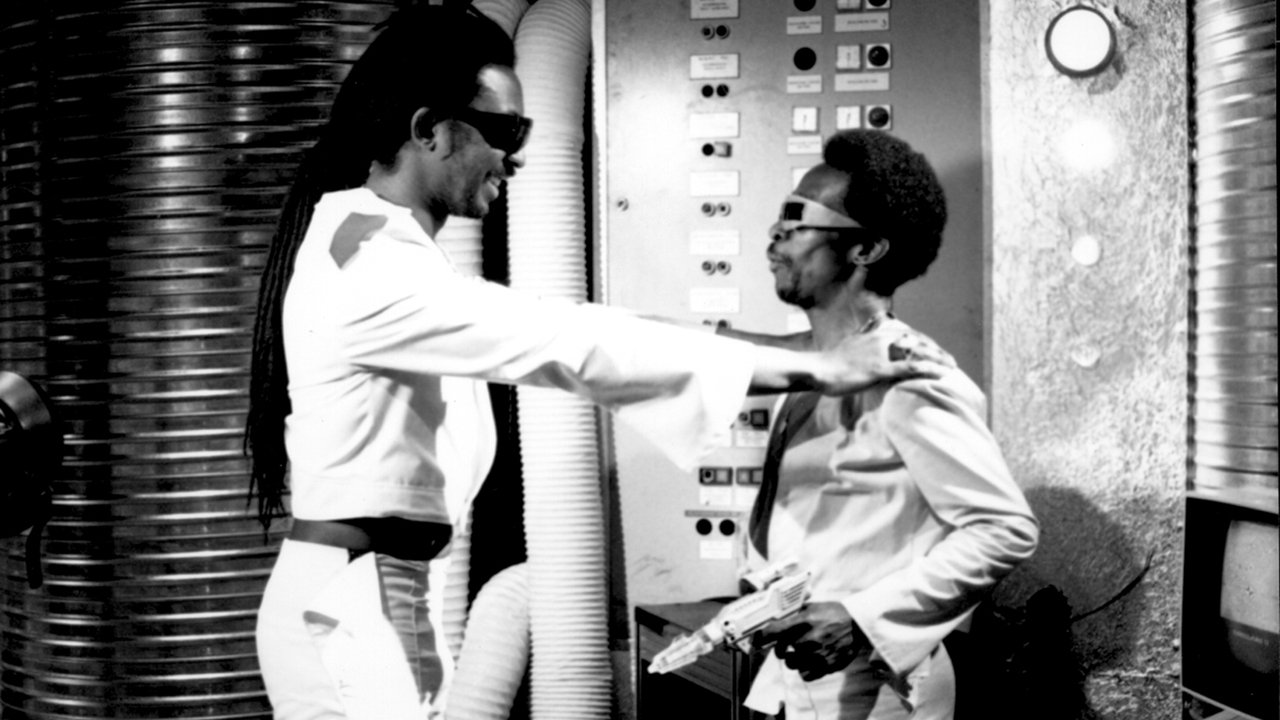
Finding a copy of this back in the day felt less like renting a movie and more like uncovering some kind of Samizdat transmission. It was whispered about, traded on nth-generation dubs, its very existence seeming like an urban legend. Directed by Danish filmmaker Morten Lindberg (later known as the beloved, eccentric media personality Master Fatman), this 26-minute short film is a relic from a different dimension of cinema, one where political correctness wasn't even a concept, and shock value was often the primary currency.
Beam Me Up, Seriously?
The premise is as audacious as the title. A spaceship crewed entirely by hyper-masculine black gay men from the planet Anus (!) travels the galaxy "liberating" planets oppressed by heterosexual relationships and, specifically, by women. Their mission? To eliminate all females from Earth, leaving behind a purely homosexual male utopia, and leaving an ambassador (a "Gay Ambassador") to teach the newly liberated Earth men how to live.

It plays out like a collision between early John Waters, low-rent Blaxploitation B-movies, and the kind of sci-fi parody you might have seen on a grainy public access channel late at night. Shot initially in black and white (representing the "drab" female-dominated Earth) which then bursts into glorious, saturated color once the liberation begins, the film leans heavily into its own absurdity.
DIY Space Opera Charm
Let's be clear: this is micro-budget filmmaking at its most naked. The spaceship interiors look suspiciously like cardboard and repurposed junk, the costumes are gloriously tacky, and the "special" effects consist mostly of flashing lights, cheap ray gun sounds, and actors dramatically falling over. Forget ILM; this is more like I L M (I Limited Means). Yet, there's a strange sort of punk-rock energy to it all. Lindberg, working with writer Per Kristensen, isn't aiming for realism; he's aiming for transgressive satire.
The performances are… well, they fit the material. Over-the-top, theatrical, and delivered with a knowing wink (or maybe just amateur enthusiasm, it's hard to tell). Coco P. Dalbert, Sammy Saloman, and Gbartokai Dakinah commit fully to their roles as the interstellar liberators, strutting and posing with a confidence that belies the ramshackle production around them. Did you know this whole thing reportedly started as a bit of fun among friends, perhaps even linked to Lindberg's film school activities? It certainly has that anarchic, let's-just-make-a-movie vibe.
The Elephant in the Room
Okay, we have to talk about the title and the content. It's deliberately, aggressively offensive. The title uses a racial slur combined with a sexual orientation in a way designed purely to shock and provoke. The plot hinges on eliminating women. Viewed today, it’s undeniably problematic on multiple levels. Its satirical target seems to be... well, possibly everything? Sci-fi tropes, gender relations, racial stereotypes, perhaps even the very notion of liberation movements themselves are thrown into the blender.
Was it meant as a commentary on Blaxploitation movie titles? A queer punk statement? A Dadaist prank? It's hard to say definitively. What's certain is that its power to offend remains potent. Back in the VHS trading days, this wasn't about coherent social commentary; it was about pushing boundaries as far as they could possibly go, often with little regard for nuance. It existed as a piece of forbidden fruit, passed around precisely because it was so outrageous.
So, Does It... Work?
As a conventional film? Absolutely not. It's technically crude, narratively nonsensical, and built on a foundation of extreme provocation. But as a piece of cult ephemera, a time capsule of underground queer/punk filmmaking sensibilities from the early 90s, and a testament to the sheer weirdness that thrived in the pre-internet VHS era? It's fascinating. It’s the kind of artifact that generates discussion, outrage, and morbid curiosity in equal measure. It’s not "good" in any traditional sense, but it's undeniably memorable.
VHS HEAVEN RATING: 3/10
Justification: This score reflects the film's status as a notorious cult object and its undeniable audacity (points for sheer nerve and historical curiosity) weighed against its extreme technical limitations, runtime brevity, and profoundly offensive title and themes. It's historically interesting as an underground artifact but impossible to recommend broadly due to its deliberate use of slurs and problematic content. The low score reflects its problematic nature and lack of conventional filmmaking quality, while acknowledging its unique, albeit infamous, place in cult film history.
Final Take: A truly bizarre footnote in the annals of outsider cinema, Gayniggers from Outer Space is less a movie to be enjoyed and more a cinematic curiosity to be cautiously examined – a radioactive isotope from the deepest, weirdest shelf of the old video store, handled best with lead-lined gloves and a strong sense of historical context (and perhaps a stiff drink). Definitely not for the easily offended... or, frankly, most people.