Alright, fellow tapeheads, dim the lights, maybe crack open a beverage that hasn't existed since 1997, and let's rewind to a discovery that felt like uncovering hidden treasure back in the day. You wouldn't necessarily find this one nestled between Stallone and Schwarzenegger on the New Releases shelf at Blockbuster, but hunt deeper into the "Foreign Films" or maybe even the slightly mislabeled "Comedy" section, and you might have stumbled upon a chaotic gem: Alfonso Cuarón's audacious feature debut, Sólo con tu pareja (released in the US often as Love in the Time of Hysteria) from 1992. And what a debut it is – slick, frantic, darkly funny, and buzzing with the kind of raw cinematic energy that hinted at the major directorial force Cuarón would become.
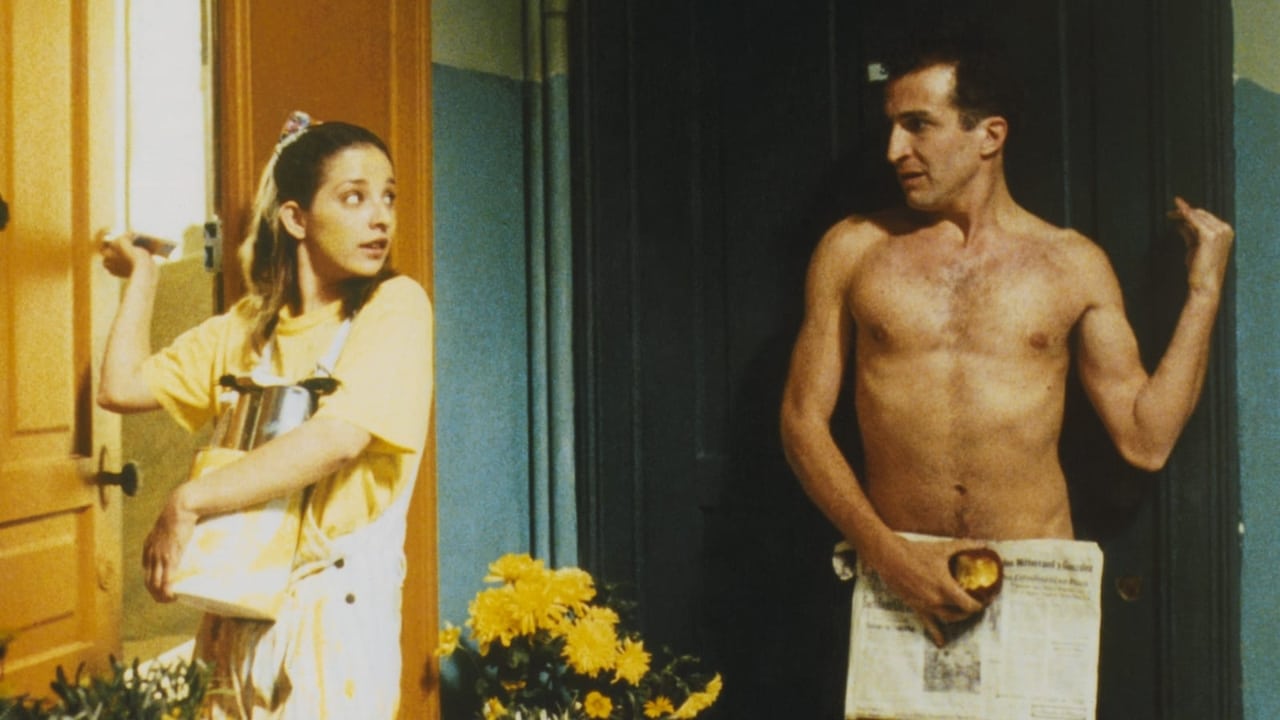
### A Yuppie's Worst Nightmare (Before Cell Phones)
Forget slow burns; this movie hits the ground running and rarely lets up. We're thrown headfirst into the life of Tomás Tomás (Daniel Giménez Cacho, brilliant here), a slick, overconfident Mexico City advertising exec – basically, the quintessential early 90s yuppie Casanova. He juggles multiple affairs with the casual disregard of someone flipping through Rolodex cards (remember those?). His meticulously scheduled romantic life involves his boss, Gloria, and Silvia (Claudia Ramírez), the flight attendant neighbor he seems genuinely interested in. But his world implodes spectacularly thanks to a cruel prank orchestrated by a spurned lover, Nurse Silvia (a different Silvia, played with vengeful glee by Luis de Icaza). She fakes his blood test results, leading him to believe he has contracted AIDS – a terrifying prospect in the early 90s, handled here with a surprisingly sharp, darkly comedic edge.
This wasn't just Cuarón's first feature film; it was a statement. Co-written with his brother, Carlos Cuarón, after Alfonso grew frustrated with the limitations of Mexican television, the film feels like bottled-up creative energy finally exploding onto the screen. You can almost feel the glee behind the camera as they push boundaries. In fact, the film initially faced hurdles with Mexican censors due to its frank depiction of sexuality and its comedic handling of the AIDS theme, delaying its widespread release for a bit. Imagine finding that out printed on the back of the VHS box!
### Visual Flair on a Budget
Okay, so Sólo con tu pareja isn't packed with exploding cars or rooftop chases. But the energy feels incredibly dynamic, prefiguring the style Cuarón would later perfect in films like Y tu mamá también (2001) and even the kinetic sequences in Children of Men (2006). This is where another future titan comes in: cinematographer Emmanuel Lubezki ("Chivo" to his friends). This film marks one of their earliest, crucial collaborations. Even on what was reportedly a tight budget (around $750,000 USD, a shoestring even then), Lubezki's camera rarely sits still. It glides through apartments, weaves through chaotic parties, and captures the vibrant, sometimes overwhelming, pulse of Mexico City. Remember how impressive fluid camera work felt before Steadicams became ubiquitous and digital stabilization smoothed everything out? There's a tangible, almost practical feel to the movement here, a sense of achieving visual dynamism through clever blocking and sheer skill, not just tech.
The film plunges us into a specific time and place – the bustling, slightly smoggy, pre-NAFTA Mexico City. The yuppie apartments, the fashion, the sheer speed of Tomás's lifestyle feel like a time capsule, viewed now with affectionate amusement but also a hint of recognition. The film doesn't shy away from the anxieties of the era, particularly the AIDS panic, using farce not to diminish the seriousness, but to explore the absurdity and terror of facing mortality, especially for someone who thought himself invincible.
### Farce, Heart, and That Cuarón Spark
At its core, Sólo con tu pareja operates as a classic farce. Mistaken identities, near-misses, frantic attempts to hide truths – it’s all here, staged with impeccable timing by Cuarón. Daniel Giménez Cacho masterfully portrays Tomás's descent from suave confidence to utter panic, making him somehow sympathetic even at his most reprehensible. Claudia Ramírez as Clarisa (the neighbour Tomás genuinely falls for amidst the chaos) provides the film's heart, the potential anchor in his spiraling life. The supporting cast is equally game, contributing to the escalating absurdity.
One particularly memorable sequence involves Tomás planning a dramatic suicide leap from the Torre Latinoamericana, a Mexico City landmark. The scene blends genuine pathos with jet-black humour in a way that feels distinctively Cuarón. It's this blend of tones – the sophisticated visual style, the breakneck comedic pacing, and the underlying serious themes – that makes the film stand out. It's not just funny; it's smart, daring, and surprisingly layered for a debut comedy. It certainly paved the way for the "Nuevo Cine Mexicano" wave that gained international attention in the following years.
***
VHS Heaven Rating: 8/10
Justification: Sólo con tu pareja is a blast – a witty, visually inventive, and surprisingly bold debut. It expertly blends dark comedy and farce with genuine human anxieties. While some elements feel distinctly early 90s, the energetic direction, sharp script, great performances (especially from Daniel Giménez Cacho), and early glimpses of the Cuarón/Lubezki magic make it incredibly watchable. It loses a point or two perhaps for the sheer unrelenting chaos which can feel slightly exhausting by the end, and maybe the central prank feels harsher through a modern lens, but its sheer audacity and craft shine through.
Final Take: This is the cinematic equivalent of finding a surprisingly sophisticated import beer tucked behind the Bud Lights at a 90s house party – proof that even early on, Alfonso Cuarón knew exactly how to mix fizz with a potent kick. A must-find for fans digging beyond the Hollywood hits of the VHS era.