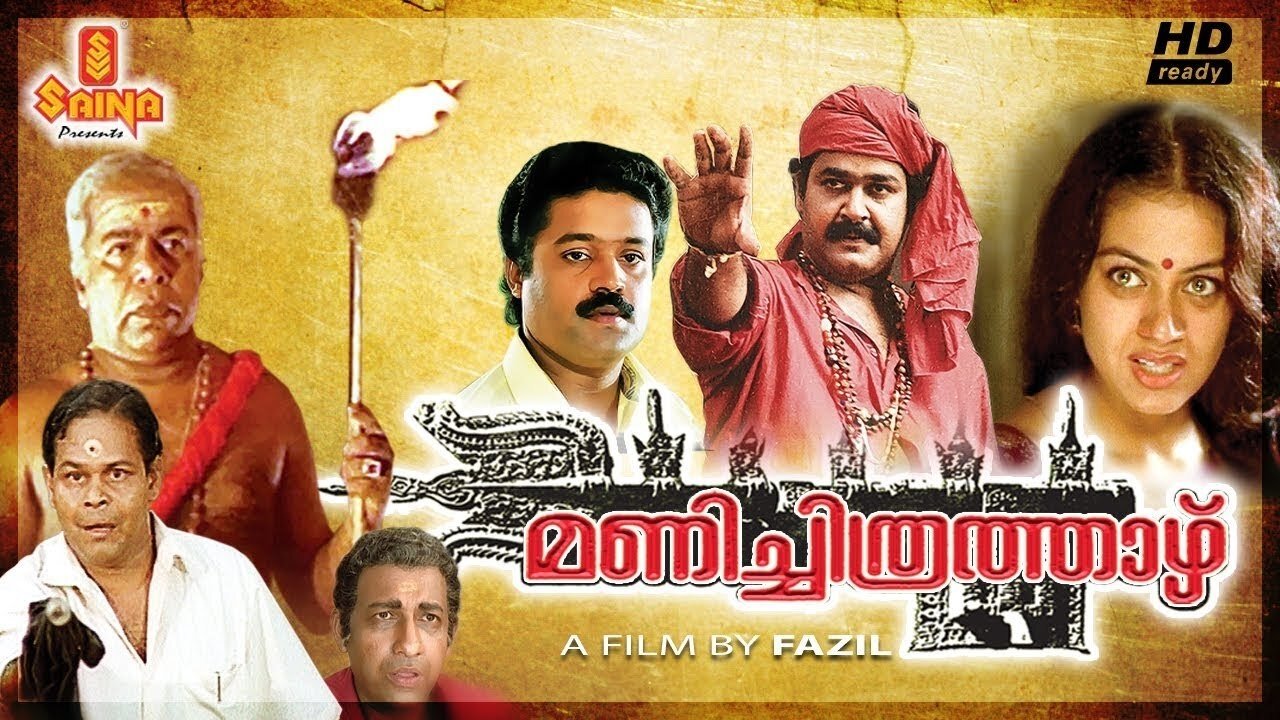
Sometimes, the greatest treasures found in those dusty video store aisles weren't the Hollywood blockbusters, but tapes whispering tales from distant shores. Unassuming cover art could hide cinematic lightning, and discovering the 1993 Malayalam masterpiece Manichitrathazhu felt exactly like that for many adventurous renters back in the day. Hailing from the vibrant film industry of Kerala in South India, this isn't your typical haunted house flick. It's something far more intricate, unsettling, and ultimately, unforgettable – a film that masterfully blends psychological chills with cultural depth, leaving an imprint long after the VCR whirred to a stop.
Whispers in the Tharavadu
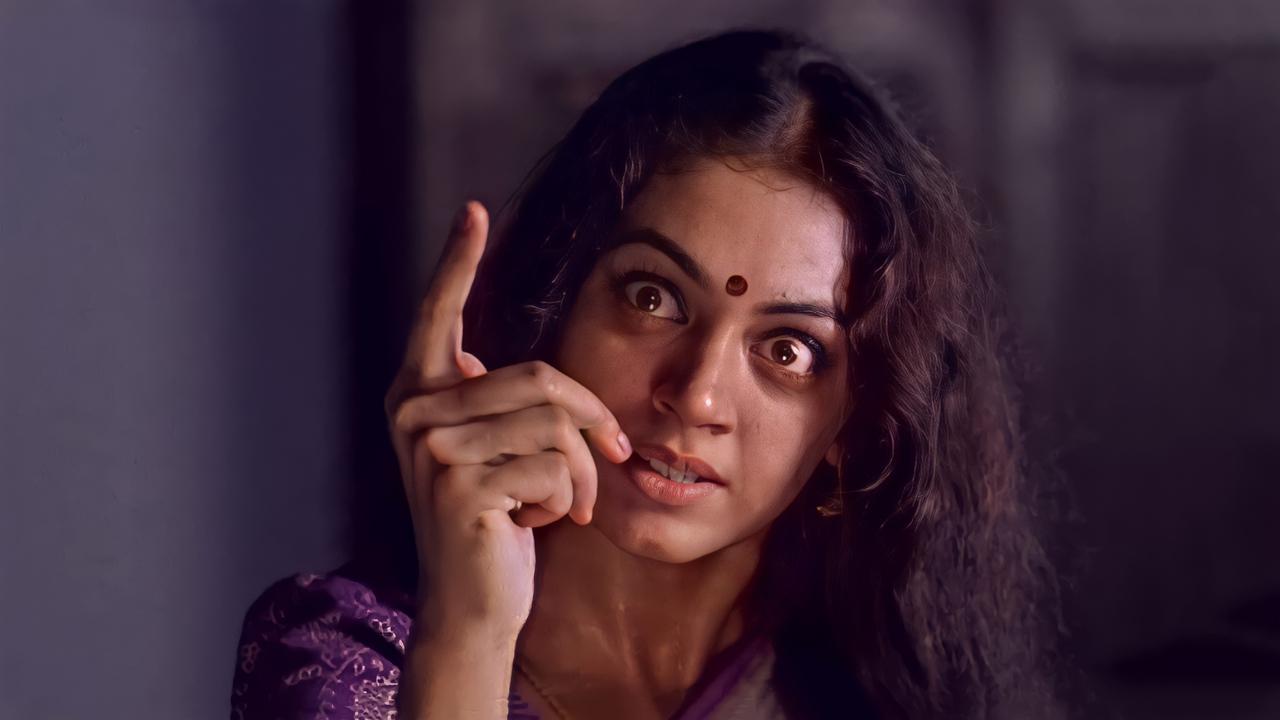
The setup feels familiar, yet instantly distinct. Newlyweds Ganga (Shobana) and Nakulan (Suresh Gopi) move back to Nakulan’s ancestral home, a sprawling, atmospheric tharavadu. Against the warnings of elders, Ganga, intrigued by local folklore, insists on opening a long-locked room – the supposed domain of Nagavalli, a court dancer tragically wronged centuries ago whose spirit is said to haunt the halls. Director Fazil, already known for his versatility, crafts an immediate sense of place. You can almost feel the humid air, smell the aged wood, and sense the weight of history pressing down. Strange occurrences begin – objects move, eerie sounds echo, and suspicion falls upon the household members. Is it Nagavalli’s vengeful ghost, or something rooted in the minds of the living?
A Tour-de-Force of Transformation
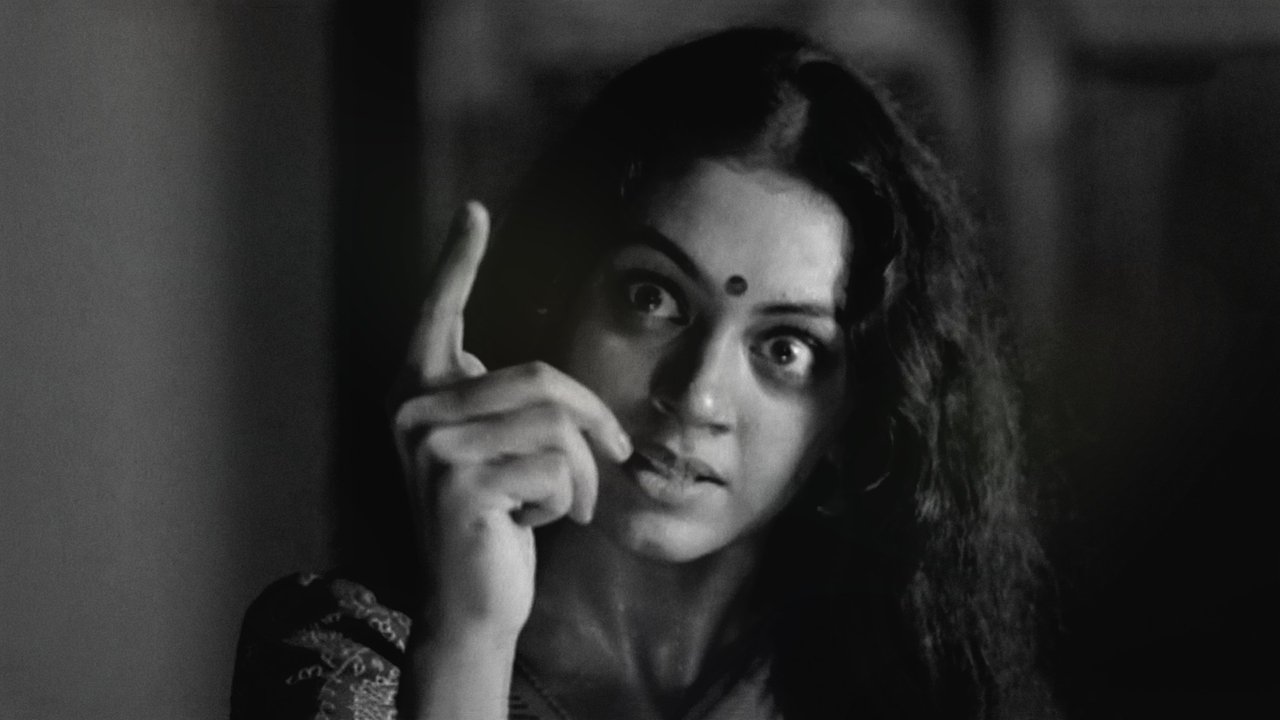
While the premise builds suspense effectively, the film truly elevates itself through its performances, particularly the astonishing work by Shobana. Her portrayal of Ganga is a masterclass in subtlety and transformation. Initially curious and modern, Ganga slowly becomes entwined with the legend of Nagavalli. Shobana navigates this shift with breathtaking precision. It’s not just about wide-eyed fear; it’s in the minute changes in posture, the flicker in her eyes, the subtle modulation of her voice. The script, penned with intricate care by Madhu Muttam, gives her layers to explore, but it's Shobana's commitment that sells the terrifying possibility that Ganga might be losing herself to the past. Her performance rightfully earned her the National Film Award for Best Actress, and watching it even today, its power is undiminished. It feels less like acting and more like a genuine, harrowing unraveling. Suresh Gopi provides the perfect counterpoint as Nakulan, the loving but increasingly desperate husband, grounded in a reality that seems to be slipping away.
Enter the Unconventional Psychiatrist
Just as the supernatural tension reaches a fever pitch, the film introduces Dr. Sunny Joseph, played with effortless charisma by the legendary Mohanlal. His arrival, deliberately delayed by Fazil to build maximum anticipation, injects a unique energy. Sunny isn't your typical brooding investigator; he's eccentric, witty, and approaches the escalating chaos with a psychiatrist's analytical eye, albeit one hidden beneath layers of playful misdirection. Mohanlal's performance is key to the film's delicate balance. He brings moments of levity, yet never undermines the underlying gravity. His interactions, probing the minds of the household members while seemingly just goofing around, add a fascinating layer of psychological intrigue. He represents rationality in the face of superstition, but the film cleverly keeps us guessing – is his science enough to explain what's happening?
Weaving Folklore, Horror, and Psychology
What makes Manichitrathazhu endure is its masterful blend of genres. It functions as a chilling ghost story, a compelling psychological thriller, a character-driven drama, and even incorporates moments of humor and stunning musical sequences (the climactic dance sequence is iconic). Fazil orchestrates these elements seamlessly. The horror often relies on suggestion, atmosphere, and sound design rather than cheap jump scares, making it far more insidious. The cinematography by Venu captures both the beauty and the claustrophobia of the ancient house, while M. G. Radhakrishnan's score perfectly complements the shifting moods.
It's worth noting that the story itself draws inspiration from folklore documented in the Aithihyamala, a collection of Kerala legends, lending it a resonant cultural authenticity. A fascinating piece of trivia often shared among fans involves the voice of Nagavalli during Ganga's possessed states – it wasn't Shobana's voice alone, but skillfully dubbed by two different artists (Durga for the Tamil dialogue portions and Bhagyalakshmi for the Malayalam lines), adding another layer to the character's unsettling duality. Shot primarily at the stunning Padmanabhapuram Palace and Hill Palace in Tripunithura, the locations themselves become characters, steeping the film in history.
An Enduring Legacy
Released in 1993, Manichitrathazhu wasn't just a film; it was a phenomenon. It shattered box office records in Kerala, becoming the highest-grossing Malayalam film at the time and running in theatres for over a year. Its critical acclaim matched its commercial success. Its influence is undeniable, setting a benchmark for psychological thrillers in Indian cinema. Its power is further evidenced by its numerous remakes across different Indian languages, including the popular Chandramukhi (2005) in Tamil and Bhool Bhulaiyaa (2007) in Hindi, though many argue (and I'd agree) that none quite capture the perfect storm of the original. Finding this on VHS, perhaps with slightly worn cover art, felt like unearthing a true cinematic gem – proof that incredible filmmaking transcends language barriers and Hollywood dominance.
Rating: 9.5/10
This rating reflects the film's near-perfect execution across the board. The masterful direction, the intricate screenplay, the unforgettable performances (especially Shobana's towering achievement), the seamless genre blending, and the pervasive, chilling atmosphere make it a landmark film. It only narrowly misses a perfect score perhaps due to minor pacing lulls in the setup, but these are quickly forgotten once the central mystery takes hold.
Manichitrathazhu remains a potent experience. It explores the power of belief, the fragility of the human psyche, and the haunting echoes of the past. Even now, thinking back on Ganga's transformation or the unsettling beauty of the climactic dance sends a shiver down the spine. It’s a film that truly gets under your skin – a haunting melody played on the strings of suspense and psychology, echoing long after the credits roll. What lingers most, perhaps, is the unnerving question: where does the mind end, and the haunting begin?