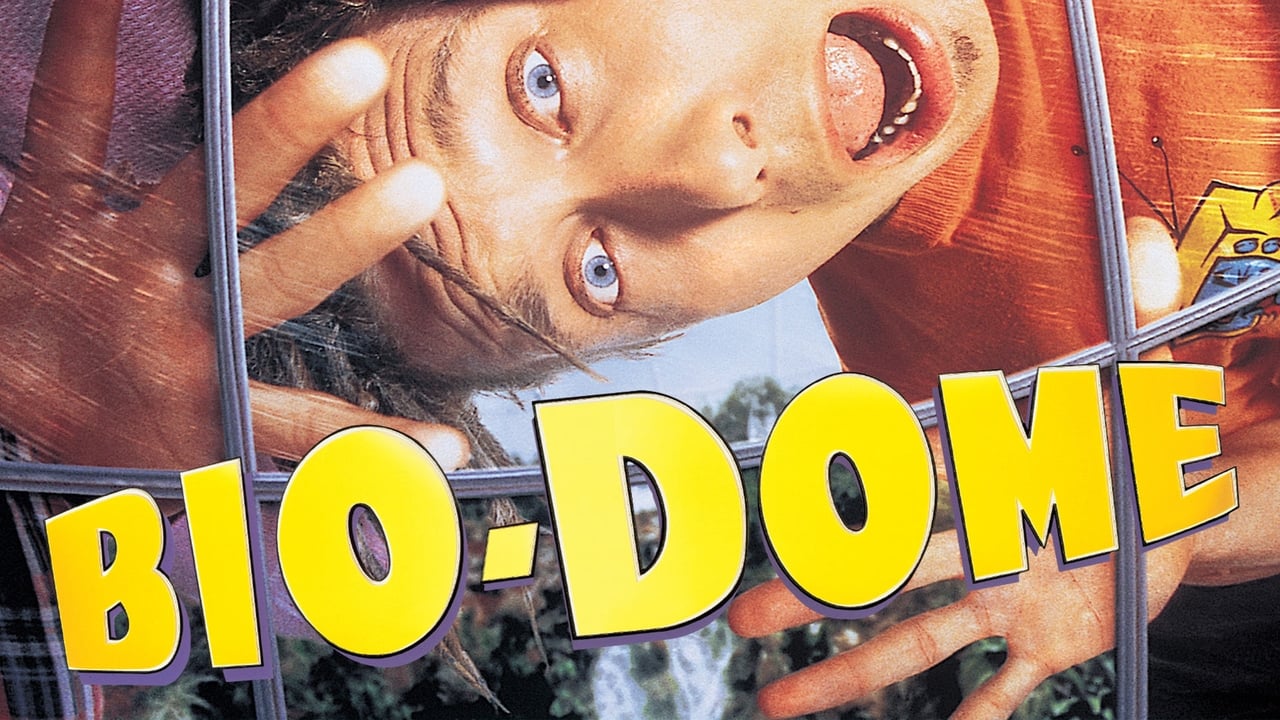
Alright, fellow tapeheads, dim the lights, maybe crack open a Jolt Cola if you can still find one, and let’s talk about a film that practically screams mid-90s excess from its very pores. I’m talking about the 1996 cinematic... experience... known as Bio-Dome. Found this one gathering dust between a worn copy of Ace Ventura and Billy Madison down at the local video store? Yeah, me too. It was a time when studios seemed willing to throw moderate budgets at comedies built entirely around catchphrases and a certain brand of slacker charm, and boy, did Bio-Dome lean into that.

### Weezin' the Juice, Bu-ddy!
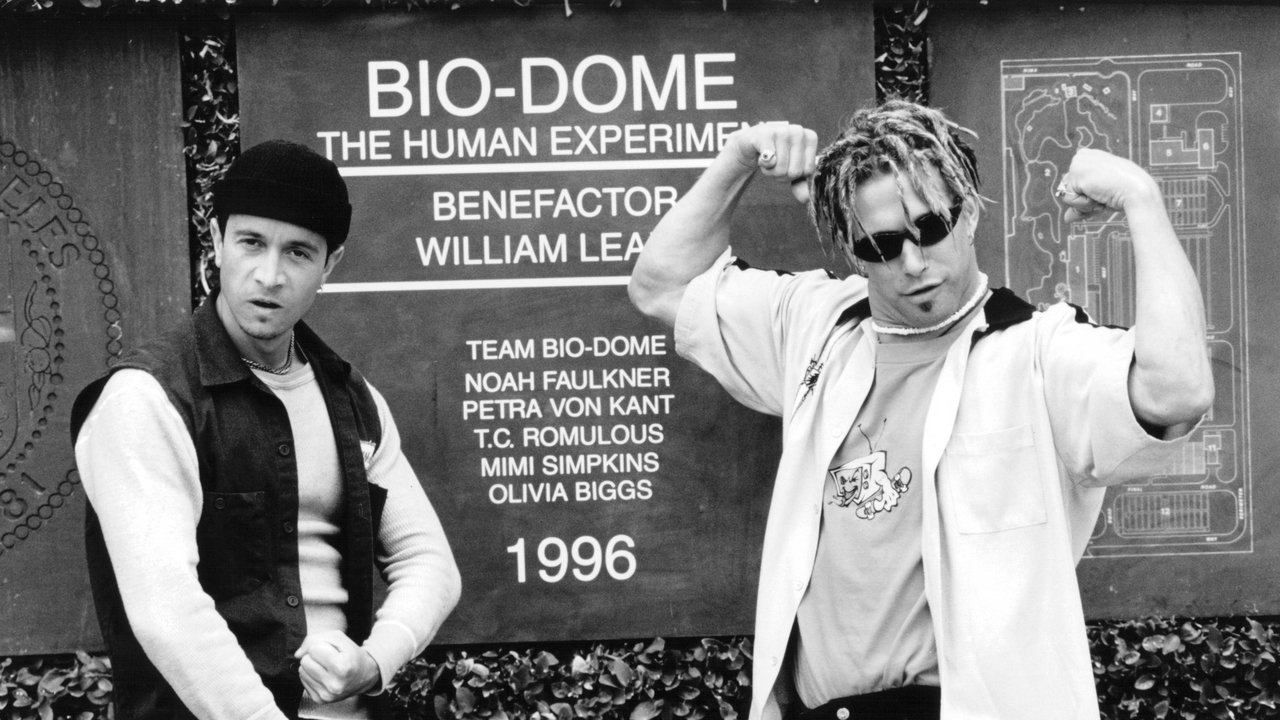
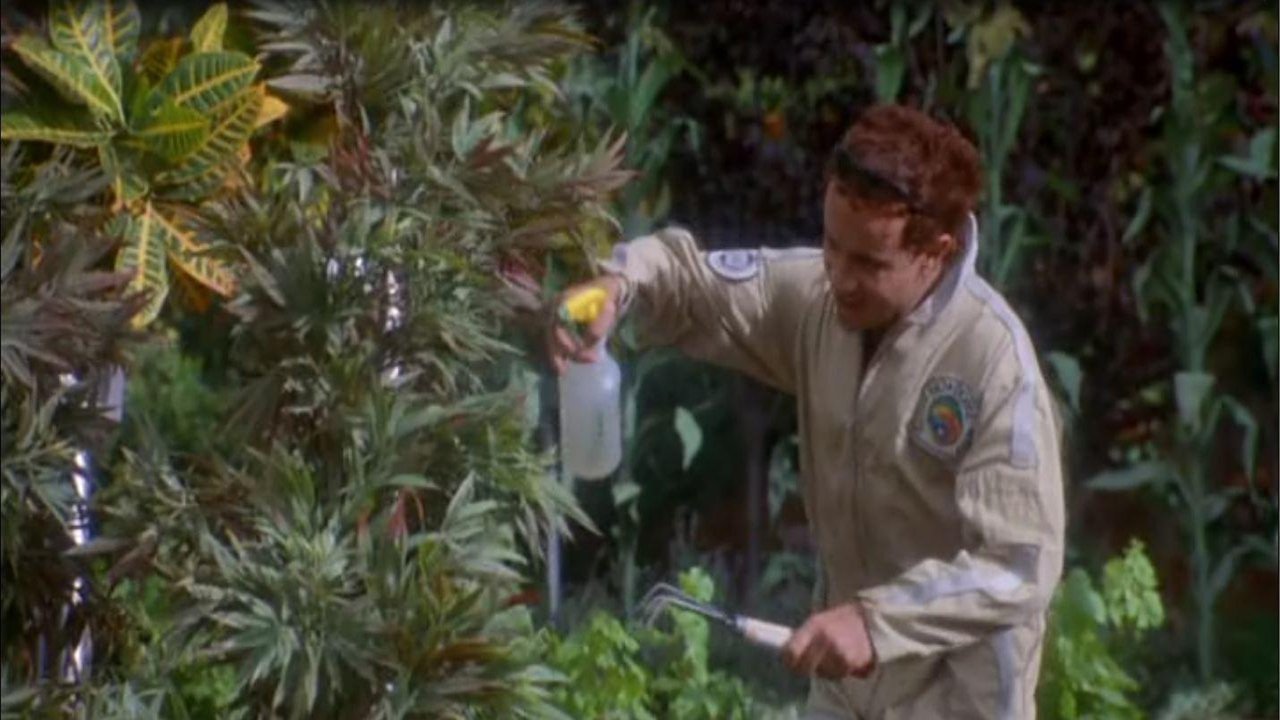
The premise alone is gloriously absurd: two terminally dimwitted best friends, Bud "Squirrel" Macintosh (Pauly Shore) and Doyle Johnson (Stephen Baldwin), mistake a sealed environmental experiment for a mall and accidentally get locked inside for a year with a group of serious scientists. It’s basically Encino Man meets Silent Running, filtered through the lens of MTV Spring Break. The plot, such as it is, involves Bud and Doyle disrupting the delicate ecosystem, annoying the dedicated researchers led by the perpetually exasperated Dr. Noah Faulkner (William Atherton, forever etched in our minds as the EPA schmuck from Ghostbusters), and generally lowering the collective IQ within the geodesic structure.
Remember the actual Biosphere 2 project in Arizona? It was a serious, ambitious, and ultimately troubled scientific endeavor that captured headlines in the early 90s. Well, Bio-Dome took that fascinating real-world experiment and used it as a backdrop for fart jokes and Pauly Shore’s signature "Weasel" speak. It's a move so audacious you almost have to admire the sheer nerve. The film reportedly had a budget of around $15 million – not huge, but definitely not peanuts for this kind of comedy back then – yet it barely made back its cost at the box office, grossing about $13.4 million domestically. Critics, perhaps unsurprisingly, were not kind.
### A Time Capsule of 90s Goofballery
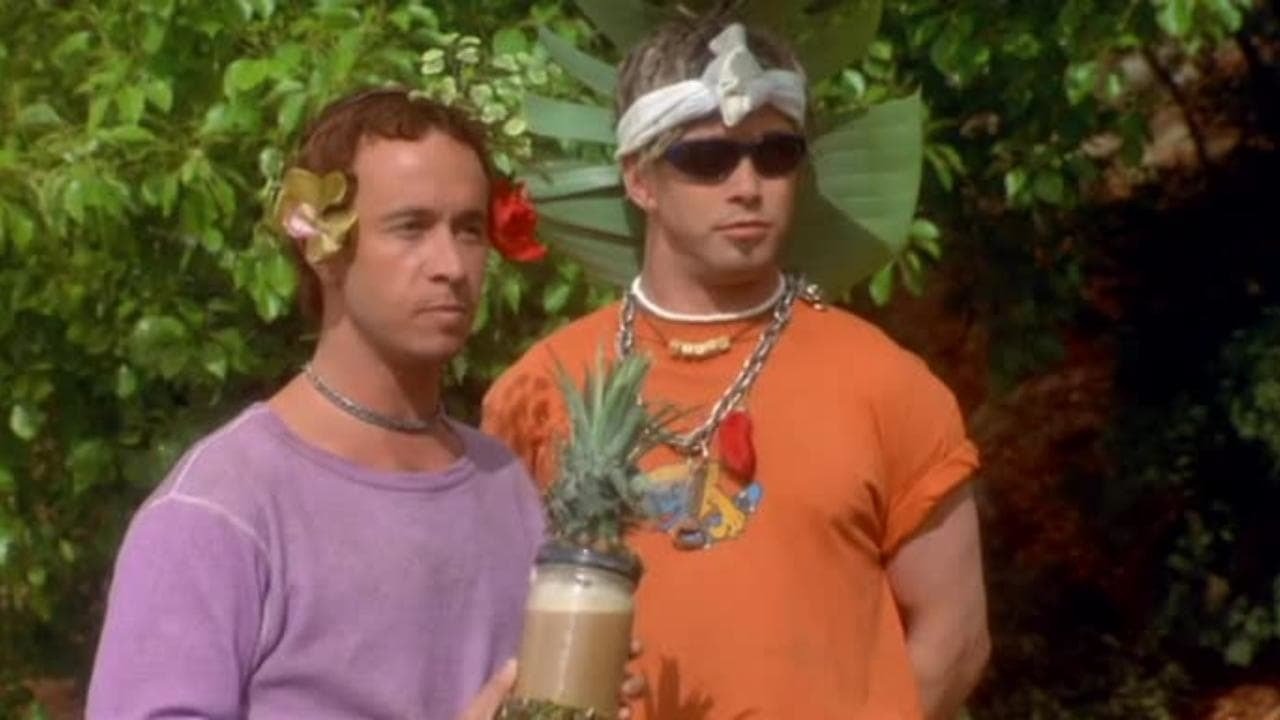
Watching Bio-Dome today is like excavating a specific layer of 90s pop culture. Shore, at the peak of his polarizing fame from films like Encino Man (1992) and Son in Law (1993), does exactly what you expect, delivering lines like "bu-ddy" and "wheezin' the juice" with relentless energy. Stephen Baldwin, the arguably more traditionally trained actor of the duo, gamely matches Shore's mania, creating a partnership built on mutual idiocy and questionable fashion choices. Their chemistry is... well, it exists. They commit fully to the absurdity, which is something, I suppose.
It’s fascinating that the script, penned by Adam Leff, Mitchell Peck, and Jason Blumenthal, somehow attracted not just Shore and Baldwin, but also established actors like Atherton and even featured cameos from folks like Kylie Minogue and, bizarrely, Patty Hearst. Director Jason Bloom, who had previously helmed the college comedy Overnight Delivery (though it was released later), keeps things moving at a frantic pace, perhaps hoping the sheer velocity will distract from the often groan-inducing gags. The film looks exactly like a mid-90s comedy – bright lighting, slightly cartoony sets within the dome, and that overall aesthetic that seemed standard before digital grading smoothed everything out.
### So Dumb It's... Still Pretty Dumb, But Nostalgic?
Let's be honest, the humor hasn't exactly aged like fine wine. Many of the jokes land with a thud, and the environmental message feels tacked on at best, utterly undermined by the protagonists' destructive antics. There’s a chaotic energy, however, that’s undeniably watchable, particularly if you grew up during that era. It’s the kind of movie you’d catch late at night on cable, maybe half-watching while flipping through a magazine, and chuckle despite yourself.
Were Pauly Shore and Stephen Baldwin the perfect choices? For this script, in that specific cultural moment, it’s hard to imagine anyone else embodying Bud and Doyle with quite the same... unique energy. Their commitment to the sheer stupidity is almost admirable in its own way. It’s a reminder of a time when comedy could be unapologetically low-brow, aimed squarely at a young audience hooked on catchphrases and personality-driven humor. Seeing William Atherton try to maintain his composure amidst the chaos is also a low-key highlight – the man knows how to play a frustrated authority figure like nobody else.
The film’s legacy? Well, it frequently appears on "worst movie" lists and earned Shore a Razzie Award for Worst Actor. Yet, like so many critically savaged films from the VHS era, it maintains a certain cult following. It’s a benchmark of sorts for a particular brand of 90s comedy that has largely faded away. Does anyone remember the proposed sequel, Bio-Dome 2: The Escape, that thankfully never materialized? Probably for the best.
***
VHS Heaven Rating: 3/10
Justification: Look, Bio-Dome is objectively not a "good" film by conventional standards. The plot is thin, the jokes are often painful, and it represents a very specific, acquired taste of 90s comedy. However, the 3 points are awarded for the sheer nostalgic time capsule effect, the committed (if grating) performances from Shore and Baldwin, and its status as a memorable piece of widely-panned-yet-oddly-enduring cinema from the era. It achieves a certain level of "so bad it's almost fascinating."
Final Thought: If you approach Bio-Dome expecting high art, you’ll be sorely disappointed. But if you want a hit of unfiltered, low-brow, mid-90s silliness that feels ripped straight from a sticky-floored video store shelf... well, bu-ddy, you might just find some unintentional laughs locked inside. Just don't expect profound environmental insights.