Alright dude, grab your air guitar and settle in. Remember popping that chunky cassette into the VCR, the whirring sound filling the room as the previews started? Some sequels just try to repeat the magic, but every now and then, one comes along that throws the original formula into a cosmic blender and hits puree. That's Bill & Ted's Bogus Journey (1991) for you – a follow-up that dared to be darker, weirder, and, dare I say, even more ambitious than its totally excellent predecessor. Forget just flunking history; this time, our favourite slackers face termination... literally.
### Dude, Where's My Afterlife?
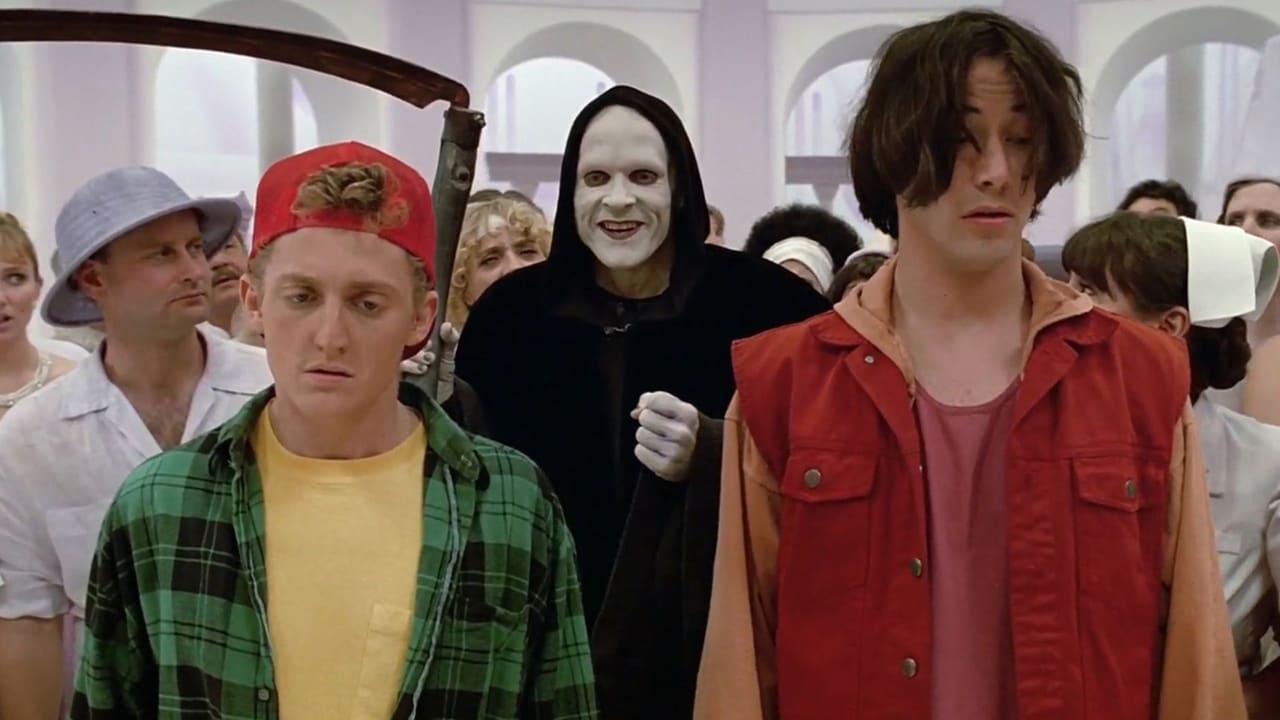
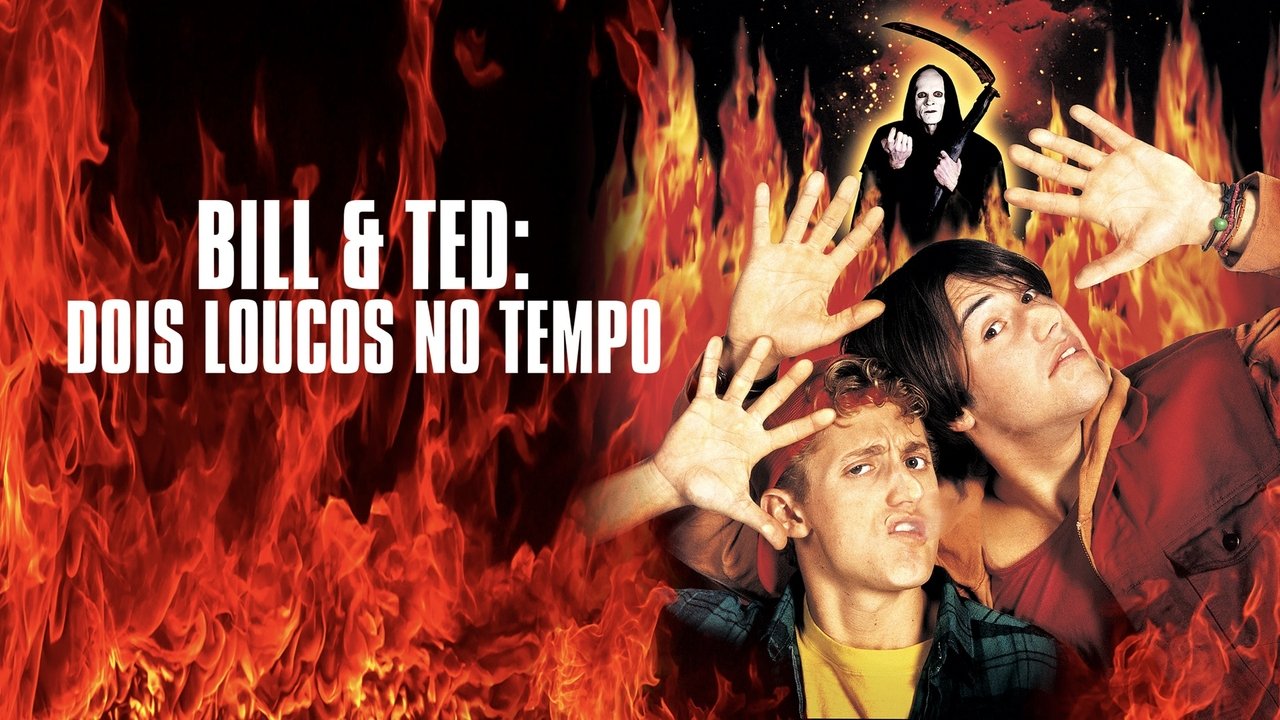
Picking up shortly after their triumphant history report, Bill S. Preston Esq. (Alex Winter) and Ted "Theodore" Logan (Keanu Reeves) are on the cusp of rock god glory with Wyld Stallyns. But their utopian future is threatened by the villainous Chuck De Nomolos (played with sneering relish by Joss Ackland), who sends evil robot duplicates back in time to kill our heroes and ruin everything. And kill them they do, pretty early on! It was a genuinely shocking turn back in '91, chucking our hapless heroes out of their bodies and into a bizarre journey through the great beyond. Writers Chris Matheson and Ed Solomon, returning from the first film, clearly decided "more of the same" wasn't bodacious enough. This wasn't just Bill & Ted Go To Hell (the original working title, by the way); it was a full-blown existential odyssey played for laughs, directed with a surprising visual flair by newcomer Peter Hewitt.
### Heaven, Hell, and Everything In Between
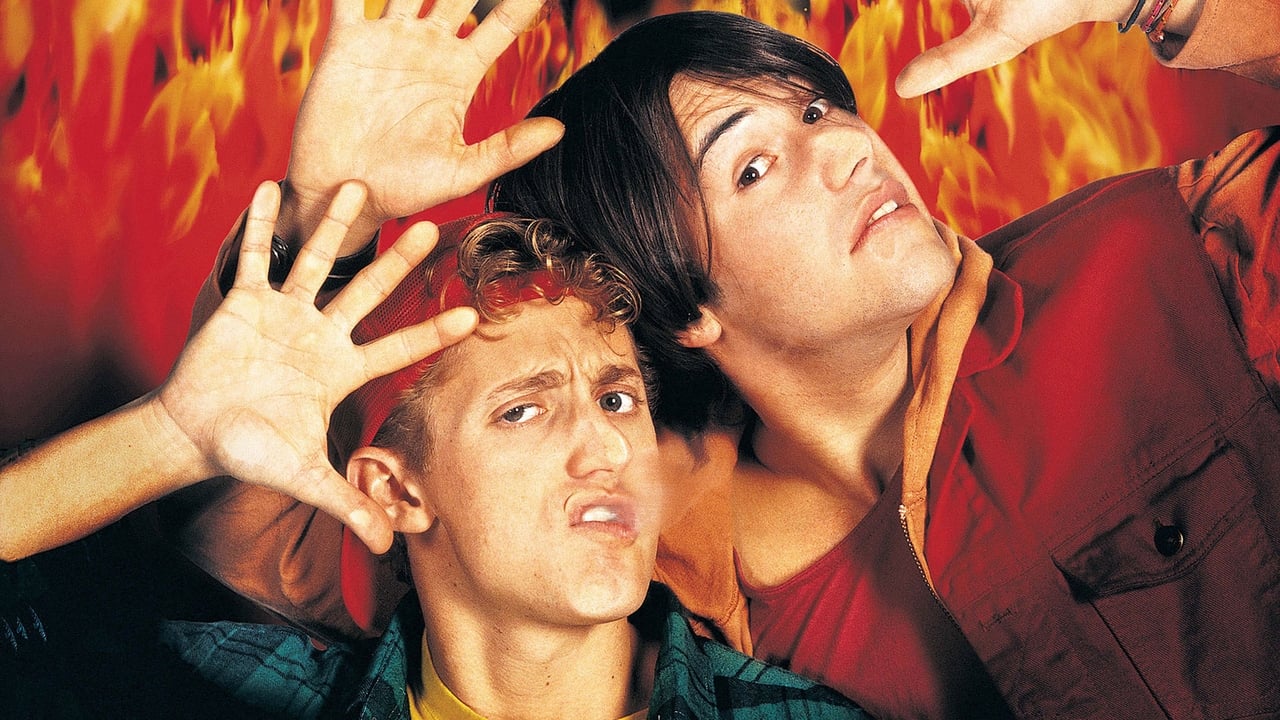
This is where Bogus Journey truly carves its own path. The depiction of the afterlife is pure 90s imagination cranked to eleven. Forget pearly gates and fluffy clouds (well, there's some of that); we get personalized Hells reflecting Bill and Ted's deepest fears (Granny S. Preston Esq.'s slobbery kisses, military school bootcamp – truly heinous!). The creativity here is off the charts. Remember those weird, lumpy alien things called Station? Those weren't slick CGI creations; they were complex, practical suits designed and built by creature effects maestro Kevin Yagher, the same talent behind Freddy Krueger's gnarly makeup and Chucky! You could feel the weight and texture of those things, a testament to the era's hands-on approach to filmmaking. It felt wonderfully tangible, even through the slightly fuzzy tracking on your well-worn VHS tape.
### Don't Fear the Reaper (He's Actually Pretty Cool)
But let's be honest, the absolute show-stealer, the character who became instantly iconic, is Death himself. Played with magnificent, deadpan brilliance by William Sadler, this wasn't your typical Grim Reaper. Inspired by Ingmar Bergman's The Seventh Seal (a reference that probably flew over most younger heads back then, but feels genius now), Bill and Ted challenge Death not to chess, but to games like Battleship, Clue, and Twister ("Best two out of three!" "EXCUSE ME?!"). Sadler reportedly took the role very seriously, developing Death's specific accent and mannerisms (supposedly based on an Eastern European character actor he admired). He absolutely nails the balance between imposing figure and bewildered participant in Bill and Ted's shenanigans. His eventual integration into Wyld Stallyns is one of the film's most triumphant and hilarious moments.
### Robots Run Amok
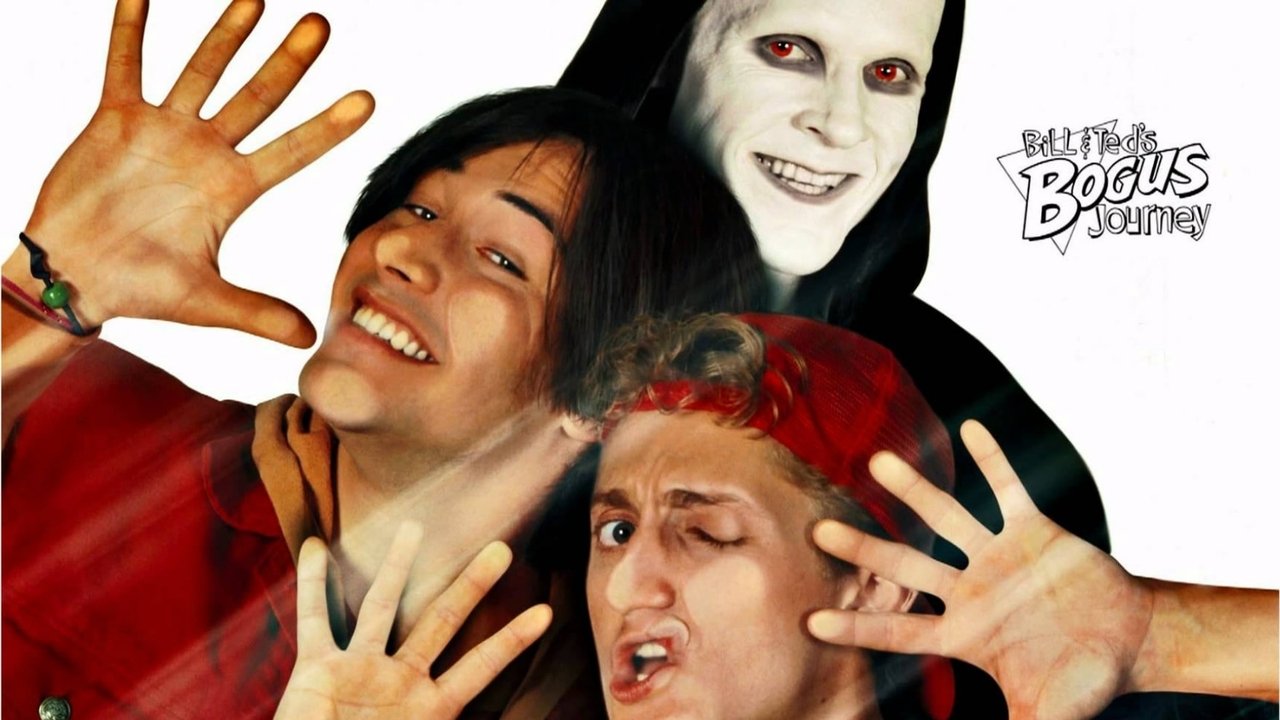
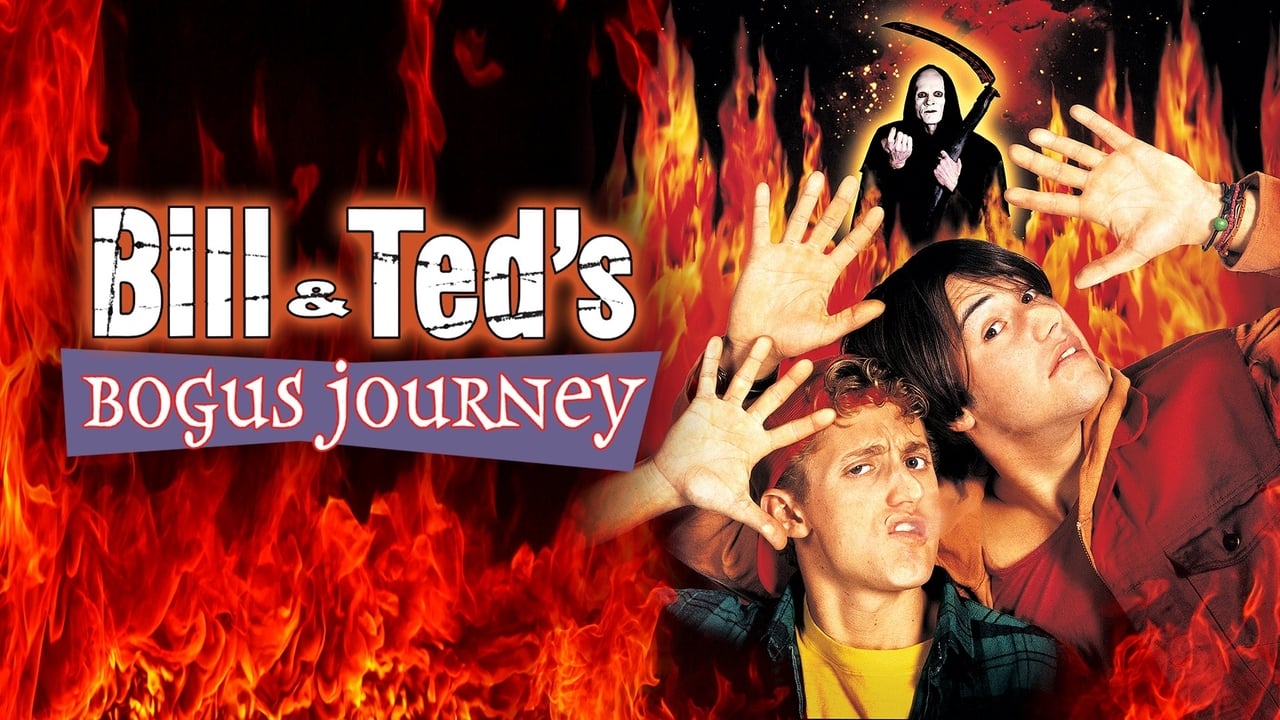
While Bill and Ted are battling demons and challenging Death, their evil robot counterparts are causing chaos back on Earth. Winter and Reeves clearly have a blast playing these nasty, sneering versions of themselves, trashing their own reputations and trying to woo the Princesses. It provides a different kind of comedy – broader, more slapstick – that contrasts nicely with the surreal afterlife quest. It also gives us some solid action beats, including the police station assault, all done with that classic 90s practical stunt work – real explosions, real squibs making those bullet hits look impactful. Sure, it might not look as polished as today's digital mayhem, but didn't it feel more real somehow?
### Most Triumphant Tunes
The film culminates, as it must, in a Battle of the Bands, featuring one of the most righteous 90s rock soundtracks committed to celluloid. We're talking Megadeth, Faith No More, Primus, King's X – it was loud, it was heavy, and it perfectly captured the era's musical zeitgeist. While the film didn't quite replicate the box office magic of the original (grossing around $38 million on a $20 million budget – respectable, but not world-conquering, translating to about $44 million budget and $83 million gross today), its cult status was cemented almost immediately. Critics were somewhat divided, perhaps unsure what to make of its tonal shifts and bizarre detours, but audiences embraced its sheer audacity. My own tape got plenty of rewinds, especially for the Death scenes and the final concert.
---
VHS Heaven Rating: 8/10
Justification: Bogus Journey gets an 8 for its sheer creative bravery, William Sadler's legendary performance as Death, its surprisingly effective blend of dark themes and goofy humour, and its wonderfully weird practical effects. It loses a couple of points for sometimes feeling a tad disjointed between the afterlife quest and the evil robot plot, but its ambition and iconic moments far outweigh any minor fumbles.
Final Word: Forget safe sequels; Bogus Journey took a most bodacious leap into the unknown, proving that even dim-witted heroes could face down death itself... and challenge him to a game of Twister. A weird, wonderful, and utterly unique slice of early 90s cinema that still plays triumphantly today. Be excellent to each other!