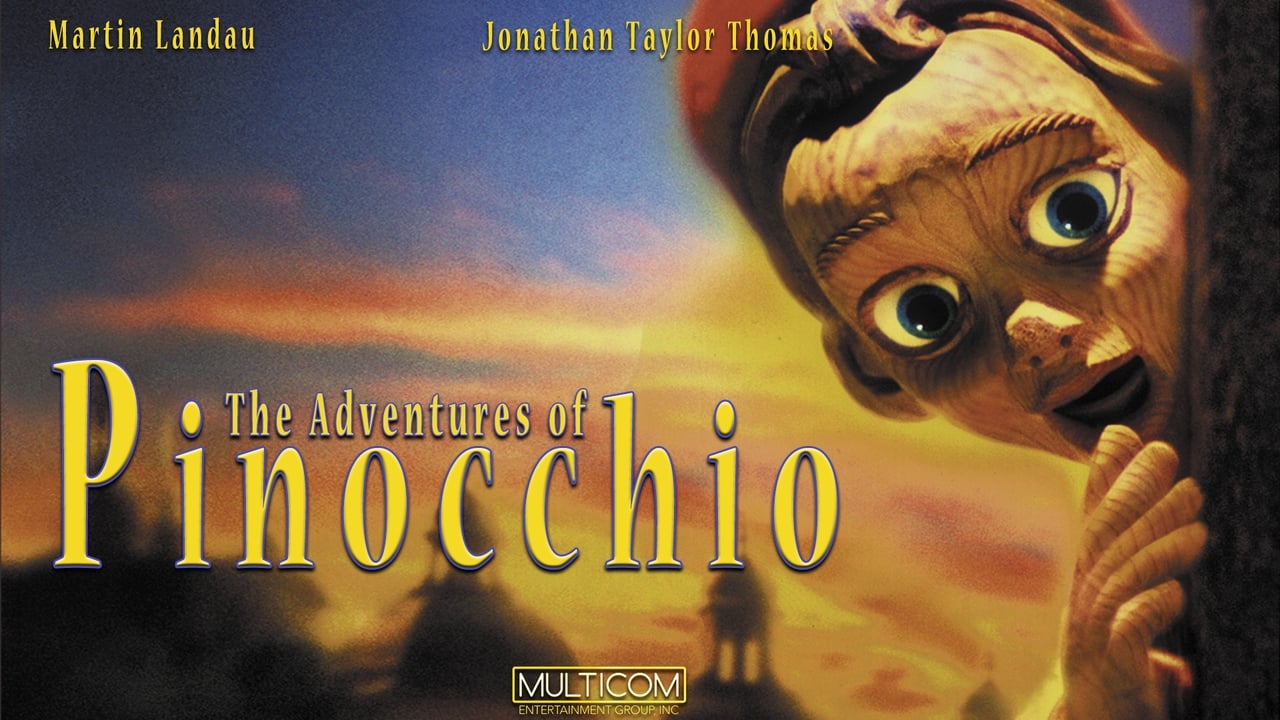
Alright, fellow tape travelers, let’s rewind to a time when adapting classic fairy tales into live-action felt like a bold, slightly risky venture, especially when tackling a story as beloved (and perhaps definitively animated) as Pinocchio. Forget the bright, sing-songy version etched into our collective memory by Disney. The mid-90s offered something… different. I distinctly remember spotting the cover for Steve Barron’s The Adventures of Pinocchio (1996) on the rental shelf, drawn in by the image of a wooden boy who looked startlingly, well, wooden. This wasn't just a cartoon character brought to life; this felt like a tangible, almost eerie creation sprung directly from Collodi's original, sometimes darker, pages.
### Carved from Imagination (and Latex)
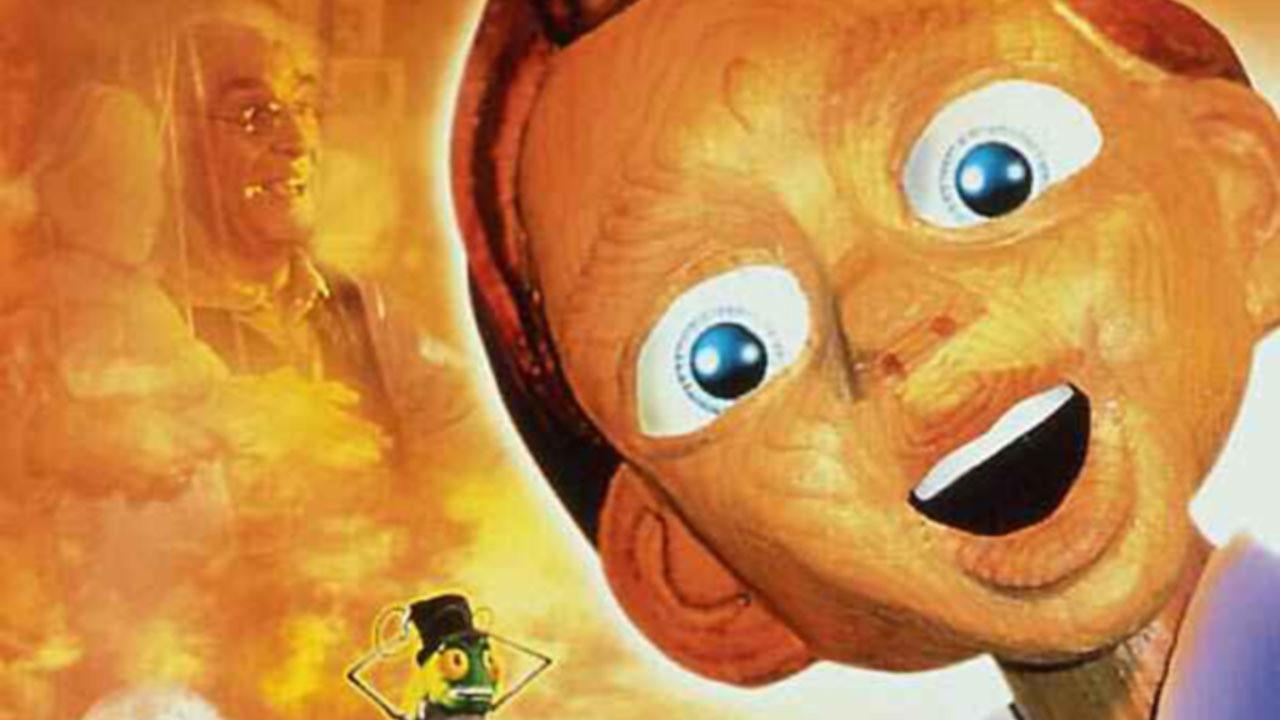
What immediately set this 1996 Pinocchio apart, and what still impresses today, is the masterful work of Jim Henson's Creature Shop. Fresh off triumphs like Barron's own Teenage Mutant Ninja Turtles (1990), the wizards at Henson’s workshop delivered a Pinocchio puppet that was a marvel of animatronics and expressive design. Operated by multiple puppeteers and imbued with a voice by the decade’s ubiquitous teen heartthrob, Jonathan Taylor Thomas (at the peak of his Home Improvement and Lion King fame), this Pinocchio felt tactile and real. You could almost smell the sawdust. His movements, sometimes fluid, sometimes intentionally jerky, perfectly captured the essence of a magical creation learning to navigate the world. It wasn't always smooth, and occasionally dipped into the uncanny valley, but the sheer artistry involved was undeniable – a testament to the power of practical effects in an era increasingly leaning towards CGI.
### A Father's Heart, An Actor's Soul

Grounding the fantastical elements is a truly wonderful performance by the legendary Martin Landau as Geppetto. Coming off his much-deserved Oscar win for Ed Wood (1994), Landau brought immense warmth, weariness, and profound love to the lonely woodcarver. His Geppetto isn't just a kindly old man; he's imbued with a deep melancholy and a desperate yearning for connection, making Pinocchio’s creation feel less like whimsy and more like an act of profound emotional necessity. Watching him interact with the puppet, treating it as his living, breathing son, is genuinely touching. Opposite him, Geneviève Bujold adds a layer of gentle strength as Leona, Geppetto's longtime admirer, providing a subtle human anchor amidst the magical chaos.
### A Darker Fairytale Hue
Director Steve Barron, no stranger to visually ambitious projects, leans into the more European, storybook aesthetic of Carlo Collodi's 1883 novel. Filmed largely in the Czech Republic, the film boasts stunning, painterly visuals – cobblestone streets, misty forests, and architecture that feels ripped straight from an old illustration. This visual style supports a tone that’s often more somber and occasionally more menacing than its animated predecessor. Remember Terra Magica, this film's version of Pleasure Island? It wasn’t just mischievous fun; there was a genuine sense of unease and consequence, capturing the cautionary-tale roots of the story. Barron wasn’t afraid to show the dangers Pinocchio faced, from the conniving Volpe and Felinet (played with relish by Rob Schneider and Bebe Neuwirth) to the genuinely intimidating whale sequence (realized through impressive, large-scale practical effects and early CGI).
### Ambition Meets Reality
Despite its visual splendor and heartfelt core, The Adventures of Pinocchio wasn't quite the blockbuster success some might have hoped for. Made on a respectable $25 million budget, it brought in around $15 million domestically. Critics at the time were somewhat divided (it sits at a mixed 36% on Rotten Tomatoes), often praising the visuals and Landau's performance but finding the narrative pacing a bit episodic or the tone occasionally uneven, sometimes struggling to balance the darker elements with moments aimed at younger viewers. It's true the story sometimes feels like a series of vignettes rather than a perfectly smooth arc, mirroring the structure of the original book.
Yet, looking back through the haze of nostalgia – perhaps fueled by memories of watching this very tape on a clunky CRT – there’s so much to appreciate. It was a bold attempt to reclaim Pinocchio from pure animation, grounding it in a tangible, beautifully crafted world. The Henson effects remain a highlight of practical puppetry, and Landau’s performance is simply captivating. It’s a film that wears its slightly offbeat, European fairytale heart on its wooden sleeve.
VHS Heaven Rating: 7/10
Justification: This score reflects the film's stunning practical effects and production design (a major plus), Martin Landau's soulful performance, and its admirable ambition in capturing a tone closer to the original story. It loses points for occasional tonal unevenness and a slightly disjointed narrative flow that didn't quite connect with mass audiences or critics universally at the time. However, its visual artistry and heartfelt moments make it a worthy and memorable entry in the 90s fantasy catalogue.
Final Thought: While perhaps not the definitive Pinocchio for everyone, this version remains a fascinating, beautifully crafted curio from the VHS era – a reminder of a time when practical magic still held powerful sway on screen, creating a wooden boy you could almost reach out and touch.