Alright, fellow tape travelers, let’s rewind to the late 90s. Picture this: you stumble upon a VHS box, maybe in the slightly dusty 'World Cinema' or 'Cult' section of your local video haunt. The cover art is stark, black and white, hinting at something different. You take a chance, pop it in the VCR late one night, the tracking maybe needing a slight tweak, and BAM! You're hit not with a traditional samurai epic, but with Samurai Fiction (1998), a blast of monochrome cool, razor-sharp style, and rock-and-roll energy that felt utterly fresh. This wasn't your dad's Kurosawa; this was something else entirely.
### Monochrome Mayhem, Guitar Hero Villain
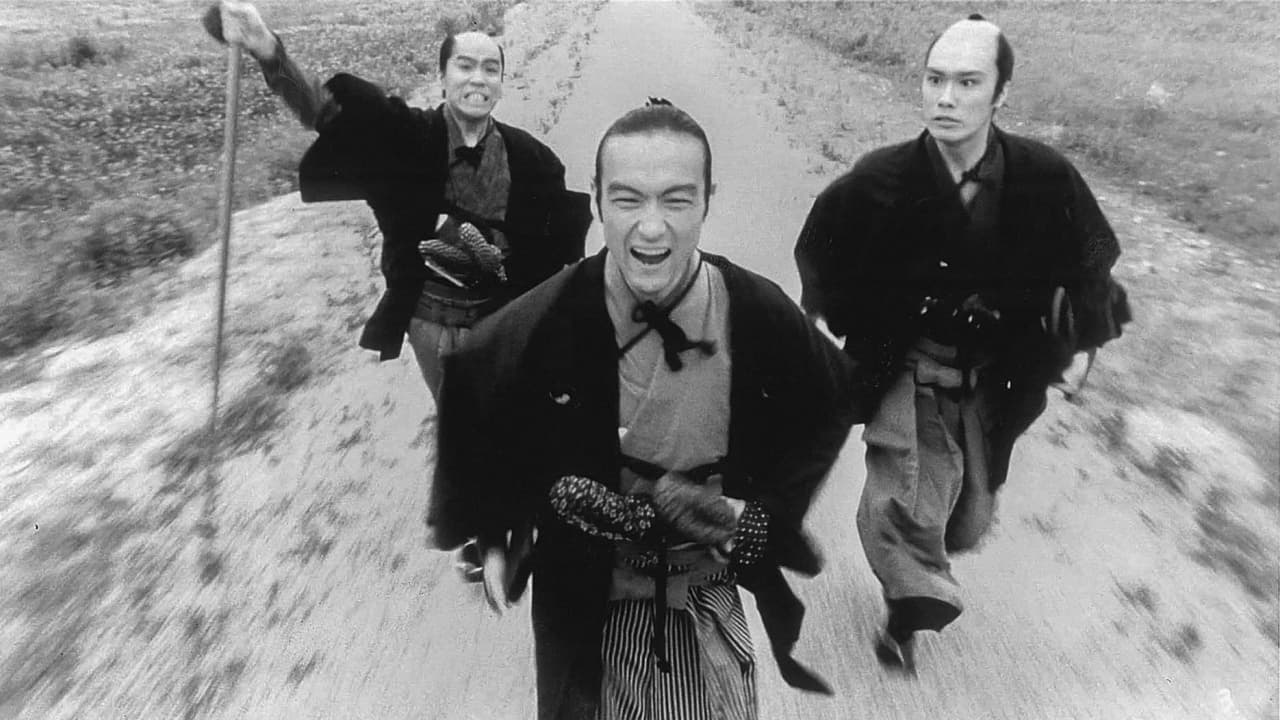
Directed by Hiroyuki Nakano, who cut his teeth directing music videos, Samurai Fiction pulses with a unique visual rhythm. Forget sprawling historical vistas; Nakano crafts a world of minimalist sets, dramatic shadows, and stark B&W compositions that feel less like a period piece and more like a live-action graphic novel crossed with a high-energy concert film. The decision to shoot in black and white wasn't just an affectation; it defines the film's entire aesthetic, making every silhouette, every quick draw, every drop of (stylized) blood pop with graphic intensity. It’s a look that, frankly, probably held up remarkably well even on slightly fuzzy CRT screens back in the day.
The plot itself is charmingly straightforward: young, impetuous samurai Inukai Heishiro (Mitsuru Fukikoshi) is dispatched by his clan elder to retrieve a priceless stolen sword. The thief? The impossibly cool, lethally skilled ronin Kazamatsuri. Heishiro, full of youthful arrogance and absolutely zero real-world skill, promptly gets his backside handed to him. Left for dead but rescued by a quirky older samurai, Hanbei Mizoguchi (Morio Kazama), and his daughter Koharu (Tamaki Ogawa), Heishiro must learn humility, strategy, and maybe, just maybe, how not to get killed.
### Style Over Swordsmanship (Almost)
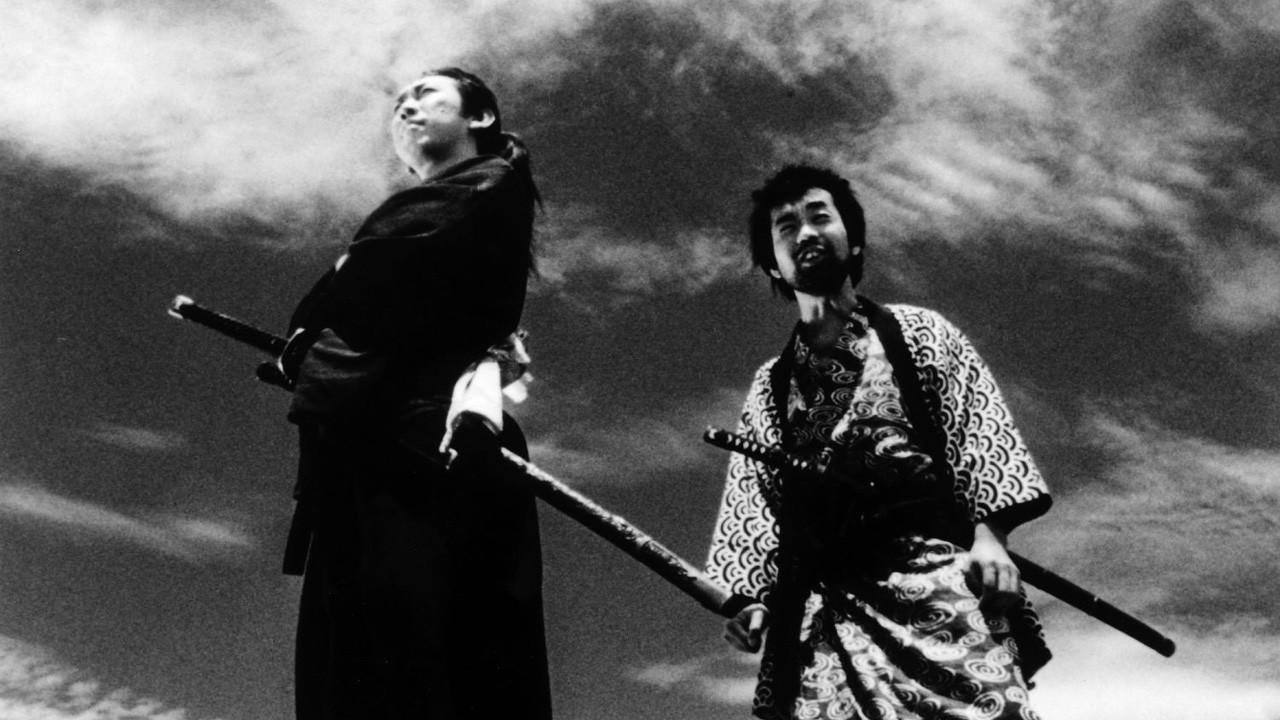
Let’s talk about Kazamatsuri. Played with electrifying presence by Japanese rock legend Tomoyasu Hotei, he’s less a traditional samurai villain and more a rockstar dispensing death with effortless cool. And here’s a killer piece of trivia: Hotei didn't just play the main antagonist; he composed the film's absolutely phenomenal soundtrack. Remember that iconic, infectious guitar theme, "Battle Without Honor or Humanity"? The one Quentin Tarantino would later famously borrow for Kill Bill: Vol. 1 (2003)? Its pulsating energy originated right here, driving the film's action and defining its swagger. Knowing the villain wrote the score adds a whole extra layer of meta-coolness.
Nakano's direction leans heavily into this musicality. The editing is sharp, often syncopated to the rhythm of the score. The fight scenes aren't the brutal, muddy affairs of some samurai classics, nor are they laden with the kind of intense practical gore we sometimes saw in 80s action. Instead, they're highly stylized, almost dance-like sequences. Think quick cuts, dramatic poses, and an emphasis on the idea of violence rather than its graphic depiction. It’s a different kind of intensity – one born from rhythm, composition, and pure attitude. Compared to today's often weightless CGI-heavy action, there's a tangible, planned choreography here that feels deliberate and impactful within its own stylish universe.
### More Than Just a Pretty Picture
While the style is front and center, the performances give Samurai Fiction its heart. Mitsuru Fukikoshi is great as the initially hopeless Heishiro, his journey from hotheaded fool to somewhat wiser warrior providing the film's emotional anchor and much of its humor. Morio Kazama is equally wonderful as the laid-back, philosophical Hanbei, dispensing wisdom with a shrug and proving that true mastery doesn't require flash. Their dynamic provides a warm counterpoint to Hotei's chillingly cool antagonist.
The film cleverly plays with samurai movie tropes, often subverting expectations with humor and postmodern flair. It acknowledges its influences – you can see nods to classic chanbara and even Westerns – but remixes them into something distinctly its own. It wasn't a massive box office smash, apparently costing around $3 million USD to make, but it quickly gained a devoted cult following, especially among viewers who appreciated its unique blend of genre-bending and visual panache. It felt like discovering a secret handshake, a movie that rewarded viewers looking for something off the beaten path. I definitely remember this being one of those tapes passed between friends with a knowing nod – "You gotta see this."
### The Verdict
Samurai Fiction is a cinematic cocktail – one part samurai flick, one part rock music video, a splash of comedy, served ice cold in a stylish black and white glass. It might prioritize style over intricate plotting, but it does so with such infectious energy, visual invention, and undeniable cool that it’s hard not to get swept up in its rhythm. The performances are engaging, the humor lands, and that soundtrack... well, it’s legendary for a reason.
Rating: 8.5/10
Justification: The score reflects the film's incredible sense of style, its killer soundtrack, memorable characters, and its sheer uniqueness. It's a supremely entertaining and rewatchable cult classic, even if the narrative is relatively simple. It loses a point perhaps for not delving deeper, but its surface is so damn cool, it hardly matters.
Final Word: Forget gritty realism; Samurai Fiction proved that monochrome minimalism and a rockstar attitude could be just as sharp as any katana blade – a truly standout gem from the late-90s indie scene that still feels effortlessly cool today.