There’s a certain kind of cold that seeps into your bones, not from the winter air, but from the chilling certainty of doom. It hangs heavy over the picture-perfect landscape of the newly opened Mountain Meadows ski resort in Avalanche. You see the pristine peaks, the luxurious lodge teeming with oblivious partygoers, and you just know. It’s not a question of if, but when the white death will come roaring down. This 1978 disaster flick, hitting the tail end of the genre's golden age, might not boast the pedigree of its bigger-budgeted brethren, but it possesses a raw, almost nihilistic inevitability that lingers.
Summit of Hubris
The setup is classic disaster movie fodder: ambitious developer David Shelby (Rock Hudson, bringing his characteristic stoic presence) has sunk everything into his dream resort, cutting corners environmental warnings be damned. His estranged wife, Caroline (Mia Farrow, looking perpetually, understandably worried), arrives just in time for the grand opening festivities and, naturally, the impending catastrophe. Throw in rugged wildlife photographer Nick Thorne (Robert Forster, adding a much-needed dose of earthy cynicism) who told Shelby this mountain was unstable, and the stage is set for nature's spectacular, snowy revenge. Directed by Corey Allen (who also co-wrote with exploitation maestro Jack Hill, known for gritty classics like Coffy (1973) and Foxy Brown (1974) – an unlikely pairing that perhaps explains some of the film's uneven tone), Avalanche leans heavily into the human melodrama before unleashing the powder.
The tension doesn't really come from intricate plotting – it's a fairly straightforward 'man vs. nature' narrative wrapped in soap opera conflicts. The real unease builds from the setting itself. Every panoramic shot of the majestic, snow-laden peaks feels like a ticking clock. You’re watching skiers carve down slopes, oblivious, while the film constantly reminds you (through dialogue, through Forster's concerned glares) that disaster is imminent. It plays on that primal fear of being trapped, overwhelmed by forces far beyond human control.
The White Fury Unleashed
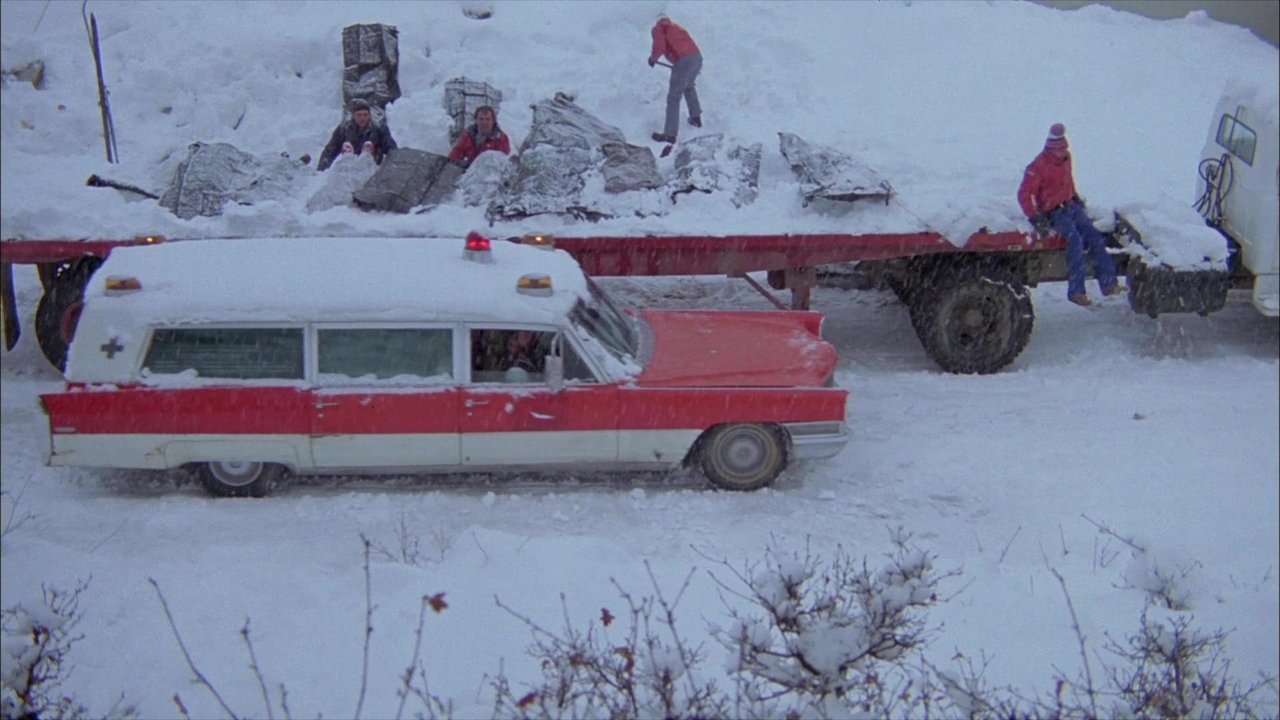
When the titular event finally occurs, it’s a fascinating example of late-70s, lower-budget spectacle. Produced by Roger Corman’s New World Pictures – a company legendary for wringing production value out of tight budgets – Avalanche employs a mix of techniques. You get miniatures, actual snow footage (filmed primarily at the Purgatory Resort in Colorado), process shots, and, notoriously, stock footage reportedly lifted from other films (a Corman trademark!). Does it all blend seamlessly? Not exactly. Watching it now on a crisp screen, the seams are more apparent than they might have been on a fuzzy CRT fed by a well-worn VHS tape. Yet, there’s a certain visceral impact to the practical elements – the sight of actual snow and debris churning, the panicked actors reacting to tangible chaos.
There's a grim footnote often associated with the production: persistent reports circulated about the dangerous nature of filming the avalanche sequences, with claims of injuries among stunt performers due to the sheer volume and force of the snow involved. While details remain murky, these "dark legends" add an unsettling layer to the on-screen destruction, a reminder of the real risks sometimes taken to capture cinematic mayhem back in the day. The chaos feels less choreographed, more genuinely dangerous, than some of the more polished disaster epics. One stunt involving a snowmobile going off a cliff certainly looks perilously real.
Buried Alive in Melodrama
Beneath the snow, the film struggles somewhat. The character arcs are thin, the dialogue often functional at best. Rock Hudson plays the arrogant developer archetype competently, but without much depth. Mia Farrow spends much of the film reacting, her inherent fragility fitting the victim role. It's Robert Forster who often steals scenes, grounding the increasingly frantic situation with a believable world-weariness. The supporting cast features familiar faces, but they're mostly sketched in broad strokes, destined to become potential casualties.
The film cost around $6.5 million, a respectable sum for New World but dwarfed by the budgets of films like The Towering Inferno (1974). It performed modestly at the box office, never quite achieving the iconic status of its peers. Perhaps the blend of soapy relationship drama and brutal natural disaster felt uneven, or maybe audiences were tiring of the formula by 1978. Yet, viewed through the lens of VHS nostalgia, Avalanche holds a certain charm. It’s the kind of movie you might have rented when the bigger hits were checked out, a slightly grittier, less polished piece of the disaster puzzle. I distinctly remember the stark cover art on the rental box, promising snowy destruction – a promise the film delivers, albeit with some B-movie grit attached.
Final Descent
Avalanche is undeniably a product of its time – the fashions, the slightly overwrought drama, the reliance on practical (and sometimes obvious) effects. It lacks the slickness and character depth of the genre's best, and the pacing can feel sluggish before the main event. However, it captures a raw sense of dread and delivers its central set piece with a chaotic energy that feels surprisingly impactful, especially considering its production constraints. The Corman-esque resourcefulness is evident, both a limitation and part of its peculiar appeal. It’s a flawed B-movie gem buried within an A-list cast and premise.
Rating: 5/10
Justification: The score reflects the film's status as a lesser entry in the 70s disaster cycle. It gets points for the star power (Hudson, Farrow, Forster), the ambition of its central disaster sequence (despite uneven execution), and its place as a notable Roger Corman production attempting mainstream spectacle. However, it loses points for the often weak script, thin characterizations, reliance on stock footage, and overall melodramatic tone that sometimes clashes with the intended tension. It delivers the promised avalanche, but buries the potential for a truly great film underneath it.
For fans of the disaster genre or Corman productions, Avalanche is a fascinating watch, a snapshot of ambitious filmmaking grappling with limitations. It may not be a pristine peak of cinema, but it’s a bumpy, sometimes thrilling ride down a dangerous slope, best enjoyed with a healthy dose of retro appreciation. Did anyone else feel that slight shiver watching those opening mountain shots, knowing what was coming?