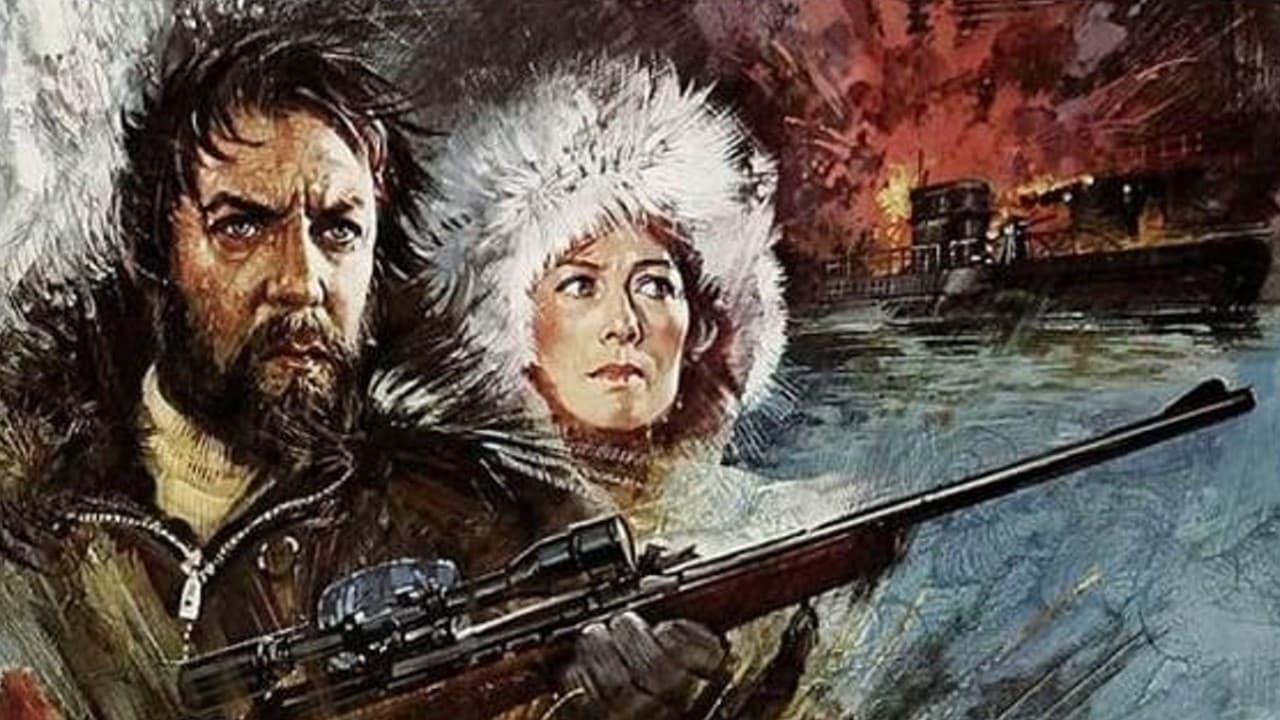
It starts, as so many great adventures promised on those chunky video store cassettes did, with a name: Alistair MacLean. Seeing his name splashed across the cover of Bear Island (1979) was practically a guarantee of intricate plotting, harsh environments, and men (and sometimes women) pushed to their absolute limits. Renting this one, often nestled between his more famous seafaring epics like The Guns of Navarone (1961) or icy thrillers like Ice Station Zebra (1968), felt like uncovering a slightly more obscure chapter in his rugged bibliography. Does the film, landing just as the 70s gave way to the 80s, deliver on that pulpy promise? Mostly, yes, though perhaps with a few more cracks in the ice than his most watertight tales.
Snow, Secrets, and Suspicions
The premise itself feels classic MacLean: a UN-sponsored scientific expedition heads to the remote, desolate Bear Island in the Arctic Circle, ostensibly to study climate change (a surprisingly prescient plot point!). The team, a motley collection of international scientists and crew aboard the vessel Morning Rose, is led by the stern Otto Gerran (Richard Widmark). Among them is American marine biologist Frank Lansing (Donald Sutherland), whose father commanded a mysterious German U-boat base on the island during World War II. Almost immediately, accidents start happening – fatal ones. Lansing, driven by personal history and growing suspicion, realizes something far more sinister than scientific research is unfolding. Is it sabotage? Old wartime secrets surfacing? Or perhaps the lure of something buried beneath the ice for decades?
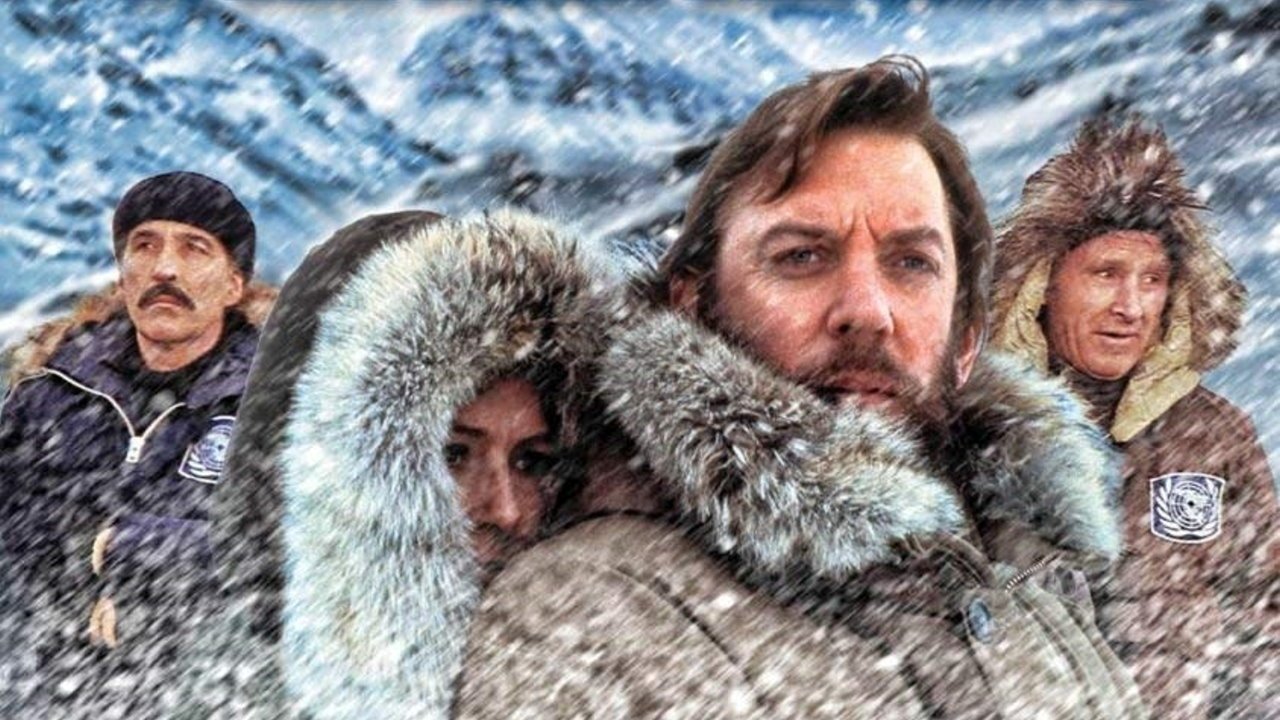
Director Don Sharp, a reliable hand who gave us Hammer's Kiss of the Vampire (1963) and the solid 1978 remake of The Thirty Nine Steps, certainly captures the forbidding atmosphere. The location shooting, primarily in Glacier Bay National Park, Alaska, and Stewart, British Columbia, is genuinely impressive. You feel the biting cold, the vast emptiness, the sheer isolation of Bear Island. The cinematography makes the landscape itself a character – beautiful but utterly indifferent to the human drama (and deaths) unfolding upon it. This tangible sense of place is one of the film's strongest assets, grounding the sometimes convoluted plot in a harsh reality.
A Stellar Crew Navigating Choppy Waters
What truly elevates Bear Island beyond standard B-movie fare, especially when viewed today, is its cast. Donald Sutherland, fresh off Invasion of the Body Snatchers (1978) and bringing that slightly off-kilter intellectual intensity he does so well, makes Lansing a compelling reluctant hero. He’s not an action star in the traditional mold, but his cautious intelligence and simmering determination feel authentic. He's matched by the always luminous Vanessa Redgrave as Heddi Lindquist, a scientist caught between loyalties and dangers. Her performance lends a touch of class and gravitas, suggesting deeper currents beneath her professional exterior. And then there's Richard Widmark. As the expedition leader with secrets of his own, Widmark, a veteran presence who could convey menace with a mere narrowing of his eyes since his explosive debut in Kiss of Death (1947), brings a grizzled authority that keeps you guessing. Is he a protector or part of the threat? The interplay between these three seasoned professionals provides the film's dramatic anchor. Supporting players like Christopher Lee and Lloyd Bridges also pop up, adding to the feeling of a substantial, if slightly overqualified, ensemble for this kind of adventure yarn.
MacLean on Set and Budget Battles
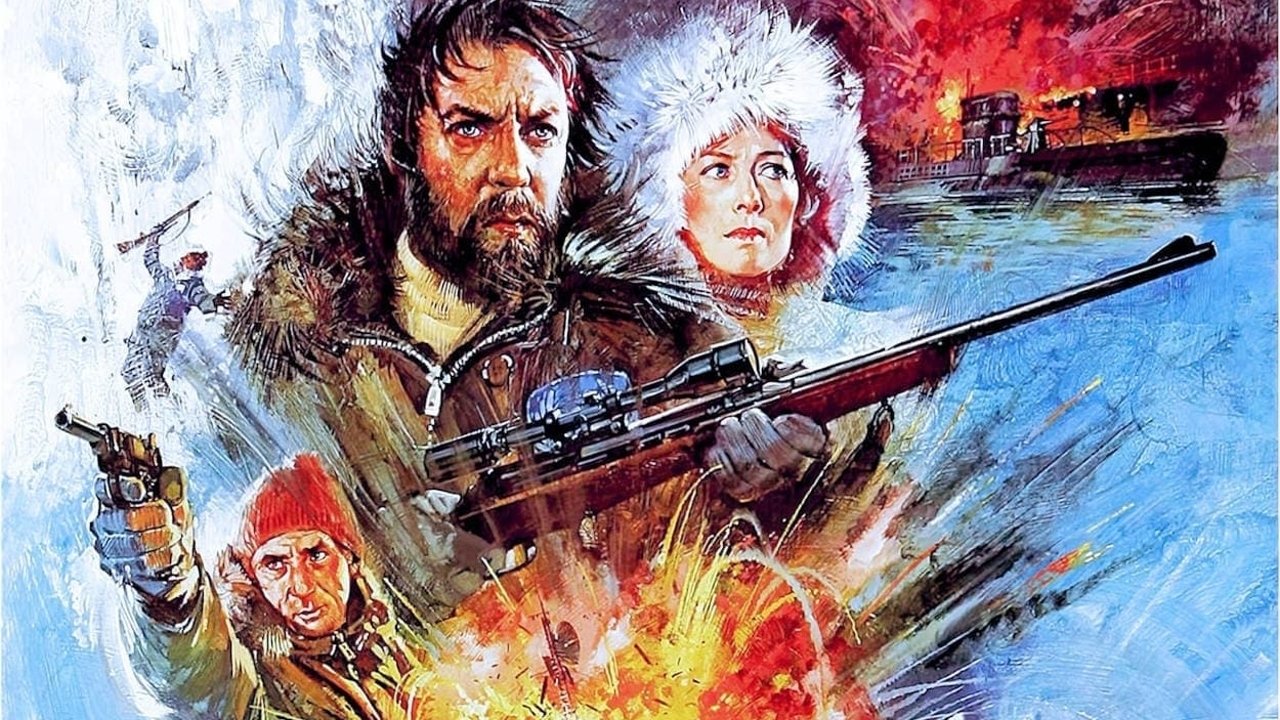
It’s always fascinating when the original author gets involved in the adaptation, and Alistair MacLean himself co-wrote the screenplay. You can feel his fingerprints on the complex web of motives, the escalating peril, and the eventual reveal involving that old wartime standby: Nazi gold. Perhaps his direct involvement explains why the plot feels dense, maybe even a little overstuffed, trying to cram in elements of a spy thriller, a murder mystery, a disaster movie (hello, avalanche sequence!), and a treasure hunt.
Interestingly, Bear Island was a notably expensive film for its time, particularly as a British/Canadian co-production. Its budget hovered around $9.5 million (that's easily over $35 million in today's money), a significant investment aimed at creating a large-scale spectacle. You see that budget in the impressive location work, the ship sequences, and the practical effects used for avalanches and explosions. While perhaps not always seamless by modern CGI standards, there's a tactile reality to these effects that resonates with the VHS era aesthetic. Remember watching those snowmobile chases and thinking they looked genuinely dangerous? They probably were! Despite the investment and star power, however, the film didn't quite ignite the box office, perhaps struggling to find its audience amidst the changing cinematic landscape at the turn of the decade.
Does it Still Chill?
Watching Bear Island today is an interesting experience. The pacing can feel a bit deliberate compared to modern thrillers, and the plot requires a certain suspension of disbelief, particularly regarding the motivations and the ease with which deadly 'accidents' occur in such a confined group. Yet, there's an undeniable charm to its earnestness, its commitment to practical filmmaking in challenging environments, and the sheer pleasure of seeing actors of this caliber tackle a pulpy adventure. The central mystery retains its grip, and the gradual uncovering of the island's dark past still provides satisfying twists. It might not be the absolute pinnacle of MacLean adaptations, lacking the nail-biting tension of Where Eagles Dare (1968) perhaps, but it stands as a sturdy, atmospheric example of the genre. It makes you wonder, doesn't it, about the stories old landscapes keep?
Rating: 6/10
This score reflects a film that is solidly entertaining, visually impressive in its use of stark locations, and significantly boosted by its heavyweight cast. Sutherland, Redgrave, and Widmark deliver committed performances that ground the sometimes unwieldy plot. While the pacing occasionally lags and the script juggles perhaps one too many thriller tropes, the core MacLean mystery and the palpable sense of Arctic isolation make it a worthwhile watch, especially for fans of 70s adventure cinema. It might require a little patience, but the payoff – a blend of espionage, survival, and buried secrets – feels earned.
It's a quintessential late-night VHS discovery – maybe not a masterpiece, but a film that transports you to a cold, dangerous place alongside characters you genuinely invest in, leaving you with the satisfying chill of a mystery solved against formidable odds.