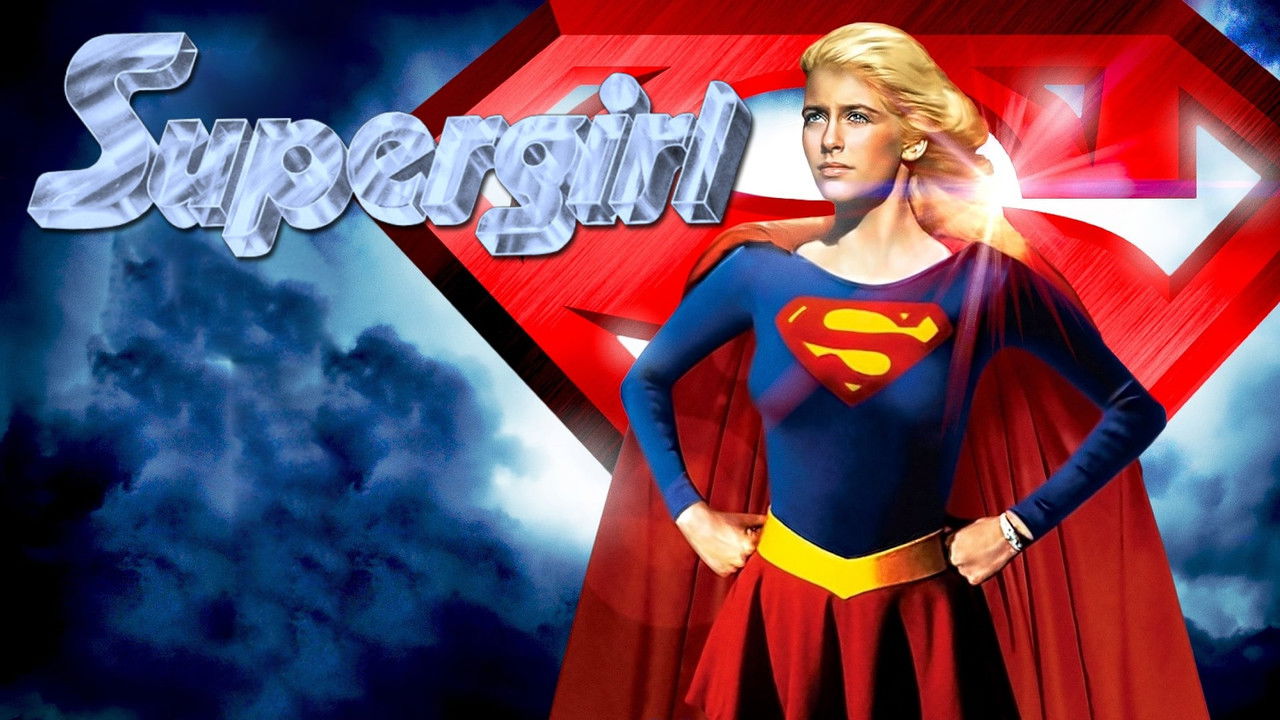
Ah, Supergirl. Sliding that worn VHS cassette into the VCR often felt like uncovering a slightly forbidden secret, a glittering, sometimes awkward cousin to the majestic Superman films that had soared across screens just a few years prior. There was an undeniable allure to Argo City's shimmering domes and the promise of Kryptonian powers wielded by Kara Zor-El. Produced by the same ambitious father-son team, Alexander and Ilya Salkind, who brought us Christopher Reeve's Man of Steel, 1984's Supergirl aimed to expand that cinematic universe, banking on the same magic striking twice. It didn't quite reach the same stratospheric heights, but oh, what a fascinating flight it took.
### A Glimmer of Argo City
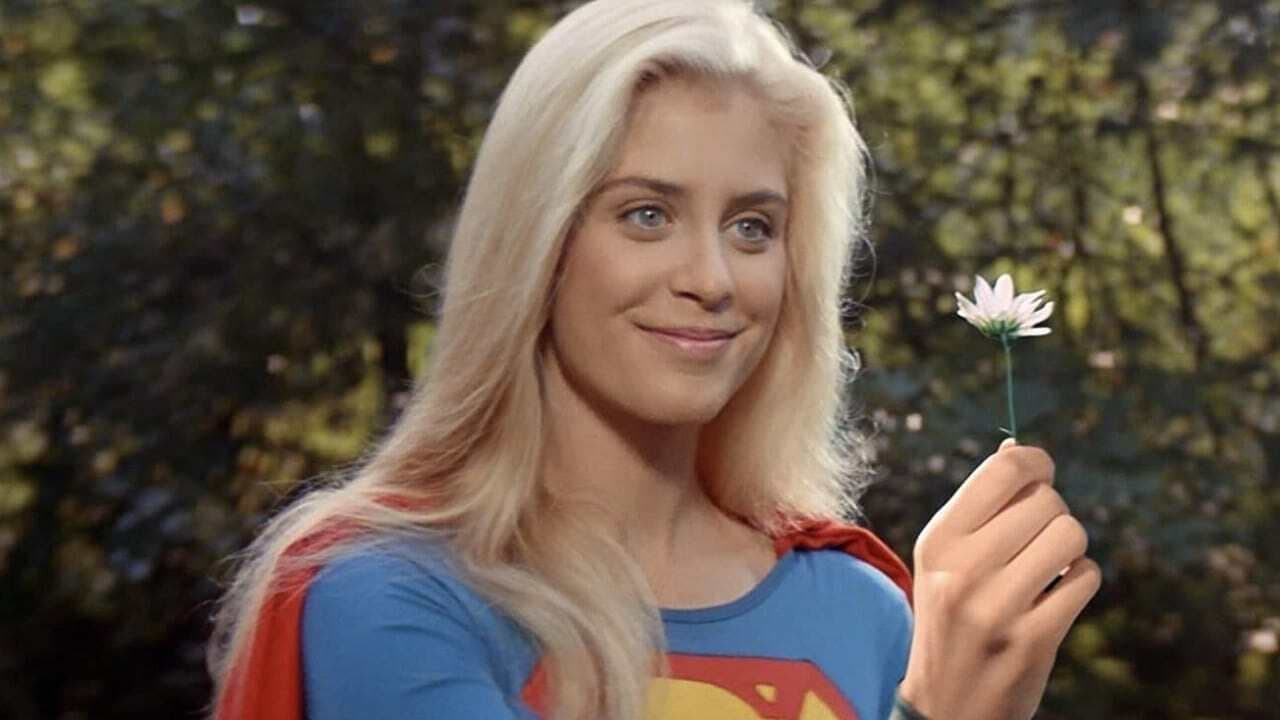
The film wastes no time introducing us to Argo City, a surviving fragment of Krypton existing in inner space, depicted with a dreamy, almost psychedelic quality typical of early 80s fantasy visuals. It's here we meet Kara, played with wide-eyed sincerity by newcomer Helen Slater, and her mentor Zaltar, portrayed by the legendary Peter O'Toole (Lawrence of Arabia, My Favorite Year) in a performance that feels both regal and slightly bemused. When a cosmic MacGuffin, the Omegahedron, is accidentally lost to Earth, Kara bravely pilots a vessel through the dimensional barrier to retrieve it, adopting the secret identity of Linda Lee, Clark Kent's cousin, at a Midvale girls' school. It’s a premise brimming with potential, echoing the classic Superman origin while offering a distinctly female perspective.
Helen Slater, in her debut role, truly embodies the character's goodness and initial naiveté. She captures that sense of wonder and slight disorientation as Kara discovers her powers – the joy of flight, the shock of super-strength. You really root for her, even when the script saddles her with some clunky dialogue or contrived situations. There's an earnestness to her portrayal that cuts through some of the film's more uneven aspects. I remember being genuinely captivated by her first flight sequence; the practical effects, while perhaps looking dated now with their visible wires and blue-screen fringing, had a tangible quality that CGI often lacks. Coupled with Jerry Goldsmith's soaring, hopeful score (a worthy companion piece to John Williams' iconic Superman theme), these moments captured a piece of that superhero magic.

### When Villains Steal the Show (and the Power)
Of course, the Omegahedron doesn't just land innocuously. It falls into the clutches of Selena, a power-hungry sorceress played with glorious, scenery-chewing abandon by the incomparable Faye Dunaway (Chinatown, Network). Fresh off her turn in Mommie Dearest (1981), Dunaway leans hard into the camp potential, delivering lines with dramatic flair and striking poses that belong in a high-fashion magazine spread about evil witchcraft. Her pursuit of power, love (via a hapless local played by Peter Cook), and ultimate control provides the film's central conflict, and honestly, much of its unintentional humor and cult appeal. Brenda Vaccaro, as her exasperated sidekick Bianca, adds another layer of comedic relief.
The clash between Slater's earnest heroism and Dunaway's flamboyant villainy creates a tonal tightrope walk that the film doesn't always navigate successfully. Directed by Jeannot Szwarc, who had previously helmed the surprisingly effective Jaws 2 (1978) and the romantic fantasy Somewhere in Time (1980), Supergirl often feels like two different movies vying for screen time: a sincere superhero origin story and a campy fantasy romp. This tonal inconsistency might be part of why it struggled to connect with wider audiences initially.
### Retro Fun Facts: The Kryptonian Chronicles
Behind the gleaming visuals and capes, Supergirl's production was as ambitious as its narrative. With a hefty budget of around $35 million (a significant sum in 1984), the Salkinds clearly hoped for another blockbuster. They even tried to secure a Christopher Reeve cameo to solidify the connection, but he ultimately declined. Marc McClure does reprise his role as Jimmy Olsen, providing the most direct link to the Superman films.
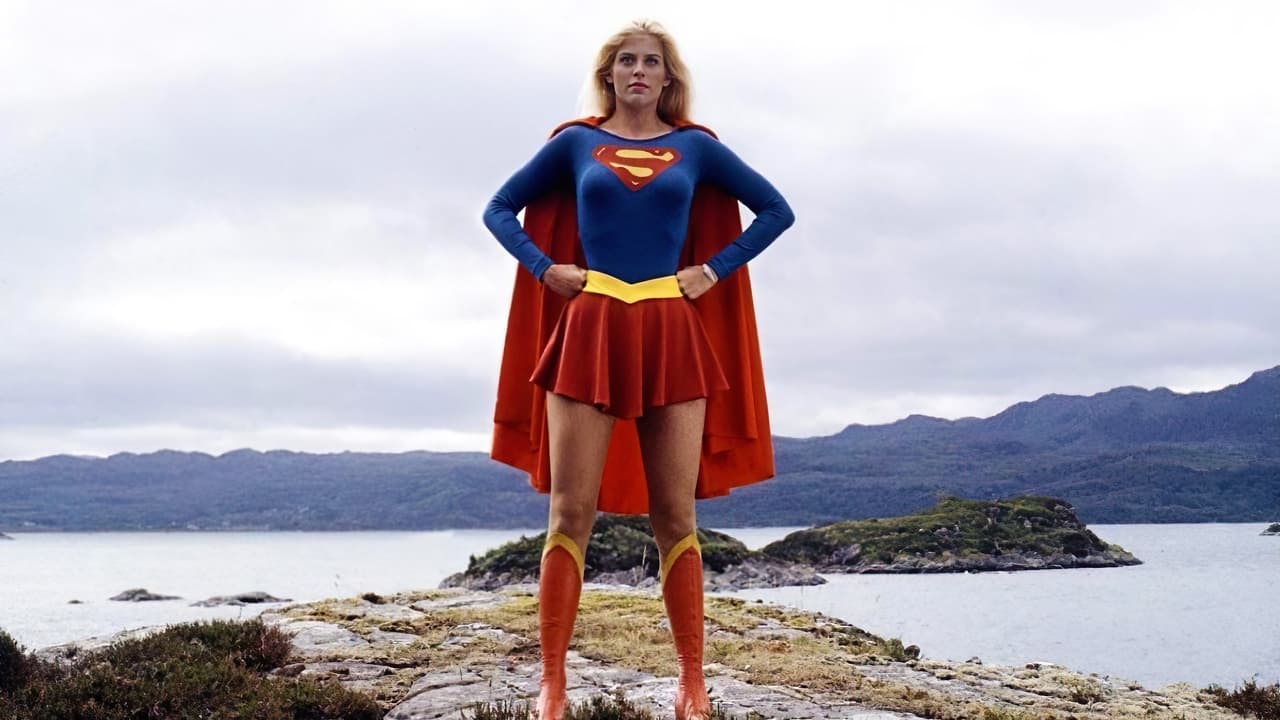
Despite the investment and star power (getting Peter O'Toole and Faye Dunaway was a coup), the film famously underperformed, pulling in just over $14 million at the US box office. Critics were often unkind, finding fault with the script and the sometimes jarring shifts in tone. It’s a fascinating case study in how difficult it can be to capture lightning in a bottle twice. Interestingly, several different cuts of the film exist, including a longer international version and a later Director's Cut released on home video, which restore significant footage and character beats, suggesting perhaps studio tinkering played a role in the theatrical release's reception. The flying effects, supervised by Derek Meddings (who worked on Superman and Bond films), involved intricate wire work and innovative (for the time) front projection techniques to make Kara soar over meticulously crafted miniature landscapes and real locations.
### Legacy on the Lower Shelf
Watching Supergirl today is a unique experience. It's undeniably flawed – the plot meanders, some dialogue induces winces, and the logic behind Selena's magic feels particularly arbitrary. Yet, there's an undeniable charm to its ambition and its leading lady's sincere performance. It captures a specific moment in superhero filmmaking, before the dark-and-gritty dominance or the tightly interconnected universes we see now. It was a splash of bright colour, earnest emotion, and slightly goofy fantasy, all bound up in that distinctive 80s aesthetic. For many who rented it back in the day, perhaps catching it on a rainy Saturday afternoon, it remains a fond, if slightly quirky, memory. It wasn't the phenomenon the producers hoped for, but this 80s superhero movie VHS certainly carved out its own little niche in the pantheon of cult classics.

Rating: 5/10
The score reflects a film brimming with earnest potential and featuring a genuinely likable lead in Helen Slater, alongside a delightfully over-the-top villainous turn from Faye Dunaway. However, it's significantly hampered by an uneven script, tonal inconsistencies, and pacing issues that prevent it from reaching the heights of its famous cousin. The ambition is visible, but the execution often falters, resulting in a viewing experience that's equal parts charmingly retro and frustratingly underdeveloped.
It may not have saved the world, but Supergirl certainly tried to fly, and sometimes, watching the attempt is an adventure in itself. A fascinating, flawed piece of superhero history well worth revisiting for a dose of pure 80s nostalgia.