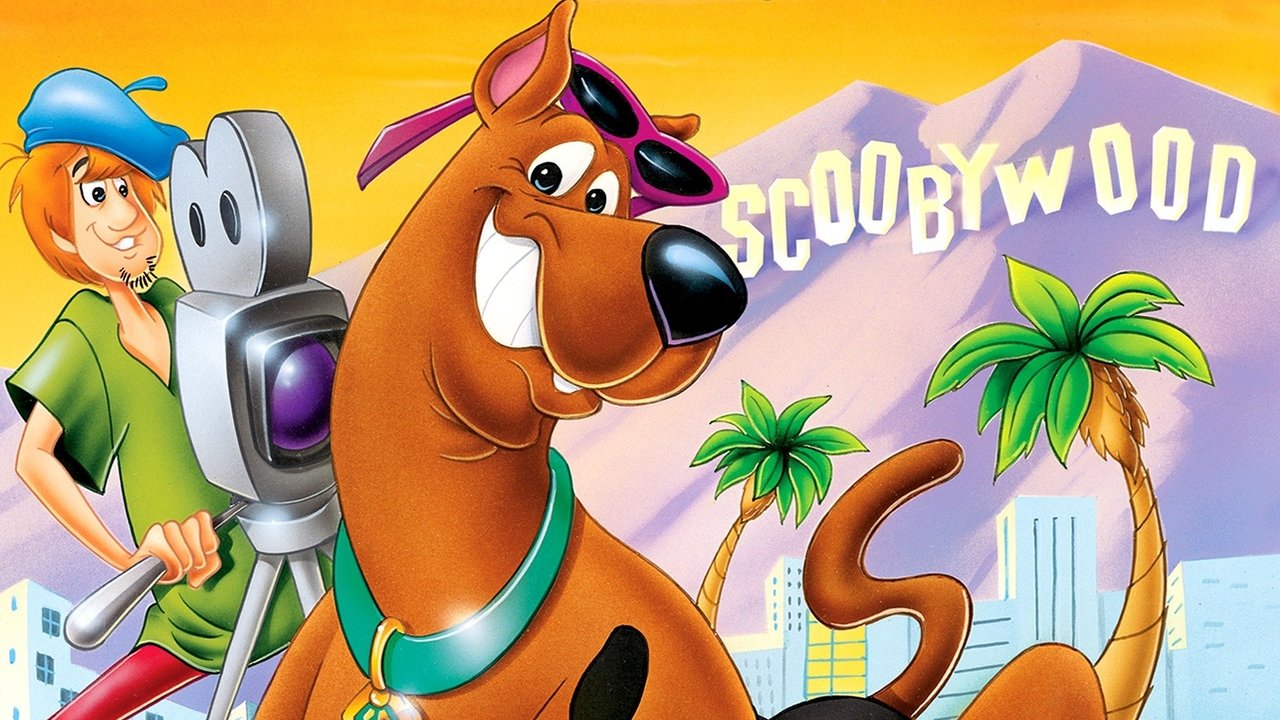
Okay, fellow tape travelers, let's rewind to a time just before the neon glow of the 80s fully took hold, but the spirit of Saturday morning adventures was already pulsing strong. We're popping in a tape – or maybe recalling a special TV night – featuring Mystery Inc.'s most famous canine, but not quite as we always knew him. Imagine Scooby-Doo, leash in paw, demanding more than just Scooby Snacks and spooky mansions. That's the wonderfully weird premise behind 1979's Scooby-Doo Goes Hollywood, a fascinating curveball from the Hanna-Barbera hit machine.
Ruh-Roh, Prime Time Dreams
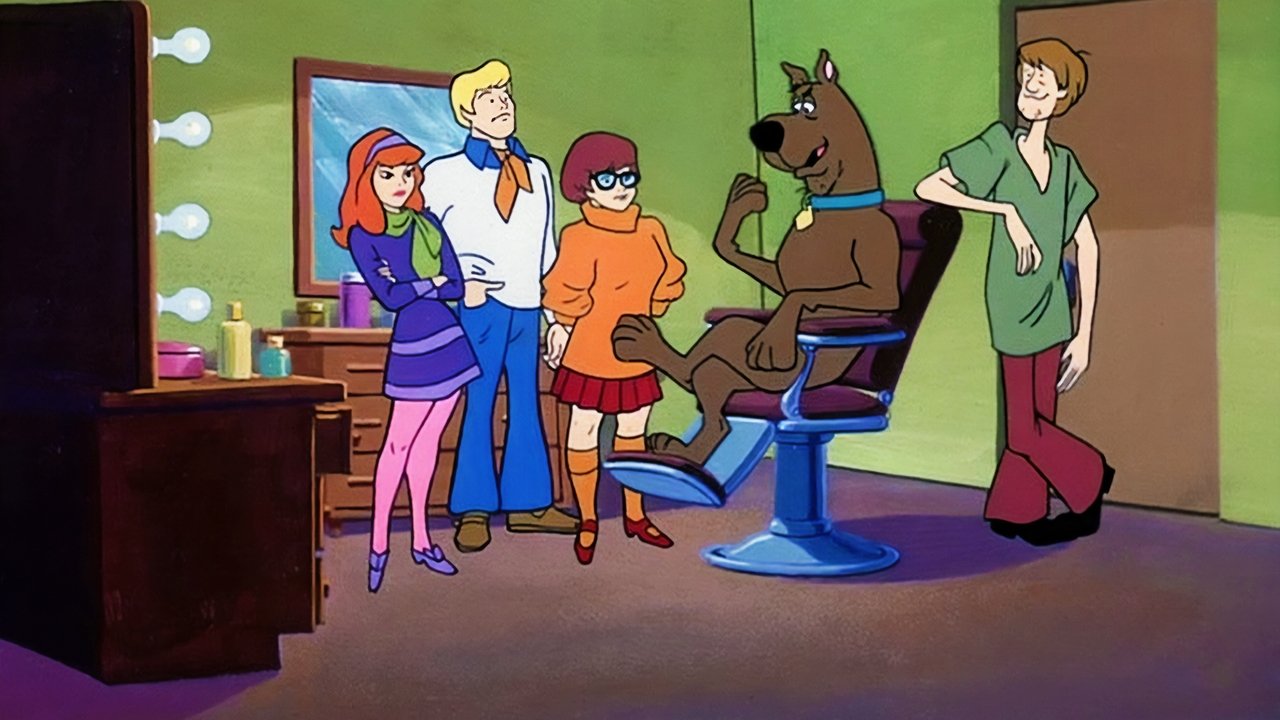
This wasn't your standard haunted amusement park caper. Aired as a primetime TV special on ABC in December '79, Scooby-Doo Goes Hollywood dared to pull back the curtain. Directed by animation veterans Ray Patterson and Carl Urbano (names synonymous with countless hours of childhood viewing), and penned by Duane Poole and Dick Robbins, the special posits a simple, almost meta crisis: Scooby (voiced, as ever, by the legendary Don Messick) and Shaggy (Casey Kasem in peak form) are tired of the spooky shtick. They crave respect! Glamour! Syndication checks! They want to break free from their cartoon confines and become bona fide Hollywood movie stars. Fred (Frank Welker, another voice acting titan), Daphne (Heather North), and Velma (Pat Stevens) are naturally aghast, trying to convince their pals that chasing ghosts is their calling.
What follows is less a mystery and more a series of screen tests and pilot pitches, essentially framing Scooby and Shaggy trying their paws at different genres. This structure allows the special to become a rapid-fire parody machine, lampooning popular TV shows and movies of the era. Remember the sheer dominance of shows like Happy Days or Laverne & Shirley back then? This special certainly did, dropping Scooby into riffs like "How Scooby Won the West" and pitching ideas clearly inspired by contemporary hits. There's even a nod to superheroics ("Scooby Days" playing on Happy Days and a Superman-esque sequence) and a surprisingly groovy disco segment tapping into the Saturday Night Fever zeitgeist.

Like, Zoinks, It's a Musical!
Perhaps the most jarring – or endearing, depending on your mileage – aspect of Scooby-Doo Goes Hollywood is its embrace of musical numbers. Yes, you read that right. Scooby and the gang break into song multiple times, delivering tunes like "Move Over" and "Ruby-Doo" (Shaggy's ode to his pal). It feels like Hanna-Barbera flexing a slightly different muscle, aiming for that broader "special" feel beyond the usual mystery formula. While none of the songs became chart-toppers, they add to the unique, slightly surreal flavour of this particular Scooby outing. It’s a bit like finding pineapple on a pizza – unexpected, maybe not for everyone, but undeniably memorable.
The animation itself is classic late-70s Hanna-Barbera. If you grew up on their shows, you know the look: expressive character designs, sometimes limited movement offset by vibrant backgrounds, and that unmistakable house style. For a TV special, it feels perhaps a touch more polished than the average weekly episode, but it’s still comfortably within that familiar visual universe. It's the kind of animation that felt perfectly at home on a chunky CRT screen, maybe with the tracking slightly off on your VCR copy.

Behind the Celluloid
As Hanna-Barbera's first animated TV special starring the Scooby gang, Scooby-Doo Goes Hollywood represented a significant step. It was an attempt to elevate the characters beyond their Saturday morning roots, testing the waters for potentially broader appeal. While it didn't exactly launch Scooby into dramatic acting roles, it demonstrated the enduring charm of these characters and their ability to adapt (or at least be shoved into) different formats. It’s fascinating to think this aired just as the 70s were closing, a sort of transitional moment before the full-blown cartoon boom of the 80s. You can almost feel the studio trying things out, seeing what might stick for the decade ahead.
The real magic, as always, lies with the voice cast. Messick's Scooby is instantly recognizable, that perfect blend of cowardice and accidental bravery. Kasem's Shaggy is Shaggy – the voice is inseparable from the character. And Welker, North, and Stevens provide the essential grounding force as Fred, Daphne, and Velma. Their chemistry, even when tackling this unusual premise, is undeniable. It’s their familiar voices that anchor the special, even when Scooby is attempting a disco strut.
A Quirky Kennel Classic?
Scooby-Doo Goes Hollywood isn't the pinnacle of the Scooby-Doo franchise. It lacks the spooky atmosphere and clever mystery plotting of the best Where Are You! episodes. The parodies, while amusing snapshots of late 70s pop culture, might feel a bit dated or obscure to some viewers today. But there's an undeniable charm to its ambition, its willingness to break the formula, and its sheer, unadulterated weirdness. It feels like a passion project, albeit a slightly goofy one. For fans who've seen every haunted house and unmasked caretaker countless times, it offers a genuinely different flavour. It’s the kind of special you might have stumbled upon during a holiday TV marathon or found tucked away at the video store, a strange gem promising Hollywood hijinks.

VHS Heaven Rating: 6/10
Why a 6? It's a fun, nostalgic curio with the beloved voice cast giving their all, and the meta-premise is surprisingly ahead of its time. The parodies offer a glimpse into the late-70s zeitgeist, and the sheer oddity of a musical Scooby-Doo special has its own unique appeal. However, it ditches the core mystery element that makes Scooby Scooby, the songs aren't exactly showstoppers, and its structure feels more like a collection of sketches than a cohesive story. It's definitely more for the dedicated Scooby archivist than the casual viewer seeking classic ghost-hunting.
Ultimately, Scooby-Doo Goes Hollywood is a charmingly awkward attempt to give our favourite mystery-solving dog a taste of the Tinseltown dream. It may not have won any Oscars, but like a well-loved, slightly warped VHS tape, it holds a special, quirky place in the vast Hanna-Barbera library.