Ah, the animated joys of yesteryear! While the neon glow of American blockbusters often dominates our VHS memories, sometimes a different kind of magic flickered across those CRT screens. Today, let's rewind to a place perhaps less familiar to some Western audiences but utterly iconic to millions – the charmingly ramshackle village of Prostokvashino, courtesy of the 1980 Soviet animated short, Vacations in Prostokvashino (Каникулы в Простоквашино). This wasn't explosive action or high-concept sci-fi; it was something gentler, quirkier, and deeply endearing.
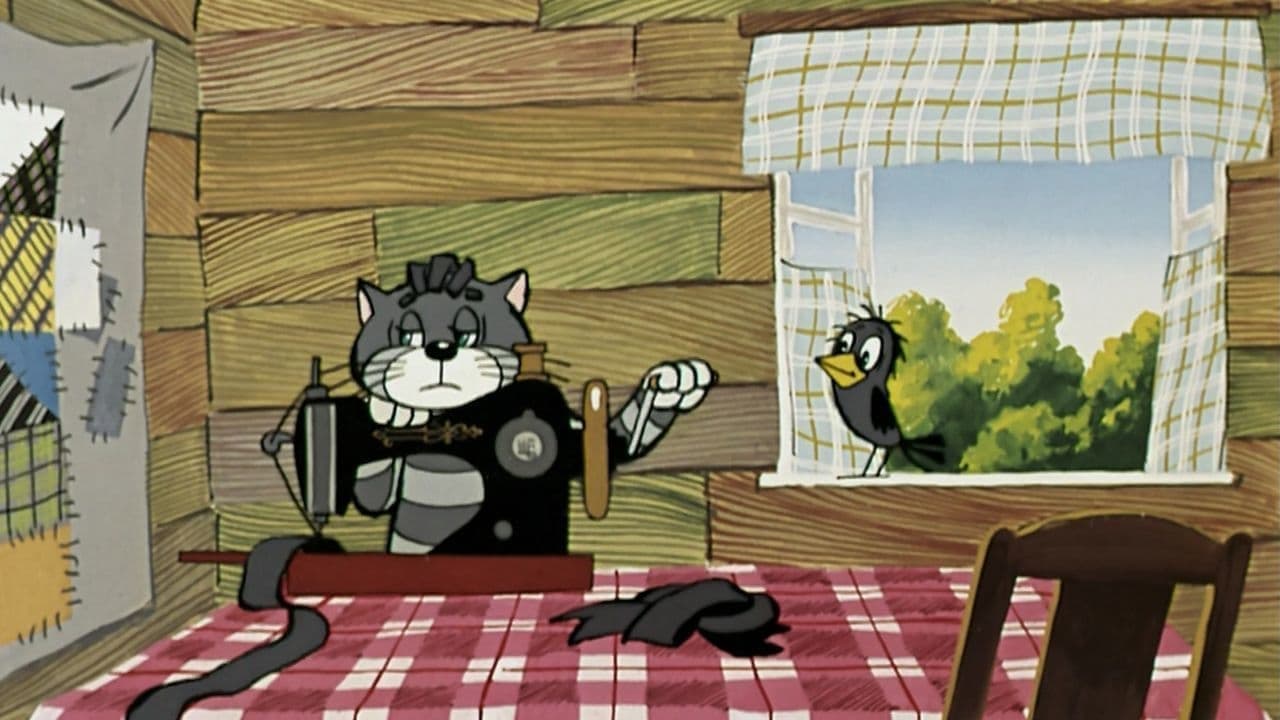
Directed by Vladimir Popov and based on the beloved children's stories by Eduard Uspensky, this film is the second installment in a trilogy that captured the hearts of generations across the former Soviet Union. Forget slick, fast-paced animation; this is Soyuzmultfilm at its classic best – hand-drawn, character-driven, and radiating a unique warmth that feels like a cozy, hand-knitted sweater. It’s the kind of cartoon that likely played on repeat in many households, its memorable lines becoming part of the family lexicon.
Summer Days and Talking Animals
The premise is simple, yet utterly charming. Young Uncle Fyodor, the unusually independent city boy, returns to the countryside village of Prostokvashino for his summer vacation. He's rejoined by his animal companions: the pragmatic, business-minded cat Matroskin (voiced with unforgettable grumpy charm by the legendary Oleg Tabakov) and the simple, good-natured dog Sharik (voiced by Lev Durov). Their idyllic rural life, however, is quickly complicated by everyday concerns turned hilariously absurd – acquiring a cow, dealing with the nosy postman Pechkin (voiced by Boris Novikov in the original trilogy, though others voiced him later), and Sharik's newfound passion for photography, much to Matroskin's economic dismay.
What makes Vacations in Prostokvashino so special isn't a complex plot, but its characters and the gentle observational humor. Matroskin, forever calculating and slightly cynical ("I'm choosing the best cow," he declares, assessing their potential milk yield with market-savvy precision), is a perfect foil for the sweet, slightly dim Sharik, who just wants to take pictures ("It's photo-hunting!"). Their bickering is never malicious, always rooted in their distinct personalities and the affectionate, if sometimes exasperated, bond they share. The perpetually suspicious Postman Pechkin, wonderfully brought to life by Valentina Talyzina's voice acting for Fyodor's arriving mother in this short (she voiced the boy's mother throughout the original trilogy), serves as the slightly bureaucratic antagonist, obsessed with rules and identification.
The Charm of Hand-Drawn Simplicity
The animation style, typical of Soyuzmultfilm during this era, might seem basic compared to Disney's contemporary fluidity, but it possesses an incredible expressiveness. The character designs are iconic – Matroskin's striped smugness, Sharik's floppy-eared earnestness, Pechkin's pinched officiousness. The backgrounds depict a slightly idealized Russian countryside, evoking a sense of peace and nostalgic longing for simpler times. There's a tangible quality to it, a feeling that every frame was crafted with care and personality, something often lost in today's hyper-polished digital productions.
It's fascinating to remember this was created within the state-funded Soviet animation system. While lacking the colossal budgets of Western studios, Soyuzmultfilm fostered immense creativity, producing works that were often artistically sophisticated and deeply resonant with their audience. Prostokvashino exemplifies this – it subtly touches on themes of self-sufficiency, friendship, the clash between urban and rural values, and the simple joys of life, all wrapped in delightful humor.
Retro Fun Facts & Enduring Legacy
The Prostokvashino series became a cultural phenomenon. Quotes from the cartoons entered everyday Russian speech and remain popular decades later. Matroskin the cat, in particular, is arguably one of the most famous and beloved characters in Russian animation history. Oleg Tabakov, a major figure in Russian theatre and film (who Western audiences might recognize from films like Moscow Does Not Believe in Tears), imbued Matroskin with such personality that his voice became inseparable from the character. The author, Eduard Uspensky, also created Cheburashka, another globally recognized icon of Russian animation.
The enduring appeal speaks volumes. While perhaps not a common sight in North American video stores, tapes of Prostokvashino were treasured items in Russian-speaking communities worldwide. For those who grew up with it, watching it again is like visiting old friends. For newcomers, it’s a delightful window into a different animation tradition, filled with humor that transcends cultural barriers. Later sequels and modern adaptations have followed, trying to recapture the magic, but the original trilogy, especially this charming middle entry, holds a special place.
Final Thoughts
Vacations in Prostokvashino is pure animated comfort food. It’s gentle, funny, and full of heart. The characters are unforgettable, the dialogue is witty, and the animation, while simple by today's standards, has a timeless appeal. It perfectly captures the feeling of lazy summer days, the minor dramas that feel huge when you're young (or a talking animal), and the enduring power of friendship, even when your best friend buys a completely unnecessary camera.
Rating: 9/10
This score reflects its status as a near-perfect example of charming, character-driven animation with immense cultural significance and enduring warmth. The humor lands beautifully, the voice acting is iconic, and the overall feeling is one of pure nostalgic delight. It doesn't aim for epic scope, but perfectly achieves its goal of creating a lovable, funny world.
For a trip back to a simpler, hand-drawn time filled with talking animals and countryside shenanigans, you can’t do much better than a summer spent in Prostokvashino. Go on, grab a metaphorical glass of milk from Matroskin's cow – you've earned it.