Okay, VHS Heaven dwellers, settle in. Sometimes, the worn tracking lines on an old tape didn't lead to explosions or alien invasions, but to something quieter, cozier, yet just as memorable. Forget the neon glow of LA noir or the jungles of South America for a moment, and let's journey to a snowy Russian village, because we need to talk about Winter in Prostokvashino (Зима в Простоквашино), a 1984 animated treasure from the legendary Soyuzmultfilm studio. It might not have been on heavy rotation at every Blockbuster, but for those who stumbled upon it, perhaps on a well-loved multi-film tape or through a curious exploration of animation beyond Disney, it left an indelible mark.
### Snow, Squabbles, and a Singing Telegram
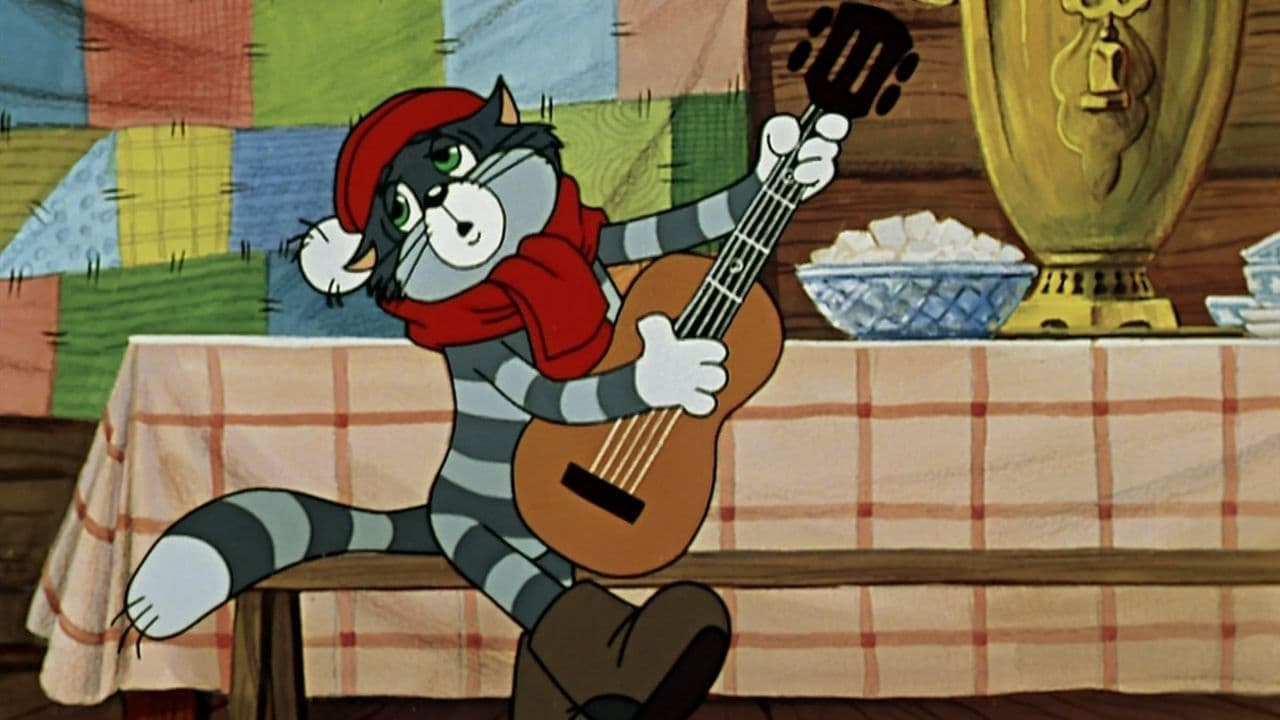
Based on the beloved children's stories by Eduard Uspensky, Winter in Prostokvashino is actually the third part of a trilogy following the remarkably independent young boy, Uncle Fyodor, and his unique chosen family: the meticulously practical cat Matroskin and the lovably simple dog Sharik. This installment finds our trio (well, mostly the cat and dog) deep in the throes of a village winter, and more importantly, deep in a classic domestic dispute. Sharik, defying Matroskin’s thrifty sensibilities, bought fashionable-but-useless kedy (sneakers) instead of proper winter boots, and now the two aren't speaking. Their frosty silence blankets the little cabin almost as thickly as the snow outside.
Directed by Vladimir Popov, who helmed all three shorts, the film instantly wraps you in a specific kind of atmosphere. It’s not just cold; it's the feeling of being snowed-in, the muffled quiet of the countryside, the anticipation of New Year's Eve. The plot itself is wonderfully simple: Uncle Fyodor and his Dad plan a surprise visit for the holiday, but their sputtering Zaporozhets car gets stuck in the snow. Meanwhile, Matroskin and Sharik must overcome their stubbornness to fix the television (a marvel of Soviet-era engineering, naturally) in time for the traditional televised New Year's address and concert.
### Characters That Feel Like Old Friends
What truly elevates Prostokvashino beyond simple animation is its characters, brought to life by unforgettable voice acting. The legendary Oleg Tabakov gives Matroskin his signature voice – pragmatic, slightly world-weary, endlessly concerned with household economy ("To sell something unnecessary, you must first buy something unnecessary!"), yet fundamentally caring. His deadpan delivery is comedic gold. Lev Durov voices Sharik with such guileless enthusiasm and simplicity that you can’t help but love him, even when his choices are questionable (those sneakers!). And Mariya Vinogradova captures Uncle Fyodor's earnestness and maturity, a boy who seems wiser than many adults.
These aren't just cartoon animals; they feel like fully formed personalities navigating relatable conflicts. Their bickering over footwear might seem trivial, but it’s played with such sincerity and gentle humour that it becomes the heart of the story. Who hasn't been locked in a stubborn standoff with a friend or family member over something silly? The film taps into that universal dynamic with warmth and wit.
### The Charm of Hand-Drawn Warmth
The animation style, typical of Soyuzmultfilm during this period, possesses a distinct charm. It lacks the slick polish of Disney features from the same era, but compensates with expressive character design and backgrounds that perfectly capture the rustic, snow-laden beauty of the Russian countryside. There’s a handmade quality to it, a tangible sense of artistry that feels incredibly nostalgic today. Remember watching cartoons where you could almost feel the pencil strokes? Prostokvashino has that vibe.
One particularly memorable sequence involves the duo attempting to repair the television set. Their increasingly absurd efforts, culminating in advice sought from the mischievous local postman Pechkin (voiced by Boris Novikov), are brilliantly paced and genuinely funny. It’s a testament to how much humour can be wrung from simple situations when the characters are this well-defined. Another gem is the arrival of Uncle Fyodor and his Dad, trudging through the snow, their car abandoned – a moment of pure, unadulterated holiday relief.
### A Cultural Touchstone
While perhaps less known internationally, the Prostokvashino series is an absolute cultural phenomenon in Russia and former Soviet republics. Its characters and their witty exchanges have permeated the language, becoming instantly recognizable catchphrases. Watching Winter in Prostokvashino around New Year's Eve is a cherished tradition for many families, akin to watching It's a Wonderful Life or A Christmas Story in the West. It generated several follow-ups decades later, trying to recapture the magic, but the original trilogy, especially this wintery entry, holds a special place. It's a reminder that great storytelling transcends borders and specific cultural contexts, speaking to universal themes of friendship, family, and the simple joys of togetherness, especially when it's cold outside.
This short film, running just under 16 minutes, packs more heart and humour than many features. It's a perfect slice of character-driven animation, a warm hug on a cold day. It doesn’t rely on grand spectacle, but on the charm of its world and the chemistry of its inhabitants. It’s the kind of film that might have been a delightful discovery on a dusty VHS tape, a window into a different kind of animation that still feels wonderfully familiar.
VHS Heaven Rating: 9/10
This rating reflects its status as a near-perfect piece of character-driven animation. The humour is timeless, the characters iconic (especially within their cultural context), and the atmosphere utterly charming. It’s a masterclass in creating warmth and relatability within a simple story. While perhaps lacking the technical dazzle of some Western counterparts, its heart and wit make it an enduring classic.
So, if you ever find yourself craving a nostalgic trip to a simpler, snowier place, seek out Winter in Prostokvashino. It’s proof that sometimes the most memorable adventures are the quiet ones, shared with a grumpy cat, a simple dog, and a warm television set flickering against the winter dark.